
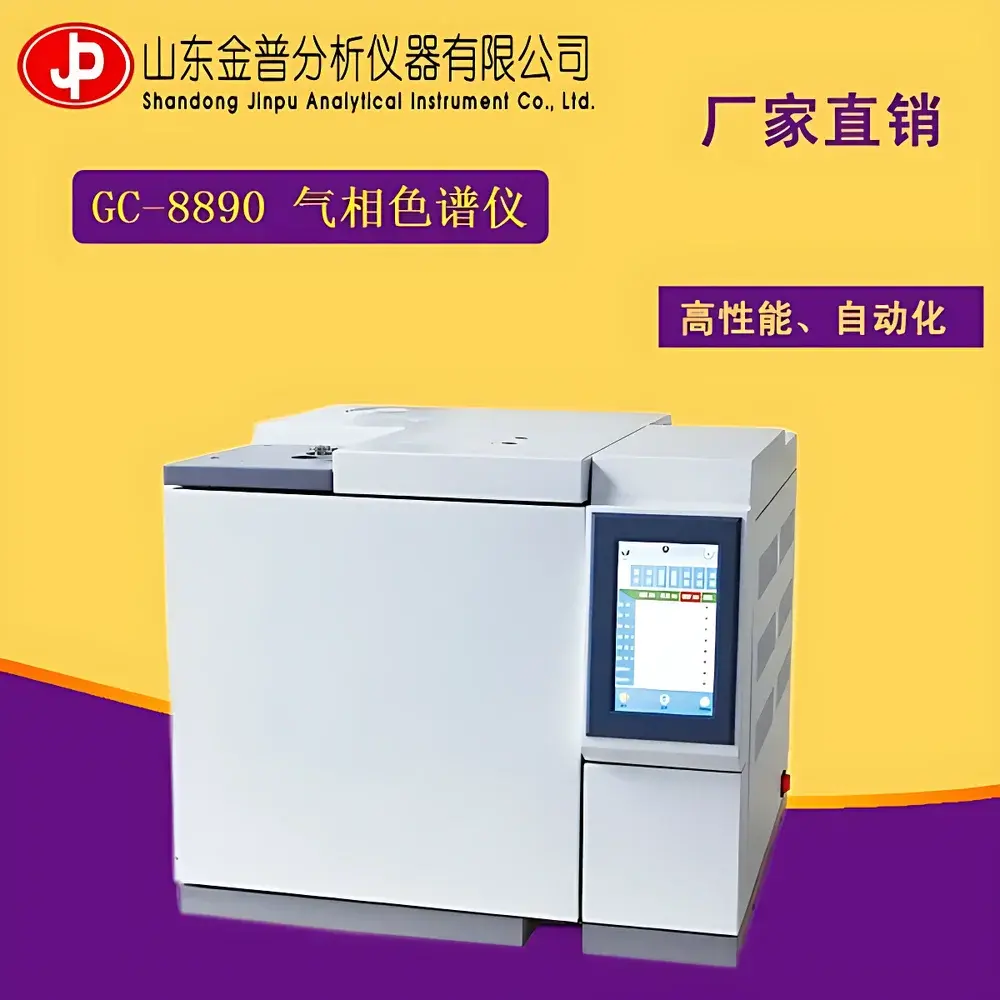
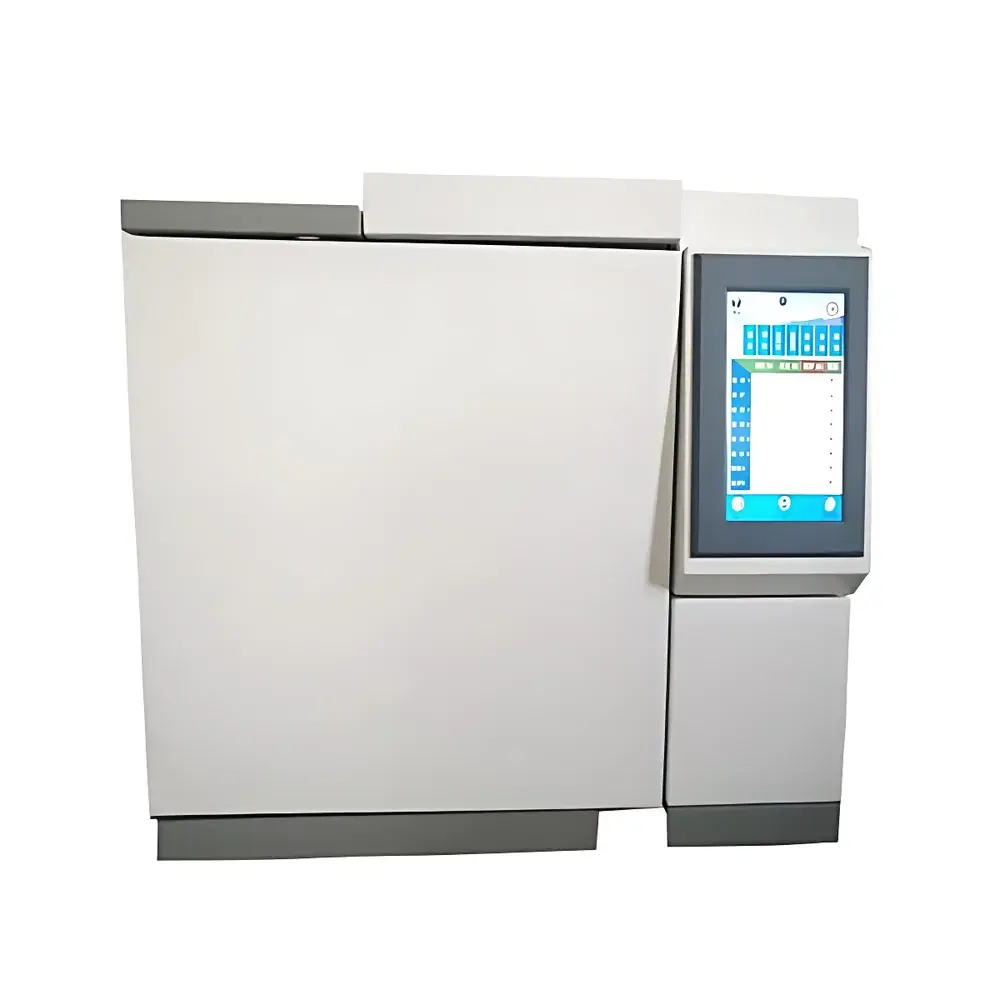
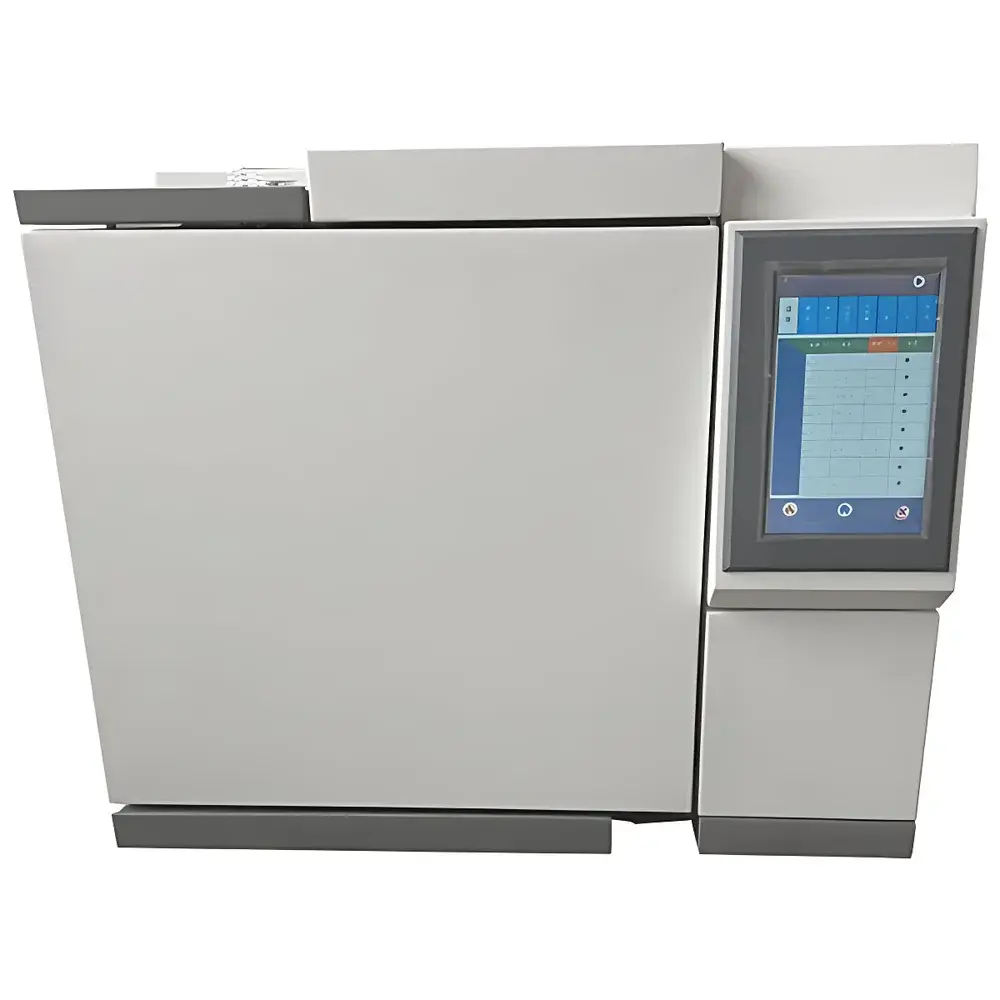
Kingpu GC-8890 Dedicated Gas Chromatograph for Dimethyl Ether (DME) Analysis in Liquefied Petroleum Gas (LPG)
| [Brand | Kingpu |
|---|---|
| Origin | Shandong, China |
| Model | GC-8890 Dedicated for DME in LPG |
| Instrument Type | Laboratory Gas Chromatograph |
| Application Field | Petrochemical Industry |
| Temperature Control Range | Ambient + 8°C to 420°C |
| Oven Ramp Rate | 0.1–40°C/min |
| Oven Cool-down | 450°C to 50°C in ~6 min |
| Carrier Gas Flow Range & Control | 0–1200 mL/min (7 programmable segments) |
| Carrier Gas Pressure Range & Control | 0–970 kPa (7 programmable segments) |
| Injector Max Temp | 450°C |
| Injector Pressure Setting Range | 0–970 kPa |
| Injector Total Flow Setting Range | 0–1200 mL/min] |
Overview
The Kingpu GC-8890 Dedicated Gas Chromatograph for Dimethyl Ether (DME) Analysis in Liquefied Petroleum Gas (LPG) is a purpose-engineered laboratory gas chromatograph designed to meet the stringent quantitative and regulatory requirements of petrochemical quality control laboratories. It employs capillary gas chromatography with high-resolution separation and selective detection to resolve and quantify trace-level DME (CH3OCH3) in complex LPG matrices—comprising propane, butane, isobutane, propylene, and other C3–C4 hydrocarbons—without interference or co-elution. The system operates on proven principles of differential partitioning in a polar or mid-polarity stationary phase (e.g., PLOT Al2O3/KCl or DB-ALC1), coupled with flame ionization detection (FID) or thermal conductivity detection (TCD), enabling reliable quantification at sub-0.1% (v/v) levels per ASTM D7085 and GB/T 13290 standards.
Key Features
- Full electronic pressure and flow control (EPC/EFC) across up to 7 programmable segments—ensuring reproducible carrier gas delivery (N2, H2, He, or air) with resolution of ±0.01 kPa and ±0.01 mL/min.
- 8 independent temperature-controlled zones—including oven, up to 3 injectors, and up to 4 detectors—with precision of ±0.1°C and 0.1°C increments; supports 16-stage oven programming and rapid ramp rates up to 40°C/min.
- Integrated cryo-cooling architecture enables oven cool-down from 450°C to 50°C in approximately 6 minutes—reducing cycle time between consecutive LPG injections without compromising column integrity.
- Touchscreen interface with embedded Linux OS and Ethernet (10/100 Mbit/s) connectivity for remote instrument control, real-time parameter adjustment, and secure data streaming via LAN or VPN.
- Dual-detector capability: simultaneous operation of FID (detection limit ≤2×10⁻¹² g/s for n-hexadecane) and TCD (sensitivity ≥12,000 mV·mL/mg) ensures method flexibility and cross-validation for DME peak confirmation.
- Patented auto-ignition and flame-out monitoring (ZL201220285854.5), rear-door forced-air cooling for near-ambient oven stabilization (ZL201220286920.0), and automated injection triggering (ZL201220285852.6) enhance operational robustness and unattended run reliability.
Sample Compatibility & Compliance
This dedicated configuration is validated for direct injection of vapor-phase LPG samples using pressurized liquid sampling valves or gas-tight syringes. It accommodates standard 30 m × 0.32 mm i.d. PLOT columns with 15 µm film thickness, optimized for C1–C5 oxygenate and hydrocarbon separation. The system complies with key industry protocols including ASTM D7085 (Standard Test Method for Determination of Dimethyl Ether in Liquefied Petroleum Gases by Gas Chromatography), GB/T 13290 (Liquefied Petroleum Gas — Determination of Dimethyl Ether Content), and ISO 8573-1 (compressed gas purity). Its hardware and firmware architecture support audit-trail-enabled operation under GLP and GMP environments when integrated with compliant chromatography data systems (CDS).
Software & Data Management
The GC-8890 operates with Kingpu ChromaLink™ CDS v3.x—a 21 CFR Part 11-ready platform supporting user role management, electronic signatures, and immutable audit trails. Raw data files (.chd) are stored with full metadata: method parameters, calibration history, detector response factors, and sequence logs. Batch processing includes automatic retention time alignment, peak integration using tangent skim or exponential baseline correction, and reporting per ISO/IEC 17025 uncertainty guidelines. Export formats include CSV, PDF analytical reports, and .cdf (NetCDF) for third-party statistical analysis or LIMS integration.
Applications
- Quantitative determination of DME adulteration in commercial LPG fuel (per Chinese National Standard GB 11174 and EN 589)
- QC release testing of refinery-grade LPG prior to cylinder filling or pipeline transfer
- Method development and validation for regulatory submissions to SAMR (State Administration for Market Regulation) or provincial metrology institutes
- Supporting R&D studies on DME blending effects on combustion efficiency, Wobbe index, and elastomer compatibility
- Trace impurity profiling (e.g., methanol, acetone, formaldehyde) when configured with ECD or FPD modules
FAQ
Is this system compliant with ASTM D7085?
Yes—the GC-8890’s temperature programming fidelity, EPC stability, and FID/TCD linearity have been verified against ASTM D7085 reference materials and repeatability criteria (RSD ≤2.5% for 0.5% DME in propane matrix).
Can it be integrated into an existing LIMS environment?
Yes—via standard ASTM E1394 or HL7-compliant APIs, or through flat-file export (CSV/PDF) with configurable naming conventions and metadata tagging.
What column types are recommended for DME/LPG separation?
PLOT Al2O3/KCl (30 m × 0.32 mm × 15 µm) provides optimal resolution of DME from propane and propylene; alternative options include DB-ALC1 or GS-Alumina for extended C4 isomer separation.
Does the system support unattended overnight operation?
Yes—when paired with a certified 10-position autosampler and configured with event-triggered valve switching, it supports fully automated sequences of up to 99 injections with real-time failure alerts and auto-recovery logic.
Is 21 CFR Part 11 compliance built-in or requires add-on licensing?
Audit trail, electronic signature, and user access control are native features of ChromaLink™ CDS v3.x; no additional license is required for core Part 11 functionality. Optional IQ/OQ documentation packages are available upon request.




