
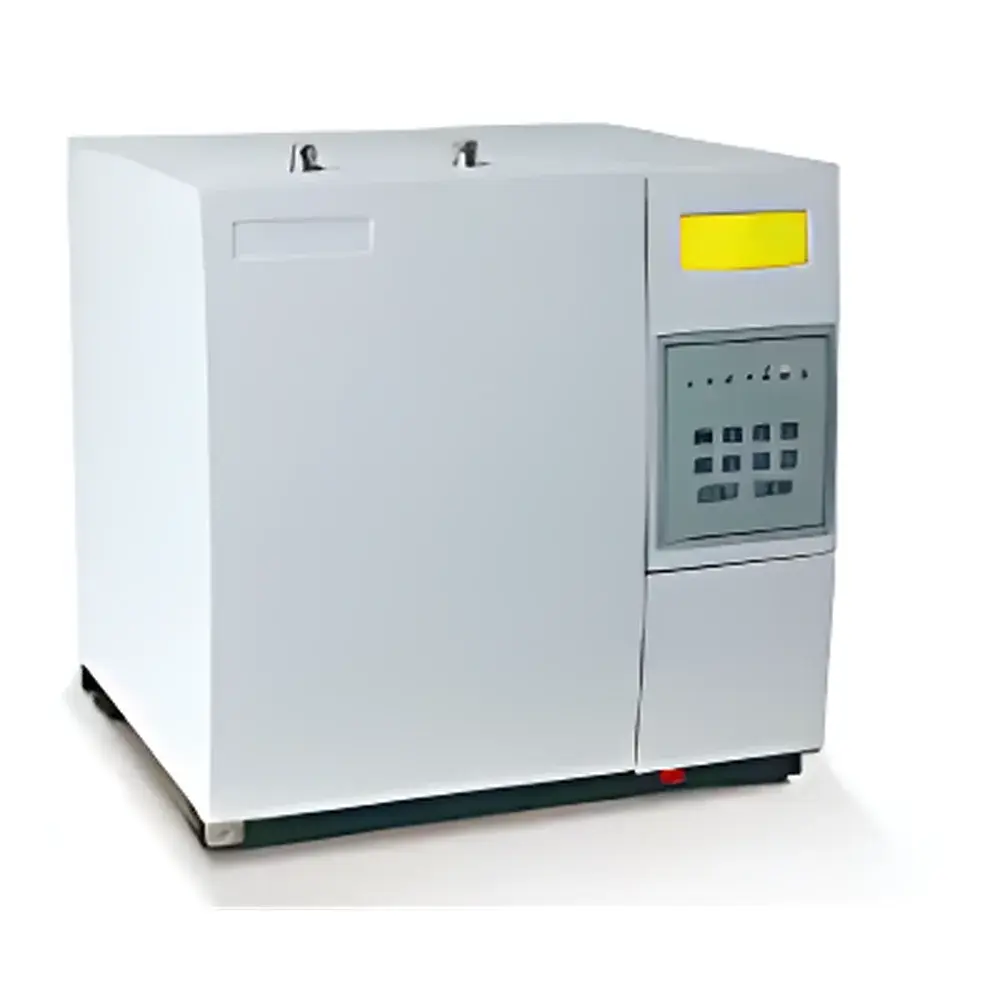
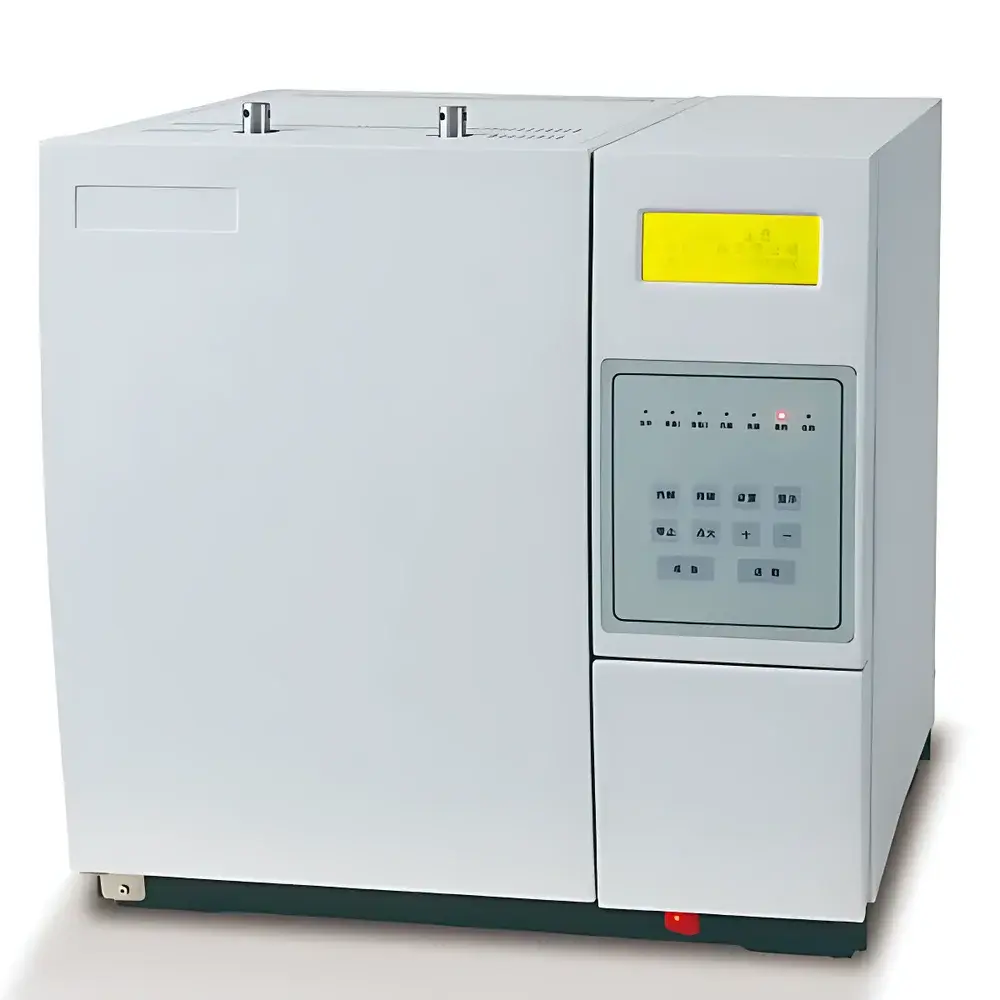
Golden普 OG-2000VA Dual-Stage Pyrolysis Gas Chromatograph for Hydrocarbon Display Evaluation
| Brand | Golden普 |
|---|---|
| Origin | Shandong, China |
| Model | OG-2000VA |
| Instrument Type | Portable Gas Chromatograph |
| Application Field | Petroleum & Petrochemical Industry |
| Oven Temperature Range | Ambient +4°C to 450°C |
| Oven Ramp Rate | 0.1–40°C/min |
| Oven Cool-down Rate | 400°C → 50°C in ~6 min |
| Carrier Gas Flow Range & Control | 0–1200 mL/min |
| Carrier Gas Pressure Range & Control | Up to 900 kPa |
| Injector Maximum Operating Temperature | 400°C |
| Injector Pressure Setting Range | Up to 900 kPa |
| Injector Total Flow Setting Range | 0–1200 mL/min |
| FID Detection Limit (Hydrocarbons) | 0.001 mg HC/g rock |
| FID Baseline Drift | < 0.1 mV/30 min |
| FID Linear Dynamic Range | 10⁶ |
| FID Temperature Stability | 360 ± 0.5°C |
| Pyrolysis Furnace Temperature Stability | 600 ± 0.5°C |
| Programmable Pyrolysis Cycles | 4 (Source Rock, Reservoir Rock, Thermal Simulation, User-Defined) |
| Ramp Linearity Deviation | < 0.5°C/min |
Overview
The Golden普 OG-2000VA is a purpose-built, dual-stage pyrolysis gas chromatograph engineered for rapid, field-deployable hydrocarbon display evaluation in petroleum exploration and production environments. Unlike conventional GC systems, the OG-2000VA integrates two thermally isolated pyrolysis ovens with independent flame ionization detectors (FIDs), enabling simultaneous thermal desorption and quantitative analysis of hydrocarbon fractions from two distinct rock samples—without cross-contamination or signal interference. Its operational principle relies on controlled thermal cracking (pyrolysis) of kerogen and bitumen under inert atmosphere, followed by separation of evolved light hydrocarbons (C1–C12) via capillary column chromatography and detection using high-sensitivity FID. Designed for downhole logging support and wellsite geochemical screening, the system meets core requirements for real-time source rock evaluation, reservoir fluid typing, and maturity assessment in accordance with industry-standard pyrolysis protocols (e.g., Rock-Eval™-compatible workflows).
Key Features
- Dual independent pyrolysis furnaces (max 600°C) with individual temperature control and stability of ±0.5°C — enables parallel analysis of source and reservoir rocks.
- Two fully isolated FID detectors, each equipped with dedicated microcurrent amplifiers (dynamic range 10⁶, detection limit 0.001 mg HC/g rock), ensuring no electronic crosstalk between channels.
- High-precision oven temperature control (ambient +4°C to 450°C; ramp rate 0.1–40°C/min; cool-down from 400°C to 50°C in ≈6 minutes) optimized for rapid cycle turnaround (~7 min per sample).
- Integrated carrier gas management: digitally regulated flow (0–1200 mL/min) and pressure (up to 900 kPa) at both injector and detector ends, supporting helium, hydrogen, or nitrogen operation.
- Intuitive Chinese-language LCD interface with real-time parameter monitoring, programmable method storage, over-temperature protection, and contextual fault diagnostics — reducing operator dependency and field training burden.
- Robust mechanical architecture designed for continuous operation in mobile labs and rig-floor environments: validated for >30 days of uninterrupted field deployment with zero calibration drift or hardware failure.
Sample Compatibility & Compliance
The OG-2000VA accepts standard 1-g crushed rock samples (shale, sandstone, carbonate) in quartz or stainless-steel sample cups. It supports ASTM D7260-22 (Standard Practice for Quantitative Analysis of Hydrocarbons in Solid Samples by Pyrolysis-GC) and aligns with ISO 10303-21 data exchange conventions for geochemical reporting. While not certified for GLP/GMP-regulated laboratories, its hardware architecture and firmware design accommodate audit-ready operation when paired with external electronic lab notebooks (ELNs). The instrument’s temperature stability, baseline reproducibility (<0.1 mV/30 min), and linear response across six orders of magnitude meet minimum performance criteria outlined in API RP 44 (Recommended Practice for Geochemical Screening of Source Rocks).
Software & Data Management
Data acquisition and processing are handled via embedded firmware with onboard method libraries for four standardized pyrolysis cycles: (1) S1/S2/S3-based source rock evaluation, (2) reservoir rock hydrocarbon yield profiling, (3) laboratory-scale thermal simulation (e.g., hydrous pyrolysis mimicry), and (4) user-defined multi-step programs. Peak integration, retention time alignment, and hydrocarbon quantification (n-alkane series, iso-alkanes, cycloalkanes) follow IUPAC-recommended integration algorithms. Raw chromatograms and pyrograms export in ASCII (.csv) and NetCDF formats for interoperability with third-party platforms including Petrel Geochemistry, Kingdom Suite, and Python-based geochemical modeling tools (e.g., PyRockEval). No cloud connectivity or remote telemetry is implemented — all data remains local to ensure compliance with upstream data sovereignty policies.
Applications
- Rapid wellsite geochemical screening during drilling operations to guide coring decisions and optimize mud logging interpretation.
- Quantitative comparison of hydrocarbon generation potential across stratigraphic intervals in mature basins.
- Thermal maturity assessment via S2 peak shape analysis, Tmax derivation, and HI/OI ratio calculation.
- Bitumen content estimation in unconventional resource plays (e.g., Bakken, Eagle Ford, Jixi Basin shales).
- Field validation of laboratory-derived kinetic models through controlled thermal simulation runs.
- Integration into portable geochemical labs deployed for frontier exploration where infrastructure access is limited.
FAQ
Is the OG-2000VA compliant with FDA 21 CFR Part 11 or EU Annex 11?
No — it is not designed for regulated pharmaceutical or clinical testing environments. Its software lacks electronic signature capability, audit trail logging, or role-based access control required under those frameworks.
Can the system be upgraded to include residual carbon (RC) measurement?
Yes — the mechanical and thermal architecture supports retrofitting with a dedicated RC furnace module, enabling full Rock-Eval™-style S1/S2/S3/RC analysis without replacing the base instrument.
What carrier gases are supported, and is hydrogen safety certification included?
Helium, nitrogen, and hydrogen are supported. Hydrogen operation requires external leak-checking and ventilation verification per OSHA 1910.103 and local site HSE protocols; no integrated hydrogen sensor or auto-shutdown is provided.
Does the instrument support ASTM D5291-compliant calibration standards?
Yes — built-in calibration routines accept certified n-alkane mixtures (C5–C40) traceable to NIST SRM 1848; calibration frequency follows ASTM D5291 Section 8.2 recommendations.
What maintenance intervals are recommended for field use?
FID jet cleaning every 200 injections; column trimming every 500 runs; pyrolysis cup replacement after 1000 thermal cycles; annual verification of temperature sensors against NIST-traceable dry-block calibrators.
Related Products




