
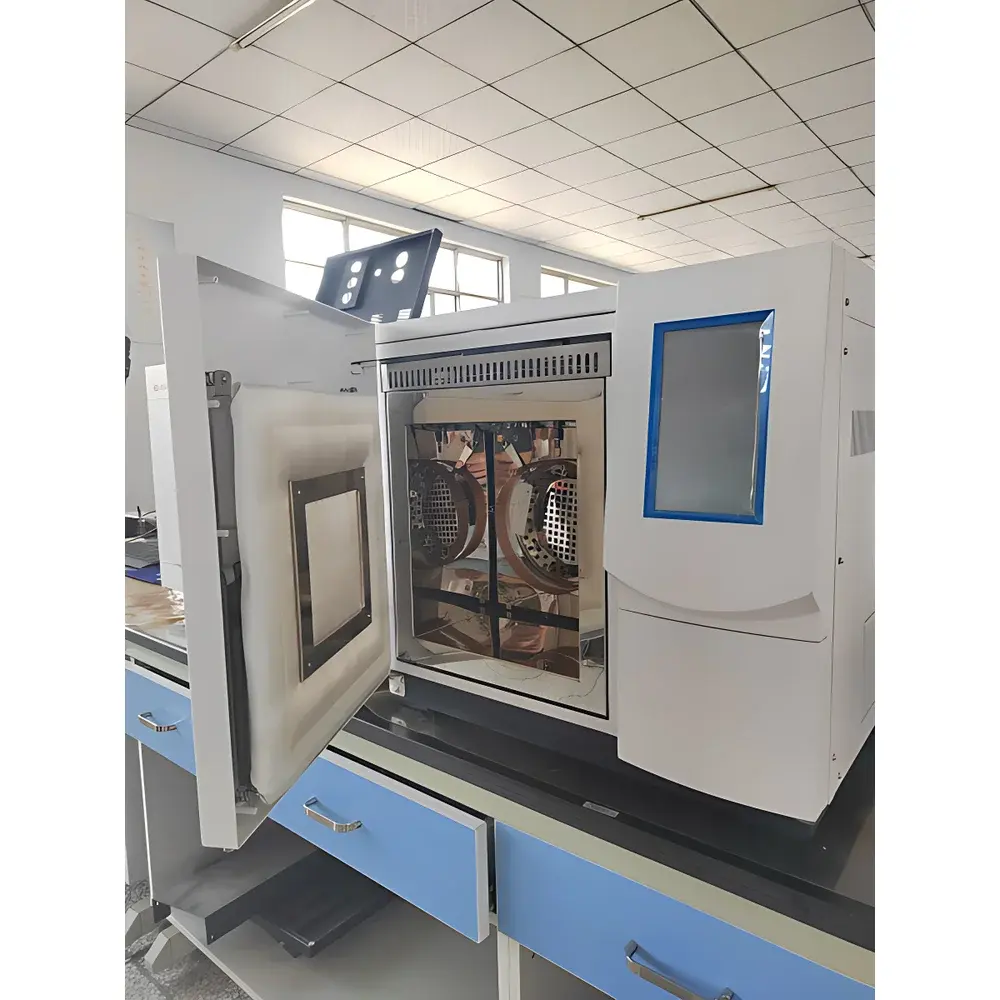
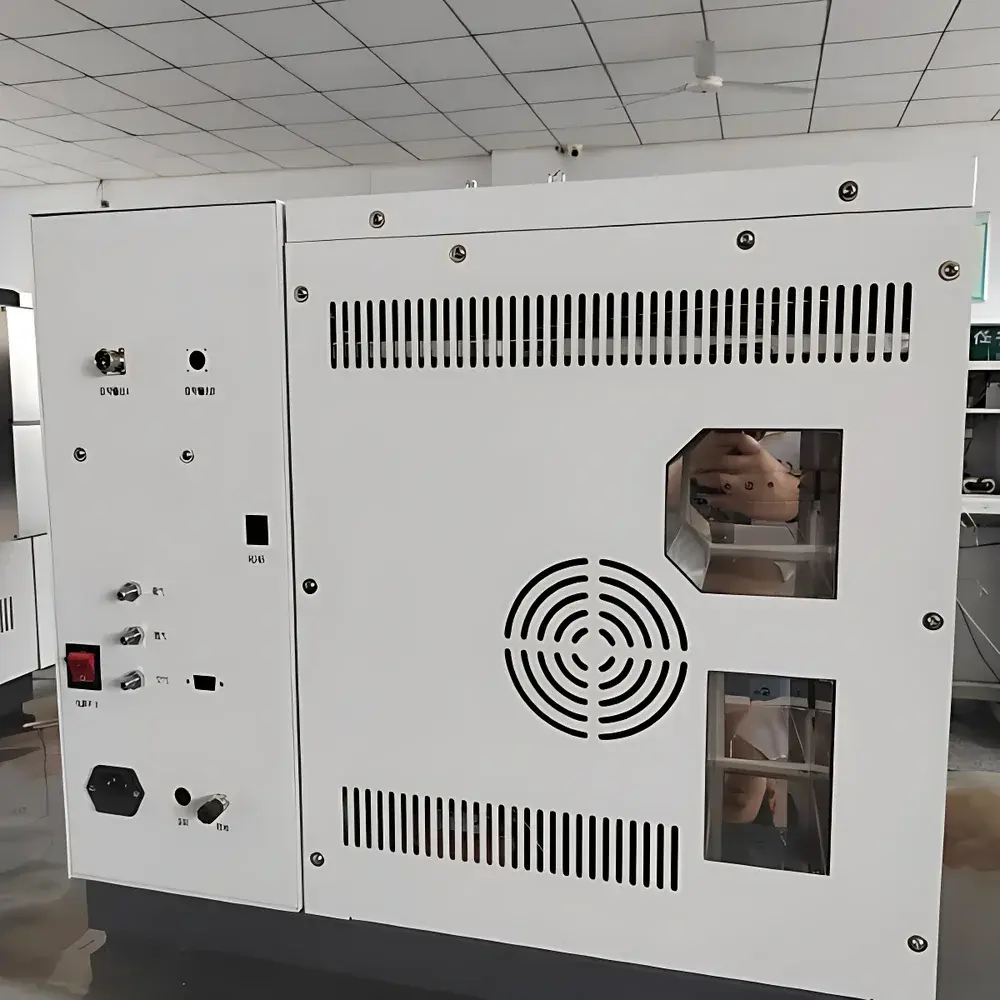
English Product Name
| Brand | Jinpu |
|---|---|
| Origin | Shandong, China |
| Manufacturer Type | Authorized Distributor |
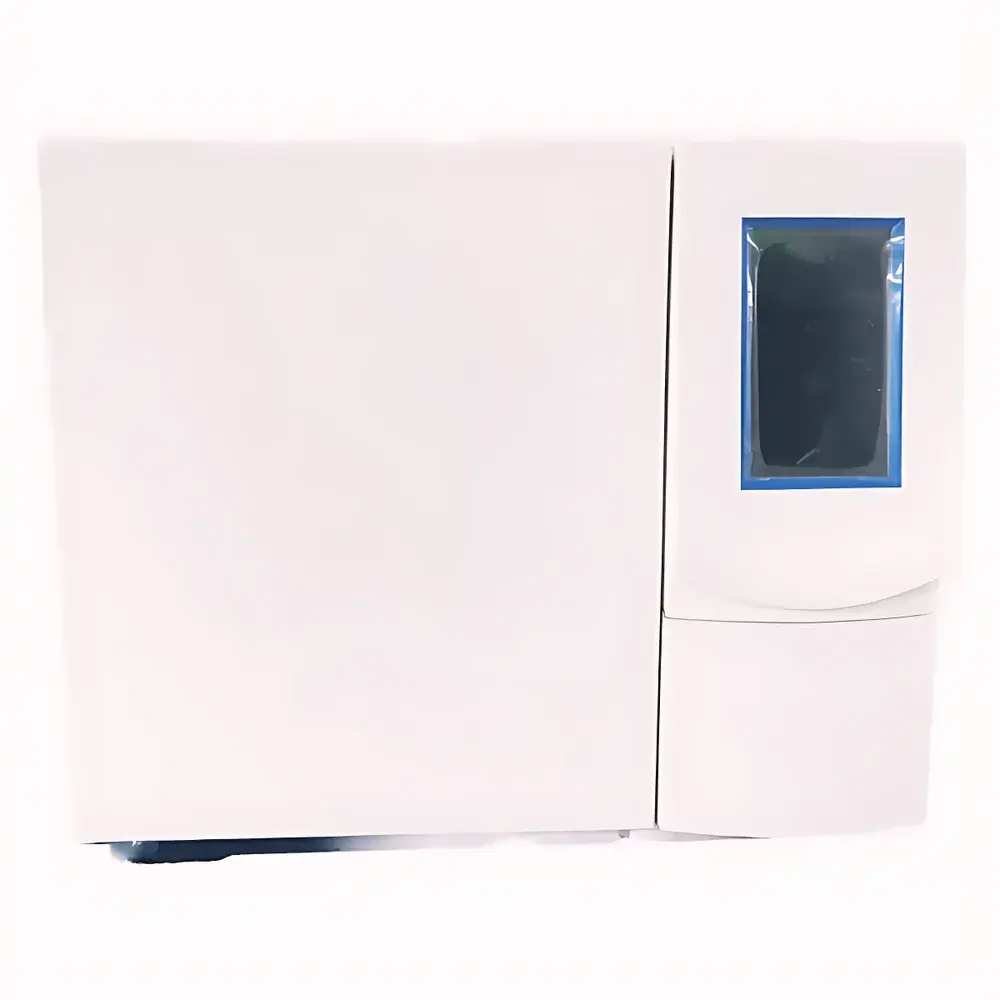
| Instrument Type | Laboratory Gas Chromatograph |
| Model | GC-7890 Touchscreen |
| Application Field | Environmental Monitoring & Food & Beverage Quality Control |
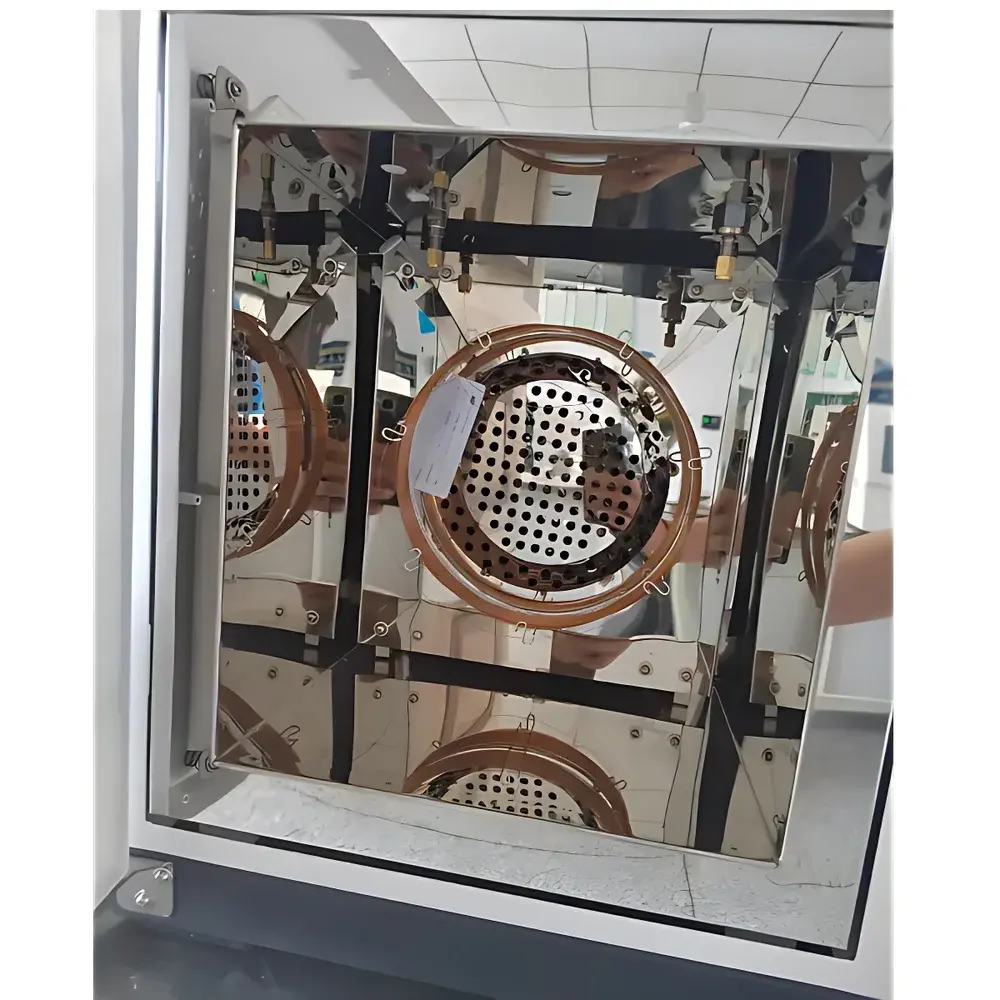
| Column Oven Temperature Range | +5 °C to 450 °C (0.1 °C increments) |
| Temperature Accuracy | ±0.1 °C |
| Max Heating Rate | 40 °C/min |
| Cooling Capability | Down to –80 °C with cryogenic coolant (dry ice or liquid nitrogen) |
| Detector Options | Dual FID, Dual TCD, FID+TCD, plus ECD, NPD, FPD |
| Simultaneous Column Configuration | Two packed columns + one capillary column, or two capillary columns |
| Independent Injector & Detector Zones | Six temperature-controlled zones |
| Programmed Temperature Ramping | Up to 7 steps |
| Power Supply | AC 220 V ±10%, 50 Hz, 2.2 kW |
| Dimensions | 660 × 460 × 465 mm |
| Weight | 60 kg |
Overview
The Jinpu GC-7890 Touchscreen Gas Chromatograph is a modular, high-stability laboratory gas chromatograph engineered for precise separation and quantification of volatile organic compounds (VOCs) in complex matrices. Designed specifically for regulatory-compliant analysis of non-methane hydrocarbons (NMHC), benzene–toluene–ethylbenzene–xylene (BTEX), ethylene oxide (EtO), and volatile congeners in baijiu (Chinese distilled spirits), it implements robust capillary and packed-column gas chromatography based on differential partitioning in a temperature-programmed stationary phase. The system supports both flame ionization detection (FID) and thermal conductivity detection (TCD) as primary quantitation methods, with optional electron capture (ECD), nitrogen–phosphorus (NPD), and flame photometric (FPD) detectors for targeted trace-level residue analysis. Its architecture complies with fundamental requirements for method validation under ISO/IEC 17025 and supports data integrity practices aligned with FDA 21 CFR Part 11 when paired with compliant chromatography data systems (CDS).
Key Features
- 10.1-inch capacitive touchscreen interface with dual-language support (English/Chinese), enabling intuitive instrument control and real-time parameter monitoring without external PC dependency.
- Advanced thermal management system featuring six independently controlled temperature zones, including dual inlet ports and detector compartments — all with PID-based regulation and ±0.1 °C stability over 100–360 °C ramping profiles.
- Seven-stage programmable oven temperature ramping with 0.1 °C resolution; rapid cooling to –80 °C using dry ice or liquid nitrogen for enhanced peak resolution of low-boiling analytes such as ethylene oxide.
- Comprehensive hardware-level safety protocols: platinum resistance thermometer (PRT) open/short circuit diagnostics, over-temperature cutoff, power-fail recovery, carrier gas failure detection, and automatic flame-out protection for FID.
- Modular detector bay supporting concurrent installation of up to three detectors — e.g., dual FID for parallel calibration and sample analysis, or FID/TCD/ECD for multi-analyte screening — with dedicated high-voltage and current-regulated power supplies.
- Patented integrated heating module (ZL 2012 20286908.X) and auto-sampling trigger mechanism (ZL 2012 20285852.6) ensure reproducible injection timing and thermal equilibration across repeated runs.
- Expandable front-end compatibility with commercial autosamplers, headspace samplers, thermal desorbers, and gas sampling valves — enabling full automation for unattended operation in routine QC laboratories.
Sample Compatibility & Compliance
The GC-7890 accommodates gaseous, liquid, and solid-phase samples via multiple injection modalities: split/splitless liquid injection, purge-and-trap, static/dynamic headspace, and direct gas valve injection. It meets essential performance criteria for environmental VOC analysis per EPA Method TO-17 (for EtO), ASTM D5504 (for sulfur compounds), and GB/T 16129–1995 (for formaldehyde and NMHC in ambient air). For baijiu analysis, it fulfills Chinese national standard GB 5009.266–2016 for ethyl carbamate and volatile ester profiling. All detector configurations are calibrated using certified reference standards traceable to NIST SRMs. The system’s hardware design supports GLP/GMP audit readiness through deterministic signal acquisition, non-volatile event logging, and mechanical interlocks preventing unauthorized configuration changes during active sequences.
Software & Data Management
While the GC-7890 operates autonomously via its embedded touchscreen controller, it exports analog and digital signals (via optional built-in 16-bit ADC) compatible with third-party CDS platforms including Chromeleon, OpenLab CDS, and Empower. Raw chromatogram files adhere to ASTM E1947-compliant formats (.cdf or .dx), ensuring interoperability with LIMS environments. Audit trails record user actions, method modifications, calibration events, and system errors with timestamped entries. When integrated with validated software, the platform satisfies electronic record retention requirements under 21 CFR Part 11, including role-based access control, electronic signatures, and immutable data archiving. Firmware updates are delivered via USB and include version-controlled release notes and regression-tested validation reports.
Applications
- Environmental laboratories performing NMHC speciation and BTEX monitoring in ambient air, stack emissions, and soil vapor extraction streams.
- Pharmaceutical facilities conducting residual solvent testing (e.g., EtO sterilant residuals in medical devices) per ICH Q2(R2) guidelines.
- Food & beverage QA/QC labs quantifying volatile flavor compounds, off-notes, and process contaminants (e.g., acetaldehyde, diacetyl, ethyl carbamate) in baijiu and other traditional spirits.
- Public health institutes screening for aromatic hydrocarbons in drinking water and indoor air using EPA Method 8260D-compliant workflows.
- Research institutions developing multidimensional GC (GC×GC) methods using serial column switching and backflush capabilities enabled by the dual-inlet, triple-detector configuration.
FAQ
Does the GC-7890 support compliance with US EPA Method TO-15 for ambient air VOC analysis?
Yes — when configured with a cryogenically cooled trap, splitless injection, and FID/ECD detection, it meets retention time window, sensitivity, and calibration linearity requirements outlined in TO-15, provided column selection and method parameters follow specified protocols.
Can the instrument operate without a connected PC?
Yes — all method setup, run control, basic integration, and report generation can be performed directly via the onboard touchscreen interface. A PC is only required for advanced data processing or LIMS integration.
What is the minimum detectable concentration for benzene using the standard FID configuration?
Under optimized conditions (30 m × 0.32 mm ID × 1.0 µm film thickness column, 1 µL splitless injection), the system achieves a practical quantitation limit of ≤50 ng/mL for benzene in aqueous standards, consistent with ISO 8518 and GB/T 5750.8–2023 requirements.
Is remote monitoring or network connectivity supported?
The base unit includes Ethernet and RS-232 ports for remote status polling and alarm notification. Full remote control requires integration with vendor-validated CDS software running on a networked host workstation.
Are consumables and service parts available outside mainland China?
Yes — Jinpu maintains authorized distribution channels in Southeast Asia, the Middle East, and Latin America. Critical spares including injectors, detector components, and column nuts are stocked regionally and shipped with OEM-certified documentation.




