
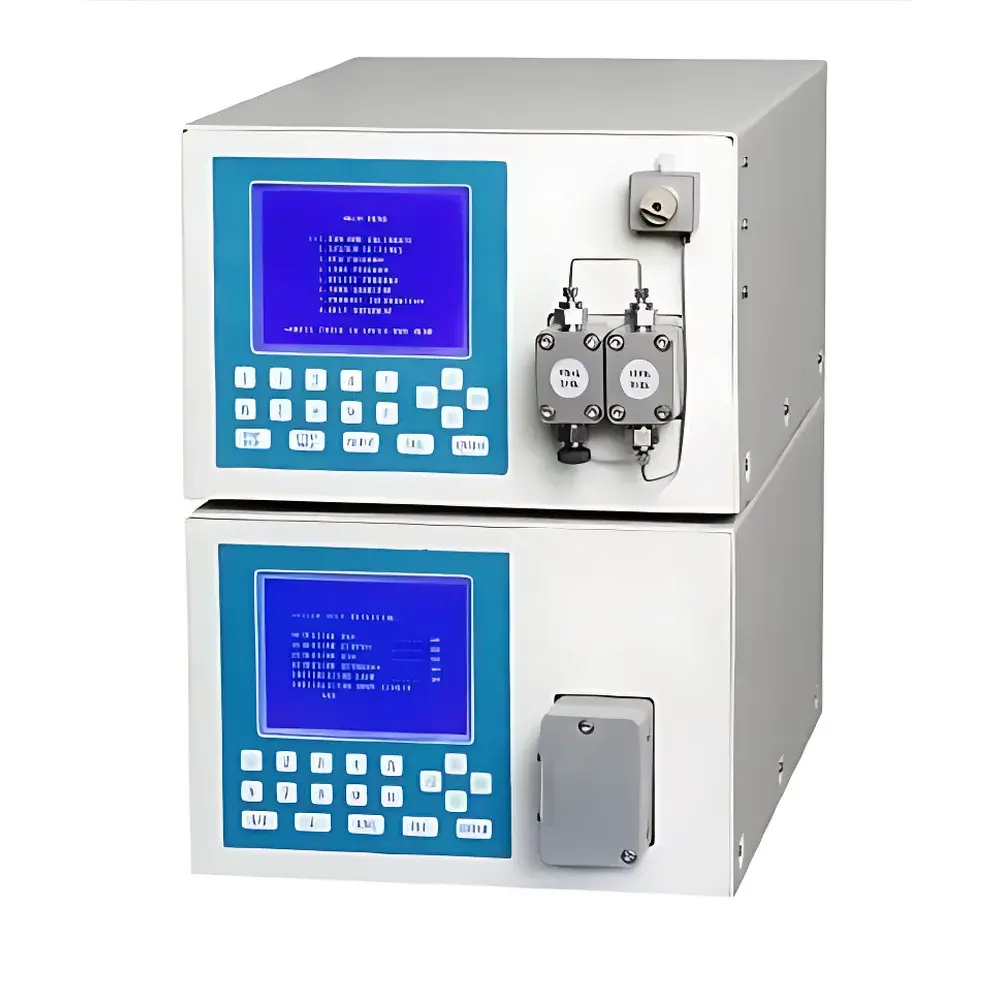
Golden Promise LC-3000 Melamine Analyzer
| [Brand | Golden Promise |
|---|---|
| Model | LC-3000 |
| Type | HPLC-Based Melamine Quantification System |
| Origin | Shandong, China |
| Instrument Class | Benchtop Liquid Chromatograph for Targeted Small-Molecule Analysis |
| Detection Principle | UV-Vis Absorption at 240 nm with Diode Array or Fixed-Wavelength UV Detector |
| Column Compatibility | Reversed-Phase C8/C18 (e.g., 250 mm × 4.6 mm, 5 µm) |
| Flow Rate Range | 0.1–2.0 mL/min |
| Column Oven Temperature Control | Ambient to 60 °C |
| Sample Injection Volume | 5–100 µL (manual or optional autosampler-ready) |
| Regulatory Alignment | Designed for ASTM D7968-19, ISO 17394:2015, and GB/T 22388–2008 compliant workflows |
| Software | PC-based chromatography data system (CDS) with peak integration, calibration curve generation (linear/non-linear), audit trail, and report export (PDF/CSV)] |
Overview
The Golden Promise LC-3000 Melamine Analyzer is a dedicated high-performance liquid chromatography (HPLC) system engineered for the precise, reproducible quantification of melamine in complex food and feed matrices. It operates on the principle of reversed-phase liquid chromatography coupled with ultraviolet detection at 240 nm—a wavelength selected for optimal molar absorptivity of the triazine ring structure in melamine. The system implements an ion-pairing mobile phase (citric acid/sodium octanesulfonate buffer with acetonitrile) to enhance retention and resolution of melamine against co-extracted interferences—particularly critical in dairy-derived samples where casein hydrolysates, lactose derivatives, and residual fats may compromise separation fidelity. Unlike generic HPLC platforms, the LC-3000 integrates pre-configured method templates aligned with internationally recognized protocols—including GB/T 22388–2008 (China), ISO 17394:2015 (Foodstuffs — Determination of melamine), and ASTM D7968-19 (Standard Test Method for Melamine in Animal Feed)—ensuring analytical continuity across regulatory testing laboratories, QC facilities, and contract research organizations. Its architecture supports both manual injection and future expansion with a 100-position autosampler, making it suitable for low-to-medium throughput environments requiring GLP-compliant traceability.
Key Features
- Dedicated HPLC platform optimized for melamine analysis—no reconfiguration required for routine operation
- Stable dual-pump gradient or isocratic delivery system with pulse-dampened flow control (±0.2% RSD)
- UV-Vis detector featuring fixed-wavelength mode at 240 nm and optional diode array scanning (190–400 nm) for spectral confirmation
- Column oven with ±0.5 °C temperature stability over 30–60 °C range, critical for retention time reproducibility
- Integrated solvent degassing module and backpressure regulator to minimize baseline noise and bubble-induced signal drift
- Pre-validated method package including mobile phase preparation protocols, column equilibration times, and system suitability criteria (e.g., tailing factor 2.0 vs. melamine analogs)
Sample Compatibility & Compliance
The LC-3000 accommodates a broad spectrum of regulated sample types without hardware modification: liquid milk, UHT-treated dairy beverages, yogurt, infant formula powders, whey protein concentrates, soy-based infant foods, and compound animal feeds. Sample preparation follows standardized protein precipitation (using sulfosalicylic acid), acid extraction (0.1 mol/L HCl), and centrifugal clarification (≥4,000 × g), followed by 0.45 µm syringe filtration prior to injection. All operational parameters comply with Good Laboratory Practice (GLP) requirements: electronic logs capture instrument status, user ID, method version, and sequence timestamps. Data files adhere to FDA 21 CFR Part 11 principles via secure user authentication, electronic signatures, and immutable audit trails within the bundled chromatography data system (CDS). The system satisfies ISO/IEC 17025 accreditation prerequisites for testing laboratories performing melamine verification under national food safety mandates.
Software & Data Management
The LC-3000 ships with Golden Promise ChromaSuite™ v3.x—a validated, Windows-based chromatography data system supporting method development, acquisition, processing, and reporting. Key capabilities include: automatic calibration curve fitting (linear, quadratic, or weighted least-squares), forced baseline correction algorithms for low-concentration samples (<0.25 µg/mL), real-time peak purity assessment using spectral overlay, and automated system suitability report generation (including plate count, asymmetry, and %RSD of replicate injections). All raw data (.raw), processed results (.csv), and audit logs are stored in a relational database with role-based access control. Export options include PDF analytical reports compliant with ISO 17025 clause 7.8.2, as well as CSV files compatible with LIMS integration. Software validation documentation (IQ/OQ/PQ summaries) is provided per request for regulated users.
Applications
- Quantitative determination of melamine in raw milk and pasteurized dairy products per GB/T 22388–2008
- Verification of melamine absence in infant formula and follow-on formulas under Codex Alimentarius Standard 72–1981
- Screening of animal feed ingredients for adulteration with melamine-containing nitrogen boosters
- Method transfer support for laboratories adopting ISO 17394:2015 or AOAC Official Method 2007.01
- Stability-indicating analysis of melamine degradation products (e.g., ammeline, ammelide, cyanuric acid) using optional DAD functionality
FAQ
Does the LC-3000 meet FDA or EU regulatory requirements for melamine testing?
Yes—the system’s performance specifications, software architecture, and documented validation approach align with FDA guidance for chromatographic methods in food safety testing and EU Commission Regulation (EC) No 401/2006 Annex I requirements for melamine in feed materials.
Can the LC-3000 analyze other triazine contaminants beyond melamine?
With minor method adjustments (e.g., mobile phase pH tuning and gradient optimization), the platform supports concurrent quantification of cyanuric acid, ammeline, and ammelide—enabling comprehensive triazine residue profiling per ISO 17394:2015 Annex B.
Is column lifetime monitored automatically?
ChromaSuite™ includes column usage tracking with configurable alerts based on total eluent volume, pressure trends, and peak shape deterioration metrics—supporting predictive maintenance and compliance with ISO/IEC 17025 clause 6.4.10.
What sample preparation accessories are recommended?
We recommend certified 0.45 µm PTFE syringe filters (non-sterile), vortex mixers with variable speed (0–3,000 rpm), refrigerated centrifuges (4 °C, ≥4,000 × g), and Class I analytical balances (0.1 mg readability) for full workflow adherence.
Is remote diagnostics supported?
Yes—optional Ethernet-enabled remote monitoring allows qualified service engineers to perform preliminary diagnostics and firmware updates while preserving data integrity and network security per IEC 62443-3-3.





