
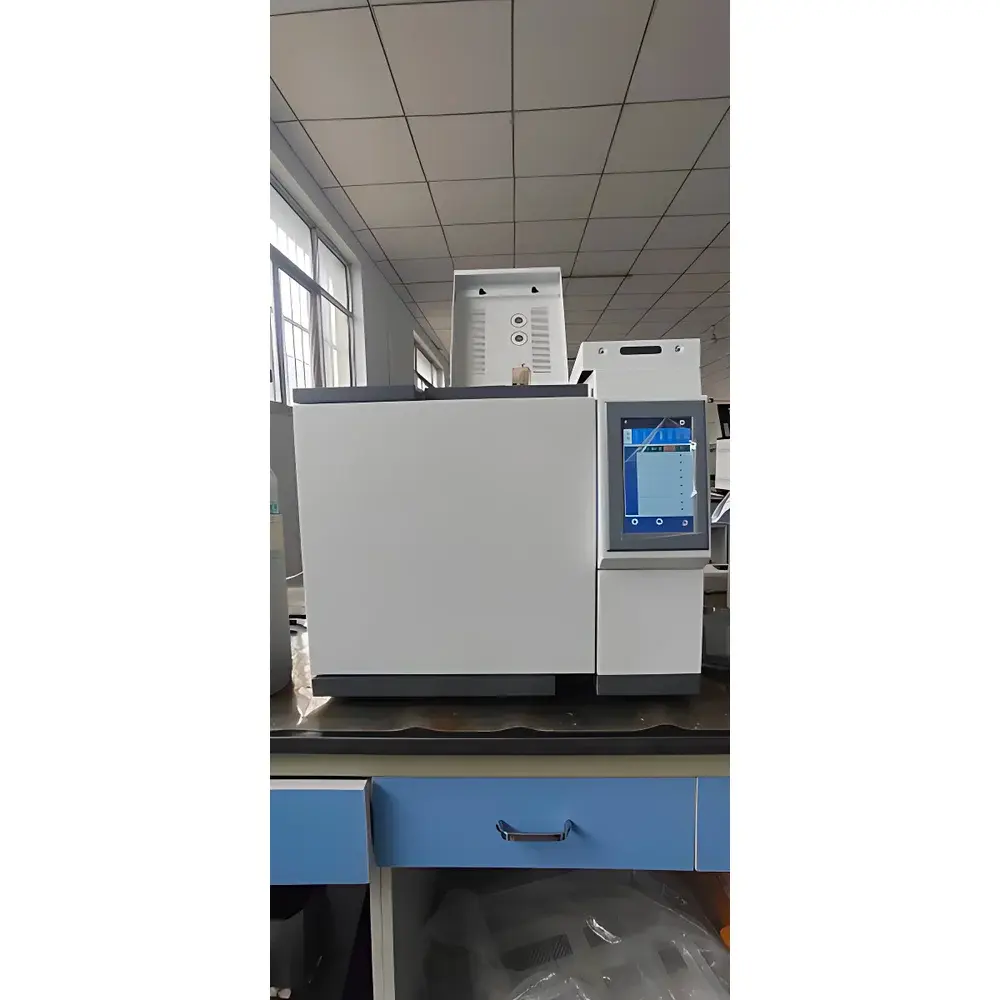
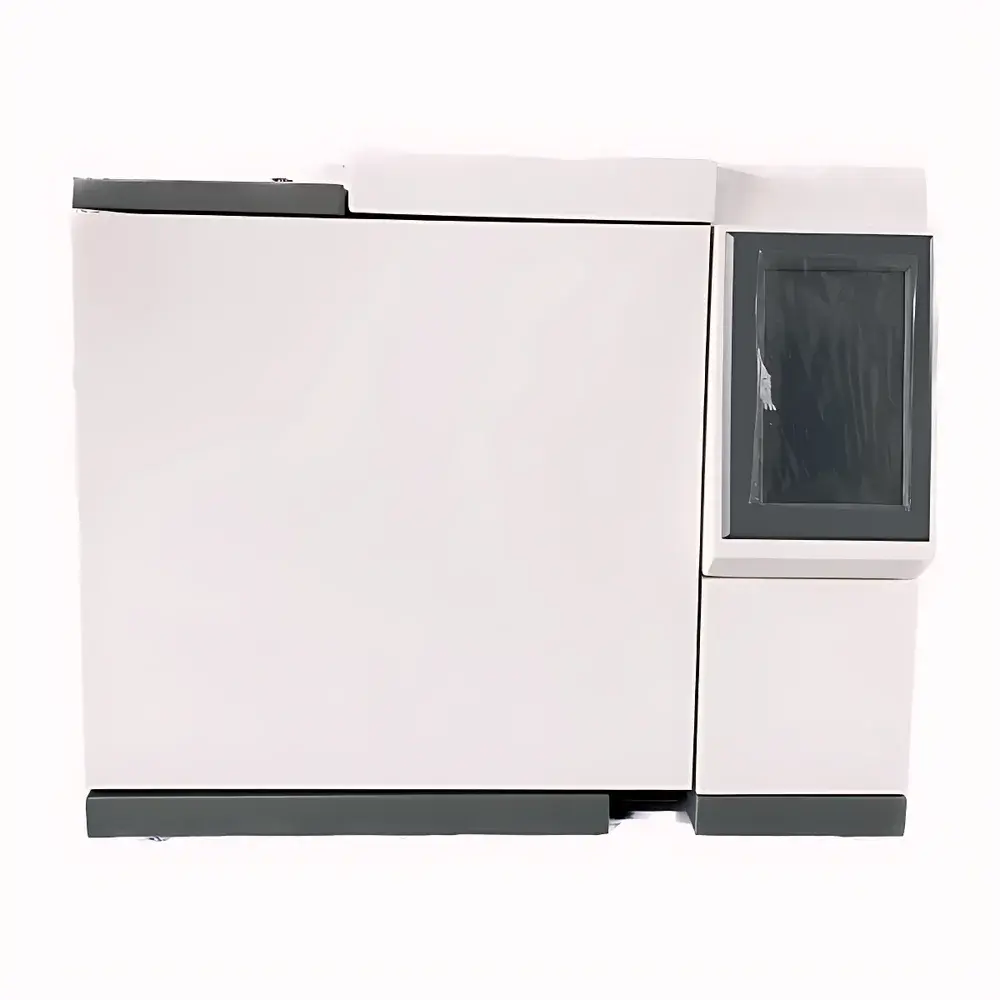
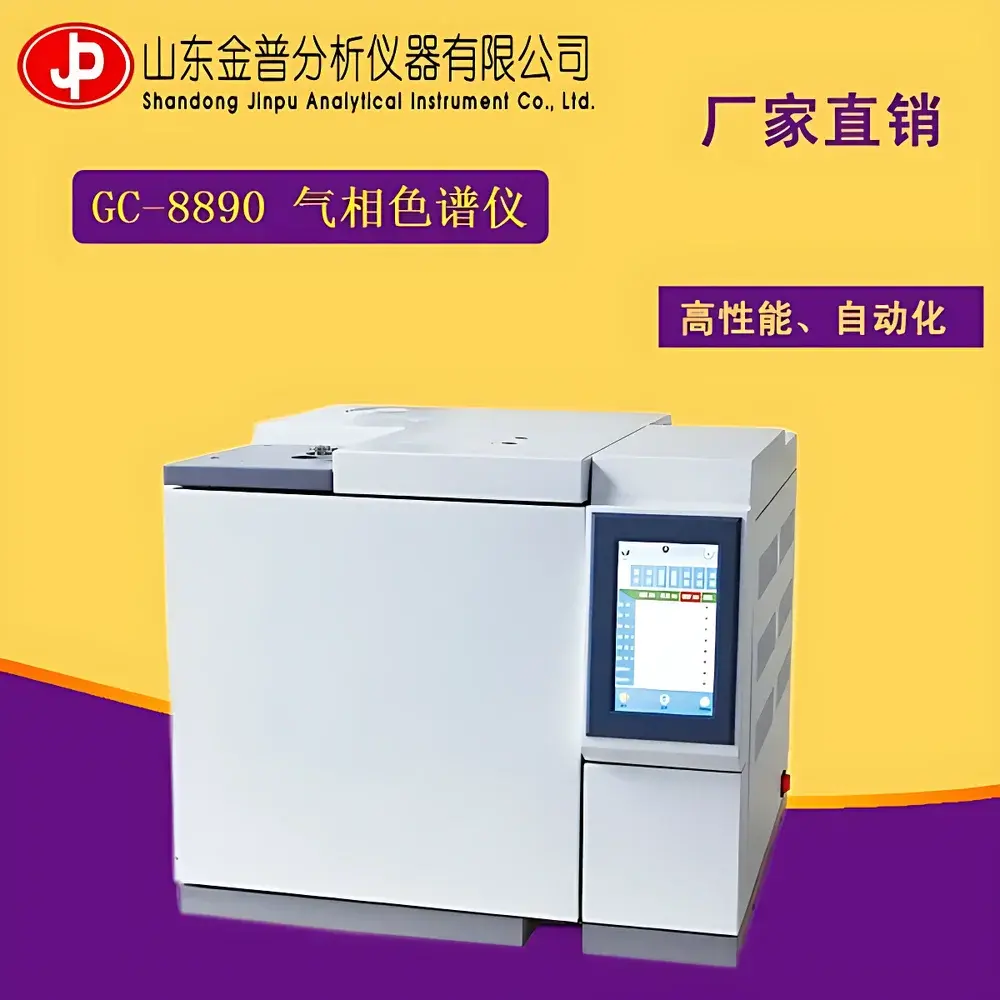
Jinpu GC-8890 Laboratory Gas Chromatograph
| Brand | Jinpu |
|---|---|
| Origin | Shandong, China |
| Model | GC-8890 |
| Instrument Type | Laboratory Gas Chromatograph |
| Application Scope | General-purpose |
| Temperature Control Range | 4 °C above ambient to 450 °C (1 °C increment |
| Oven Ramp Rate | 0.1–80 °C/min |
| Cooling Rate | 450 °C → 50 °C in ≤6 min |
| Carrier Gas Flow Range & Control | 0–1000 mL/min (4-program segments) |
| Carrier Gas Pressure Range & Control | 0–500 kPa (4-program segments) |
| Injector Max Temp | 450 °C |
| Injector Pressure Setting Range | 0–500 kPa |
| Injector Total Flow Setting Range | 0–1000 mL/min |
Overview
The Jinpu GC-8890 is a high-performance, general-purpose laboratory gas chromatograph engineered for precision, stability, and operational flexibility in routine and method-development environments. Built upon a robust dual-oven architecture with advanced thermal management, it employs conventional packed or capillary column separation coupled with universal detection modalities—including Flame Ionization Detection (FID), Thermal Conductivity Detection (TCD), Electron Capture Detection (ECD), Flame Photometric Detection (FPD), and Nitrogen-Phosphorus Detection (NPD). Its core analytical principle relies on differential partitioning of volatile and semi-volatile analytes between a mobile phase (inert carrier gas) and a stationary phase (column coating), enabling high-resolution separation based on boiling point, polarity, and molecular interaction affinity. Designed for compliance-critical workflows, the GC-8890 supports full audit trail generation, electronic signature readiness, and integration into GLP/GMP-compliant laboratories when paired with validated software.
Key Features
- 6 independent temperature-controlled zones—including oven, up to 3 injectors, and up to 2 detectors—with programmable ramping (16 heating/cooling steps) and ±0.1 °C thermal stability.
- Digital Electronic Pressure Control (EPC) and Electronic Flow Control (EFC) systems supporting nitrogen, hydrogen, helium, and air across 16 simultaneous sensor channels; pressure resolution: 0.01 kPa; flow resolution: 0.01 sccm.
- High-speed thermal management: rapid oven ramp rates up to 80 °C/min and sub-6-minute cooling from 450 °C to 50 °C—enabling high-throughput batch analysis without thermal lag.
- Intelligent ignition system with auto-controlled H2/air solenoid sequencing, eliminating manual flame adjustment and enhancing safety and reproducibility.
- Dual automatic back-door mechanism that dynamically adjusts opening angle in response to oven temperature, optimizing heat dissipation and column stability during rapid cooling cycles.
- Integrated 5.7-inch color TFT display with dual-channel real-time chromatogram overlay and optional resistive touch interface for local instrument control and diagnostics.
- Four external event ports supporting multi-valve switching, enabling comprehensive multidimensional GC (MDGC) configurations including heart-cutting and comprehensive two-dimensional GC (GC×GC) setups.
- Native Ethernet (10/100BASE-T) connectivity enabling bidirectional remote control: one GC-8890 unit can be managed by up to three workstations simultaneously; conversely, a single workstation may supervise up to 5,000 GC units via centralized network deployment.
Sample Compatibility & Compliance
The GC-8890 accommodates a broad spectrum of sample matrices—including environmental water and soil extracts, petrochemical fractions, pharmaceutical residual solvents, food flavor volatiles, and forensic toxicology specimens—via multiple injection modalities: split/splitless liquid injection, headspace analysis (with compatible autosampler integration), pyrolysis, and purge-and-trap. All gas control modules are calibrated per ISO/IEC 17025 requirements and traceable to NIST standards. The system meets essential regulatory expectations for data integrity under FDA 21 CFR Part 11 when operated with compliant chromatography data systems (CDS), including secure user authentication, immutable audit trails, and electronic signature support. It is routinely deployed in laboratories performing ASTM D3606 (benzene/toluene in gasoline), USP (residual solvents), and EPA Method 8260/8021 analyses.
Software & Data Management
The GC-8890 operates with vendor-supplied CDS software featuring method editor, sequence scheduler, real-time spectral visualization, peak integration with customizable baseline algorithms, and automated calibration curve generation. Raw data files adhere to ASTM E1947-compliant formats and include embedded metadata (instrument parameters, operator ID, timestamp, environmental conditions). The software supports export to CSV, PDF, and AIA (.cdf) formats for LIMS integration. All parameter changes—including oven ramps, detector voltages, and EPC setpoints—are logged with user attribution and time stamps, satisfying GLP documentation requirements. Remote firmware updates and diagnostic telemetry are supported over standard TCP/IP networks without requiring physical access to the instrument.
Applications
- Environmental monitoring: quantification of VOCs (e.g., benzene, chloroform, tetrachloroethylene) in drinking water per EPA Method 524.2.
- Petrochemical QA/QC: hydrocarbon group-type analysis (PIONA) and simulated distillation (ASTM D5292/D5293) using dual-TCD/FID detection.
- Pharmaceutical quality control: residual solvent profiling (Class 1–3 solvents) in active pharmaceutical ingredients (APIs) per ICH Q3C guidelines.
- Food and flavor analysis: identification and quantification of esters, aldehydes, and terpenes in essential oils and fermented products.
- Forensic toxicology: detection of drugs of abuse (e.g., amphetamines, opioids) and metabolites in biological matrices using derivatized ECD/NPD protocols.
- Materials science: outgassing analysis of polymers and composites under thermal desorption-GC coupling.
FAQ
Does the GC-8890 support method transfer from legacy Agilent or Shimadzu instruments?
Yes—retention time alignment is achievable via retention index calibration and linear velocity matching. Column dimension and phase chemistry must match; software allows retention time window adjustment and peak re-identification.
Can the system operate unattended for overnight sequences?
Yes—when equipped with an autosampler and configured with scheduled shutdown, leak-check routines, and email alert triggers, the GC-8890 supports fully automated 24/7 operation with minimal intervention.
Is the EPC module field-upgradeable to support additional gas channels?
No—the hardware configuration is fixed at time of manufacture (16-channel max); however, firmware updates may extend protocol compatibility for new carrier gases or control algorithms.
What validation documentation is provided with the instrument?
Each unit ships with Factory Acceptance Test (FAT) report, Certificate of Conformance, and IQ/OQ templates aligned with ISO/IEC 17025 and GAMP5 principles. PQ execution requires site-specific reference standards and SOPs.
How does the dual back-door mechanism improve column lifetime?
By actively modulating airflow and thermal gradient distribution during cooling phases, it minimizes mechanical stress on fused-silica capillaries and prevents stationary phase degradation caused by abrupt thermal contraction.
Related Products





