
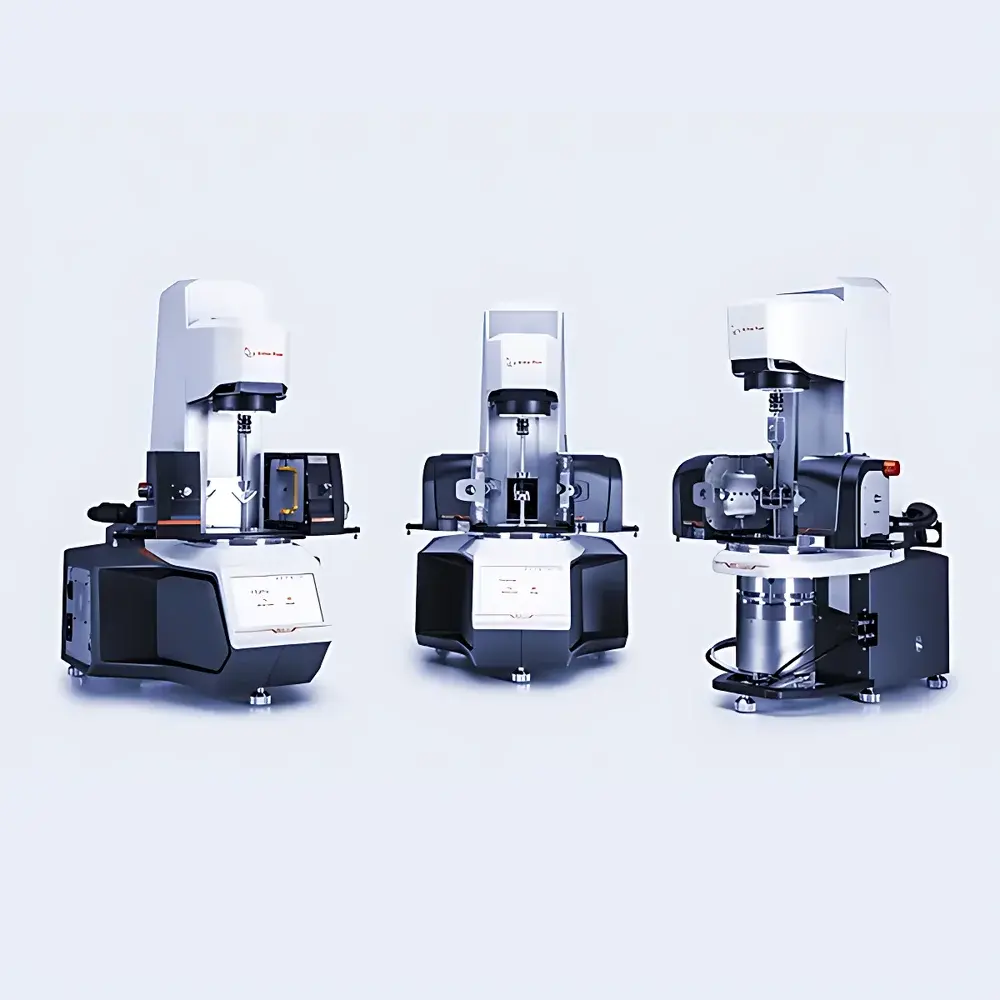
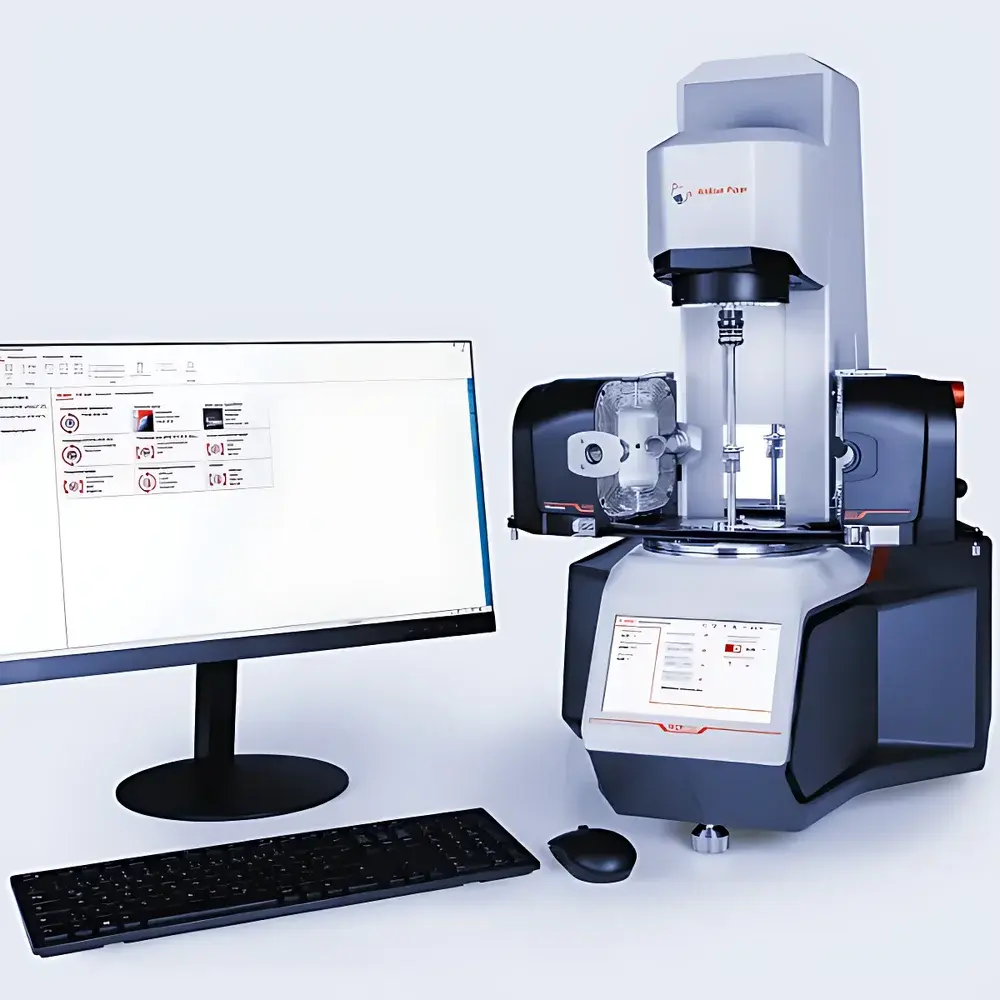
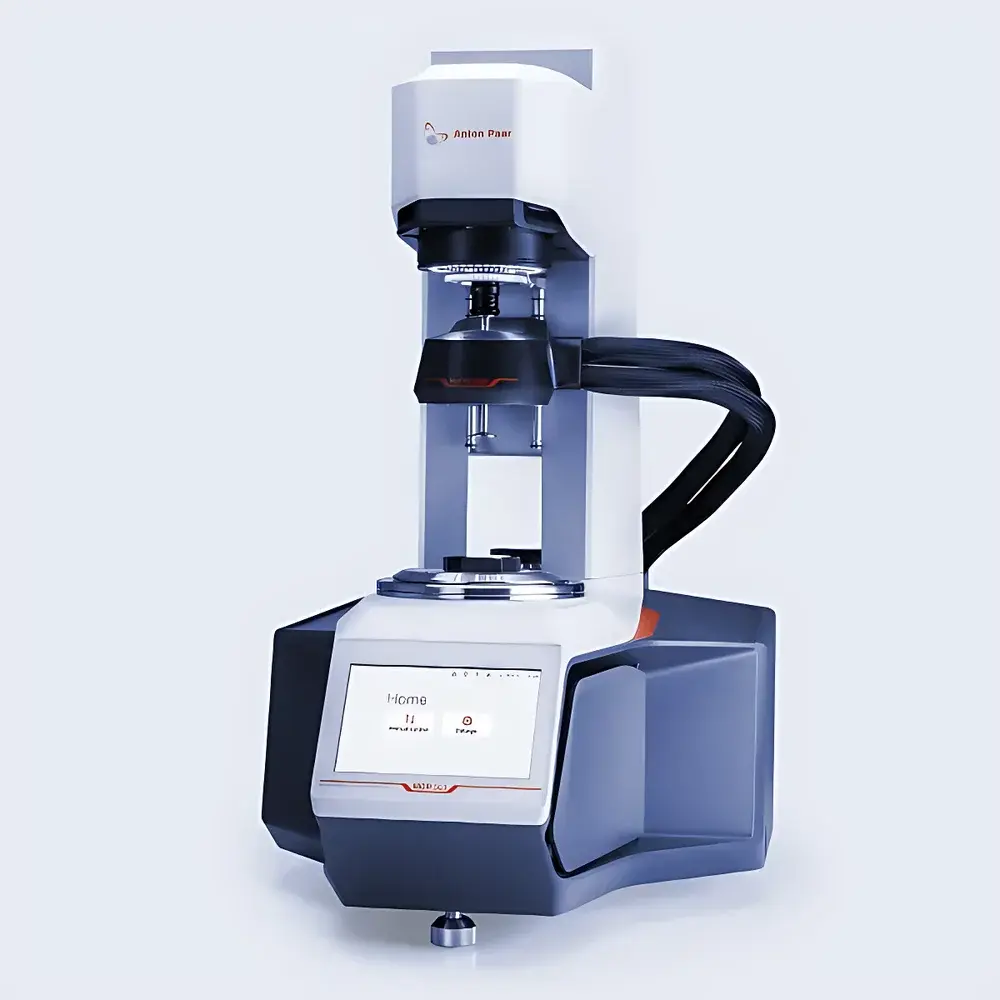
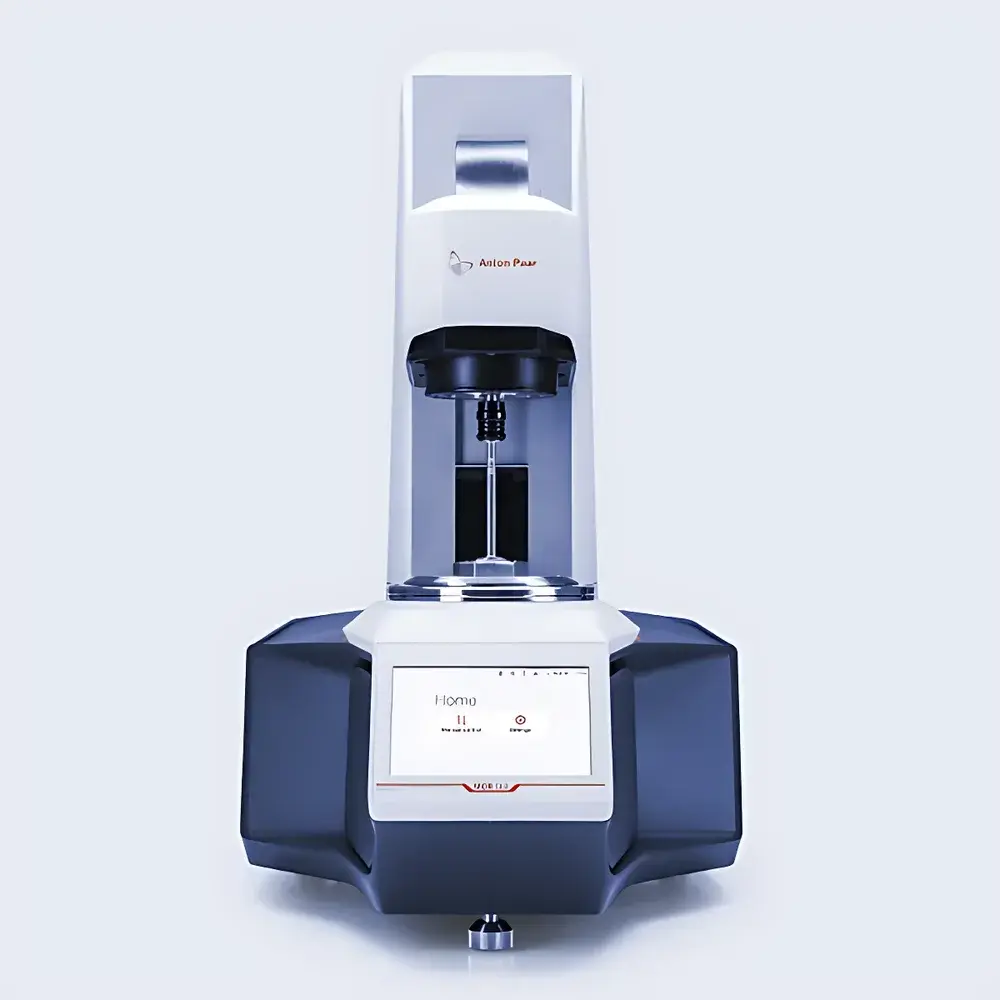
Anton Paar MCR Series High-Temperature High-Pressure Rotational Rheometer
| Brand | Anton Paar |
|---|---|
| Origin | Austria |
| Manufacturer Type | Original Equipment Manufacturer (OEM) |
| Product Origin | Imported |
| Model | MCR Series |
| Instrument Type | Rotational Rheometer |
| Sample State | Liquid |
| Bearing Type | Air Bearing |
| Temperature Range | −160 °C to 1000 °C |
| Minimum Rotational Speed | 0 rpm |
| Frequency Range | 2×10⁻⁸ to 200 rad/s |
| Maximum Rotational Speed | 3000 rpm |
| Maximum Torque | 300 mNm |
| Torque Resolution | 0.05 nNm |
Overview
The Anton Paar MCR Series is a modular, high-performance rotational rheometer platform engineered for precision viscoelastic characterization under extreme thermal and mechanical conditions. Based on Couette and cone-plate rheometry principles, the MCR series employs air-bearing-supported motor systems and high-fidelity optical encoders to deliver exceptional torque sensitivity and angular displacement resolution—critical for measuring weak structural recovery in soft matter, time-dependent yielding in complex fluids, and high-temperature polymer melt behavior. Its design supports both controlled shear rate (CSR) and controlled shear stress (CSS) modes, enabling rigorous compliance with ISO 6721, ASTM D4440, and ISO 3219 standards for rheological testing. The system’s wide temperature range—from cryogenic (−160 °C) to ultra-high-temperature (1000 °C) environments—is achieved via interchangeable temperature modules including Peltier, liquid nitrogen, and furnace-based systems, making it suitable for R&D labs and industrial QC facilities requiring traceable, GLP-compliant material qualification.
Key Features
- Modular architecture supporting seamless upgrades from basic viscosity measurement to advanced material characterization (e.g., DMA, LAOS, friction rheology)
- Air-bearing motor with electronic commutated (EC) permanent magnet synchronous drive—ensuring zero mechanical friction, minimal inertia, and long-term calibration stability
- Integrated 360° capacitive normal force sensor—enabling precise axial load control and real-time correction during large-amplitude oscillatory shear (LAOS) or extensional deformation
- TruStrain™ technology (optional)—provides true strain control in rotational and extensional modes, eliminating geometric approximation errors inherent in conventional rheometers
- 7-inch capacitive touchscreen with RheoCompass 2.0 software interface—supporting multilingual operation, guided workflows, and context-aware parameter validation
- Toolmaster® auto-recognition system—automatically detects and configures transducers, geometry, and temperature modules upon attachment, reducing setup errors and operator training time
- Fast instrument boot-up (<6 seconds) and accelerated frequency sweeps (up to 60% faster between 0.1–100 Hz), enhancing throughput in high-volume testing environments
Sample Compatibility & Compliance
The MCR Series accommodates liquid, paste, and low-viscosity semi-solid samples using standard geometries (cone-plate, parallel-plate, concentric cylinder) and specialized fixtures (e.g., vane, serrated plates, elongational nozzles). All configurations maintain full compatibility with ISO/IEC 17025-accredited laboratories and support FDA 21 CFR Part 11-compliant audit trails when deployed with RheoCompass Enterprise Edition. The system meets mechanical safety requirements per EN 61000-6-2/6-4 and electromagnetic compatibility standards for laboratory instrumentation. Temperature modules are certified to IEC 60584 (thermocouple accuracy) and ASTM E1142 (high-temperature furnace calibration), ensuring metrological traceability across the entire operating range.
Software & Data Management
RheoCompass 2.0 serves as the unified software environment for instrument control, data acquisition, and analysis. It includes over 250 pre-validated method templates aligned with USP , ISO 1628, and ASTM D3835 protocols. The software supports customizable reporting, automated pass/fail evaluation against user-defined specification limits, and export of raw data in ASCII, HDF5, or vendor-neutral RheoML format. For regulated environments, optional RheoCompass Enterprise adds role-based access control, electronic signatures, and full 21 CFR Part 11 compliance—including immutable audit logs, data integrity checks, and secure archiving. All firmware updates are digitally signed and delivered via encrypted channels to maintain system integrity throughout its lifecycle.
Applications
- High-temperature polymer processing simulation (e.g., melt fracture prediction, die swell modeling)
- Thermoset curing kinetics under isothermal and dynamic temperature ramps
- Colloidal gelation and thixotropic recovery in pharmaceutical suspensions and injectables
- Geothermal drilling fluid rheology at elevated pressure and temperature (HPHT)
- Carbon black dispersion quality assessment in rubber compounds
- Food texture profiling under shear and thermal cycling (e.g., chocolate tempering, starch retrogradation)
- Fuel and lubricant oxidation stability evaluation via time-resolved modulus tracking
FAQ
What temperature control options are available for the MCR Series?
The system supports Peltier-cooled (H-PTD 200/Air), liquid nitrogen cryostat (LCC), and high-temperature furnace (HTF) modules—each independently calibrated and validated for ±0.1 °C accuracy across their respective ranges.
Can the MCR Series perform extensional rheology?
Yes—when equipped with the Linear Drive 20 module and appropriate fixtures (e.g., SENT, Capillary Breakup Extensional Rheometer), it enables uniaxial extensional measurements compliant with ISO 19991 and ASTM D8115.
Is remote monitoring and control supported?
RheoCompass 2.0 includes integrated VNC server functionality and RESTful API endpoints for integration into LIMS and MES platforms, enabling secure off-site operation and automated test scheduling.
How does the air bearing contribute to measurement accuracy?
The porous carbon air bearing eliminates mechanical contact, delivering sub-nanoradian angular resolution and torque noise floor below 0.05 nNm—essential for detecting subtle structural transitions in dilute biopolymer solutions.
Are GMP/GLP documentation packages available?
Yes—Anton Paar provides IQ/OQ/PQ documentation kits, 21 CFR Part 11 validation support packages, and on-site qualification services performed by certified field application engineers.



