
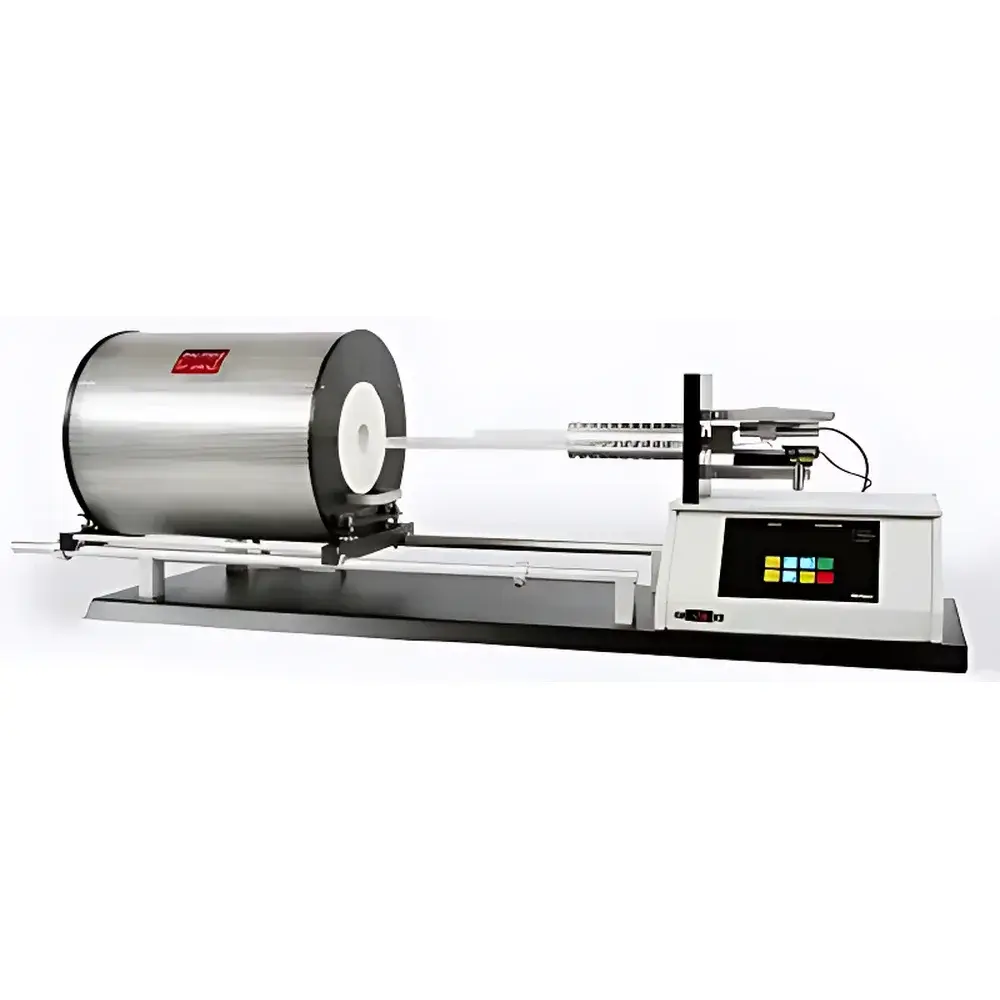
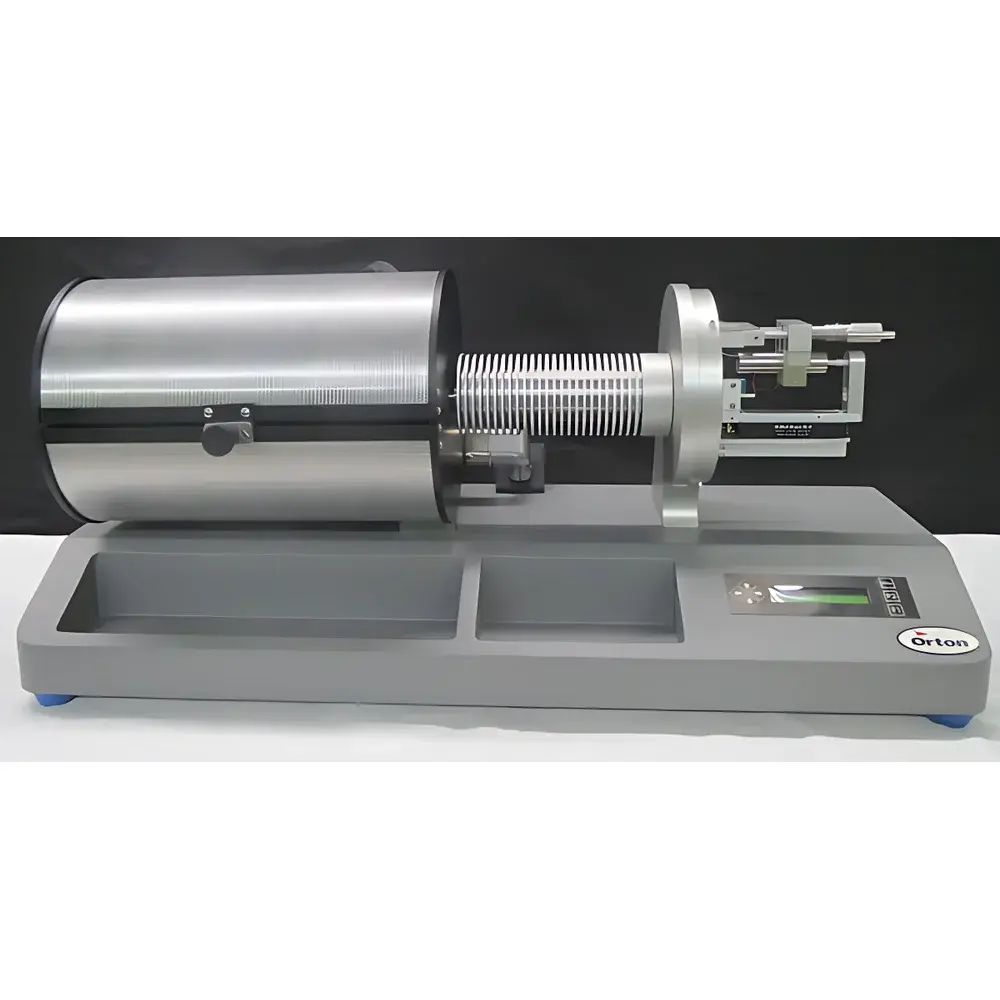
Orton DIL 2000 Series Digital Horizontal Dilatometer
| Brand | Orton |
|---|---|
| Origin | USA |
| Model | DIL 2000 Series |
| Max Operating Temperature | 1000 °C (DIL 2010), 1200 °C (DIL 2020), 1600 °C (DIL 2030) |
| Low-Temp Capability | Down to –196 °C (with LN₂ cooling option, DIL 2010C) |
| Sample Dimensions | Up to 50 mm length × 20 mm diameter |
| Repeatability | ±0.004 PLC |
| Heating Rate | 1–30 °C/min |
| Temperature Resolution | 0.1 °C |
| Atmosphere Control | Optional inert/vacuum/oxidizing gas environments |
| Calibration Standards | Included (fused quartz, α-alumina, NIST-traceable reference materials) |
Overview
The Orton DIL 2000 Series Digital Horizontal Dilatometer is a precision thermal expansion measurement system engineered for high reproducibility and traceable dimensional analysis under controlled thermal conditions. Based on the principle of contact-based linear displacement detection via Linear Variable Differential Transformer (LVDT) transduction, it quantifies minute changes in sample length as a function of temperature during programmed heating or cooling cycles. Designed in strict conformance with ASTM E228 (Standard Test Method for Linear Thermal Expansion of Solid Materials With a Push-Rod Dilatometer) and ASTM C372 (Standard Test Method for Linear Thermal Expansion of Glass), the instrument delivers metrologically sound data for coefficient of linear expansion (CTE or α), glass transition temperature (Tg), softening point (Ts), and solid-state phase transitions—including the α–β quartz inversion at ~573 °C. Its horizontal configuration minimizes gravitational sag effects and ensures mechanical stability across extended thermal ranges, making it particularly suitable for low-density, brittle, or irregularly shaped specimens common in ceramics, optical glasses, refractory composites, and advanced polymers.
Key Features
- Three configurable high-temperature variants: DIL 2010 (up to 1000 °C), DIL 2020 (up to 1200 °C), and DIL 2030 (up to 1600 °C), enabling application-specific thermal envelope selection.
- Cryogenic extension option (DIL 2010C) supports measurements from –196 °C using liquid nitrogen cooling—critical for low-temperature CTE profiling of engineering plastics and semiconductor substrates.
- High-resolution LVDT sensor with ±0.004 PLC repeatability ensures sub-micrometer displacement resolution over full stroke, validated per ISO 11359-1 and NIST SP 823 guidelines.
- Modular furnace design with programmable heating rates (1–30 °C/min) and 0.1 °C temperature resolution enables precise control of thermal profiles for kinetic studies and multi-step annealing protocols.
- Atmosphere-compatible sample chamber accepts inert (N₂, Ar), oxidizing (air, O₂), or vacuum environments (down to 10–2 mbar), supporting oxidation-sensitive or reduction-prone materials such as ferrites, carbides, and metal alloys.
- Interchangeable sample holders accommodate cylindrical specimens up to 50 mm in length and 20 mm in diameter, with optional fixtures for thin rods, tiles, or irregular geometries.
Sample Compatibility & Compliance
The DIL 2000 Series accommodates a broad spectrum of solid-state materials including amorphous and crystalline oxides (e.g., fused silica, soda-lime glass, alumina), metallic alloys (stainless steels, Invar, Kovar), polymer systems (PMMA, PC, PEEK), cementitious binders, carbon composites, and sintered ceramics. All measurements adhere to internationally recognized standards: ASTM E228 and C372 for method validation; ISO 11359-2 for determination of linear expansion coefficients; and USP for pharmaceutical container glass characterization. Instrument calibration is supported by certified reference materials traceable to NIST Standard Reference Materials (SRMs), including SRM 736 (fused quartz) and SRM 782 (α-alumina). Full audit trail functionality satisfies GLP and GMP documentation requirements per FDA 21 CFR Part 11 when used with compliant software configurations.
Software & Data Management
Orton’s proprietary DilNet™ software provides an intuitive Windows-based interface for instrument control, real-time data acquisition, and post-run analysis. Key analytical modules include automated Tg detection via second-derivative inflection, Ts identification based on defined viscosity thresholds, CTE calculation over user-specified temperature intervals (e.g., 25–300 °C or 500–800 °C), and comparative overlay of multiple runs for batch consistency assessment. Raw displacement vs. temperature datasets are exportable in CSV, ASCII, and Excel formats. Software supports time-temperature superposition (TTS) modeling and integrates with third-party thermal analysis suites for cross-platform correlation. All data files retain embedded metadata—including operator ID, calibration status, atmosphere settings, and thermal program parameters—to ensure full traceability and regulatory readiness.
Applications
- Determination of mean and instantaneous CTE values for thermal stress modeling in optical lens assemblies and microelectronic packaging.
- Characterization of glass transition behavior in thermosets and thermoplastics for processing window definition and mold design.
- Monitoring densification kinetics and pore closure during ceramic sintering, including shrinkage onset temperature and rate maxima.
- Evaluation of thermal mismatch between composite layers in aerospace laminates and battery electrode stacks.
- Quantifying reversible α–β quartz transformation hysteresis and associated volumetric strain in geological and refractory materials.
- Assessing thermal stability of additive-manufactured metal parts following heat treatment cycles.
FAQ
What standards does the Orton DIL 2000 Series comply with?
It fully conforms to ASTM E228, ASTM C372, ISO 11359-1/-2, and supports validation against NIST SRMs for metrological traceability.
Can the system measure negative thermal expansion (NTE) materials?
Yes—the bidirectional LVDT architecture captures both expansion and contraction with equal fidelity, enabling accurate NTE quantification in ZrW2O8-type compounds and certain MOFs.
Is automatic baseline correction available?
Yes. DilNet™ includes drift-compensated baseline subtraction using pre- and post-run isothermal segments, minimizing thermal lag artifacts.
How is calibration verified during routine operation?
Daily verification uses included fused quartz and alumina standards; annual recalibration is recommended and supported by Orton’s ISO/IEC 17025-accredited service lab.
Does the system support custom thermal programs with hold steps and cooling ramps?
Yes—multi-segment programs with independent heating/cooling rates, dwell times, and direction reversal are fully programmable within DilNet™.



