
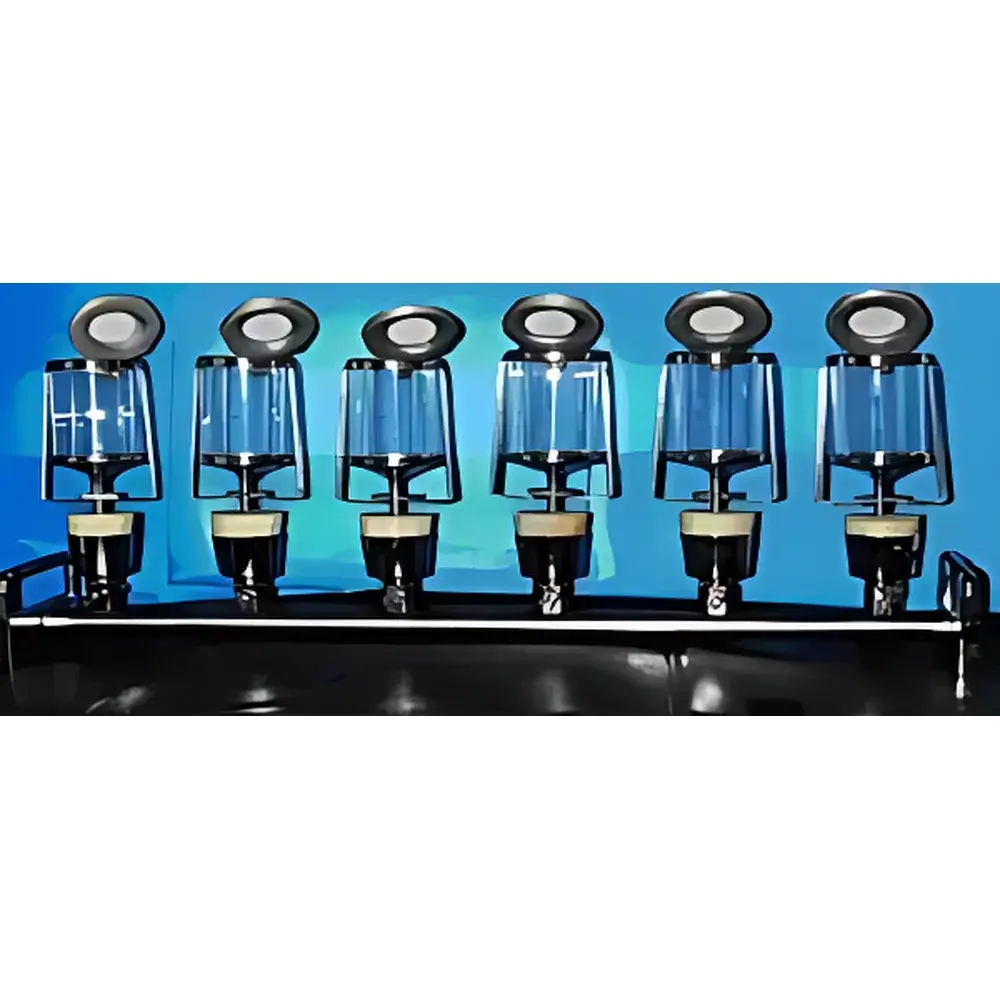
Sterile Membrane Filtration Assembly for Microbial Testing (STV3/STV6)
| Origin | Beijing, China |
|---|---|
| Manufacturer Type | Authorized Distributor |
| Origin Category | Domestic (China-made) |
| Model | STV3 (Triple-Unit) / STV6 (Hexa-Unit) |
| Base Dimensions | 310 mm (STV3) / 550 mm (STV6) |
| Filter Vessel Capacity | 100 mL (with dual刻度: 50 mL & 100 mL) |
| Overall Dimensions (L×W×H) | 310×100×230 mm (STV3), 550×120×235 mm (STV6) |
| Weight | 2.8 kg (STV3), 5.0 kg (STV6) |
| Vacuum Pump Specifications | Max. Vacuum –0.09 MPa (680 mmHg), Airflow Rate 30 L/min, Dual 2500 mL Collection Bottles, Adjustable Vacuum Range –0.02 to –0.09 MPa (150–680 mmHg), Noise Level ≤60 dB(A), Power Input AC 220 V ±10%, 50 Hz, Rated Power 250 VA, Duty Cycle: Intermittent Loading with Continuous Operation Capability |
Overview
The Sterile Membrane Filtration Assembly (Model STV3 and STV6) is a validated, closed-system filtration platform engineered for quantitative microbial enumeration and sterility testing in compliance with pharmacopoeial standards. It operates on the principle of vacuum-assisted membrane filtration: liquid samples—such as injectables, ophthalmic solutions, oral suspensions, topical preparations, and herbal extracts—are drawn under controlled negative pressure through sterile, low-protein-binding 0.45 µm or 0.22 µm pore-size membranes. Retained microorganisms are then transferred onto selective or non-selective agar media for colony enumeration or incubated in fluid thioglycollate or soybean–casein digest medium for sterility assessment. Designed for full regulatory alignment, the system satisfies the procedural requirements of Chinese Pharmacopoeia (ChP) 2000 and 2005 editions, United States Pharmacopeia (USP) Sterility Tests and Microbial Limits Tests, European Pharmacopoeia (Ph. Eur.) 2.6.1 and 2.6.12, and Japanese Pharmacopoeia (JP) General Tests 4.03 and 4.04.
Key Features
- Hermetically sealed, reusable stainless-steel or medical-grade polycarbonate filtration manifolds (STV3: triple-channel; STV6: hexa-channel), eliminating cross-contamination risk and enabling repeat use after autoclaving (121 °C, 20 min, 100 kPa).
- Graduated 100 mL filter vessels with dual-scale markings (50 mL and 100 mL) for precise volumetric dosing and real-time flow monitoring.
- Integrated vacuum control with continuously adjustable range (–0.02 to –0.09 MPa), ensuring optimal filtration rates across viscous or particulate-laden pharmaceutical formulations without membrane clogging or bubble formation.
- Dual 2500 mL borosilicate glass collection bottles with hydrophobic inline filters, preventing backflow and safeguarding vacuum pump integrity during extended operation.
- Low-noise (<60 dB[A]) oil-free diaphragm vacuum pump compliant with IEC 61000-3-2 harmonic emission limits and rated for continuous duty under intermittent loading conditions.
- Compact footprint and ergonomic height design facilitate integration into ISO Class 5 laminar flow hoods and Grade A cleanroom environments per EU GMP Annex 1 and FDA Aseptic Processing Guidance.
Sample Compatibility & Compliance
The STV3/STV6 assembly accommodates a broad spectrum of pharmaceutical dosage forms, including aqueous and oily injectables, lyophilized reconstitutes, ointments (after solvent extraction), oral liquids, nasal sprays, and traditional Chinese medicine (TCM) decoctions—provided they meet membrane compatibility criteria (non-corrosive, non-oxidizing, pH 4–9). All wetted components conform to USP Biological Reactivity Tests (Class VI) and ISO 10993-5 cytotoxicity requirements. System validation documentation supports IQ/OQ/PQ protocols aligned with WHO TRS 986 Annex 5, EU GMP Annex 15, and FDA Process Validation Guidance (2011). Full traceability is maintained via equipment logbooks and maintenance records compatible with 21 CFR Part 11-compliant electronic quality management systems (eQMS).
Software & Data Management
While the STV3/STV6 is a hardware-only platform requiring manual operation, its design integrates seamlessly with laboratory information management systems (LIMS) and electronic batch record (EBR) platforms. Each filtration run can be uniquely logged using standardized metadata fields—including operator ID, sample ID, membrane lot number, vacuum setpoint, filtration duration, and environmental monitoring data (temperature/humidity from adjacent sensors). Audit trails for calibration certificates (vacuum gauge, timer), preventive maintenance logs, and sterilization cycle records (autoclave printouts) are retained per GLP and GMP data integrity principles (ALCOA+). Optional digital vacuum meters with RS-485 output enable automated data capture when paired with third-party SCADA or MES interfaces.
Applications
- Routine microbial limit testing (MLT) of non-sterile products per ChP 2020 Section 1107 and USP .
- Sterility testing of terminally sterilized and aseptically processed parenterals per ChP 2020 Section 1101, USP , and Ph. Eur. 2.6.1.
- Environmental monitoring filter analysis in cleanrooms and isolators (ISO 14644-1 Class 5–8).
- Raw material and excipient bioburden assessment during formulation development.
- Validation studies for filter compatibility, extractables/leachables screening, and hold-time determination.
- Academic and contract research organization (CRO) microbiology labs requiring pharmacopoeia-aligned, cost-effective filtration infrastructure.
FAQ
Is the STV3/STV6 system suitable for sterility testing of highly viscous ophthalmic gels?
Yes—when used with pre-filtration clarification (e.g., coarse membrane or centrifugation) and adjusted vacuum settings (–0.04 to –0.06 MPa), it maintains membrane integrity and quantitative recovery for viscosity ranges up to 500 mPa·s.
Can the filtration manifolds be sterilized in a steam autoclave?
Yes—both STV3 and STV6 manifolds are constructed from autoclavable materials (316L stainless steel or USP Class VI polycarbonate) and withstand standard cycles (121 °C, 15–20 min, saturated steam).
Does the system comply with 21 CFR Part 11 requirements?
The base unit is hardware-only and does not include electronic signature or audit trail functionality; however, its operational parameters and usage logs are fully compatible with externally validated eQMS or LIMS platforms meeting Part 11 criteria.
What membrane types and diameters are supported?
Standard 47 mm or 50 mm diameter disc membranes (cellulose ester, nylon, PVDF, PTFE) with pore sizes 0.22 µm (sterility) or 0.45 µm (microbial limits) are fully compatible.
Is technical support and qualification documentation available for GMP audits?
Yes—comprehensive user manuals, factory calibration reports, material certifications (RoHS, REACH), and template IQ/OQ protocols are provided upon request to support regulatory inspections and internal quality audits.






