
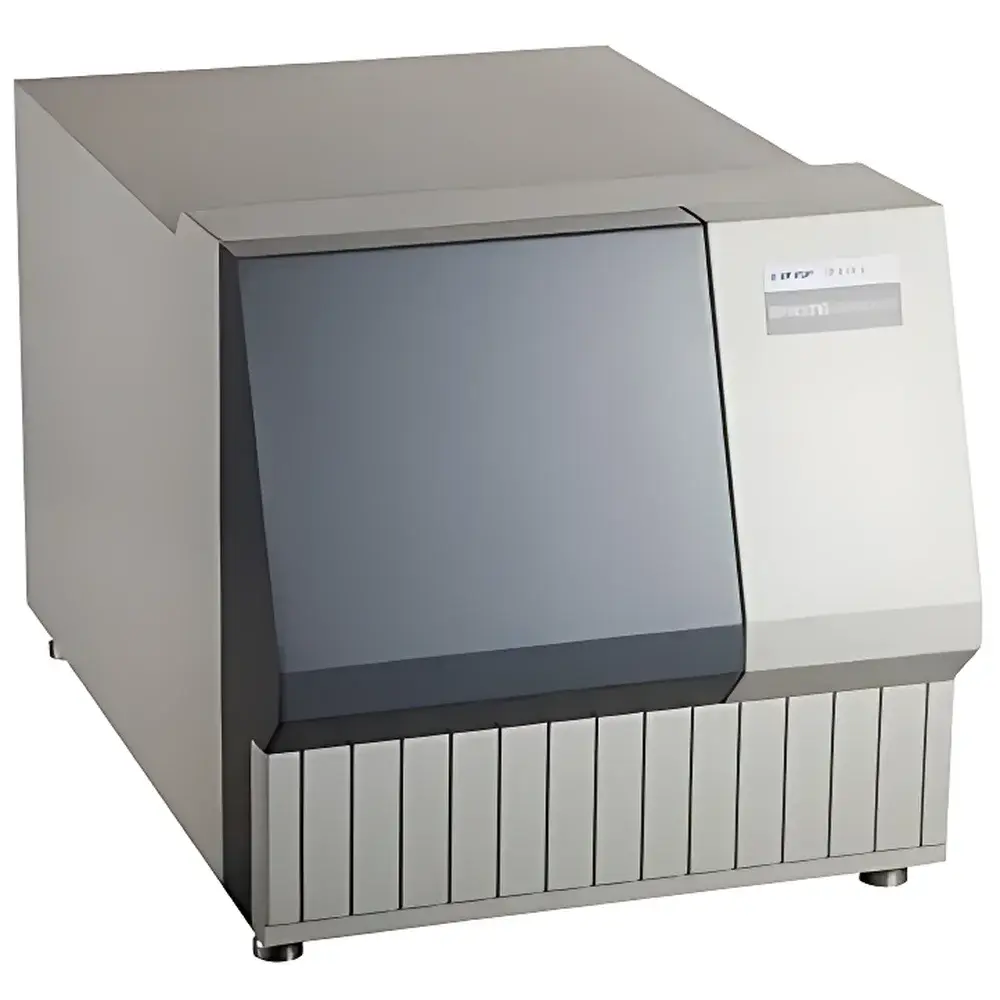
SOPTOP SHP8400PMS-I Industrial Process Mass Spectrometer
| Brand | SOPTOP |
|---|---|
| Origin | Shanghai, China |
| Model | SHP8400PMS-I |
| Mass Range | 1–200 amu (300 amu optional) |
| Ion Source | Electron Impact (EI) |
| Mass Analyzer | Quadrupole |
| Detector | Dual-mode — Faraday Cup and Electron Multiplier |
| Vacuum System | Rotary Vane Pump + Turbo Molecular Pump |
| Mass Axis Stability | < ±0.1 amu/24 h |
| Detection Limits | 10 ppm (Faraday), 10 ppb (Electron Multiplier) |
| Minimum Detectable Partial Pressure | 5×10⁻¹¹ Torr (Faraday), 5×10⁻¹⁴ Torr (Electron Multiplier) |
| Number of Simultaneous Components | Unlimited |
| Scan Speed | 200 ms per spectrum |
| Inlet System | Motorized Multi-Port Rotary Valve (solenoid valve option available) |
| Digital Output | DDE, OPC DA/UA compliant |
| Analog Output | 4–20 mA or 0–10 V |
| Environmental Rating | General Purpose / Hazardous Area (ATEX/IECEx optional) |
Overview
The SOPTOP SHP8400PMS-I is a high-performance industrial process mass spectrometer engineered for real-time, multi-component gas analysis in continuous production environments. Based on quadrupole mass filtering principles, it operates under high vacuum conditions to separate ions generated via electron impact ionization according to their mass-to-charge ratio (m/z). This enables quantitative and qualitative identification of volatile and semi-volatile species directly from process streams—without chromatographic separation. Designed for integration into plant-wide automation architectures, the SHP8400PMS-I delivers sub-second spectral acquisition (200 ms per full 1–200 amu scan), supporting dynamic process monitoring, closed-loop control, and rapid fault detection in chemical synthesis, petrochemical refining, semiconductor fabrication, and biopharmaceutical fermentation.
Key Features
- Quadrupole mass analyzer with < ±0.1 amu/24 h long-term mass axis stability—ensuring repeatable calibration and minimal drift during unattended operation.
- Dual-detector architecture: Faraday cup for high-concentration, linear-response measurement (up to 100% vol); electron multiplier for ultra-trace detection down to 10 ppb partial pressure—enabling seamless dynamic range coverage across six orders of magnitude.
- Motorized multi-port rotary inlet valve with programmable sampling sequence, supporting up to 16 independent process lines without manual intervention; solenoid valve configuration available for high-cycle-rate applications.
- Integrated dual-stage vacuum system comprising a robust oil-sealed rotary vane pump and a high-throughput turbo molecular pump—achieving base pressures below 5×10⁻⁸ Torr and maintaining stable operation under variable gas load conditions.
- Industrial-grade enclosure rated for general-purpose and optionally certified for hazardous areas (ATEX II 2G Ex d IIB T4 Gb / IECEx Ex d IIB T4 Gb), with intrinsically safe analog outputs and explosion-proof digital interface options.
- Real-time data publishing via OPC DA and OPC UA protocols, fully compatible with Siemens PCS7, Emerson DeltaV, Honeywell Experion, and Yokogawa CENTUM VP DCS platforms.
Sample Compatibility & Compliance
The SHP8400PMS-I accepts sample gases ranging from inert mixtures (e.g., N₂, Ar, He) to reactive and corrosive streams (e.g., Cl₂, HCl, NH₃, H₂S), provided appropriate inlet conditioning (heated lines, particle filtration, moisture removal) is implemented upstream. It complies with ISO/IEC 17025 requirements for analytical instrument validation and supports GLP/GMP audit trails when configured with time-stamped raw data logging and user-access controls. The system meets electromagnetic compatibility standards per EN 61326-1 and functional safety guidelines aligned with IEC 61511 for Safety Instrumented Systems (SIS) integration.
Software & Data Management
The embedded firmware and optional PC-based SOPTOP PMS Control Suite provide full remote configuration, method scheduling, spectral library matching (NIST-compatible), and multivariate trend analysis. All acquired spectra are timestamped and stored in HDF5 format—ensuring interoperability with MATLAB, Python (via h5py), and LIMS systems. Audit-ready features include electronic signatures, change logs, and 21 CFR Part 11–compliant user role management (Administrator, Operator, Analyst). Data export supports CSV, XML, and direct SQL insertion for enterprise-level historian integration (e.g., OSIsoft PI, AspenTech IP.21).
Applications
- Real-time catalyst performance monitoring in ammonia synthesis loops and Fischer–Tropsch reactors.
- In-line purity verification of bulk gases (e.g., H₂, O₂, CO₂) in electronics-grade supply networks.
- Fermentation off-gas profiling for metabolic flux analysis and endpoint determination in monoclonal antibody production.
- Leak detection and composition tracking in ethylene oxide sterilization chambers and cleanroom purge systems.
- Combustion efficiency optimization via flue gas O₂/CO/NOₓ ratio feedback in thermal oxidizers and incinerators.
- Reaction stoichiometry validation during nitration, hydrogenation, and chlorination batch processes.
FAQ
What is the recommended maintenance interval for the ion source and quadrupole assembly?
Routine inspection is advised every 6 months; cleaning frequency depends on sample matrix—typically quarterly for clean process gases, monthly for high-particulate or condensable streams.
Can the SHP8400PMS-I be validated for use in regulated pharmaceutical manufacturing?
Yes—when deployed with IQ/OQ documentation packages, 21 CFR Part 11 software modules, and third-party calibration certificates traceable to NIST standards.
Is remote diagnostics supported?
Yes—the instrument includes embedded web server functionality and supports secure VPN-based access for firmware updates, log retrieval, and real-time status monitoring.
How does the system handle background signal drift during extended operation?
Automatic mass calibration using internal reference peaks (e.g., residual air N₂⁺, O₂⁺) occurs at user-defined intervals; optional external calibrant gas injection enhances long-term accuracy.
What certifications are available for hazardous area installation?
ATEX, IECEx, and UL/cUL Class I Division 1 certifications are available upon request, with customized conduit entries and explosion-proof junction boxes.
Related Products






