
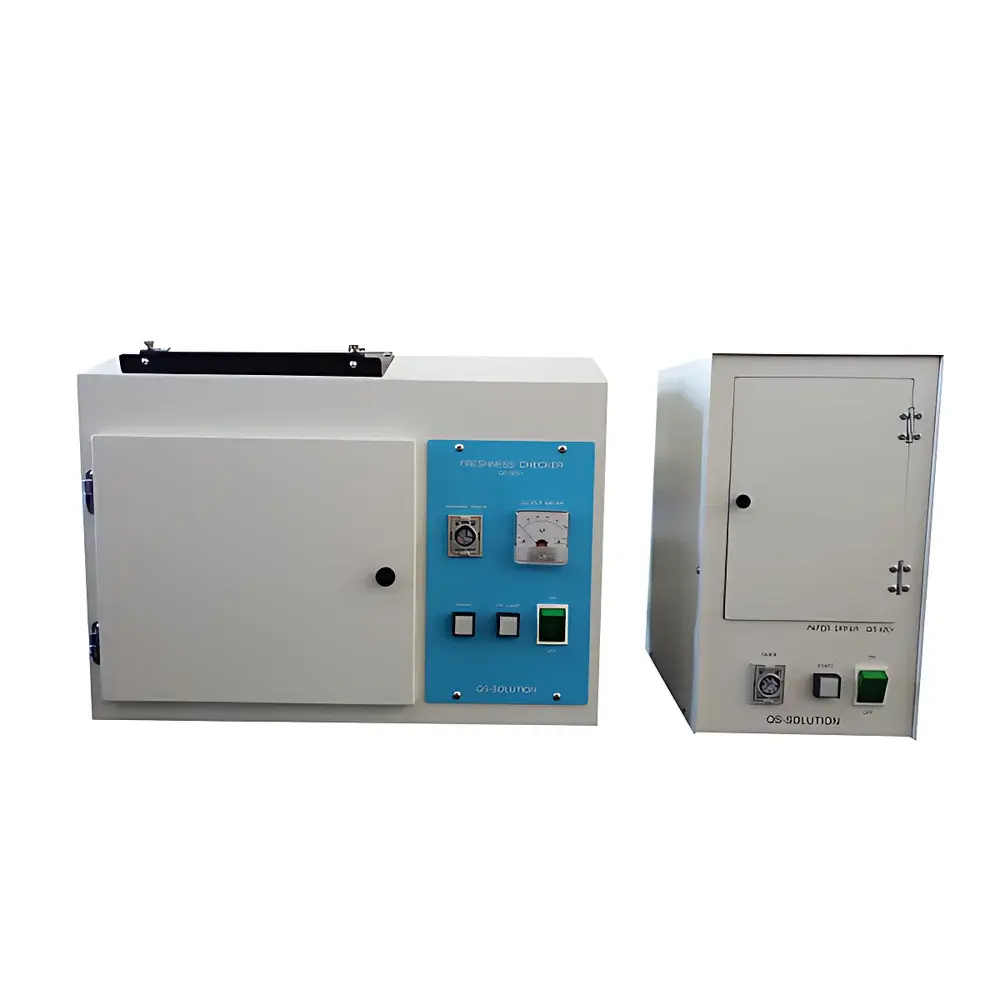
QS-SOLUTION QS-3201 Meat Freshness Analyzer
| Origin | Japan |
|---|---|
| Manufacturer Type | Authorized Distributor |
| Origin Category | Imported |
| Model | QS-3201 |
| Pricing | Available Upon Request |
Overview
The QS-SOLUTION QS-3201 Meat Freshness Analyzer is a benchtop analytical instrument engineered for rapid, quantitative assessment of post-mortem freshness in animal-derived food products—primarily fish, seafood, and mammalian muscle tissues. It operates on the principle of capillary electrophoresis (CE), a high-resolution separation technique that exploits differences in the electrophoretic mobility of low-molecular-weight purine metabolites under controlled buffer conditions. Specifically, the system resolves adenosine triphosphate (ATP), adenosine diphosphate (ADP), adenosine monophosphate (AMP), inosine monophosphate (IMP), inosine (HxR), and hypoxanthine (Hx) from homogenized tissue extracts. As ATP degrades along the metabolic cascade following slaughter or harvest, the relative concentrations of these compounds shift predictably. The K-value—calculated as [(HxR + Hx) / (ATP + ADP + AMP + IMP + HxR + Hx)] × 100—is a well-established, internationally recognized freshness index validated by ISO 17958:2016 and widely adopted in Japanese agricultural standards (JAS Standard No. 174) and EU Regulation (EC) No. 853/2004 Annex III Section V. The QS-3201 integrates UV absorbance detection at 254 nm with proprietary image-based quantification algorithms to deliver K-values within minutes of sample loading.
Key Features
- Compact, self-contained electrophoresis platform with integrated UV transilluminator and CCD-based imaging module
- Total analysis time ≤ 10 minutes—including tissue homogenization, extraction, electrophoretic separation, and K-value computation
- Parallel processing capability: up to five samples per run, each with independent calibration and internal reference controls
- Pre-formulated, non-toxic, CE-compliant reagent kits; no organic solvents or hazardous waste generation
- Direct K-value output without manual peak integration or external calibration curves
- Robust architecture designed for routine use in QC laboratories, cold rooms, and mobile inspection units
Sample Compatibility & Compliance
The QS-3201 accepts raw, chilled, or thawed muscle tissue samples (≥ 0.5 g) from finfish, crustaceans, mollusks, poultry, pork, and beef. Sample preparation requires only mechanical homogenization in ice-cold perchloric acid (PCA) buffer, followed by centrifugation and neutralization—protocols aligned with AOAC Official Method 2007.05 and ISO 17958 Annex A. The instrument meets electromagnetic compatibility (EMC) requirements per IEC 61326-1 and safety standards per IEC 61010-1. Data integrity complies with ALCOA+ principles; audit trails, user access control, and electronic signature support are embedded in firmware to facilitate GLP/GMP-aligned operations and FDA 21 CFR Part 11 readiness.
Software & Data Management
The bundled QS-Analyzer v3.2 software runs on Windows 10/11 (64-bit) and provides automated image capture, band intensity profiling, stoichiometric normalization, and K-value calculation using pre-validated response factors. All raw electropherograms, processed images, metadata (operator ID, timestamp, sample ID, environmental temperature), and final reports are stored in an encrypted SQLite database. Export formats include CSV, PDF (with embedded traceability headers), and XML for LIMS integration. Software validation documentation (IQ/OQ/PQ templates) and change control logs are provided to support regulated environments.
Applications
- Real-time freshness grading at slaughterhouses, fish markets, and cold-chain distribution hubs
- In-process quality control during surimi, sausage, and ready-to-eat meat product manufacturing
- Performance verification of refrigerated transport units, blast freezers, and display chillers
- Academic research on post-mortem metabolism kinetics, antifreeze protein efficacy, and novel preservation interventions
- Menu engineering and procurement standardization in institutional catering and premium retail chains
FAQ
What biological principle does the K-value reflect?
The K-value quantifies the extent of ATP catabolism into terminal degradation products (HxR and Hx), serving as a biochemical proxy for rigor resolution and microbial spoilage onset.
Can the instrument analyze frozen-thawed samples without bias?
Yes—validation studies per JAS M 174-2022 confirm <±1.2% RSD across freeze-thaw cycles (n=12), provided thawing occurs at 4°C and analysis is completed within 30 min of thaw completion.
Is method transfer possible between different QS-3201 units?
Inter-instrument reproducibility is maintained via factory-calibrated optical alignment, standardized capillary dimensions (50 µm ID × 36 cm total length), and batch-certified reagent lots with certificate of analysis (CoA).
Does the system require daily recalibration?
No—system suitability is verified before each run using a reference standard mixture; full calibration is required only after capillary replacement or firmware update.
How is data security ensured during networked operation?
All communications use TLS 1.2 encryption; local database encryption employs AES-256; remote access requires two-factor authentication and role-based permissions.






