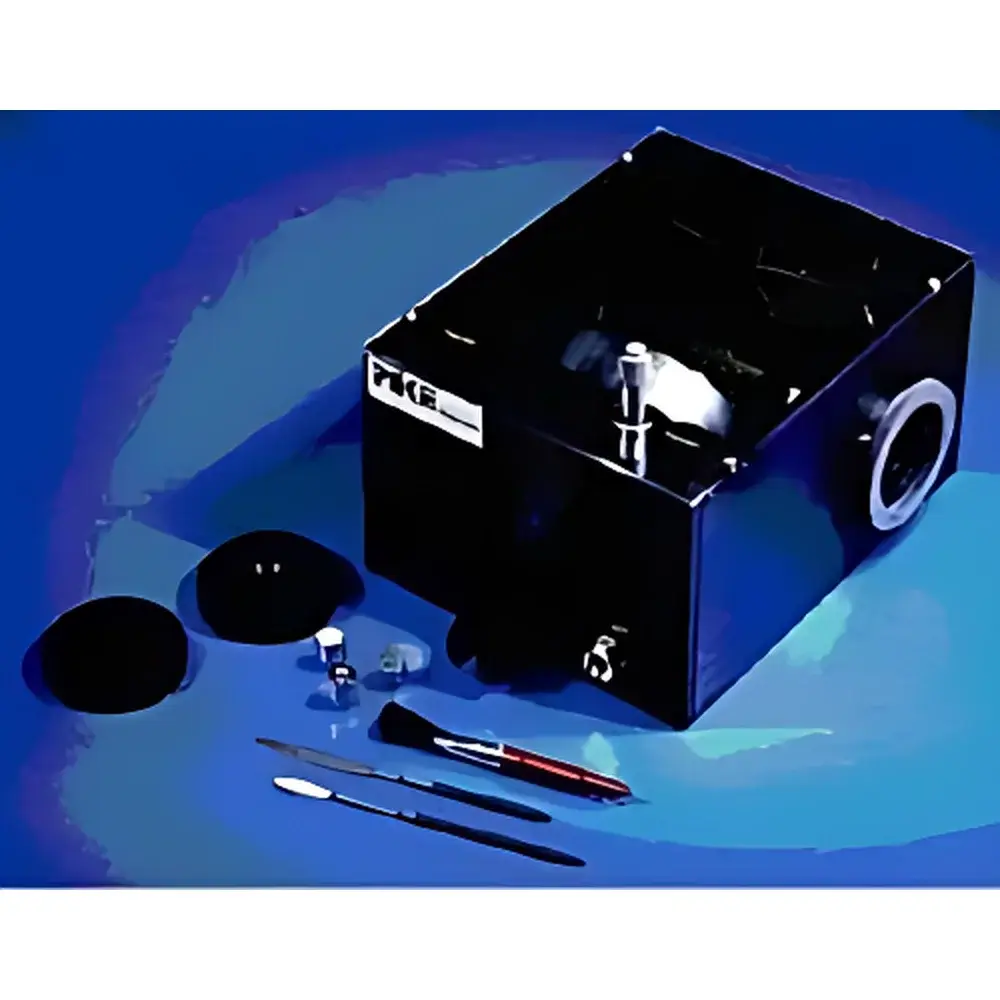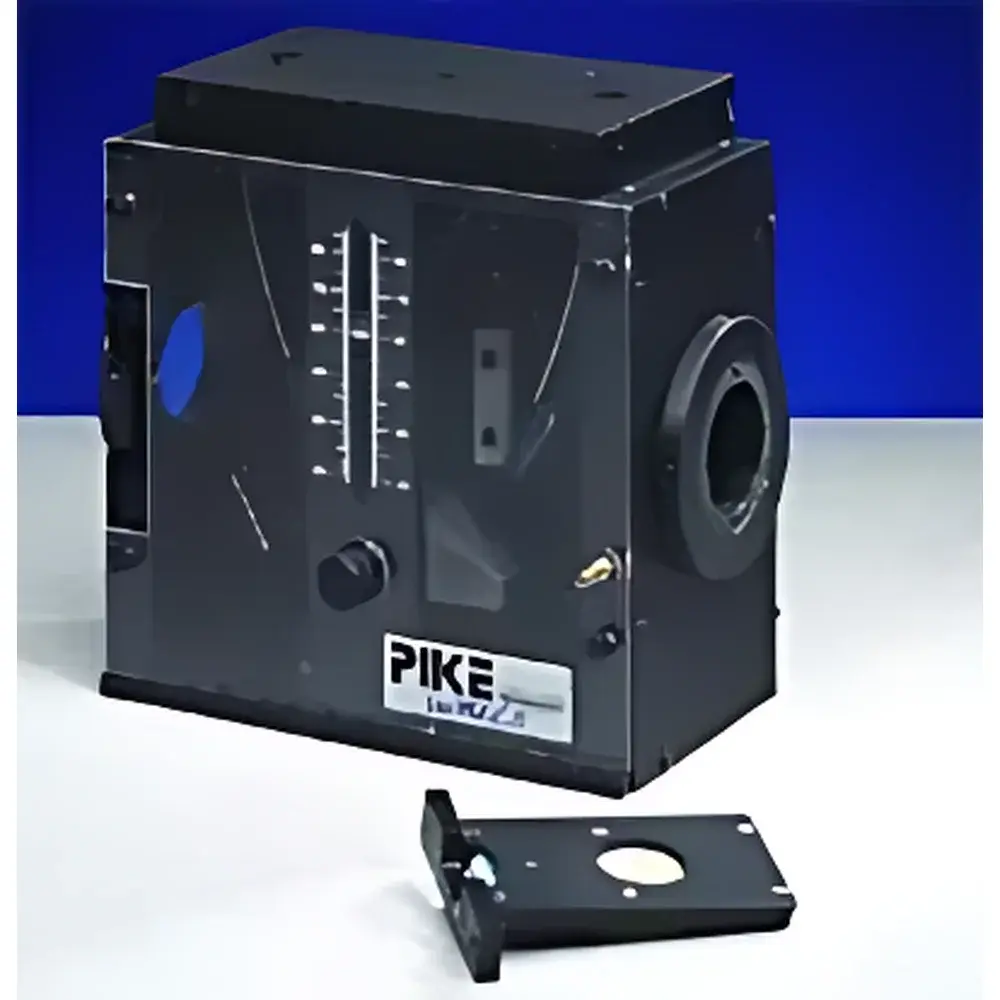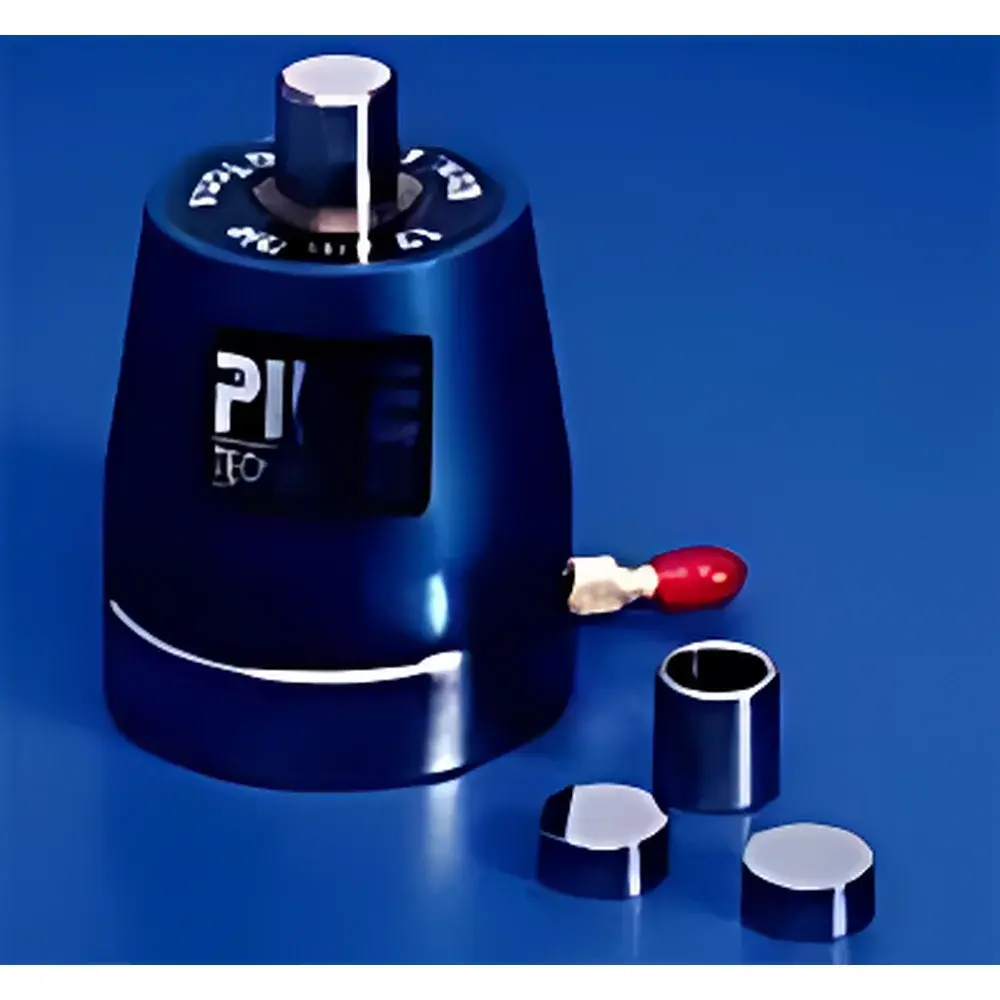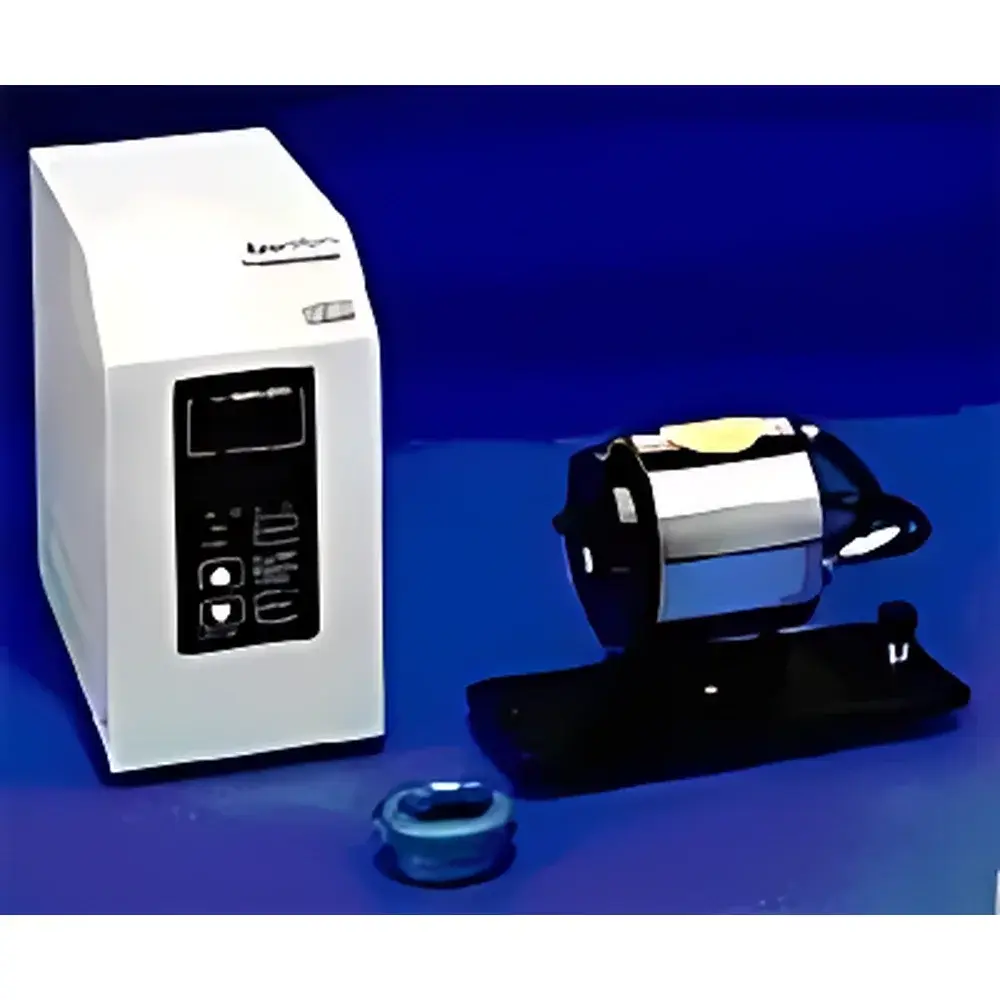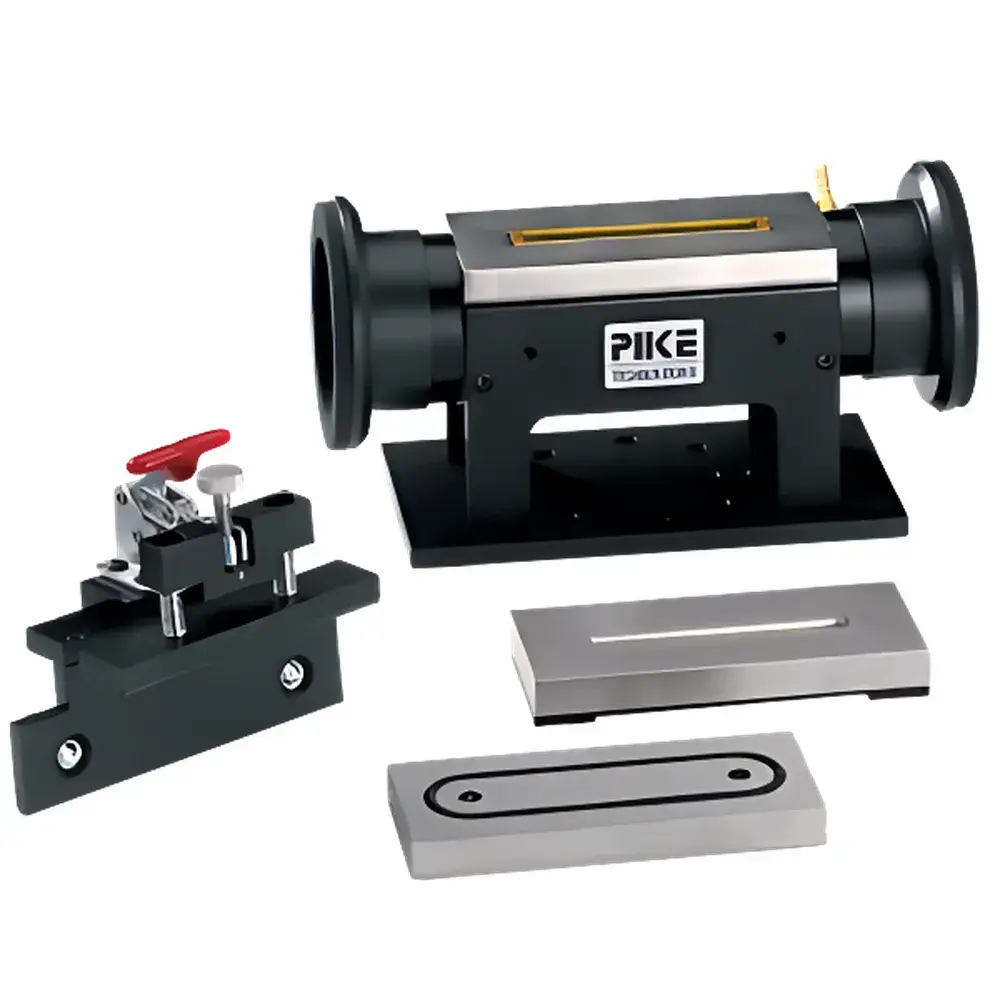
Pike HATR Horizontal Attenuated Total Reflectance Accessory

| Brand | Pike |
|---|---|
| Origin | USA |
| Model | HATR |
| Crystal Options | ZnSe, KRS-5, Ge, AMTIR, Si |
| Configurable Crystal Mounts | Grooved or Flat Plate |
| Maximum Internal Reflections | 20 |
| Optional Accessories | Flow Cell, Heated Stage |
Ask about pricing, availability and specifications.
Overview
The Pike HATR Horizontal Attenuated Total Reflectance accessory is an engineered optical interface designed for integration with Fourier Transform Infrared (FTIR) spectrometers to enable direct, non-destructive analysis of solid, semi-solid, and viscous liquid samples. Operating on the principle of evanescent wave penetration, the HATR technique relies on total internal reflection within a high-refractive-index crystal—typically ZnSe, KRS-5, Ge, AMTIR, or Si—to generate an exponentially decaying electromagnetic field extending ~0.5–2 µm beyond the crystal surface. This evanescent field interacts selectively with the sample in intimate contact with the crystal face, yielding infrared absorption spectra with minimal sample preparation. The horizontal geometry facilitates gravity-assisted sample placement and accommodates irregular or layered specimens without pressure-induced spectral distortion. Unlike transmission or diffuse reflectance methods, HATR eliminates the need for KBr pelletization or solvent dilution, preserving sample integrity and reducing analytical artifacts.
Key Features
- Horizontal optical configuration optimized for ease of sample loading, operator ergonomics, and compatibility with standard FTIR benchtop systems.
- Interchangeable crystal mounting system supporting both grooved and flat plate crystal discs—enabling rapid adaptation to sample morphology (e.g., powders vs. films) and minimizing cross-contamination.
- Configurable internal reflection path length via adjustable incident angle and crystal geometry; up to 20 internal reflections achievable with appropriate crystal dimensions and refractive index, enhancing effective pathlength and signal-to-noise ratio for weakly absorbing species.
- Crystal material selection tailored to spectral range and chemical resistance requirements: ZnSe (broad mid-IR, 7,800–650 cm⁻¹), KRS-5 (extended range to 250 cm⁻¹, moisture-resistant), Ge (high refractive index, ideal for low-absorbance samples), AMTIR (low dispersion, high thermal stability), and Si (robust, cost-effective, limited to >1,200 cm⁻¹).
- Modular accessory architecture permitting seamless integration of optional components—including temperature-controlled heated stages (operating range: ambient to 120 °C, ±0.1 °C stability) and flow cells for real-time monitoring of liquid-phase reactions or chromatographic eluents.
Sample Compatibility & Compliance
The Pike HATR supports a broad spectrum of sample types without derivatization or matrix interference: polymers, pharmaceutical tablets, biological tissues, coatings, gels, pastes, and thin films. Its contact-based measurement avoids scattering artifacts common in DRIFTS and enables reproducible quantitative analysis when coupled with standardized calibration protocols. The accessory conforms to ASTM E1252–98 (Standard Practice for General Techniques for Qualitative Infrared Analysis) and supports GLP-compliant workflows when used with FTIR systems equipped with audit-trail-capable software (e.g., compliant with FDA 21 CFR Part 11). All crystal materials meet ISO 9001-certified manufacturing specifications, and optional heated stages include NIST-traceable temperature calibration documentation.
Software & Data Management
No proprietary software is embedded in the hardware; instead, the HATR accessory functions transparently through the host FTIR spectrometer’s native acquisition platform (e.g., Thermo OMNIC, Bruker OPUS, or PerkinElmer Spectrum). Spectral preprocessing—including ATR correction algorithms (e.g., single-bounce or multi-bounce refractive index compensation), baseline subtraction, and normalization—is fully supported. Data export formats (CSV, JCAMP-DX, SPA) ensure interoperability with chemometric tools such as MATLAB, Unscrambler, or Python-based scikit-learn pipelines. When deployed in regulated environments, instrument control logs, parameter settings, and spectral metadata are retained in accordance with ALCOA+ principles (Attributable, Legible, Contemporaneous, Original, Accurate, Complete, Consistent, Enduring, Available).
Applications
- Pharmaceutical solid-state characterization: polymorph identification, hydrate/solvate screening, and coating uniformity assessment on tablet surfaces.
- Surface chemistry analysis of catalysts, corrosion layers, and functionalized nanomaterials.
- In-process monitoring of polymer curing kinetics using heated-stage configurations.
- Forensic trace evidence analysis (e.g., paint chips, adhesives, fibers) with minimal sample consumption.
- Food science applications including lipid oxidation tracking in edible films and protein conformational changes during thermal processing.
FAQ
What crystal material is recommended for routine mid-IR analysis of organic compounds?
ZnSe offers optimal balance of transmission range (7,800–650 cm⁻¹), mechanical durability, and cost-effectiveness for most organic and pharmaceutical applications.
Can the HATR be used for quantitative analysis?
Yes—when combined with internal standard calibration, pathlength correction, and stable contact pressure, relative and absolute quantitation of surface-bound species is achievable with RSD <3% across replicate measurements.
Is the grooved crystal disc compatible with powdered samples?
Yes—the micro-grooves enhance capillary retention and improve contact uniformity for fine powders, reducing spectral variability caused by air gaps.
Does the heated stage support programmable temperature ramps?
Yes—integrated PID control allows linear or stepwise ramping (0.1–10 °C/min) with real-time temperature logging synchronized to spectral acquisition.
How is cleaning and maintenance performed between samples?
Crystals are cleaned using spectroscopic-grade solvents (e.g., chloroform, acetone) and lint-free wipes; KRS-5 requires avoidance of water and alcohols due to hygroscopic sensitivity. Routine inspection for scratches or residue buildup is recommended per ISO/IEC 17025 preventive maintenance guidelines.