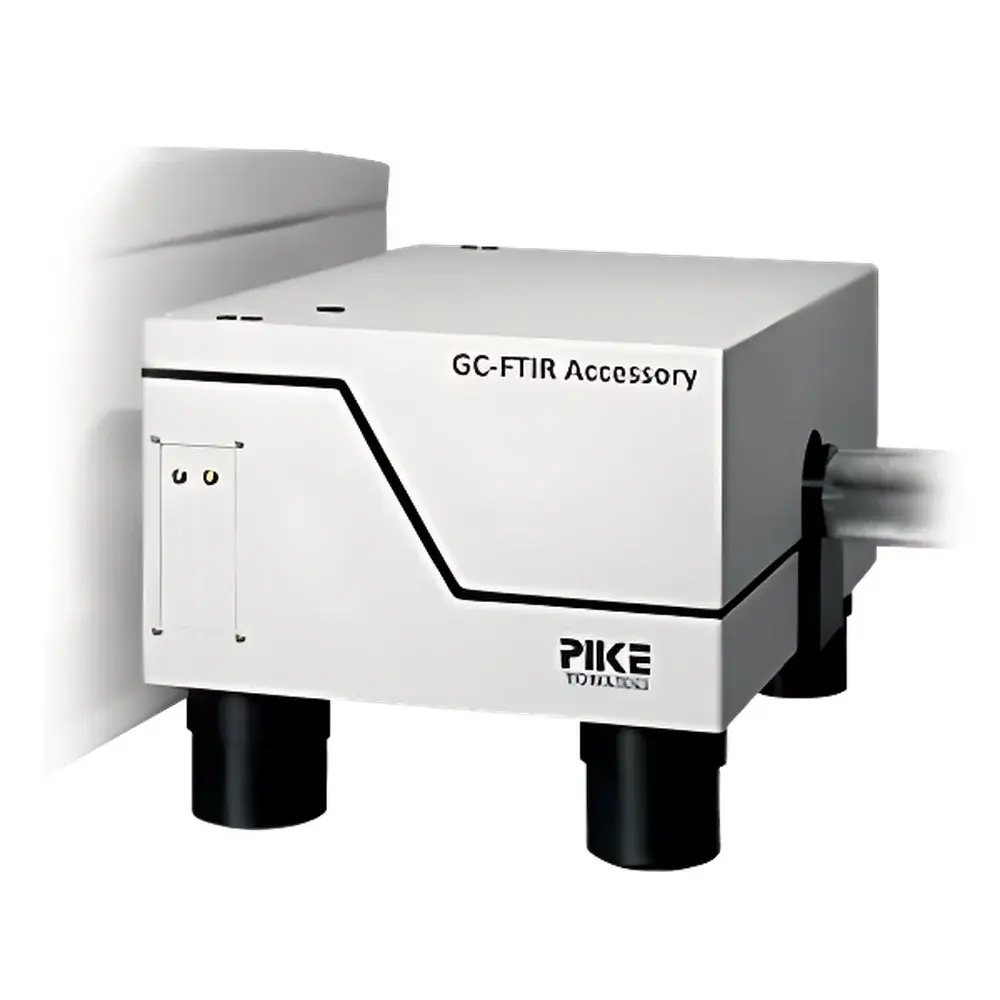
Pike GC-FTIR Coupling System

| Brand | Pike |
|---|---|
| Origin | USA |
| Manufacturer Type | Authorized Distributor |
| Origin Category | Imported |
| Model | GC-FTIR |
| Price Range | USD 7,000 – 14,000 |
| Flow Cell Path Length | 12 mm |
| Maximum Flow Cell Temperature | 300 °C |
Ask about pricing, availability and specifications.
Overview
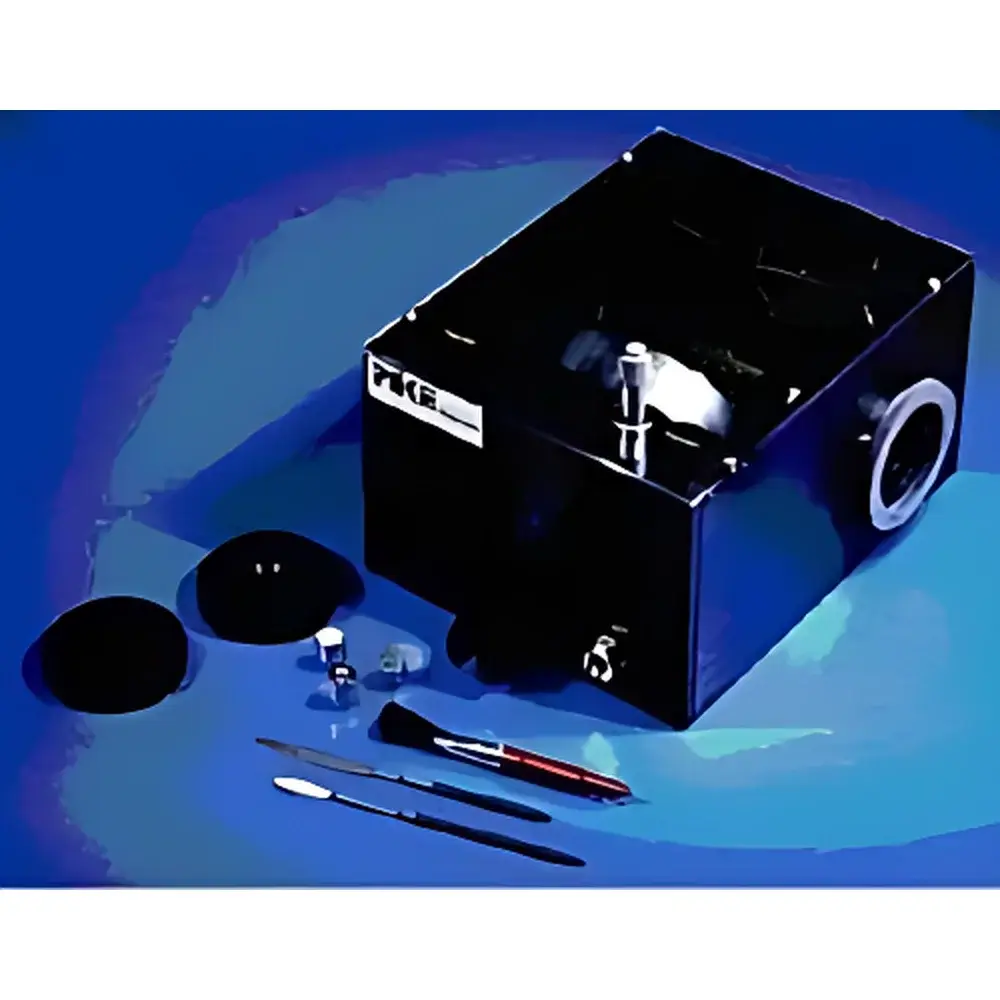
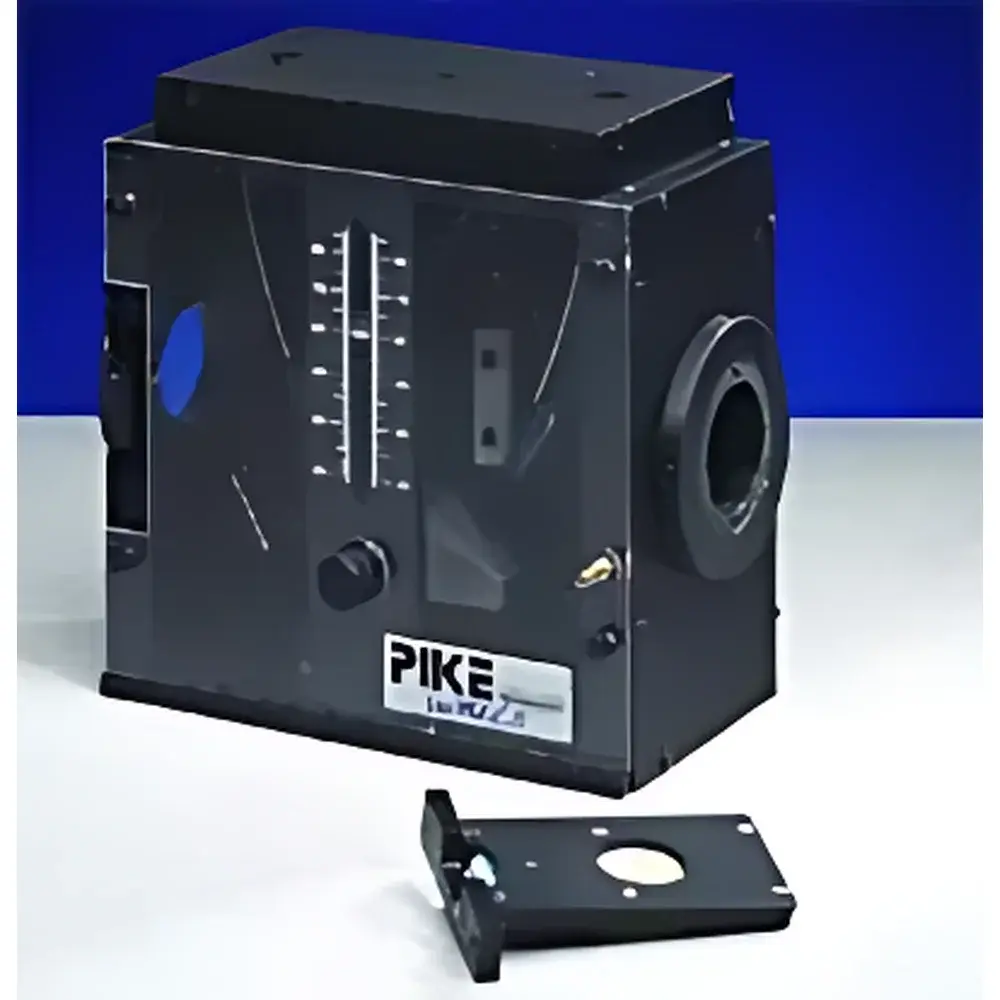
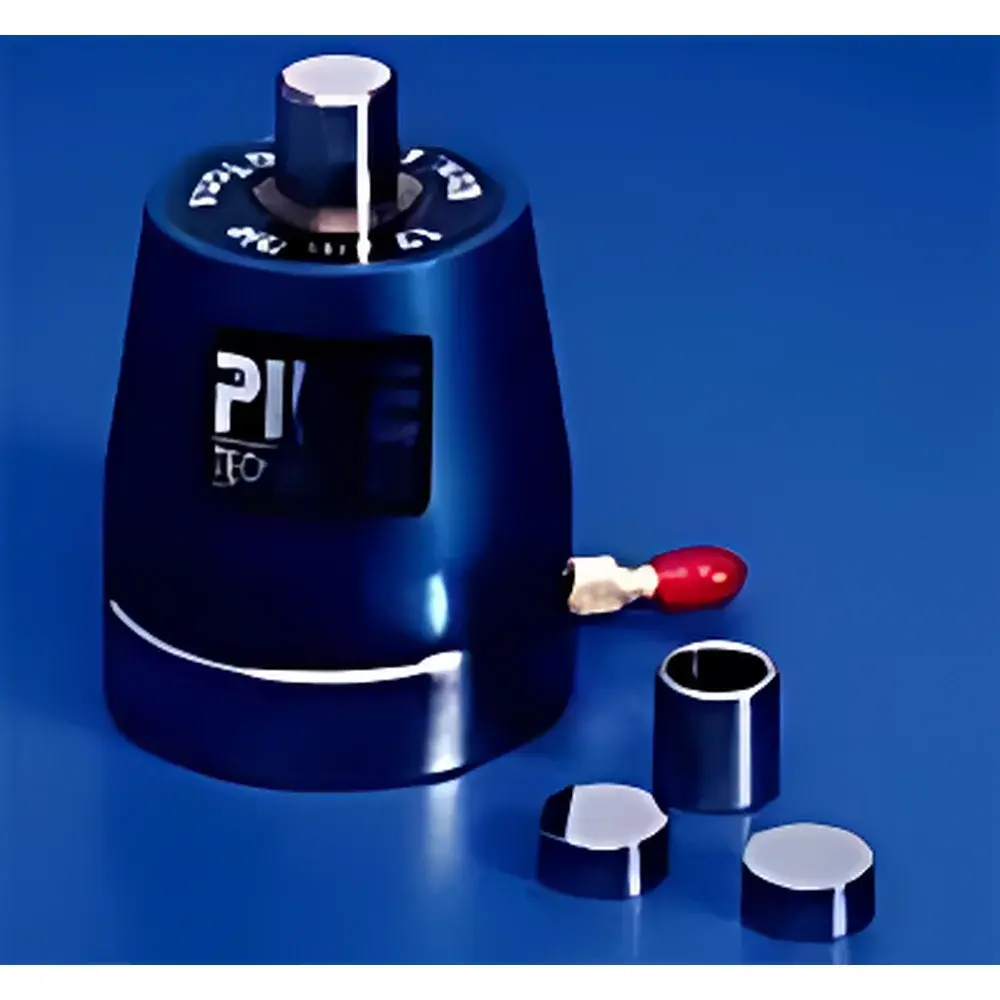
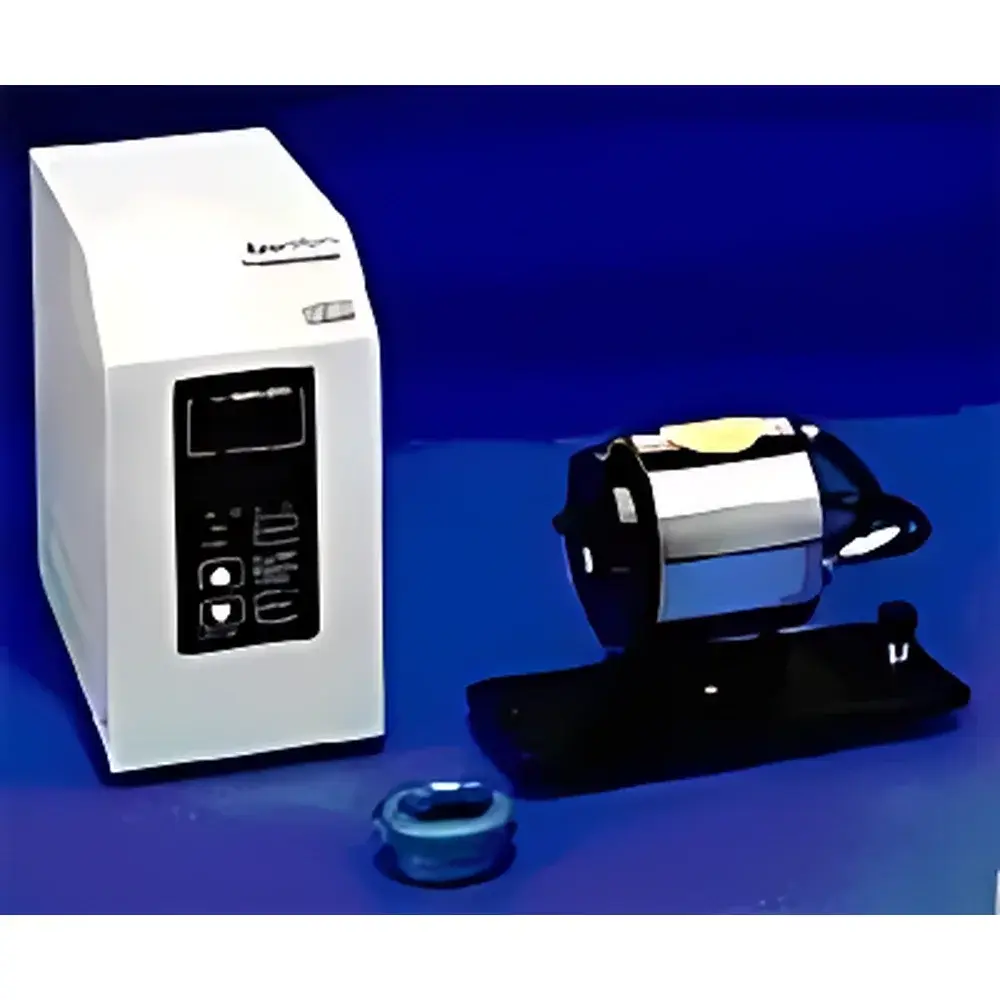
The Pike GC-FTIR Coupling System is a purpose-engineered interface designed to integrate seamlessly with any commercially available gas chromatograph (GC) and Fourier transform infrared (FTIR) spectrometer. It enables real-time, hyphenated analysis by directing eluting GC fractions directly into a heated, high-sensitivity infrared flow cell for structural identification based on fundamental vibrational absorption bands. Unlike mass spectrometry, FTIR detection provides unambiguous functional group characterization—particularly critical for distinguishing structural isomers (e.g., ortho/meta/para substituted aromatics, cis/trans alkenes, or branched vs. linear alkanes) that exhibit identical mass spectra but distinct IR fingerprints. The system operates on the principle of transmission-mode IR spectroscopy within a controlled, thermostatically stabilized environment, ensuring minimal band broadening and condensation artifacts during transfer.
Key Features
- Universal GC compatibility: Designed with standardized 1/8″ or 1/4″ stainless steel transfer lines and modular fittings to interface with Agilent, Thermo Fisher, Shimadzu, PerkinElmer, and other major GC platforms without hardware modification.
- High-temperature, low-volume flow cell: Precision-machined 12 mm path length ZnSe or KBr window cell rated for continuous operation up to 300 °C, minimizing analyte adsorption and thermal degradation while maintaining optimal signal-to-noise ratio.
- Optimized optical throughput: Anti-reflection coated windows and collimated beam alignment ensure >90% IR energy transmission across the mid-IR range (4000–400 cm⁻¹), compatible with both DTGS and MCT detectors.
- Gas-tight, leak-free coupling: All-metal VCR or Swagelok connections with helium or nitrogen purge capability prevent atmospheric moisture and CO₂ interference in the optical path.
- Thermal management architecture: Independent PID-controlled heating zones for transfer line, interface manifold, and flow cell—each with digital setpoint adjustment and real-time monitoring via integrated thermocouples.
Sample Compatibility & Compliance
The GC-FTIR system supports volatile and semi-volatile organic compounds with boiling points below 350 °C and thermal stability at 300 °C. It is routinely applied to petrochemical fractions, environmental extractables (e.g., PAHs, chlorinated benzenes), flavor and fragrance volatiles, pharmaceutical impurity profiling, and polymer pyrolyzates. From a regulatory standpoint, data generated using this configuration meets documentation requirements for method development under ASTM E168 (Standard Practices for General Techniques of Infrared Quantitative Analysis) and ISO 17025-accredited laboratories. When operated with audit-trail-enabled FTIR software (e.g., OMNIC with CFR Part 11 compliance package), the system supports GLP and GMP environments requiring electronic record integrity per FDA 21 CFR Part 11.
Software & Data Management
Data acquisition is synchronized via TTL trigger output from the GC to initiate spectral collection at user-defined retention time windows. Spectra are collected in interferogram format and processed using standard FTIR software suites (e.g., Thermo OMNIC, Bruker OPUS, or Agilent MicroLab). Peak tracking, library searching (Sadtler, Aldrich, or custom-built spectral libraries), and spectral subtraction routines enable compound-specific identification even in co-eluting regions. Raw interferograms and processed absorbance spectra are stored in vendor-neutral formats (e.g., JCAMP-DX) for long-term archival and third-party reprocessing. Optional scripting interfaces (Python API, MATLAB toolbox) support automated batch processing and integration into LIMS workflows.
Applications
- Isomeric differentiation in synthetic chemistry QC—e.g., confirming regioselectivity in Friedel-Crafts acylations or stereochemistry in dihydroxylation reactions.
- Identification of unknown peaks in EPA Method 8270D semi-volatile analyses where MS confirmation is ambiguous.
- Reaction monitoring of catalytic hydrogenation or oxidation processes via online GC-FTIR sampling loops.
- Forensic toxicology screening for designer drugs exhibiting identical m/z but differing carbonyl or amine stretching frequencies.
- Failure analysis of outgassed volatiles from aerospace-grade adhesives or encapsulants under thermal stress testing.
FAQ
Can this interface be used with cryogenically cooled FTIR detectors?
Yes—the flow cell and transfer line design accommodates MCT detectors operating at 77 K; however, dewar geometry and beam height must be verified for optical alignment.
Is vacuum compatibility required for the GC-FTIR interface?
No—this is a pressure-balanced, atmospheric-pressure interface; no high-vacuum pumping is needed, unlike GC-MS systems.
What maintenance intervals are recommended for the flow cell windows?
ZnSe windows should be inspected visually after every 200 injections and cleaned with spectroscopic-grade methanol followed by dry nitrogen purge; replacement is typically required after 1,000–2,000 analyses depending on sample matrix.
Does Pike provide application support for method development?
Yes—Pike Technologies offers remote application consulting, spectral interpretation training, and pre-configured GC-FTIR method templates for common compound classes upon system installation.
Is the interface compatible with microfluidic or capillary GC columns?
Yes—standard configurations support 0.1–0.53 mm ID fused silica columns; optional low-dead-volume adapters minimize band broadening for narrow-bore applications.