
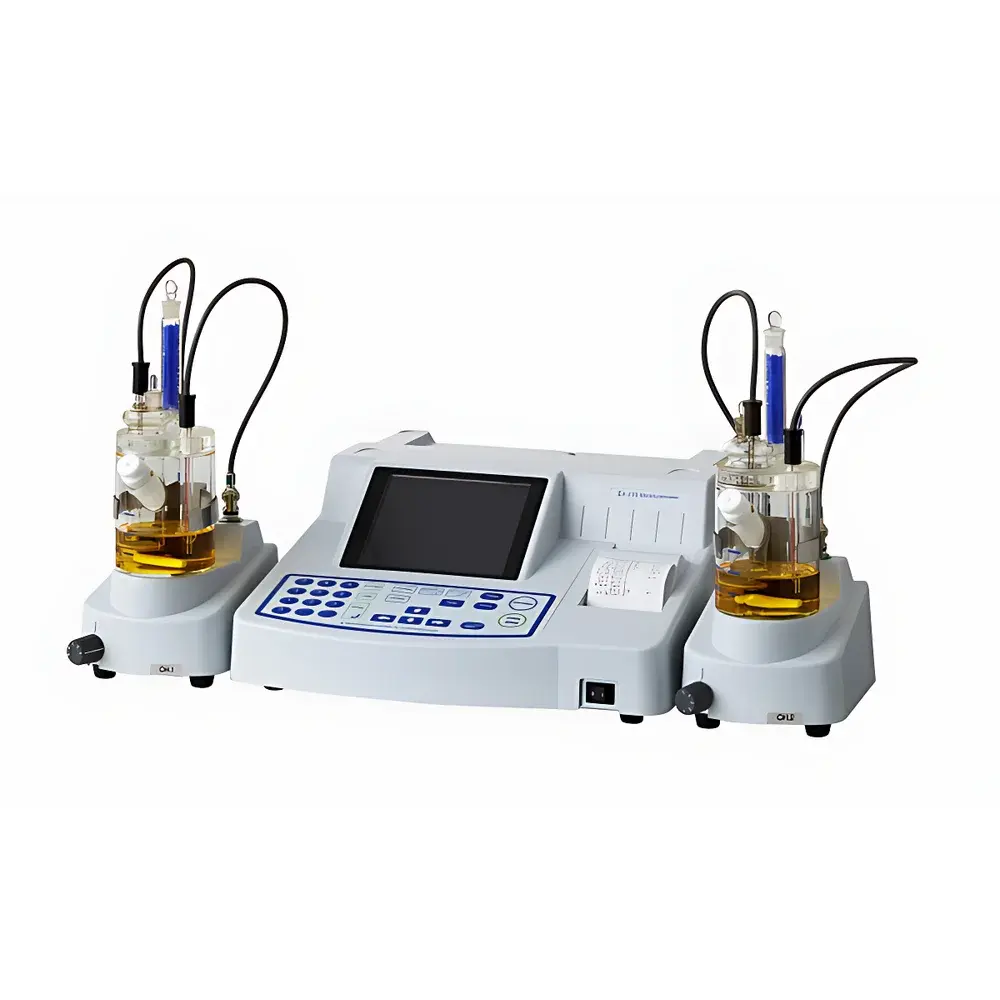
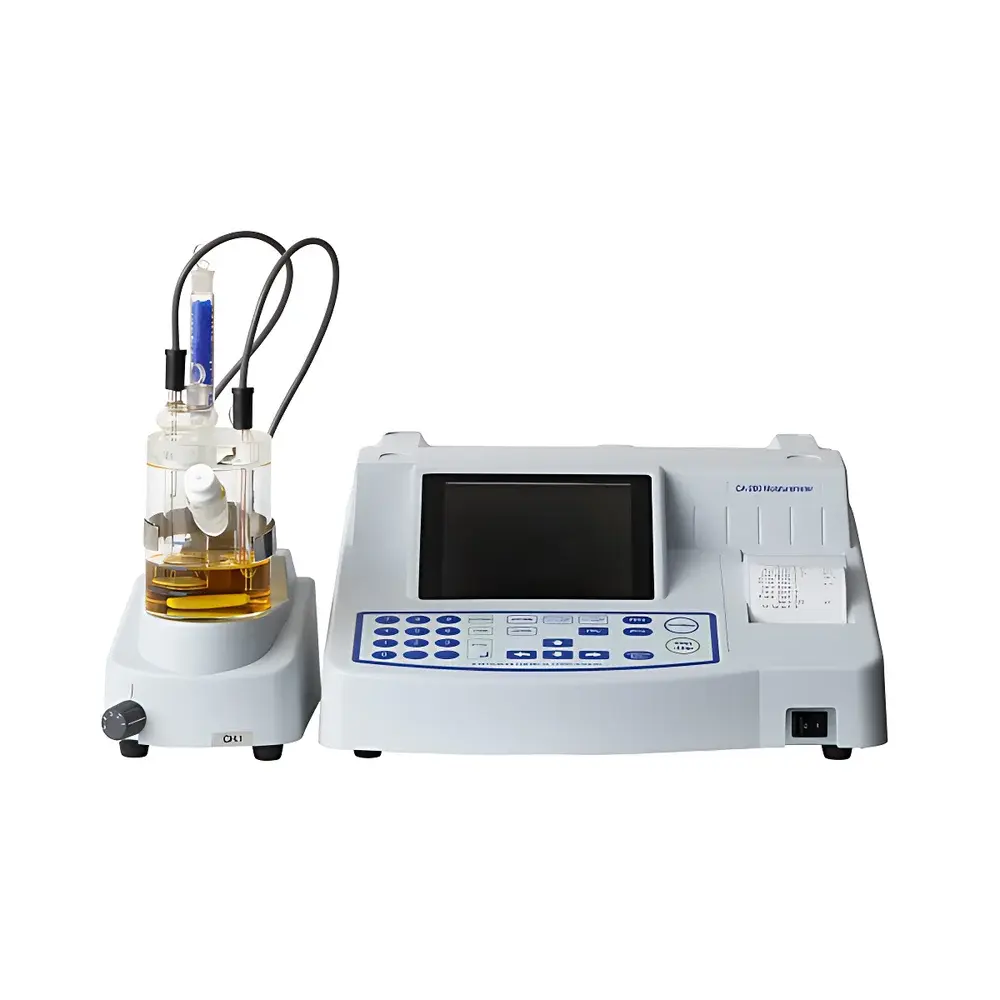
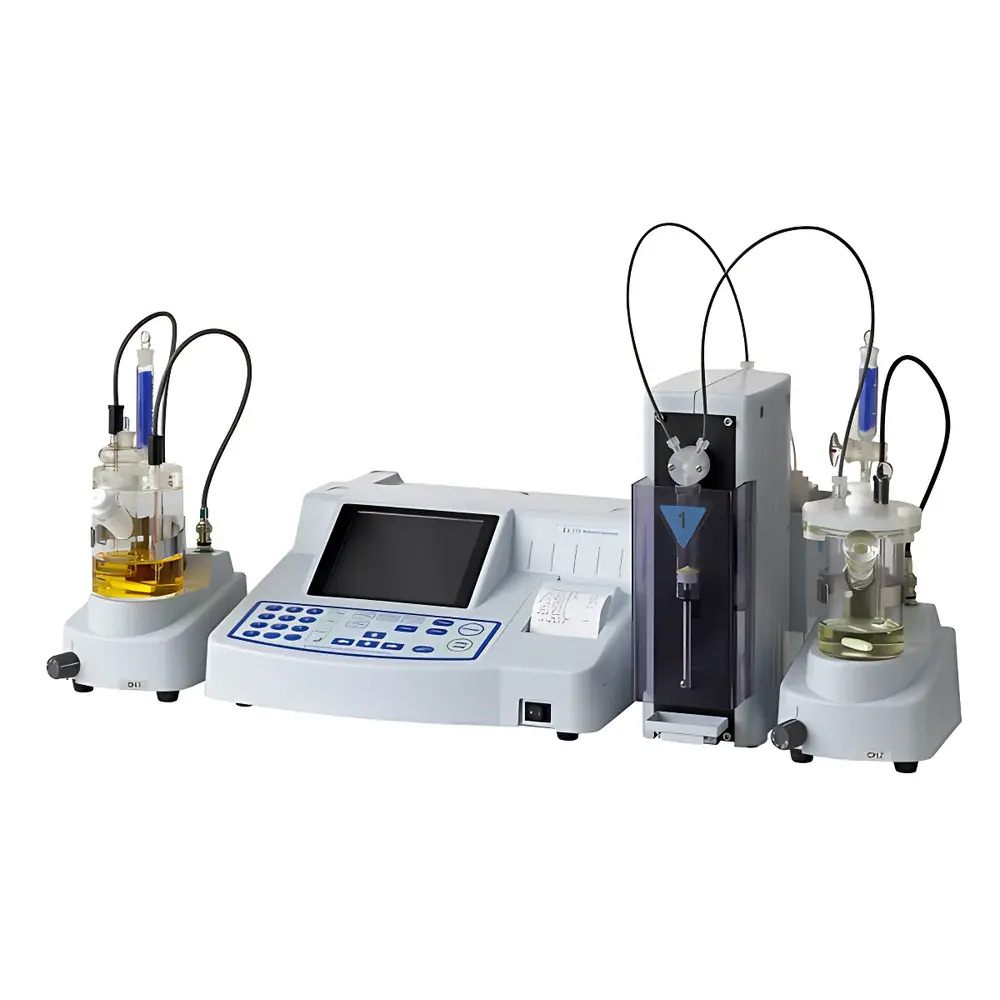
Mitsubishi Chemical CA200C Coulometric Karl Fischer Moisture Analyzer
| Brand | Mitsubishi Chemical |
|---|---|
| Origin | Japan |
| Model | CA200C |
| Instrument Type | Coulometric Karl Fischer Moisture Analyzer |
| Water Measurement Range | 10 µg – 100 mg H₂O |
| Accuracy | ≤ 0.3% RSD (for samples ≥ 1 mg H₂O) |
| Minimum Dispensing Volume | 1/2000 of burette volume |
| Titration Speed | 2.2 mg H₂O/min (36 µg H₂O/sec) |
| Electrolysis Current | 430 mA |
| Precision | CV ≤ 0.3% (n = 10, ≥1 mg H₂O) |
| Display | 5.7-inch color LCD |
| Data Storage | 20 single files + 50 composite files |
| Interfaces | Dual USB ports, RS-232C (optional), balance auto-input support |
| Power Supply | AC 100–120 V / 230–240 V, 50/60 Hz |
| Power Consumption | 80 VA (100–120 V), 310 VA (230–240 V) |
| Dimensions (main unit) | 220 × 350 × 360 mm (W×D×H) |
| Weight | ~5 kg |
Overview
The Mitsubishi Chemical CA200C is a high-precision coulometric Karl Fischer moisture analyzer engineered for trace-level water quantification in pharmaceuticals, fine chemicals, polymers, and battery electrolytes. Unlike volumetric KF titrators, the CA200C employs coulometric generation of iodine at the anode via Faraday-controlled electrolysis—enabling direct, absolute quantification of water without reliance on standardized titrant concentration. This principle ensures exceptional accuracy and reproducibility for samples containing 10 µg to 100 mg of water, making it ideal for low-moisture matrices where reagent stability and electrode fouling are critical concerns. The instrument builds upon the legacy of the CA-100 platform with enhanced hardware architecture, real-time electrochemical diagnostics, and automated electrode maintenance protocols—delivering robust performance under GLP/GMP-regulated laboratory environments.
Key Features
- Advanced coulometric detection with 430 mA maximum electrolysis current, enabling rapid analysis (up to 36 µg H₂O/sec) while maintaining sub-0.3% RSD precision for samples ≥1 mg H₂O.
- 5.7-inch full-color LCD interface with intuitive navigation, integrated context-sensitive help system, and multilingual on-screen prompts for operator guidance.
- Dual USB host ports support direct data export to flash drives and seamless connection to external printers—eliminating dependency on PC-based software for routine reporting.
- Configurable dual-cell operation: supports simultaneous or sequential analysis using two independent coulometric titration cells or paired vaporizers for heterogeneous solid/liquid sample types.
- Self-cleaning electrode algorithm automatically applies reverse-polarity pulses during idle periods to remove adsorbed byproducts, minimizing manual maintenance and ensuring long-term baseline stability.
- Flexible fluidic design offers both drain-equipped and non-drain variants to accommodate lab-specific waste handling protocols and solvent compatibility requirements.
Sample Compatibility & Compliance
The CA200C accommodates a broad spectrum of sample types—including hygroscopic solids (e.g., APIs, excipients), viscous liquids (e.g., silicone oils, resins), and volatile solvents—via optional heated vaporizers and customizable sample introduction modules. All measurement procedures adhere to ASTM E203, ISO 760, and USP guidelines for Karl Fischer titration. The system supports full audit trail functionality when used with compliant balance integration (via RS-232C or auto-input protocols), satisfying FDA 21 CFR Part 11 requirements for electronic records and signatures when deployed with validated software configurations. Routine calibration verification follows internal reference standards traceable to NIST-certified water standards.
Software & Data Management
Data integrity is maintained through embedded file management supporting up to 20 individual assay files and 50 composite files—each storing complete method parameters, raw current/time curves, endpoint detection logs, and operator annotations. USB storage enables encrypted export of CSV-formatted results compatible with LIMS and statistical process control platforms. Optional PC connectivity via RS-232C allows remote method deployment, batch report generation, and integration into centralized QA/QC dashboards. All stored data includes timestamped metadata, user ID tagging, and version-controlled method templates—facilitating retrospective review during regulatory inspections.
Applications
- Pharmaceutical quality control: Residual moisture testing of lyophilized products, active pharmaceutical ingredients (APIs), and packaging materials per ICH Q5C guidelines.
- Electrolyte formulation: Quantification of trace water in lithium-ion battery electrolytes (e.g., LiPF₆ in EC/DMC), where ppm-level moisture directly impacts cell cycle life and safety.
- Polymer manufacturing: Monitoring moisture content in engineering thermoplastics (e.g., polyamide, polycarbonate) prior to extrusion or injection molding to prevent hydrolytic degradation.
- Chemical synthesis: Verification of anhydrous conditions in Grignard reagent preparation, organometallic catalysis, and moisture-sensitive intermediate purification.
- Food ingredient certification: Validation of low-moisture specifications for powdered dairy, starch derivatives, and functional food additives subject to microbial stability criteria.
FAQ
What distinguishes coulometric from volumetric Karl Fischer titration?
Coulometric KF generates iodine electrochemically in situ, providing absolute quantification based on Faraday’s law—ideal for samples with ≤100 µg water. Volumetric KF uses pre-standardized iodine-containing titrant, better suited for higher water concentrations (>100 µg).
Can the CA200C be validated for GMP compliance?
Yes—the instrument supports IQ/OQ documentation packages, configurable user access levels, electronic signature workflows (with optional software), and full audit trail generation meeting Annex 11 and ALCOA+ data integrity principles.
Is method transfer from CA-100 to CA200C straightforward?
All CA-100 methods are backward-compatible; the CA200C retains identical electrode geometry, cell volume, and reagent chemistry—requiring only minor optimization of current thresholds and endpoint sensitivity settings.
How often does the generator electrode require replacement?
Under typical usage (≤5 assays/day with Mitsubishi-certified reagents), the platinum generator electrode maintains stable performance for ≥12 months—extended by the built-in electrochemical cleaning routine.
Does the system support non-aqueous solvent compatibility?
Yes—it is fully compatible with standard KF solvents including methanol, chloroform, and proprietary anhydrous mixtures (e.g., Hydranal-Coulomat AG); vaporizer temperature control (up to 250°C) ensures complete sample volatilization without decomposition.
Related Products





