
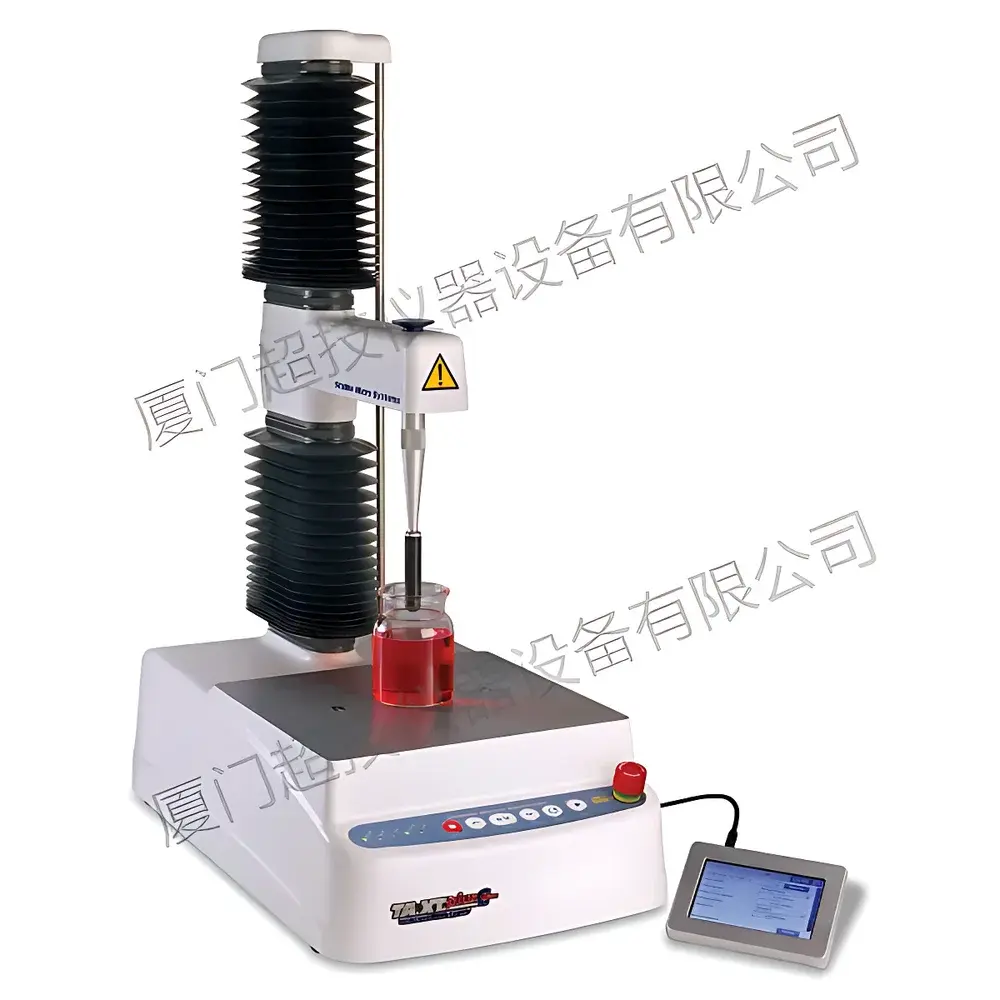
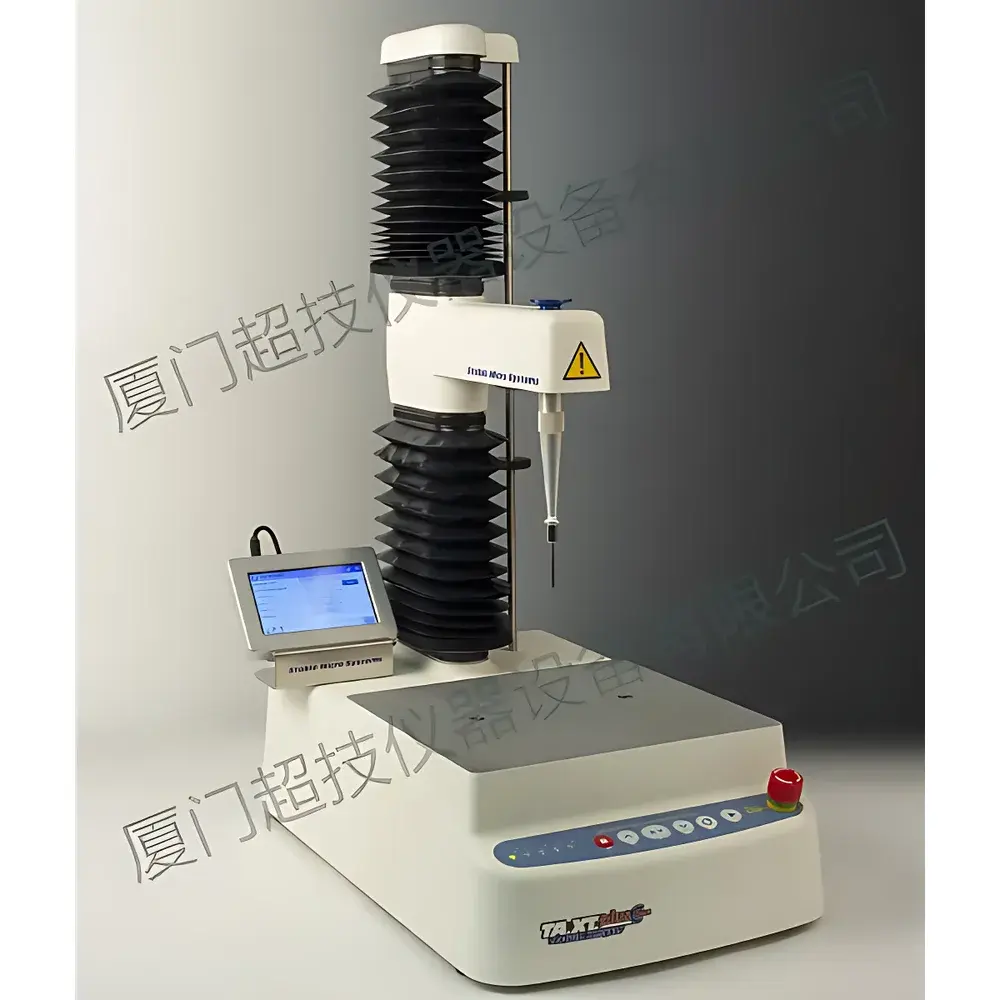
SMS TA.XT Plus Multi-Function Texture Analyzer
| Brand | SMS |
|---|---|
| Origin | United Kingdom |
| Manufacturer Type | Authorized Distributor |
| Import Status | Imported |
| Model | TA.XT Plus |
| Force Range | 0.5–50 kgf |
| Force Resolution | 0.1 g |
| Test Speed Range | 0.01–40 mm/s |
| Maximum Travel Distance | 370 mm |
| Position Resolution | 0.001 mm |
| Data Acquisition Rate | >2000 samples/sec (4 channels simultaneously) |
Overview
The SMS TA.XT Plus Multi-Function Texture Analyzer is a high-precision, motorized single-column texture testing system engineered for objective mechanical property evaluation of solid, semi-solid, and viscoelastic materials. Based on the fundamental principles of uniaxial compression, tension, penetration, extrusion, and shear deformation, the instrument quantifies force–distance–time relationships to derive standardized textural parameters defined by ASTM STP 961, ISO 11357-3, and USP . Designed specifically for food science laboratories, quality control departments, and R&D facilities in pharmaceuticals and cosmetics, the TA.XT Plus delivers repeatable, traceable, and auditable measurements under GLP-compliant workflows.
Key Features
- High-resolution load cell with 0.1 g force resolution and calibrated range spanning 0.5–50 kgf, enabling precise characterization of both delicate (e.g., gelatin films, yogurt) and robust (e.g., cheese blocks, meat jerky) samples.
- Programmable crosshead speed from 0.01 to 40 mm/s, supporting quasi-static deformation protocols as well as dynamic rupture analysis per ISO 18852.
- Sub-micron positional accuracy (0.001 mm) over a 370 mm vertical travel range, ensuring reproducible probe positioning for multi-cycle tests including compression-relaxation, puncture-adhesion, and tensile extension.
- Real-time data acquisition at >2000 Hz across four synchronized analog input channels—ideal for simultaneous force, displacement, temperature (via optional probe), and auxiliary sensor integration (e.g., acoustic emission).
- Barcode-triggered test initiation: compatible with standard USB barcode scanners to auto-load preconfigured methods, reducing operator intervention and minimizing method selection errors.
- Remote operation capability via secure web-based interface accessible from iOS/Android tablets or desktop browsers—enabling real-time monitoring, manual override, and post-test email notification with embedded PDF reports.
Sample Compatibility & Compliance
The TA.XT Plus accommodates a broad spectrum of sample geometries and physical states—including powders, pastes, gels, emulsions, baked goods, confectionery, dairy products, plant-based meats, and polymer hydrogels—using interchangeable fixtures (e.g., Kramer shear cells, Warner–Bratzler blades, spherical probes, tensile grips). All hardware and firmware comply with CE marking requirements and electromagnetic compatibility standards (EN 61326-1). Software supports 21 CFR Part 11 compliance through configurable user roles, electronic signatures, audit trails, and immutable data archiving. Method validation documentation aligns with ICH Q2(R2) guidelines for analytical procedure verification.
Software & Data Management
Equipped with Texture Exponent v3.x software, the system provides an intuitive, scriptable environment for method development, execution, and statistical reporting. Users may build custom test sequences using drag-and-drop logic blocks—incorporating conditional branching, loop iterations, and real-time pass/fail thresholds. The software library includes over 400 peer-reviewed application notes and instructional videos covering FDA-regulated texture profiling, AOAC-approved dough extensibility assays, and ISO-standardized fruit firmness protocols. Raw data exports in CSV, Excel, and ASTM E1447-compliant XML formats; automated report generation supports customizable templates with embedded graphs, statistical summaries (mean ± SD, CV%), and pass/fail annotations per internal SOPs.
Applications
- Food Science: Quantification of hardness, fracturability, cohesiveness, springiness, chewiness, gumminess, adhesiveness, and resilience per the classic “TPA double compression” model.
- Pharmaceutical Development: Tablet friability, capsule shell rupture strength, hydrogel swelling kinetics, and transdermal patch peel adhesion assessment.
- Agri-Food QA/QC: Objective grading of fruit ripeness (e.g., avocado, mango), meat tenderness prediction, and cereal product crispness profiling.
- Materials Research: Mechanical characterization of biodegradable packaging films, 3D-printed food matrices, and plant protein texturization efficiency.
- Regulatory Submissions: Generation of validated texture datasets supporting GRAS dossiers, EFSA scientific opinions, and Health Canada novel food applications.
FAQ
Is the TA.XT Plus compliant with 21 CFR Part 11 for regulated environments?
Yes—the software includes full electronic signature support, role-based access control, time-stamped audit logs, and data immutability features required for FDA-submitted studies.
Can I integrate third-party sensors (e.g., temperature, humidity, acoustic emission)?
Yes—four analog input channels support simultaneous acquisition from external transducers with user-defined scaling and calibration curves.
Does SMS provide method validation assistance for ISO/ASTM compliance?
Yes—application scientists offer remote and on-site support for IQ/OQ/PQ protocol development, uncertainty budgeting, and inter-laboratory comparison studies.
What training resources are available post-installation?
All systems include complimentary access to the Texture Academy portal—featuring video modules, downloadable SOP templates, live webinars, and quarterly technical bulletins.
How frequently is firmware updated, and is legacy data migration supported?
Firmware updates are released biannually; backward compatibility is maintained across all v2.x and v3.x data files, ensuring seamless archival continuity.





