
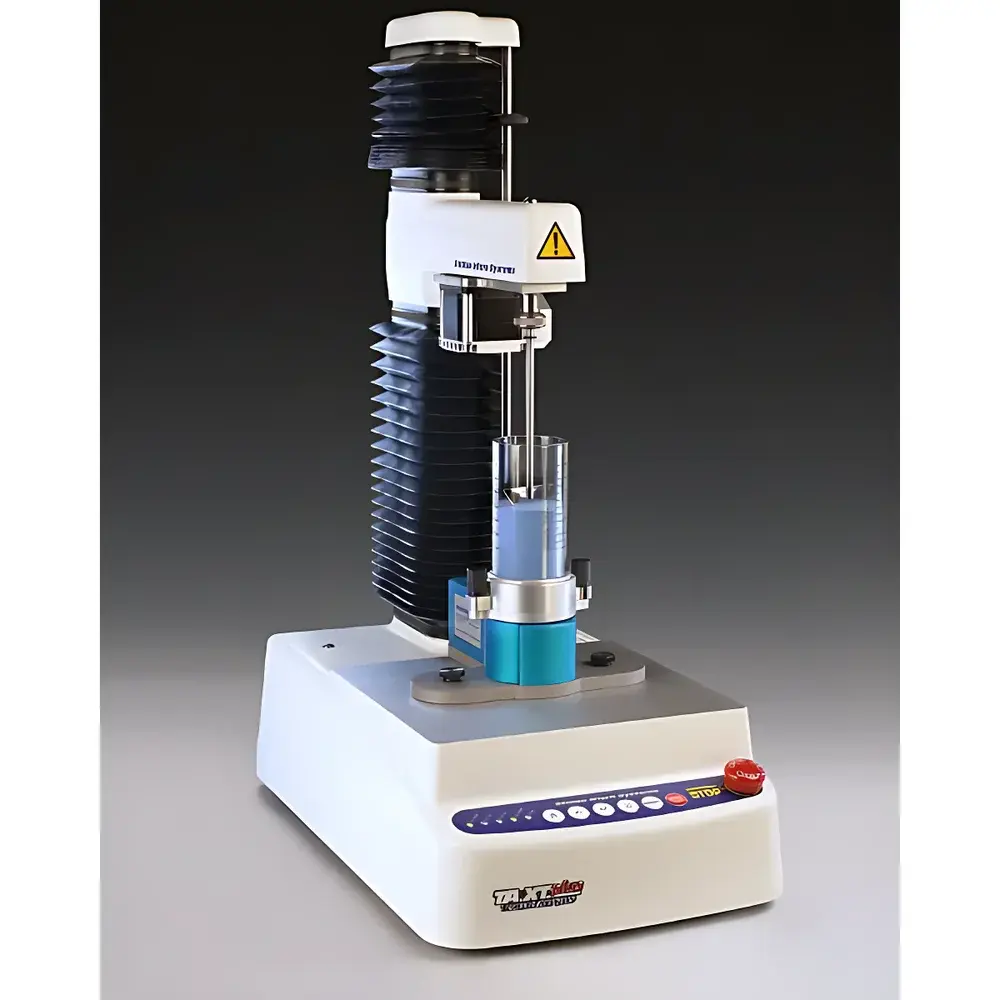
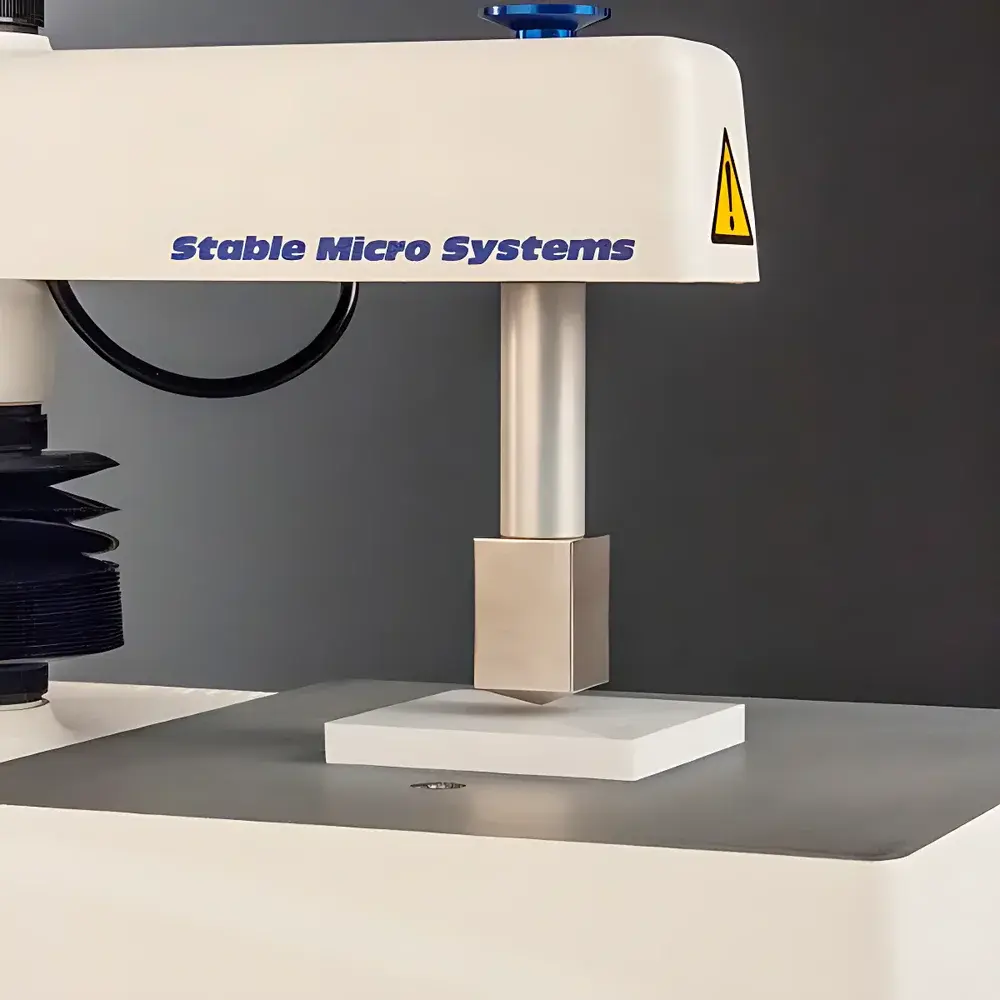
SMS TA.XTplus Pharmaceutical Texture Analyzer
| Brand | SMS |
|---|---|
| Origin | United Kingdom |
| Product Type | Tablet Hardness & Texture Testing System |
| Model | TA.XTplus (Pharmaceutical Configuration) |
| Compliance | ASTM D1435, USP <1217>, ISO 14660-1, FDA 21 CFR Part 11–ready |
Overview
The SMS TA.XTplus Pharmaceutical Texture Analyzer is a precision-controlled, motorized single-column universal testing instrument engineered for mechanical property characterization of solid and semi-solid pharmaceutical dosage forms. It operates on the fundamental principle of controlled-force compression/deformation testing, utilizing load cell–based force measurement and high-resolution displacement transduction to quantify textural parameters—including hardness, friability, elasticity, adhesiveness, cohesiveness, and disintegration kinetics—under programmable speed, distance, and force profiles. Unlike conventional hardness testers relying on static indentation geometry, the TA.XTplus implements instrumented indentation methodology compliant with ISO 14660-1, enabling automated calculation of Vickers-equivalent hardness without optical microscopy, alongside derived viscoelastic metrics such as stress relaxation ratio, plastic-to-elastic energy ratio, and creep compliance. Its modular probe system supports interchangeable fixtures—including cylindrical plungers, ball indenters, wedge blades, and custom-designed tablet holders—ensuring method flexibility across tablet hardness (USP ), capsule shell rupture, ointment extrusion, gel stiffness, and powder compaction analysis.
Key Features
- High-precision dual-range load cell (0.01 N–500 N) with ±0.1% full-scale accuracy and 0.001 N resolution, calibrated traceable to UKAS-accredited standards
- Programmable crosshead speed from 0.01 mm/s to 1000 mm/s, with real-time velocity feedback control ensuring repeatability across dynamic disintegration and rapid dissolution simulations
- Integrated barcode scanning interface enabling one-touch test protocol activation via QR or Code 128 barcodes—eliminating manual method selection errors and reducing operator training time
- Remote operation capability via secure web-based client (iOS/Android/tablet compatible), supporting live monitoring, parameter adjustment, and post-test data export during active assays
- Auto-email reporting module configured to dispatch CSV, PDF, and XML-formatted results—including force–distance curves, peak force values, area-under-curve integrals, and statistical summaries—to designated recipients immediately after test completion
Sample Compatibility & Compliance
The TA.XTplus accommodates standard pharmaceutical sample geometries per ICH Q5C and USP general chapters: intact tablets (2–25 mm diameter), coated capsules (size 00–5), hydrogels (3–10 mm thickness), topical ointments (in Petri dishes or syringe barrels), and granular powders (in confined die setups). All mechanical testing protocols align with regulatory expectations for quality-by-design (QbD) development: tablet hardness testing follows USP procedural requirements; disintegration assessment replicates oral cavity conditions (37 °C, pH 6.8 simulated saliva, 10 s pre-wetting cycle); and viscoelastic profiling meets ASTM D1435 guidelines for soft solids. The system architecture supports 21 CFR Part 11-compliant audit trails, electronic signatures, and role-based access control when deployed in GMP environments.
Software & Data Management
Exponent Connect™ software provides a validated, GLP/GMP-ready platform for method development, execution, and reporting. It includes over 400 pre-validated pharmaceutical test templates—covering tablet crushing strength, capsule puncture, gel rigidity (G′/G″ estimation via oscillatory ramp), and mucoadhesive bond strength—and allows full customization of test sequences, trigger conditions, and pass/fail criteria. Raw data are stored in encrypted SQLite databases with immutable timestamps, version-controlled method files, and automated backup to network drives or cloud storage (AWS S3 or Azure Blob). Built-in literature library contains peer-reviewed publications indexed by API class, formulation type, and QC application—accessible offline without internet dependency.
Applications
- Quantitative correlation of tablet hardness with dissolution rate (e.g., immediate-release vs. sustained-release formulations)
- Detection of microstructural defects in compressed tablets via non-linear force–displacement inflection points
- Characterization of polymer matrix erosion kinetics in hydrophilic matrix tablets using time-resolved penetration depth tracking
- Assessment of lyophilized cake mechanical integrity under simulated handling stresses (vibration, stacking pressure)
- Screening of excipient effects on granule compactibility and tablet tensile strength via Heckel analysis integration
FAQ
Does the TA.XTplus comply with USP for tablet hardness testing?
Yes—the system’s force calibration, probe geometry, loading rate (typically 1 mm/min), and data acquisition frequency (≥100 Hz) meet all instrumental requirements specified in USP . Validation documentation is supplied with each installation.
Can it differentiate between brittle fracture and plastic deformation during tablet compression?
Yes—by analyzing the slope discontinuity and hysteresis area in the unloading curve, the software calculates elastic recovery percentage and plastic energy absorption, enabling mechanistic classification of failure modes.
Is remote software validation support available for regulated laboratories?
Yes—SMS provides IQ/OQ/PQ documentation packages, URS alignment reviews, and on-site or virtual 21 CFR Part 11 configuration audits upon request.
What sample holder options exist for irregularly shaped dosage forms?
Custom-machined stainless-steel fixtures—including concave tablet cradles, capsule clamping jaws, and gel slab compression platens—are available under engineering consultation.
How is data integrity maintained during multi-user network deployment?
Role-based permissions, encrypted database transactions, automatic checksum verification, and daily integrity logs ensure ALCOA+ compliance across distributed lab networks.
Related Products





