
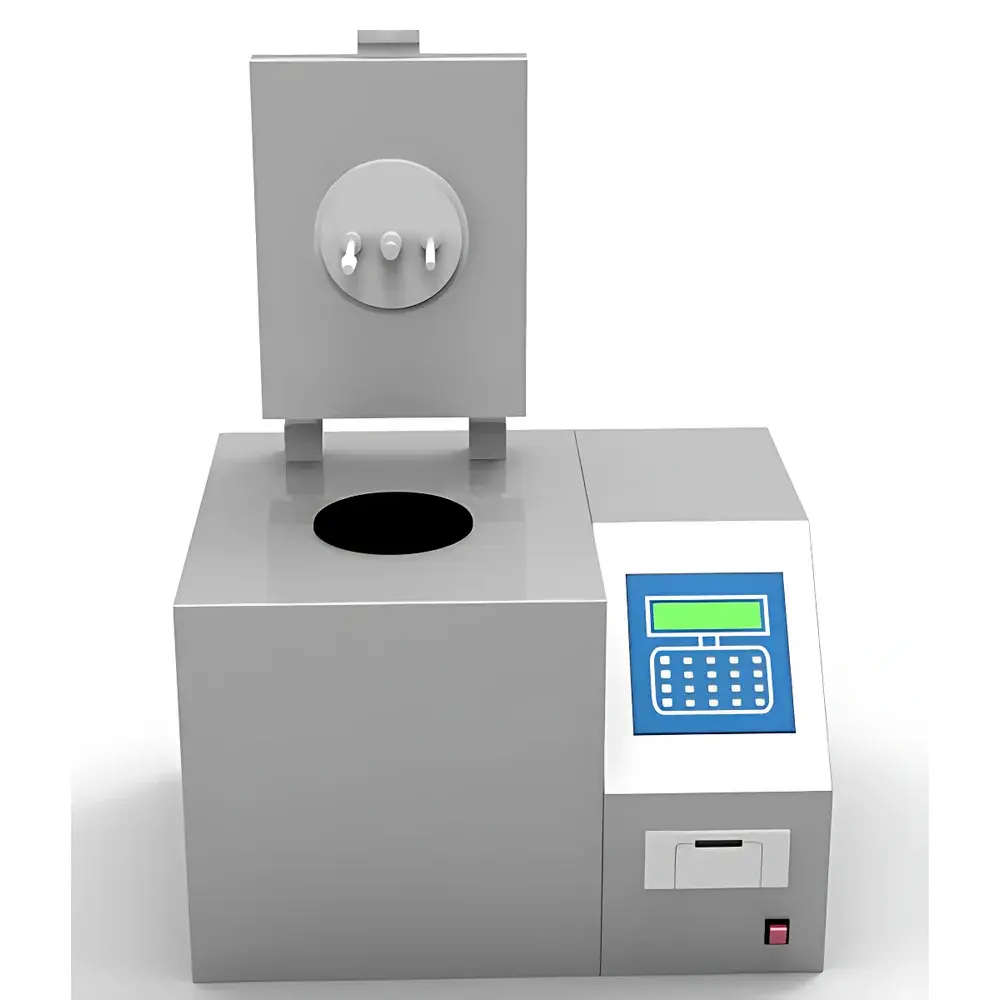
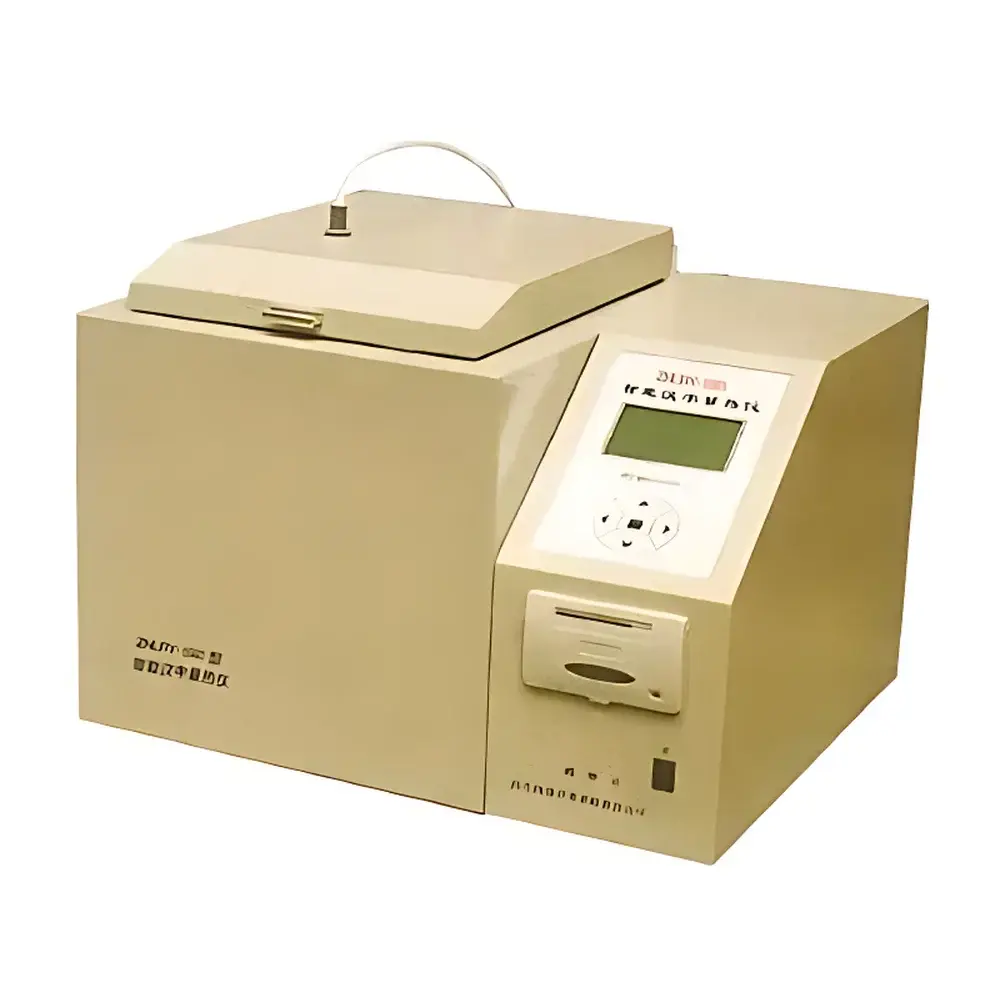
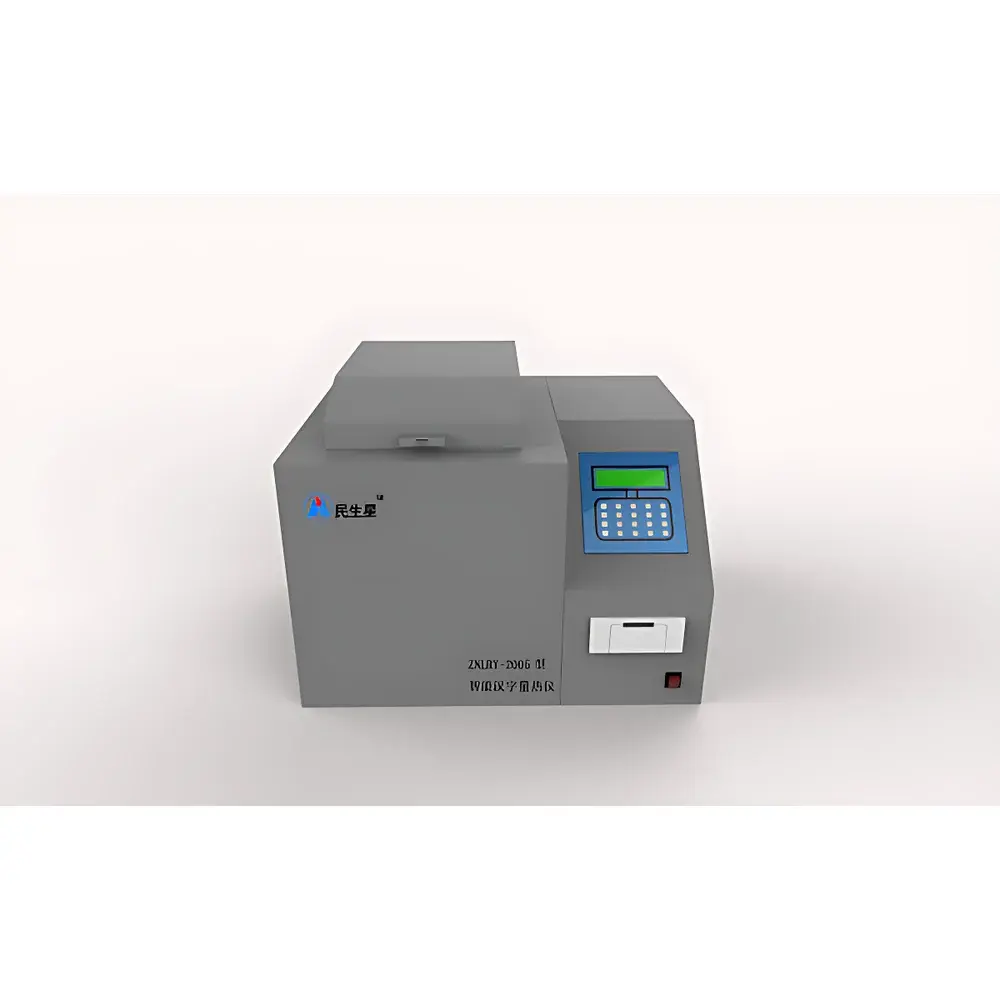
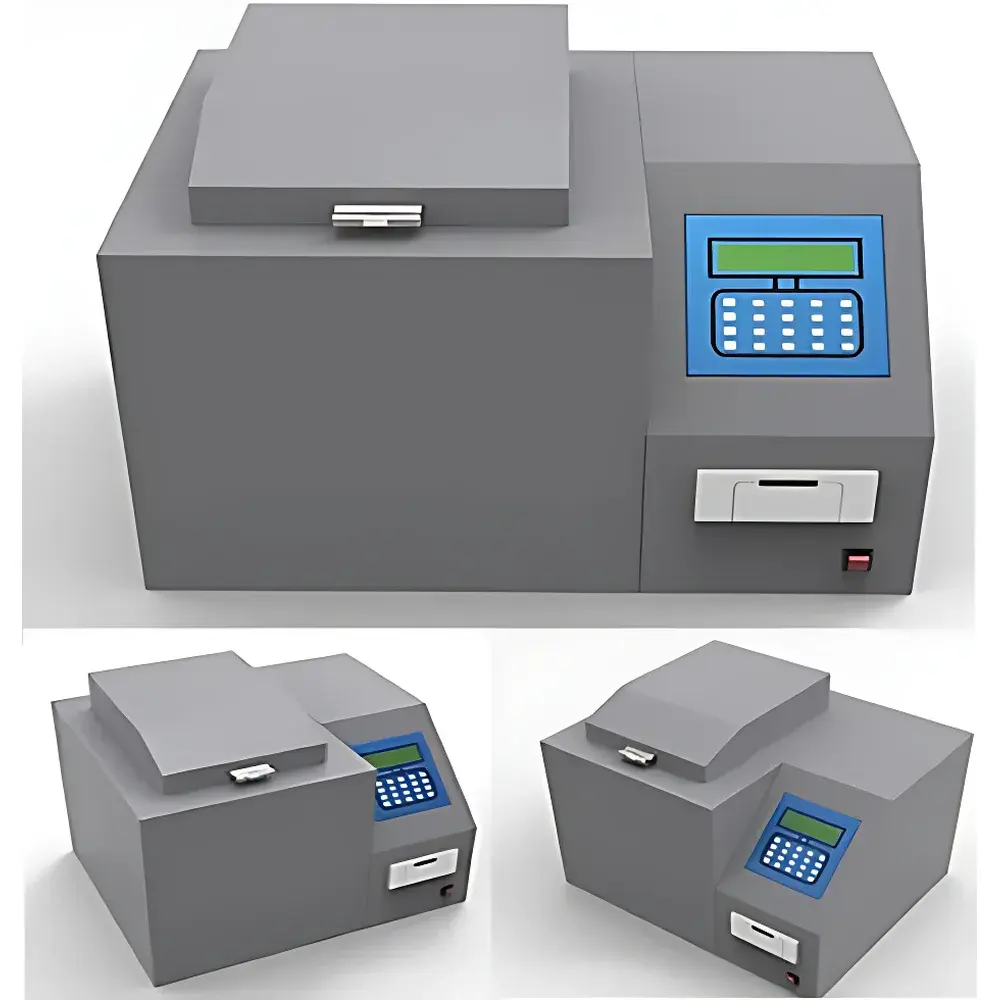
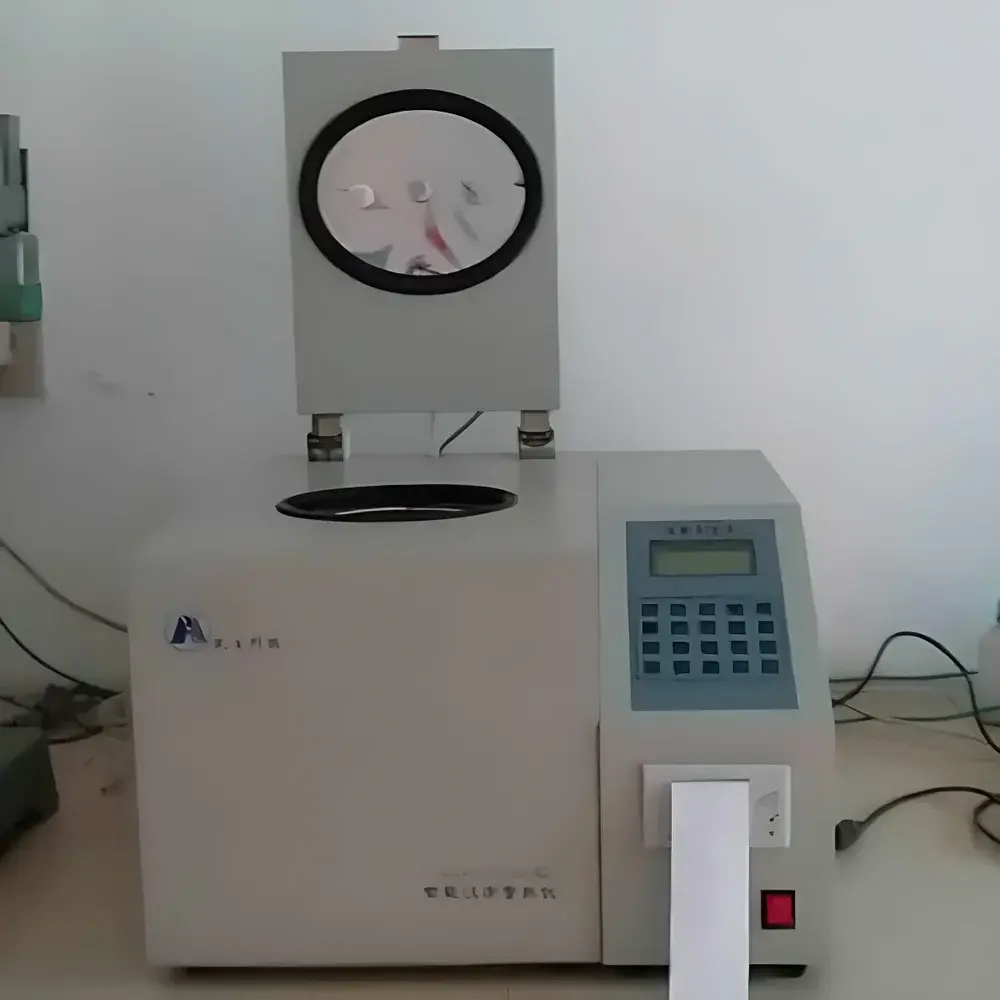
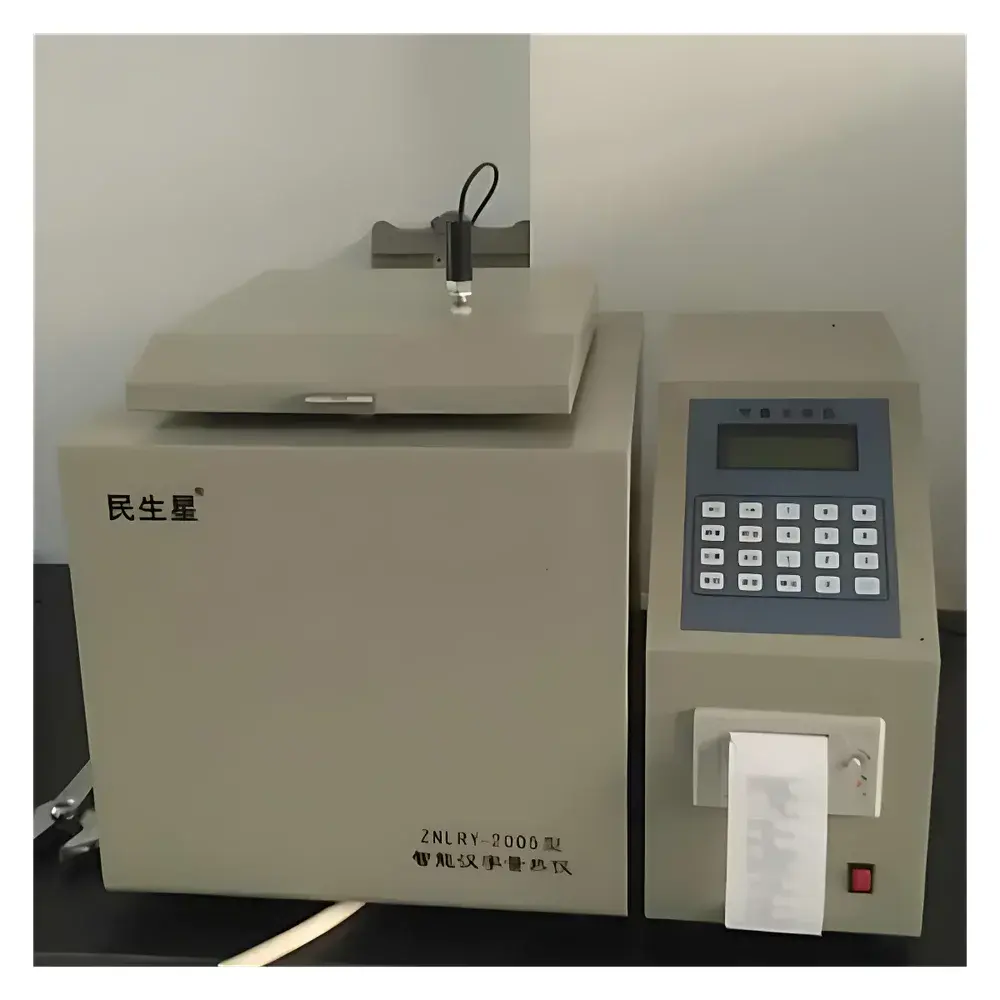
MingShen Science ZNLRY-2005 Intelligent Chinese-Display Isoperibolic Oxygen Bomb Calorimeter
| Brand | MingShen Science |
|---|---|
| Origin | Henan, China |
| Model | ZNLRY-2005 |
| Instrument Type | Oxygen Bomb Calorimeter |
| Measurement Mode | Isoperibolic (Constant-Temperature Jacket) |
| Temperature Range | 0 °C to 65 °C |
| Temperature Resolution | 0.0001 °C |
| Temperature Precision | ±0.003 °C |
| Single-Sample Test Duration | 18 min |
| Heat Capacity (Water Equivalent) | ~10,500 J/K |
| Inner Bucket Volume | 2000 mL |
| Outer Jacket Volume | ~20 L |
| Sample Mass Range | 0.5–1.5 g |
| Power Supply | AC 220 V, 50 Hz |
| Repeatability of Heat Capacity Calibration | <0.1% RSD |
Overview
The MingShen Science ZNLRY-2005 Intelligent Chinese-Display Isoperibolic Oxygen Bomb Calorimeter is a precision benchtop instrument engineered for the accurate determination of gross calorific value (GCV) and net calorific value (NCV) of solid and viscous liquid fuels in compliance with GB/T 213—2008, the Chinese national standard equivalent to ISO 1928 and ASTM D5865. It operates on the principle of isoperibolic (constant-temperature jacket) oxygen bomb calorimetry: a precisely weighed sample is combusted under high-pressure oxygen (typically ≥3.0 MPa) inside a stainless-steel bomb immersed in a thermally stabilized water bath. The temperature rise of the inner bucket—measured via dual platinum resistance thermometers (PRTs) for inner and outer jacket—is used to calculate energy release based on the calibrated heat capacity of the system. Designed for routine quality control and regulatory testing, the ZNLRY-2005 delivers high reproducibility in coal analysis laboratories, cement raw material testing facilities, and academic research environments where trace-level thermal resolution and robust automation are required.
Key Features
- Microcontroller-based real-time control architecture with integrated stirring, ignition, data acquisition, and thermal equilibrium monitoring
- Dual-path temperature measurement: independent inner-bucket (ITH) and outer-jacket (OT) sensors enable active thermal drift compensation and improved baseline stability
- High-resolution digital thermometry with 0.0001 °C resolution and ±0.003 °C absolute accuracy over 0–65 °C range
- Modular horizontal split-body design: separate thermostatic calorimeter chamber (430 × 340 × 370 mm) and electronic control unit (430 × 170 × 320 mm) reduce thermal crosstalk and simplify maintenance
- Built-in thermal printer with automatic result output—including air-dried basis (adb) GCV and as-received basis (arb) NCV—formatted per GB/T 213 reporting conventions
- Pre-configured test modes for coal and raw meal (cement feedstock), supporting low-energy samples with extended integration time and adaptive baseline correction
- Electrically isolated ignition circuit with jacket-shell conduction path ensures reliable, spark-free combustion initiation
Sample Compatibility & Compliance
The ZNLRY-2005 accepts solid fuels (e.g., bituminous coal, anthracite, biomass pellets) and semi-viscous materials (e.g., cement raw meal, dried sludge, foodstuffs) within the 0.5–1.5 g mass range. Its oxygen-resistant bomb assembly complies with pressure safety requirements for standard 30 bar (3 MPa) operation. The instrument meets the metrological and procedural criteria defined in GB/T 213—2008, which references ISO 1928:2009 (Solid mineral fuels — Determination of gross calorific value) and aligns with ASTM D5865–22 (Standard Test Method for Gross Calorific Value of Coal and Coke). While not validated for FDA 21 CFR Part 11 or GLP audit trails out-of-the-box, its deterministic measurement workflow, timestamped thermal records, and calibration traceability support internal validation protocols in regulated QC labs.
Software & Data Management
The ZNLRY-2005 operates autonomously via embedded firmware without external PC dependency. All operational states—including ignition confirmation, stirrer RPM verification, thermal equilibrium detection, and delta-T integration—are logged internally with real-time clock stamping. Measurement data (raw ΔT, corrected ΔT, heat capacity factor, GCV/NCV values) are stored in non-volatile memory and printed directly to the front-panel thermal printer. For laboratory information management system (LIMS) integration, users may manually transcribe results or interface via RS-232 serial port (optional configuration) to export ASCII-formatted reports. Calibration certificates for heat capacity (≈10,500 J/K) are generated during benzoic acid verification runs and include repeatability statistics (<0.1% RSD), satisfying ISO/IEC 17025 documentation requirements for accredited testing.
Applications
- Routine gross calorific value determination of commercial coal batches per power plant procurement specifications
- Quality assurance of cement kiln feedstocks (raw meal) where low-calorific input affects clinker formation kinetics
- Energy content evaluation of alternative solid fuels (wood chips, agricultural residues, RDF) for sustainability reporting
- Academic thermodynamics studies requiring high-resolution isoperibolic calorimetric data under controlled ambient conditions
- Regulatory compliance testing for municipal solid waste incineration feed characterization
FAQ
What standards does the ZNLRY-2005 comply with?
It conforms to GB/T 213—2008, which is technically aligned with ISO 1928:2009 and ASTM D5865–22 for gross calorific value determination.
Can it measure net calorific value (NCV) directly?
Yes—the instrument calculates and prints both air-dried basis (adb) gross calorific value and as-received basis (arb) net calorific value using built-in moisture and hydrogen correction algorithms per GB/T 213.
Is external computer software required for operation?
No—the system is fully self-contained with onboard microcontroller, LCD interface, and thermal printer; no PC or proprietary software is needed for standard operation.
What is the typical calibration frequency?
Heat capacity calibration using certified benzoic acid (e.g., NIST SRM 39j) is recommended before each analytical session or at least daily when operating under ISO/IEC 17025 conditions.
Does the instrument support ASTM D5865-compliant corrections for nitric acid and sulfuric acid formation?
Yes—its firmware applies standardized acid correction factors per ASTM D5865 Annex A1, including ΔHHNO₃ and ΔHH₂SO₄ adjustments based on measured nitrogen and sulfur content inputs.



