
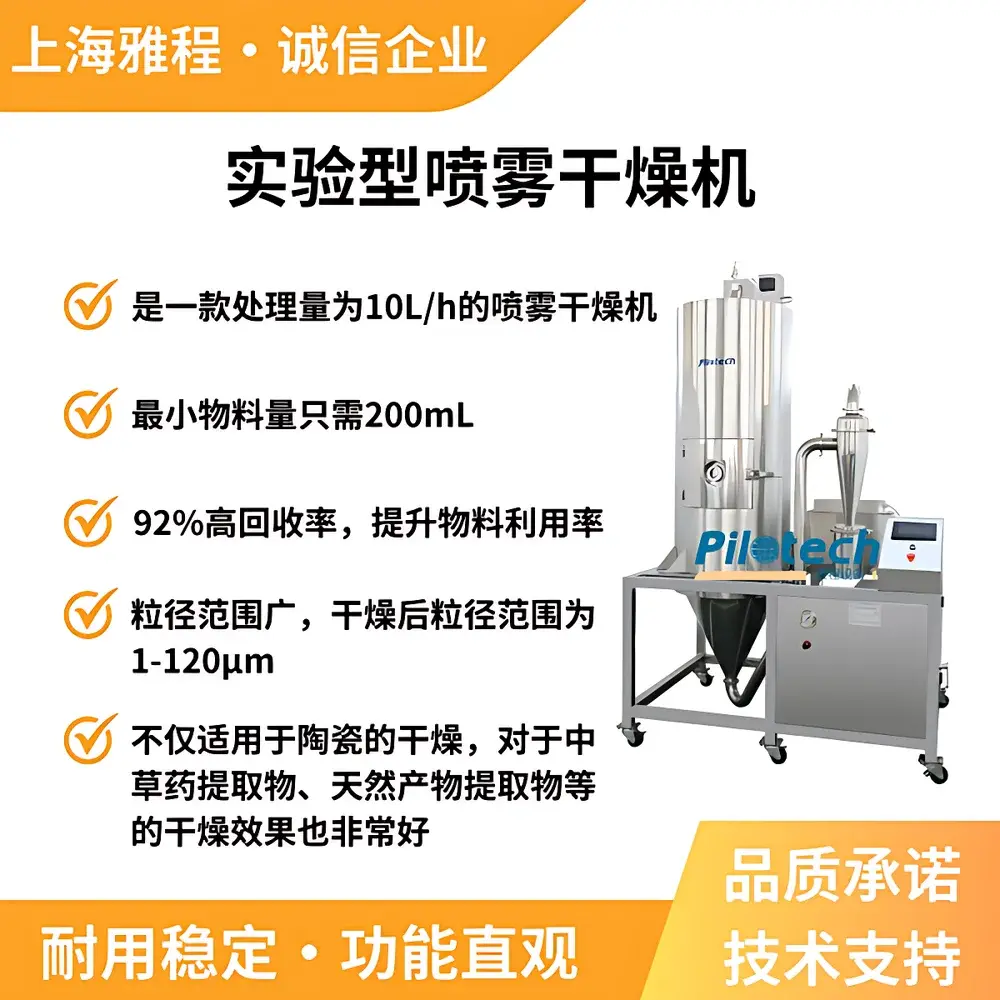
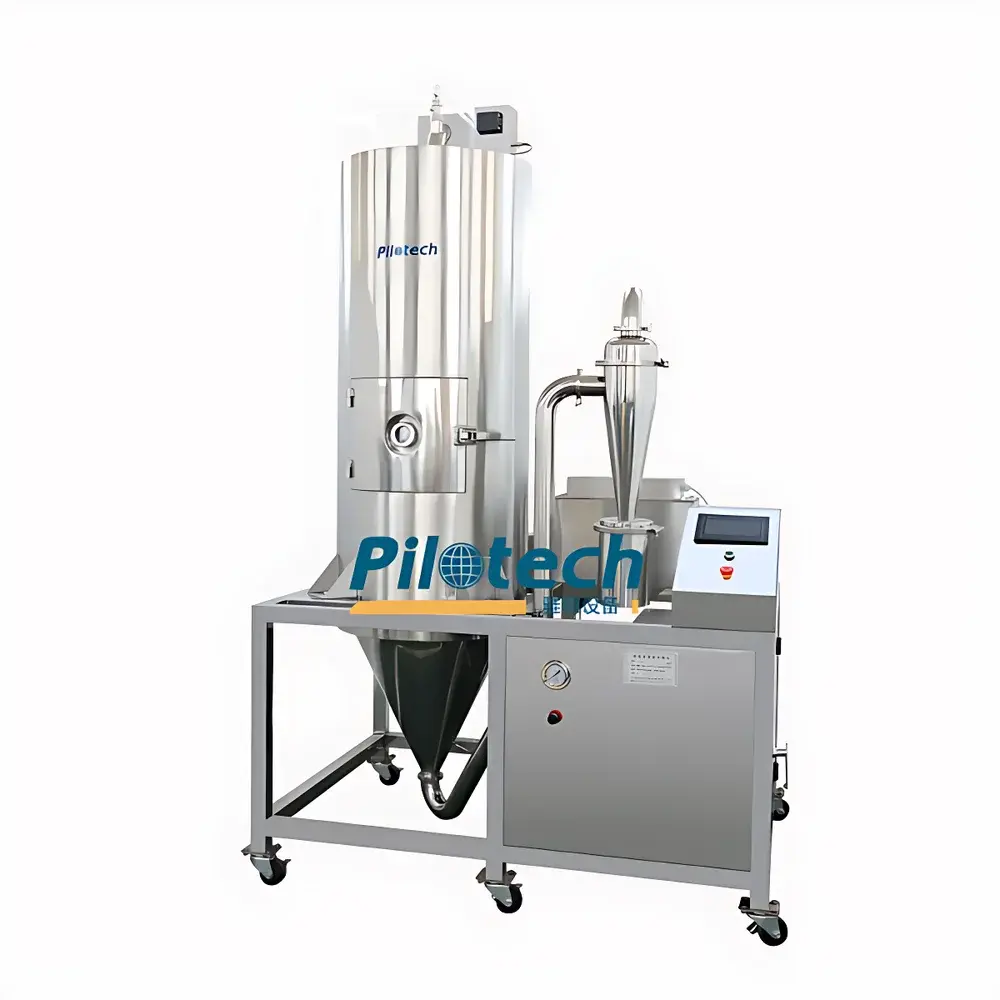
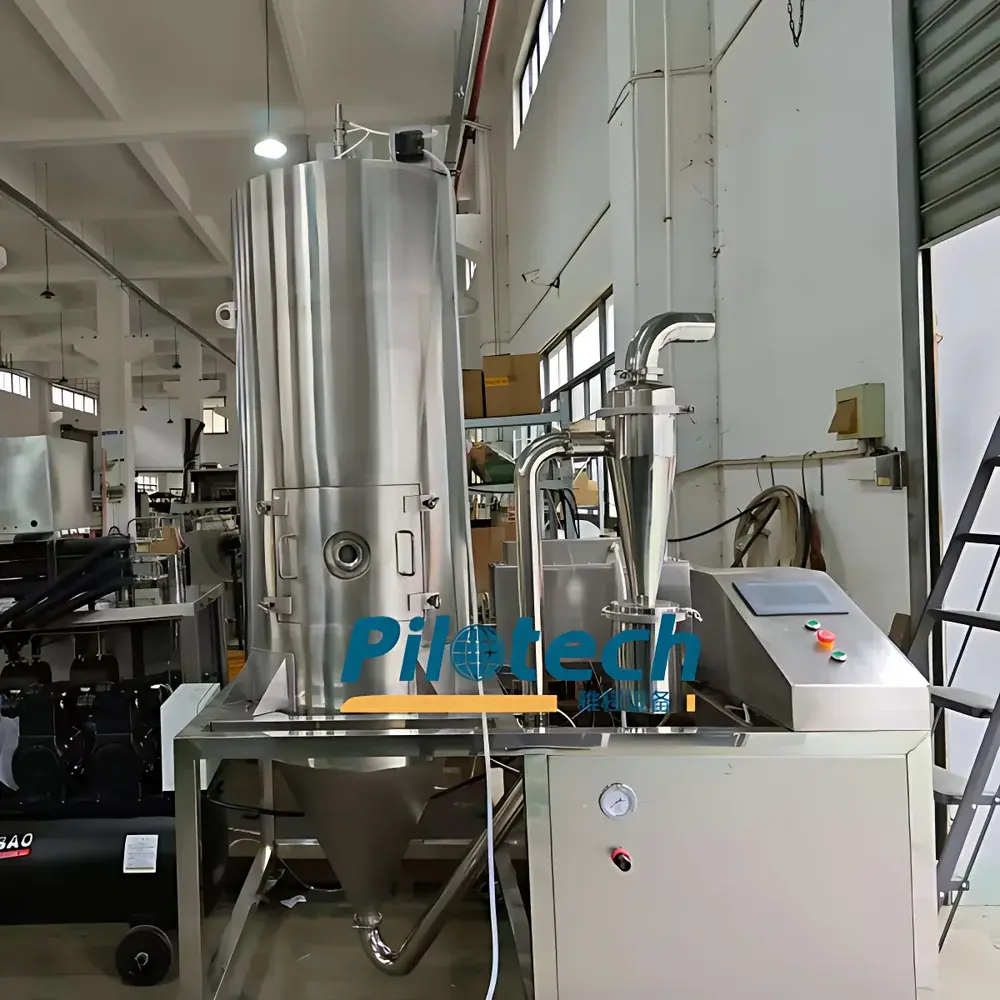
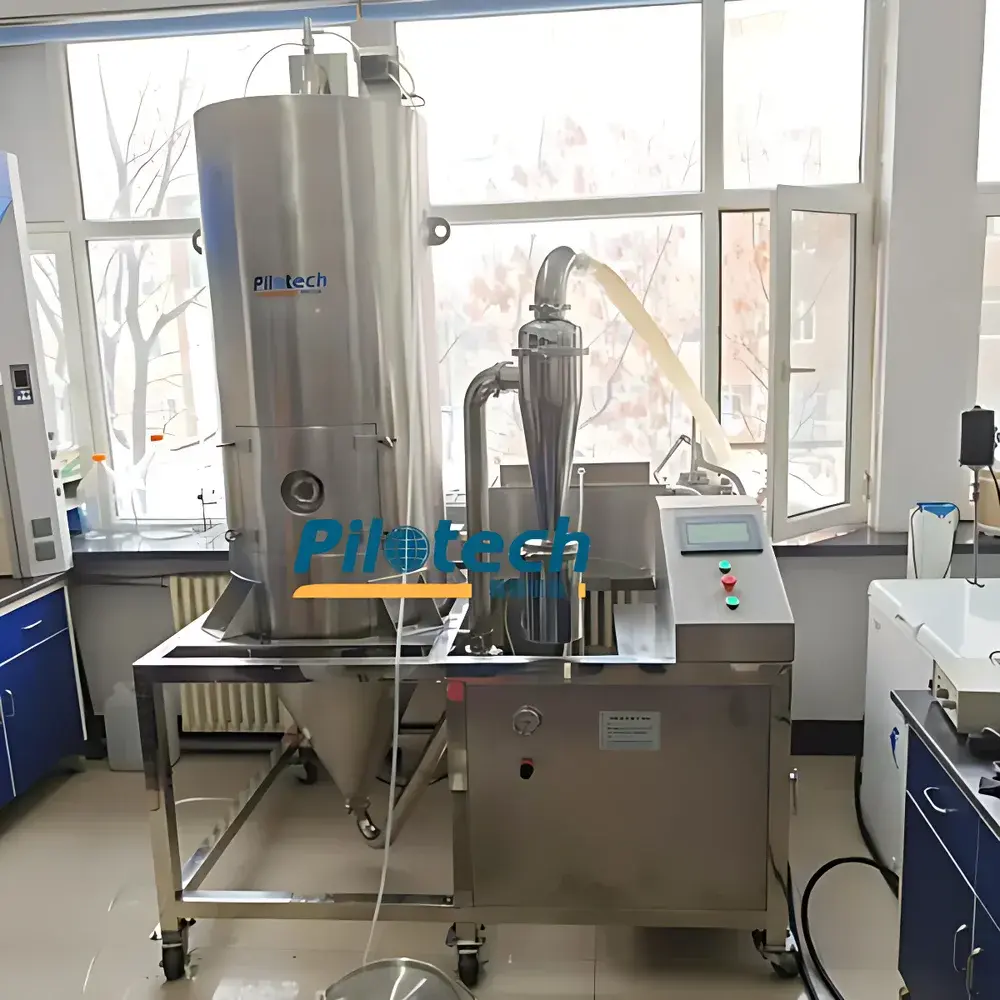
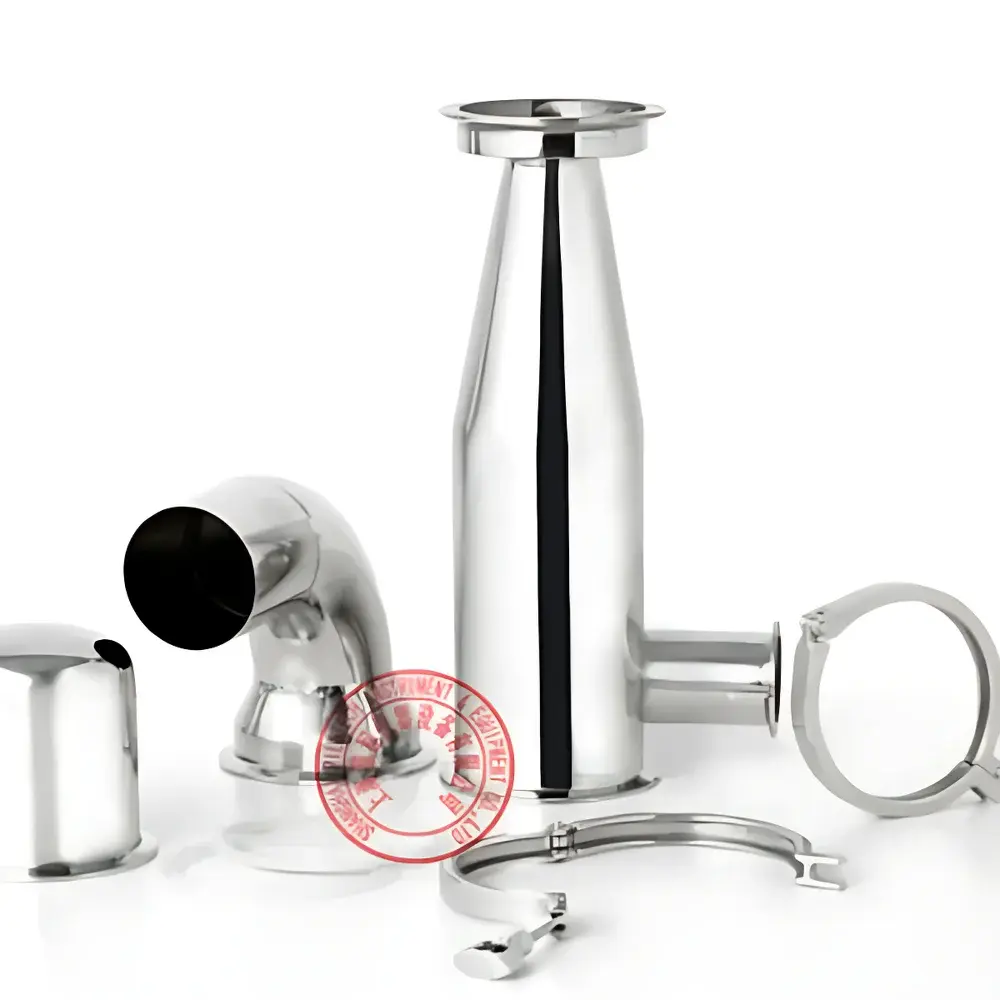
雅程 YC-029 Pilot-Scale Spray Dryer
| Brand | Pilotech |
|---|---|
| Origin | Shanghai, China |
| Manufacturer Type | Direct Manufacturer |
| Country of Origin | China |
| Model | YC-029 |
| Sample Type Compatibility | Aqueous Solutions Only |
| Maximum Feed Rate | 10,000 mL/h |
| Inlet Air Temperature Range | 105–300 °C |
| Particle Size Output Range | 1–120 µm |
| Heating Power | 20 kW |
| Noise Level | <60 dB(A) |
| Control Interface | Bilingual (English/Chinese) Touchscreen LCD |
| Drying Chamber & Collection Components | AISI 304 Stainless Steel |
| Temperature Control Accuracy | ±2 °C (PID) |
| Nozzle Orifice Diameter | 3.0 mm (optional) |
| Extended Coaxial Atomizer Length | ≥310 mm |
| Minimum Feed Volume | 200 mL per run |
Overview
The Pilotech YC-029 Pilot-Scale Spray Dryer is an engineered solution for laboratory-scale and pre-commercial development of free-flowing, spherical particulates from aqueous feedstocks. Based on the principle of flash evaporation via concurrent-flow spray drying—where atomized liquid droplets are rapidly dried upon contact with heated air—the YC-029 delivers reproducible particle morphology and narrow size distribution under controlled thermal and fluidic conditions. Designed for transitional use between benchtop R&D and small-batch production, it bridges the gap between academic feasibility studies and GMP-aligned process validation. Its operational envelope—spanning inlet temperatures from 105 °C to 300 °C and feed rates from 200 mL to 10,000 mL/h—enables systematic parameter screening for critical quality attributes including residual moisture (<5% w/w typical), bulk density (0.2–0.6 g/cm³), and flowability (Hausner ratio <1.4). The system operates without excipients or carriers, preserving native chemical integrity—essential for ceramic precursors, botanical extracts, and heat-labile biopolymers.
Key Features
- High-precision PID-controlled inlet air temperature regulation (±2 °C accuracy) with real-time dynamic feedback across the full 105–300 °C range
- Extended coaxial stainless-steel atomizer (≥310 mm length) ensuring symmetrical droplet dispersion and eliminating wall impaction during drying
- Adjustable vertical nozzle positioning for optimization of spray trajectory relative to drying chamber geometry and airflow profile
- Full-color 7-inch touchscreen interface with animated process visualization—including live inlet temperature, peristaltic pump RPM, and fan frequency
- Integrated safety architecture: automatic shutdown sequence isolates heating elements while maintaining fan operation to prevent thermal damage
- AISI 304 stainless-steel construction for all wetted parts (drying chamber, cyclone separator, collection vessel, and transfer tubing), compliant with ISO 8573-1 Class 4 compressed air purity requirements
- Low-noise design (<60 dB[A] at 1 m distance) suitable for shared laboratory environments without acoustic isolation
- Energy-efficient 20 kW heating system optimized for pilot-scale throughput, achieving >65% thermal utilization efficiency under standard operating conditions
Sample Compatibility & Compliance
The YC-029 is validated for aqueous-based suspensions and solutions only—including ceramic slurries (e.g., alumina, zirconia, silicon carbide), herbal extracts (e.g., *Ginkgo biloba*, *Panax ginseng*), natural polymers (chitosan, alginate), and inorganic salt solutions. It is not rated for organic solvents, flammable liquids, or viscous non-aqueous media. All material contact surfaces meet FDA-compliant surface finish standards (Ra ≤ 0.8 µm), supporting cleaning validation per ASTM E3106-18. While not certified for cGMP manufacturing, the unit’s traceable temperature logging, password-protected parameter locking, and audit-ready operational records align with GLP documentation frameworks and support Phase I–II formulation development under USP and ICH Q5C guidelines.
Software & Data Management
The embedded control firmware supports time-stamped data export (CSV format) of all critical process variables—temperature setpoint/actual, pump speed, fan frequency, and runtime—via USB port. Optional Ethernet connectivity enables remote monitoring and integration into LabVantage or Thermo Fisher SampleManager LIMS environments. All parameter changes are logged with user ID and timestamp, satisfying basic 21 CFR Part 11 electronic record requirements for non-production research use. Firmware updates are delivered via secure HTTPS download with SHA-256 checksum verification.
Applications
- Ceramic powder synthesis: Production of sinterable, spherical oxide particles (Al₂O₃, ZrO₂, SiO₂) with tunable median diameter (D50 = 5–80 µm) and low agglomeration index
- Phytochemical stabilization: Conversion of aqueous plant extracts into stable, hygroscopicity-controlled powders without surfactants or anti-caking agents
- Functional food ingredient development: Encapsulation-free drying of probiotic supernatants, enzyme solutions, and vitamin complexes
- Inorganic nanomaterial precursor drying: Preparation of uniform metal hydroxide or carbonate particles for subsequent calcination
- Academic process mapping: DOE-driven studies correlating inlet temperature, feed rate, and atomization pressure to final powder properties (flow, compressibility, dissolution)
FAQ
Can the YC-029 handle organic solvents such as ethanol or acetone?
No. The system is designed exclusively for aqueous feed solutions and does not incorporate explosion-proof components or solvent recovery capability.
What is the minimum sample volume required for a single drying run?
The system supports discrete runs starting from 200 mL, enabling statistically valid trials without excessive material consumption.
Is the particle size distribution adjustable within the 1–120 µm range?
Yes—through coordinated modulation of inlet temperature, feed rate, atomization pressure, and nozzle orifice selection (standard 3.0 mm; optional variants available).
Does the unit comply with ISO/IEC 17025 calibration requirements?
Temperature sensors are factory-calibrated against NIST-traceable references; users may perform in-house verification using calibrated thermocouple probes per ISO/IEC 17025 Clause 6.5.
Can process data be exported for regulatory submission?
All operational logs are exportable in CSV format with full metadata (date/time, operator ID, parameter values), supporting inclusion in IND/IMPD dossiers where pilot-scale data is referenced.



