
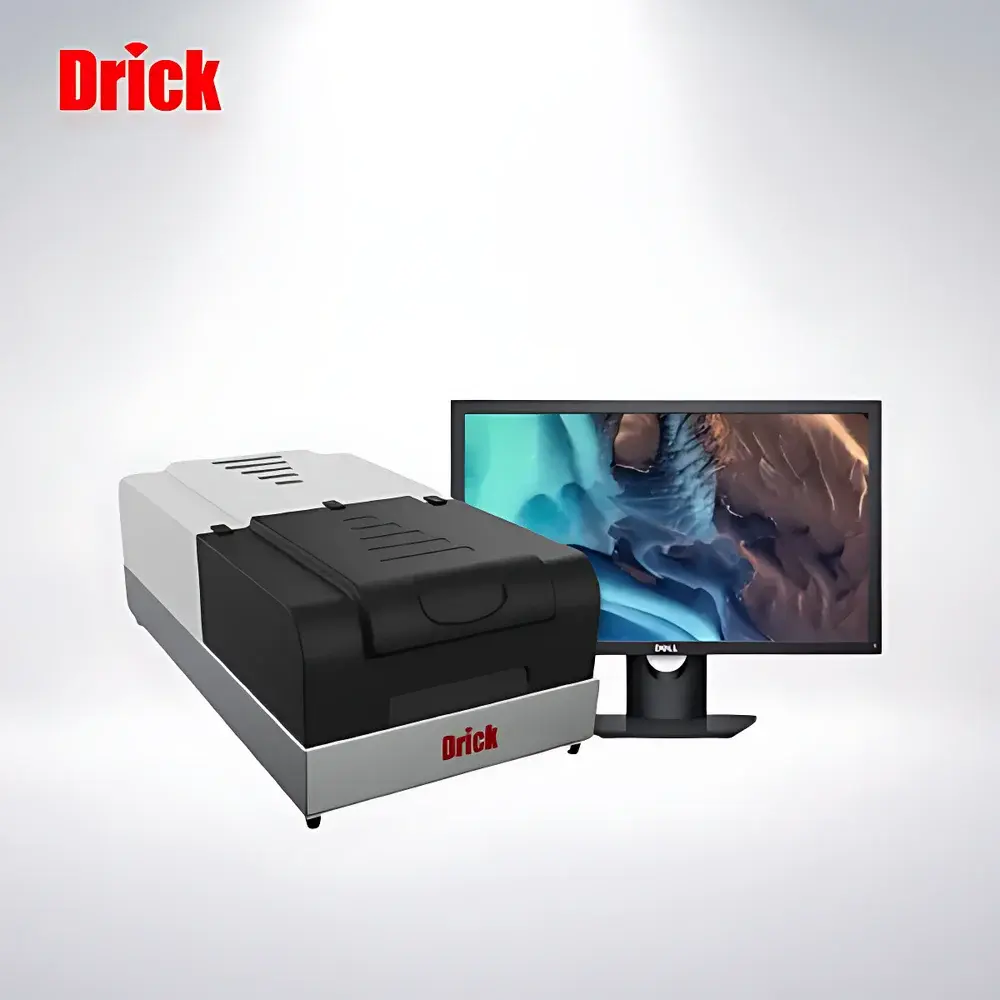
Drick DRK310 Gas Permeation Analyzer – Differential Pressure Method (Triple-Chamber Averaging)
| Brand | Drick |
|---|---|
| Origin | Shandong, China |
| Manufacturer Type | Direct Manufacturer |
| Country of Origin | China |
| Model | DRK310 |
| Price | USD 27,500 (FOB Qingdao) |
Overview
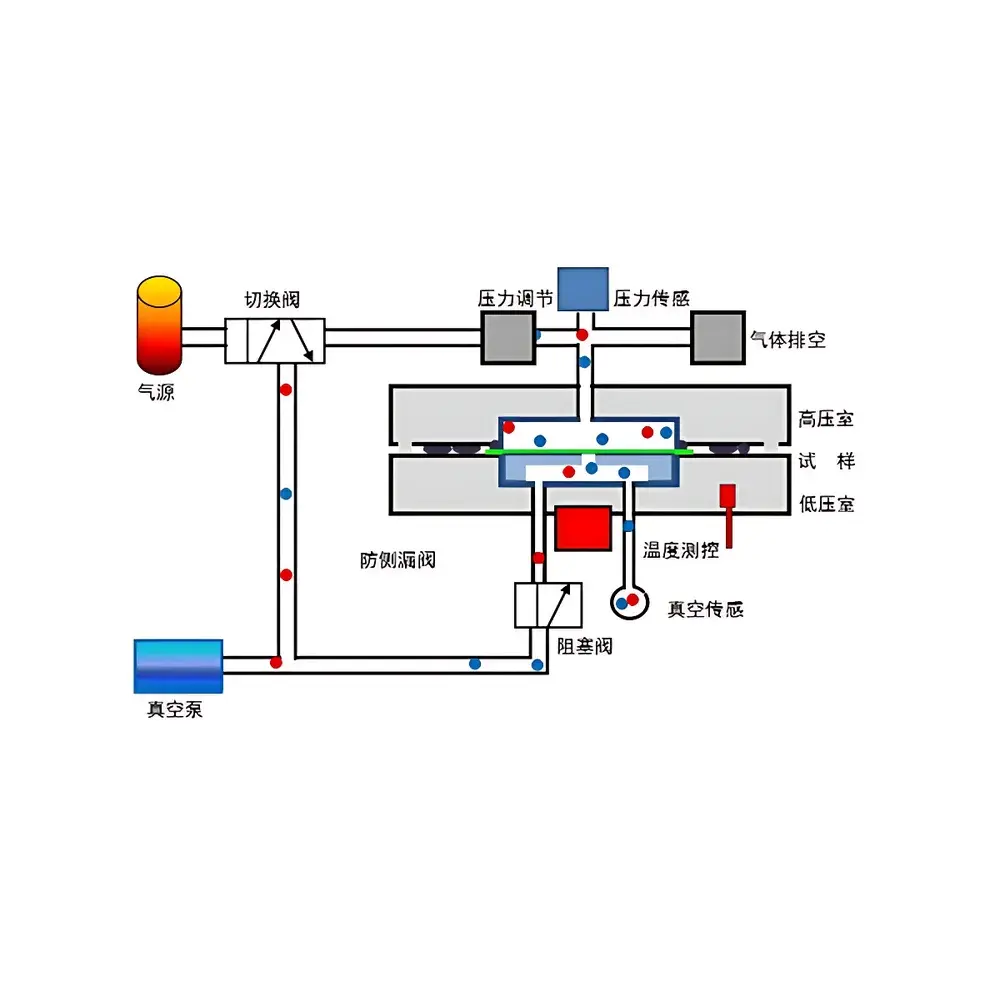
The Drick DRK310 Gas Permeation Analyzer is a precision-engineered differential pressure (manometric) instrument designed for quantitative determination of gas transmission rates (GTR) through polymeric and composite barrier materials. Operating on the fundamental principle of Fick’s first law of diffusion under steady-state conditions, the DRK310 establishes a controlled, constant partial pressure gradient across a conditioned test specimen—typically plastic films, laminates, metallized foils, rubber sheets, or high-barrier packaging substrates. The system simultaneously monitors pressure rise in an evacuated downstream (low-pressure) chamber while maintaining a stable upstream (high-pressure) gas environment. By measuring the rate of pressure increase over time—and correcting for chamber volume, temperature, and effective test area—the analyzer calculates gas permeability (cm³·mm/m²·day·kPa), permeance (cm³/m²·day·kPa), and transmission rate (cm³/m²·day) for O₂, CO₂, N₂, and other non-corrosive or low-toxicity gases including H₂S and SO₂ (when equipped with optional exhaust scrubbing and ventilation interface). Its triple-chamber averaging architecture eliminates single-point measurement bias by performing parallel, synchronized tests on three identical specimens and reporting statistically robust mean values with standard deviation—critical for QC laboratories requiring ISO/IEC 17025-compliant repeatability.
Key Features
- Triple independent test chambers with synchronized vacuum evacuation, pressure equilibration, and real-time differential pressure monitoring—enabling true statistical averaging per ASTM D1434 Annex A3.
- High-stability semiconductor-based dual-mode temperature control (–10 °C to 60 °C, ±0.1 °C), operating in parallel configuration to ensure uniform thermal conditioning across all chambers without cross-talk.
- Imported ultra-low-drift capacitive vacuum transducers (0–100 Pa range, 0.01 Pa resolution) and piezoresistive pressure sensors (0–0.6 MPa, 0.001 MPa resolution) calibrated traceably to NIST standards.
- Dynamic background leakage compensation algorithm that distinguishes true permeation signal from system outgassing and seal-related drift during initial stabilization phase.
- Dedicated toxic gas management subsystem: integrated catalytic scrubber, fail-safe solenoid venting path, and negative-pressure containment enclosure compliant with OSHA 1910.1200 and EU CLP hazard communication requirements.
- Fully automated test sequence: auto-leak check, vacuum ramp profiling, pressure hold validation, permeation data acquisition, and end-of-test purge—all initiated via single-button command.
- Embedded industrial PC with 21.5″ touchscreen display; local data storage with power-fail recovery (no data loss during unexpected shutdown).
Sample Compatibility & Compliance
The DRK310 accommodates circular specimens up to Ø100 mm (standard test area: 50.27 cm²), with optional fixtures supporting rigid containers (bottles, trays) and humidity-conditioned samples (when paired with external RH control module). It is validated for use with FDA-listed food-contact polymers, pharmaceutical blister lidding foils (per YBB 00082003), and medical device packaging per ISO 11607-1. Regulatory compliance includes: GB/T 1038–2000 (China), ASTM D1434–2021 (Standard Test Method for Determining Gas Permeability of Plastic Film and Sheeting), ISO 2556:2001 and ISO 15105-1:2007 (Plastics — Determination of gas transmission rate), JIS K7126-A:2022 (Japanese Industrial Standard), and supports audit-ready documentation for GLP and GMP environments.
Software & Data Management
The included PermeaSoft™ v4.2 analysis suite provides full ICH- and FDA 21 CFR Part 11–compliant functionality when configured with the optional GMP Computerized System Module. This includes role-based user authentication (administrator, operator, reviewer), electronic signatures, immutable audit trails recording all parameter changes, test start/stop events, calibration logs, and raw sensor data timestamps. All reports export in PDF/A-1b and CSV formats with embedded metadata (test ID, operator, instrument serial number, environmental ambient log). Data integrity is reinforced via SHA-256 hashing of measurement files and automatic backup to network drives or encrypted USB media.
Applications
- Quality control of pharmaceutical blister packaging (PVC/PVDC, Alu-Alu) for oxygen barrier validation against USP and EP 3.2.1.
- R&D evaluation of nanocomposite films, SiOₓ-coated PET, and graphene-enhanced barriers for flexible electronics encapsulation.
- Regulatory submission support for FDA 510(k) and CE-marked sterile barrier systems.
- Accelerated shelf-life modeling via Arrhenius-based permeability temperature dependence studies (enabled by precise ±0.1 °C thermal control).
- Supplier qualification testing per ISO/TS 22002-4 for food packaging material vendors.
FAQ
What gases can be tested with the DRK310?
O₂, CO₂, N₂, He, Ar, and low-hazard gases such as H₂S and SO₂—subject to proper exhaust handling and operator safety protocols.
Is humidity control integrated into the base system?
No. Relative humidity conditioning requires the optional RH Control Unit (DRK-RH100), which interfaces with the main controller for simultaneous T/RH permeation studies per ISO 15105-2.
Does the system meet FDA 21 CFR Part 11 requirements out of the box?
Basic data logging complies with ALCOA+ principles; full Part 11 compliance—including electronic signatures and audit trail—requires activation of the GMP Computerized System software module.
Can the DRK310 test rigid containers like bottles or cups?
Yes, using the optional Container Test Fixture Kit (DRK-CTF3), which adapts the chamber geometry and sealing mechanism for cylindrical and rectangular rigid packages.
What vacuum level is achieved prior to test initiation?
The system evacuates both high- and low-pressure chambers to ≤1 Pa (≤0.01 mbar) within 15 minutes using the integrated two-stage rotary vane pump (ultimate vacuum: 0.1 Pa).





