
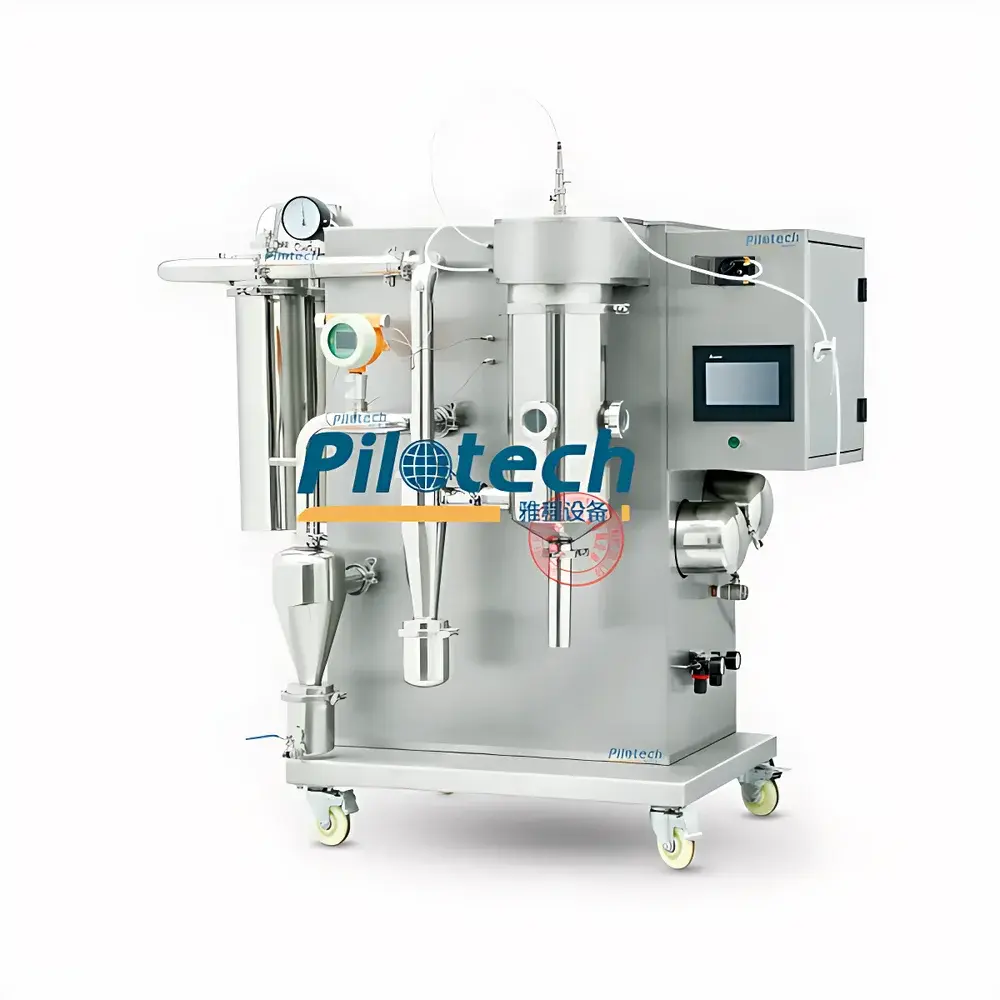
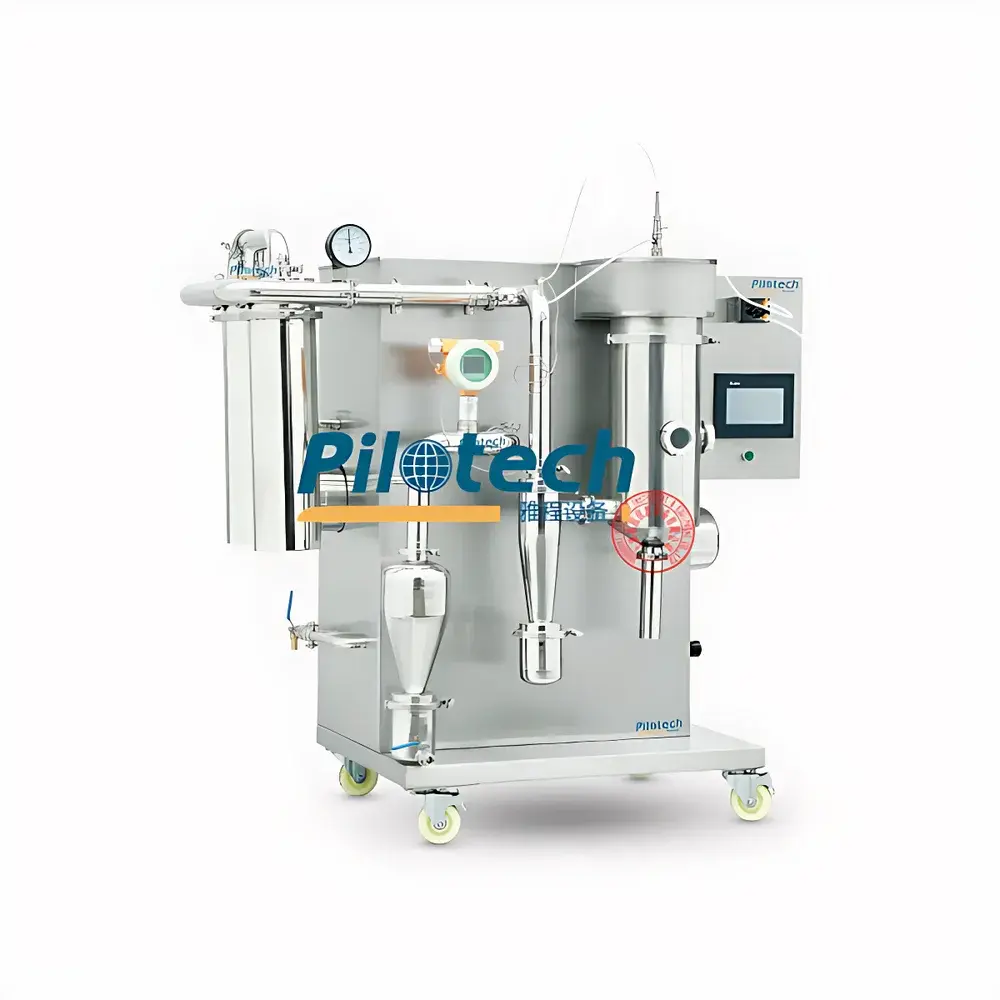
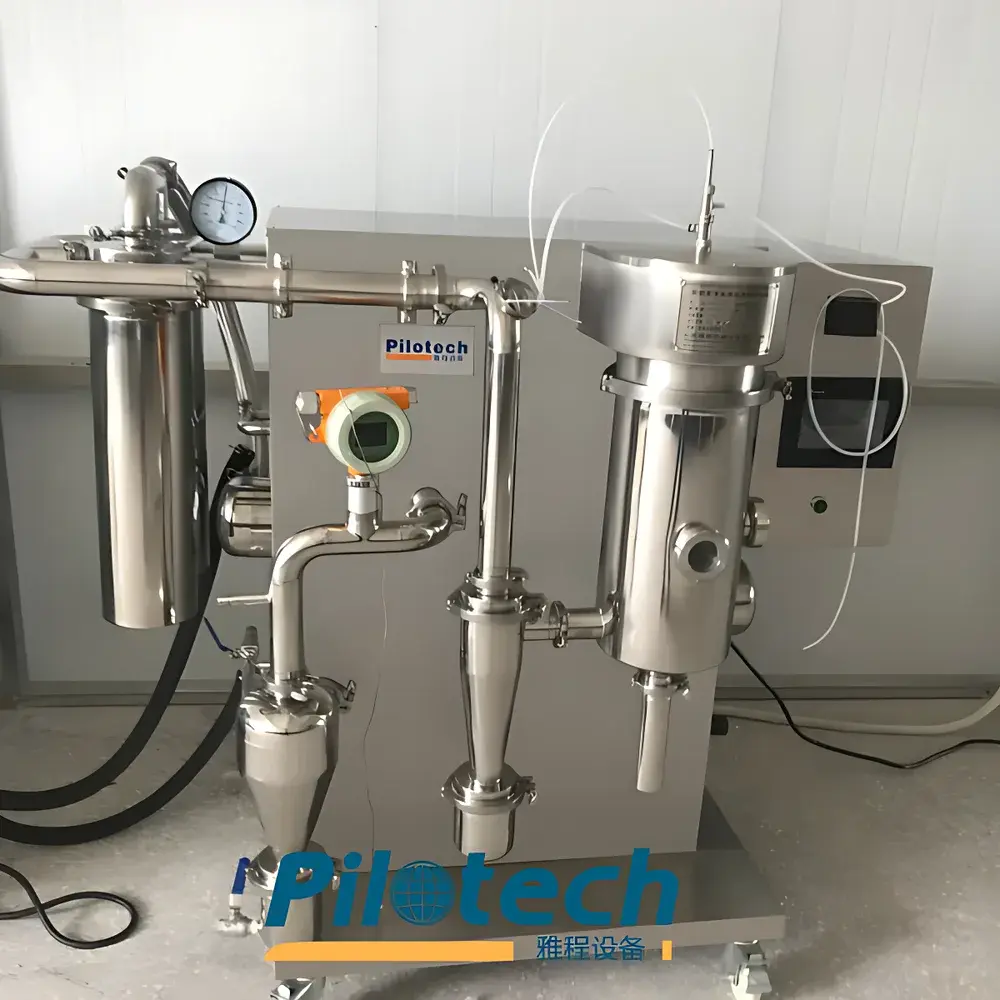
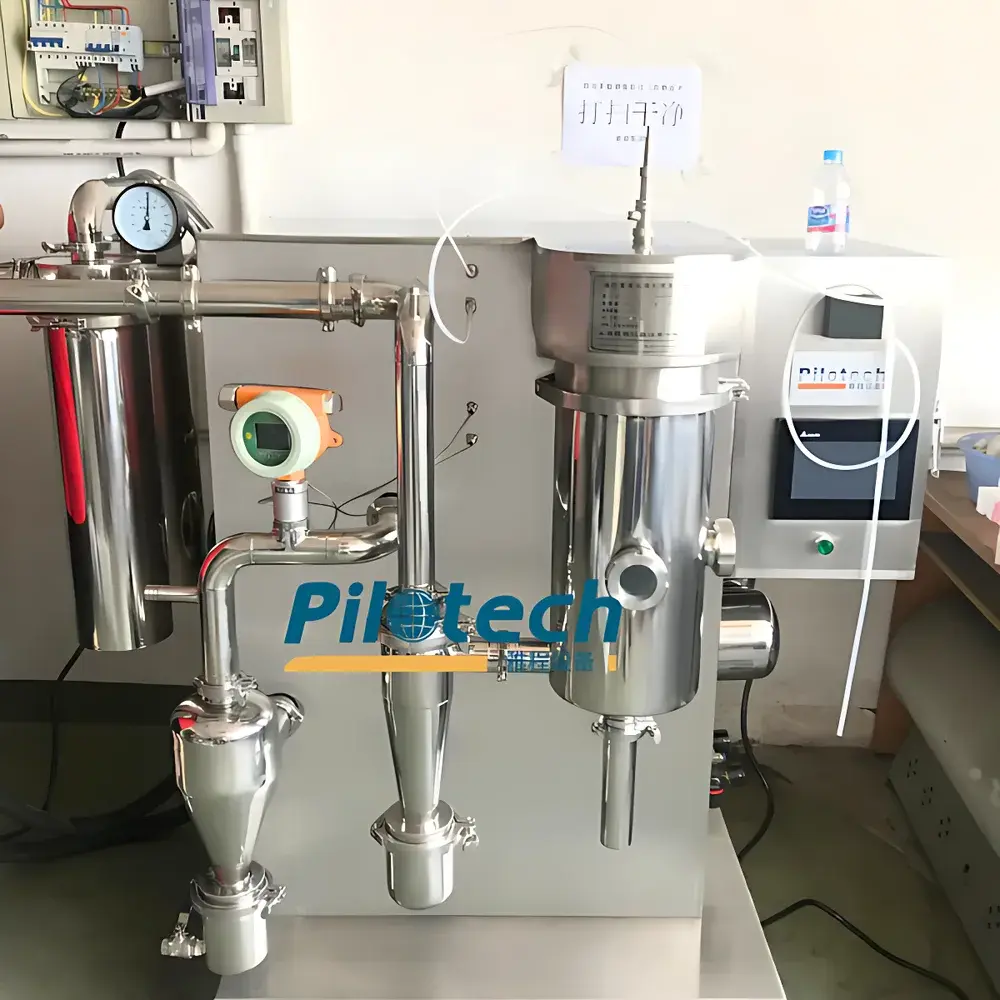
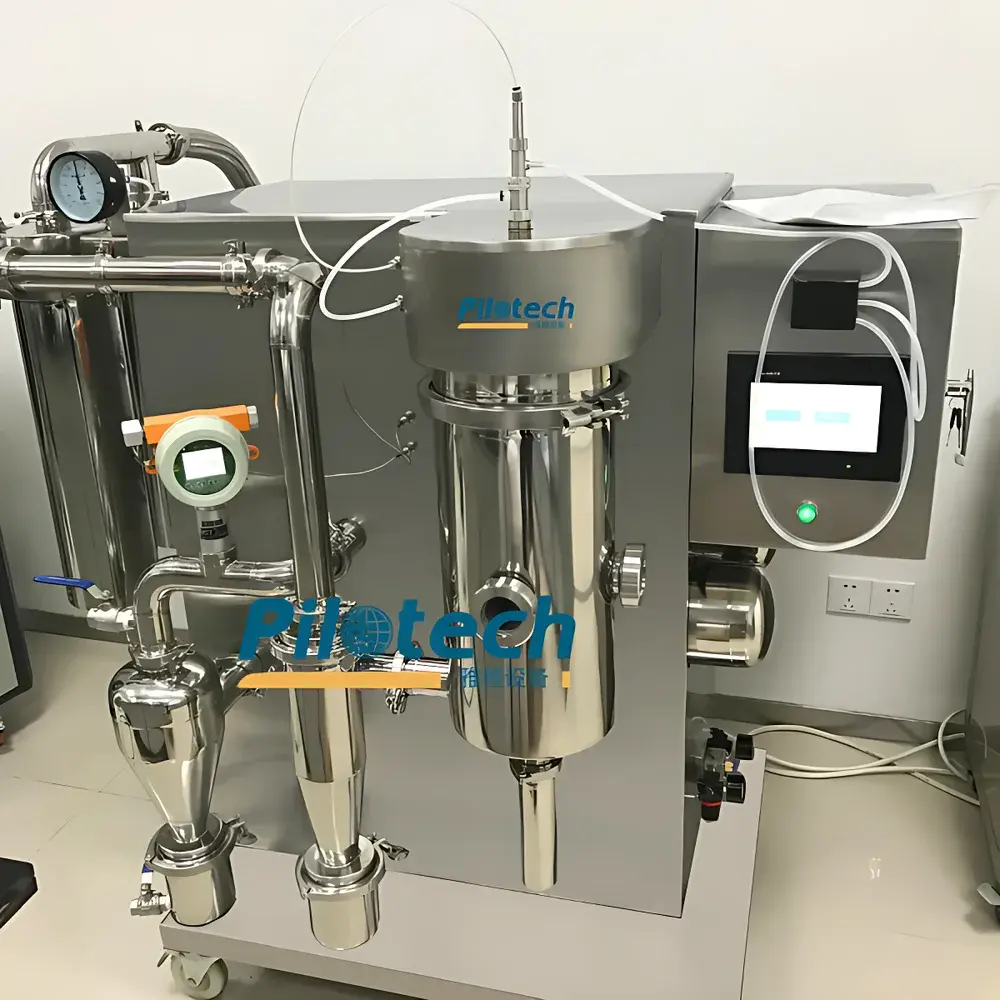
YaCheng YC-015A Closed-Circuit Organic Solvent Spray Dryer
| Brand | YaCheng / PILOTECH |
|---|---|
| Origin | Shanghai, China |
| Manufacturer Type | Direct Manufacturer |
| Model | YC-015A |
| Max Feed Rate | 1500 mL/h |
| Temperature Range | Up to 200 °C |
| Particle Size Range | 1–25 µm |
| Operating Atmosphere | Nitrogen-closed loop with real-time O₂ monitoring (alarm threshold: 2.5% v/v) |
| Nozzle Diameter | Standard 1.0 mm (optional: 0.5 / 0.8 / 1.5 / 2.0 mm) |
| Control Interface | 7-inch color touchscreen PLC controller with PID temperature regulation (±1 °C accuracy) |
| Integrated Solvent Recovery | Condenser-based cryogenic solvent capture system |
| Minimum Sample Volume | 30 mL |
| Compliance | Designed for GLP-compliant lab environments |
Overview
The YaCheng YC-015A Closed-Circuit Organic Solvent Spray Dryer is an engineered solution for the safe, reproducible, and scalable production of fine particulate powders from heat-sensitive, oxidation-prone, or hazardous organic solutions. Unlike conventional open-loop spray dryers, the YC-015A operates under a fully sealed nitrogen atmosphere—eliminating oxygen exposure, suppressing flammability risks, and preventing oxidative degradation during drying. Its core principle relies on inert-gas-assisted atomization: sample solution is metered via a precision peristaltic pump into a concentric dual-fluid nozzle, where pressurized nitrogen shears the liquid stream into uniform microdroplets. Concurrently, preheated nitrogen (up to 200 °C) enters the drying chamber in co-current flow, enabling rapid solvent evaporation while preserving thermolabile structures such as proteins, enzymes, liposomes, and small-molecule APIs. The resulting dried particles are separated by cyclonic force, collected in an inert-gas-purged receiving vessel, while solvent-laden exhaust passes through a refrigerated condenser for quantitative recovery (>95% typical recovery for acetone, ethanol, dichloromethane, THF). This closed-loop architecture ensures operator safety, environmental compliance, and material integrity—critical for R&D scale-up in pharmaceutical, agrochemical, and advanced materials laboratories.
Key Features
- Inert gas management system with continuous O₂ concentration monitoring (0–10% range); automatic shutdown if O₂ exceeds 2.5% v/v—meeting IEC 60079-10-1 zoning guidelines for Class II hazardous areas.
- Concentric dual-nozzle design with vertical adjustability ensures consistent radial atomization—preventing wall impaction, maximizing yield, and minimizing cross-contamination between runs.
- PLC-based control architecture with 7-inch HMI touchscreen interface supporting full parameter logging (inlet temperature, pump speed, needle purge frequency, O₂ level, chamber pressure) in CSV format for traceability.
- Integrated cryogenic solvent recovery module featuring a two-stage condenser (-20 °C to -40 °C operational range) compatible with low-boiling solvents including ethyl acetate (bp 77 °C), acetonitrile (bp 82 °C), and methanol (bp 65 °C).
- Post-drying thermal safety protocol: fan continues operation until chamber temperature falls below 50 °C, enforced via hardware interlock—eliminating manual override risk.
- Corrosion-resistant airflow path: all wetted components—including blower housing, ducting, and cyclone—fabricated from 316L stainless steel or fluoropolymer-coated alloys to withstand prolonged exposure to aggressive organic vapors.
- Modular nozzle interchange system: standardized 1.0 mm orifice with optional diameters (0.5, 0.8, 1.5, 2.0 mm) enables granulometric tuning across applications—from nanoemulsion carriers (1–5 µm) to sustained-release microparticles (10–25 µm).
Sample Compatibility & Compliance
The YC-015A accommodates aqueous and organic solvent systems including water, ethanol, isopropanol, acetone, dichloromethane, ethyl acetate, tetrahydrofuran, and dimethyl sulfoxide. It is validated for use with biological macromolecules (e.g., monoclonal antibodies, plasmid DNA), labile natural products (e.g., curcuminoids, anthocyanins), and reactive intermediates (e.g., organometallic catalysts). All process parameters comply with ISO 22000 prerequisite programs for food-grade powder development and support GMP-aligned documentation per ICH Q5C and USP . Data integrity conforms to FDA 21 CFR Part 11 requirements through electronic signature-capable user authentication, immutable audit trails, and time-stamped event logs. The system meets CE machinery directive (2006/42/EC) and ATEX 2014/34/EU standards when configured with certified explosion-proof components.
Software & Data Management
The embedded control firmware records all critical process variables at 1-second intervals and exports timestamped datasets compliant with ASTM E2500-07 Annex A1 for analytical method validation. Export formats include CSV and Excel-compatible XLSX, with optional integration into LIMS platforms via Modbus TCP/IP or OPC UA protocols. User access levels (Operator, Technician, Administrator) enforce role-based parameter restrictions. All calibration events—including thermocouple verification, flowmeter zeroing, and O₂ sensor bump testing—are logged with digital signatures and retention periods configurable per institutional SOPs. Optional remote monitoring package enables secure HTTPS-based dashboard access for multi-site labs.
Applications
- Pharmaceutical formulation: preparation of amorphous solid dispersions, inhalable dry powders, and nanoparticle-loaded microparticles for pulmonary delivery.
- Biotechnology: stabilization of lysozyme, lactoferrin, and viral vectors without denaturation; production of vaccine adjuvant carriers.
- Agrochemical R&D: microencapsulation of pesticides and biopesticides for controlled release and UV protection.
- Materials science: synthesis of metal-organic framework (MOF) precursors, conductive polymer nanoparticles, and battery electrode active materials.
- Food & nutraceuticals: encapsulation of omega-3 oils, probiotics, and polyphenols using GRAS-compliant solvents.
- Academic research: kinetic studies of solvent evaporation dynamics, particle morphology optimization, and scale-down modeling for industrial spray dryer qualification.
FAQ
What solvents are compatible with the YC-015A?
The system supports common polar and non-polar organic solvents including ethanol, methanol, acetone, ethyl acetate, dichloromethane, THF, and DMSO—provided their flash points fall within the operational safety envelope defined by nitrogen partial pressure and O₂ suppression thresholds.
Can the YC-015A handle heat-sensitive biologics?
Yes. Inlet temperature can be precisely regulated from 60 °C to 200 °C with ±1 °C stability, enabling gentle drying of proteins, enzymes, and nucleic acids. Co-current nitrogen flow minimizes residence time in high-temperature zones.
Is solvent recovery quantitative?
Recovery efficiency exceeds 95% for solvents with boiling points above 40 °C under standard condenser settings (-30 °C). For low-boiling solvents (e.g., diethyl ether), optional deep-cold condensation (-50 °C) is available.
How is data integrity ensured for regulatory submissions?
All process data are stored locally with cryptographic hashing, tamper-evident timestamps, and user-authenticated access control—fully aligned with FDA 21 CFR Part 11 and EU Annex 11 expectations for electronic records.
Does the system support IQ/OQ/PQ documentation?
Yes. Factory-supplied qualification templates (including test protocols, acceptance criteria, and blank execution records) are provided for Installation Qualification (IQ), Operational Qualification (OQ), and Performance Qualification (PQ) in accordance with ASTM E2500 and ISPE Baseline Guide Vol. 5.



