
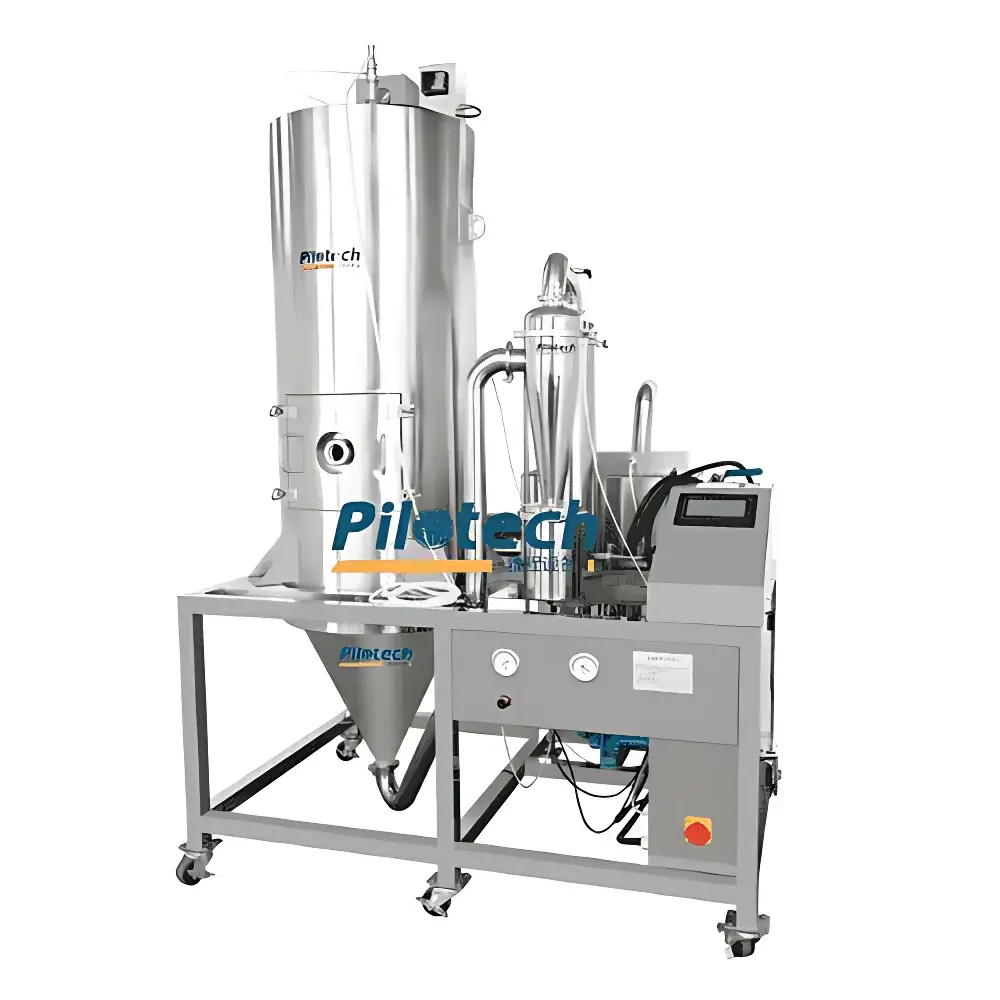
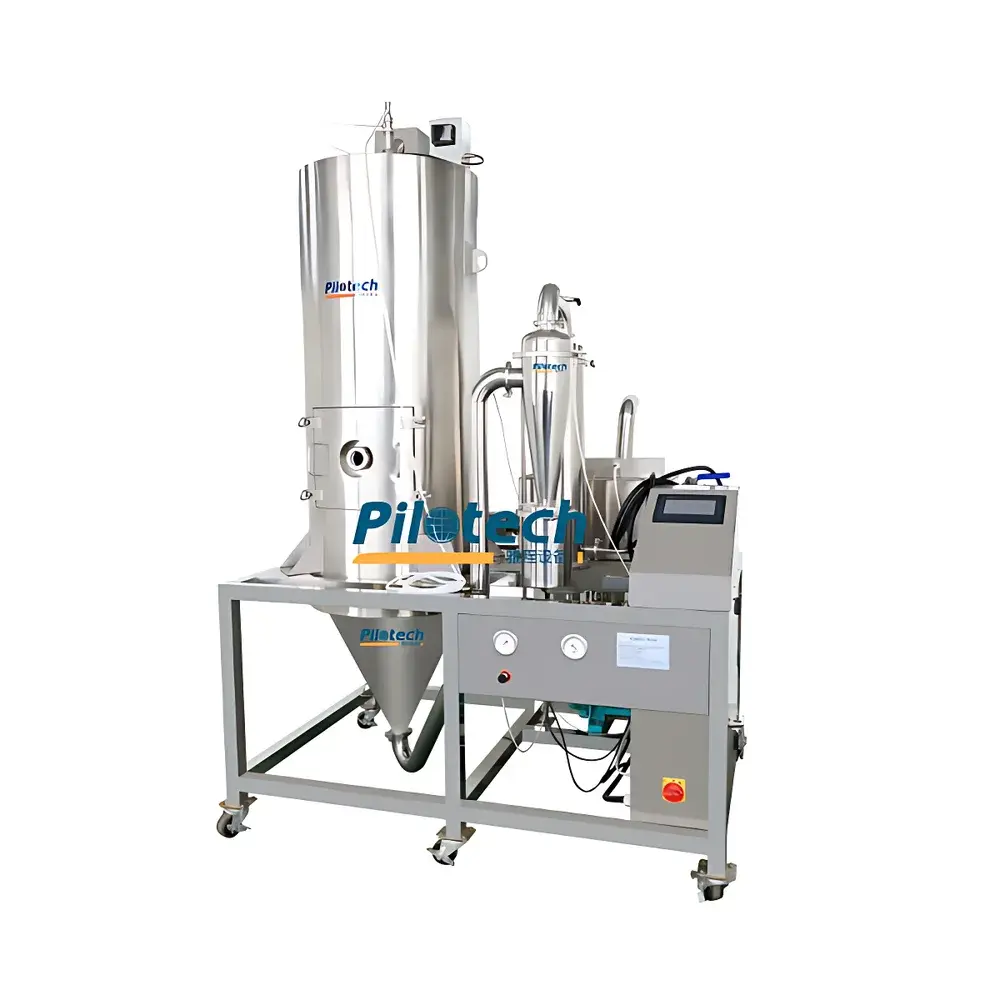
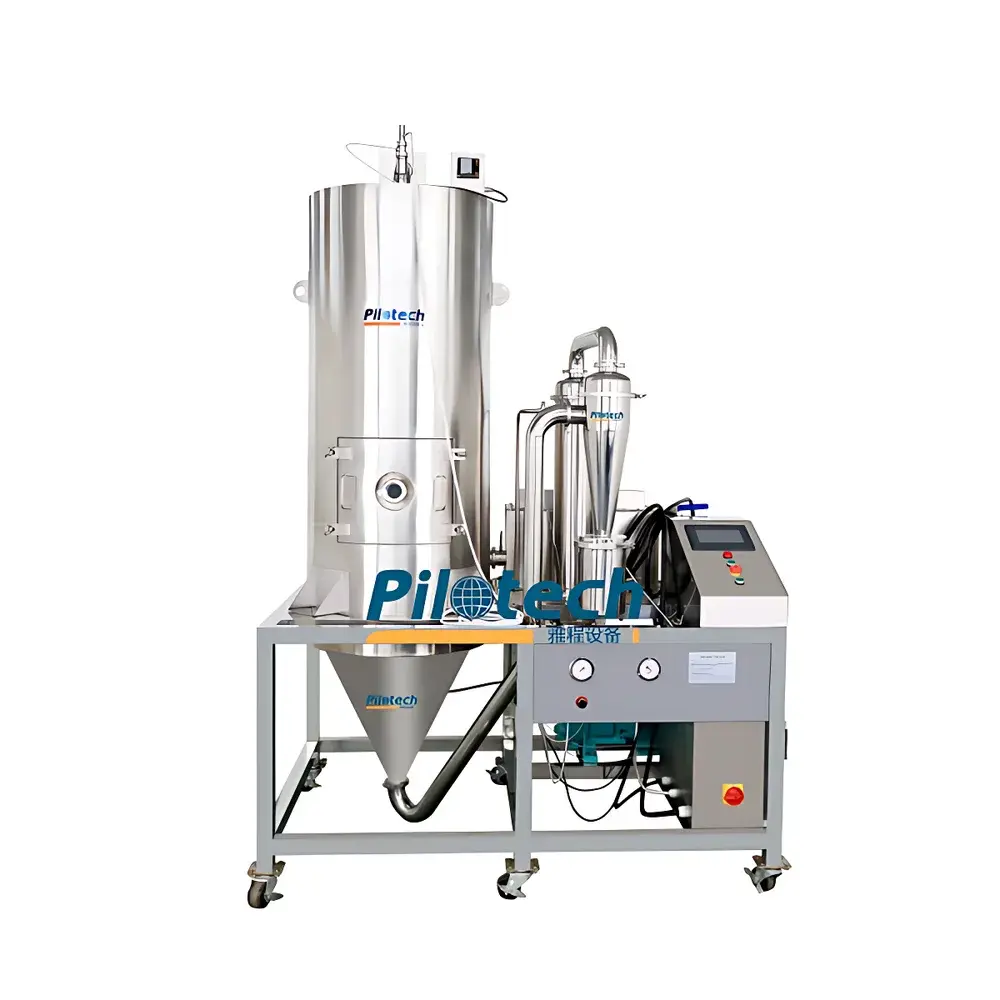
PiloTech YC-3100 Pilot-Scale Vacuum Low-Temperature Spray Dryer
| Brand | PiloTech |
|---|---|
| Origin | Shanghai, China |
| Manufacturer Type | Direct Manufacturer |
| Product Origin | Domestic (China) |
| Model | YC-3100 |
| Sample Type Compatibility | Aqueous Solutions Only |
| Maximum Throughput | 6–10 L/h (water-based feed) |
| Particle Size Range | 1–120 µm |
Overview
The PiloTech YC-3100 Pilot-Scale Vacuum Low-Temperature Spray Dryer is an engineered solution for bridging the gap between laboratory-scale process development and industrial-scale manufacturing. Unlike conventional atmospheric spray dryers, the YC-3100 operates under controlled vacuum conditions—typically in the range of 5–50 kPa absolute—to substantially lower the boiling point of aqueous solvents. This enables rapid solvent removal at inlet drying gas temperatures as low as 40–80 °C, minimizing thermal degradation of thermolabile compounds. The system employs a dual-fluid nozzle atomization mechanism coupled with precise vacuum regulation, temperature feedback control (±2 °C), and real-time feed rate modulation to ensure reproducible particle morphology, residual moisture content (<3% w/w typical), and batch-to-batch consistency. Designed specifically for process validation, formulation screening, and GMP-aligned pilot batches, the YC-3100 supports scalable parameter mapping—allowing direct correlation of lab-scale (e.g., YC-2000) operating conditions to commercial production equipment.
Key Features
- Vacuum-assisted drying chamber (adjustable from 5 to 50 kPa abs) enabling sub-ambient evaporation temperatures without cryogenic cooling
- Wide dynamic feed range: stable operation from 200 mL/h to 10 L/h aqueous solutions—ideal for both feasibility studies and 1–5 kg/batch pilot runs
- Integrated PID-controlled heating system with ±2 °C thermal stability across inlet air, chamber wall, and exhaust zones
- Quick-release sanitary design: all wetted parts—including atomizer assembly, cyclone, collection vessel, and tubing—are ISO 2852-compliant clamp-mounted for tool-free disassembly and CIP-compatible cleaning
- Compact footprint (≤2.6 m height, <1.2 m² floor space) optimized for ISO Class 7/8 cleanroom integration or standard laboratory environments
- Modular control architecture supporting optional USB data logging (U-disk export of time-stamped process logs) or full HMI touchscreen interface with recipe management and audit trail capability
Sample Compatibility & Compliance
The YC-3100 is validated for aqueous-based feedstocks only—including pharmaceutical suspensions, protein solutions, probiotic broths, natural extract concentrates, and water-soluble polymer dispersions. It is not rated for organic solvents, high-viscosity non-aqueous systems (>500 cP), or abrasive slurries. All contact surfaces are constructed from electropolished 316L stainless steel (Ra ≤ 0.4 µm), compliant with ASME BPE-2022 surface finish standards. The system supports GLP documentation workflows and can be configured with 21 CFR Part 11–compliant electronic signatures and audit trails when equipped with the advanced touchscreen controller. Process parameters—including vacuum level, inlet/outlet temperature, feed rate, and chamber pressure—are continuously recorded and exportable in CSV format for regulatory submission (e.g., FDA IND/IMPD dossiers).
Software & Data Management
The optional touchscreen HMI runs on a real-time Linux OS with deterministic I/O response (<100 ms loop cycle). It provides multi-user role-based access (Operator, Supervisor, Administrator), customizable alarm thresholds, and automated report generation per batch (including trend charts for Tin, Tout, ΔP, and mass flow). Raw sensor data (sampled at 1 Hz) is stored locally on encrypted internal flash memory and simultaneously mirrored to removable USB storage. All data files include embedded metadata: operator ID, timestamp (ISO 8601), instrument serial number, and calibration certificate expiry date—ensuring full traceability per ISO/IEC 17025 requirements.
Applications
- Pharmaceutical R&D: Stabilization of monoclonal antibodies, mRNA-LNPs, peptides, and live biotherapeutics via low-thermal-stress powder formation
- Nutritional science: Encapsulation of heat-sensitive vitamins (e.g., vitamin C, B12), enzymes, and probiotics into free-flowing, shelf-stable powders
- Food ingredient engineering: Production of instant coffee, dairy protein isolates, fruit powder blends, and functional food additives without Maillard browning
- Advanced materials: Synthesis of catalyst precursors, battery cathode intermediates (e.g., LiFePO₄ slurries), and ceramic nanopowders requiring oxygen-free drying environments
- Chemical process development: Solvent recovery optimization, crystallinity control in amorphous solid dispersions, and excipient compatibility screening
FAQ
What is the minimum recommended feed volume per run?
For statistically robust process characterization, a minimum of 500 mL is advised; however, the system maintains stable atomization and drying efficiency down to 200 mL using the low-flow nozzle configuration.
Can the YC-3100 handle organic solvents such as ethanol or acetone?
No. The YC-3100 is certified exclusively for aqueous feeds. Organic solvent use poses explosion risk under vacuum and exceeds material compatibility limits of standard gasketing and seals.
Is third-party IQ/OQ/PQ validation support available?
Yes. PiloTech provides vendor-qualified protocols aligned with ASTM E2500-13 and EU Annex 15, including factory acceptance testing (FAT) reports and on-site commissioning assistance.
How does particle size distribution correlate between YC-3100 and industrial-scale dryers?
When operated within matched dimensionless groups (e.g., Weber number, Reynolds number, and drying kinetics), the YC-3100 demonstrates >92% geometric similarity in Dv50 and span (Dv90/Dv10) versus production-scale vacuum spray dryers—enabling reliable scale-up modeling.
What maintenance intervals are recommended for the vacuum pump and atomizer?
Vacuum pump oil replacement every 500 operational hours; atomizer nozzle inspection and ultrasonic cleaning after each batch when processing viscous or particulate-laden feeds.



