
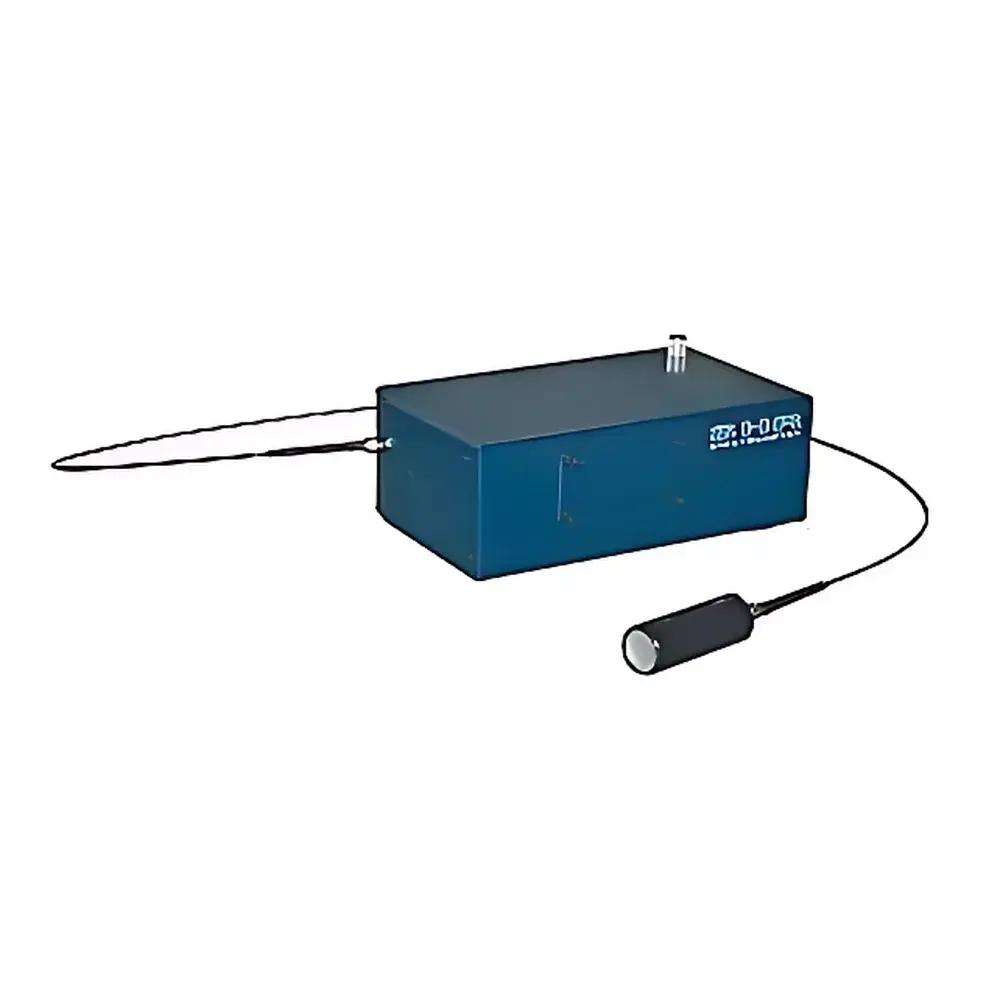
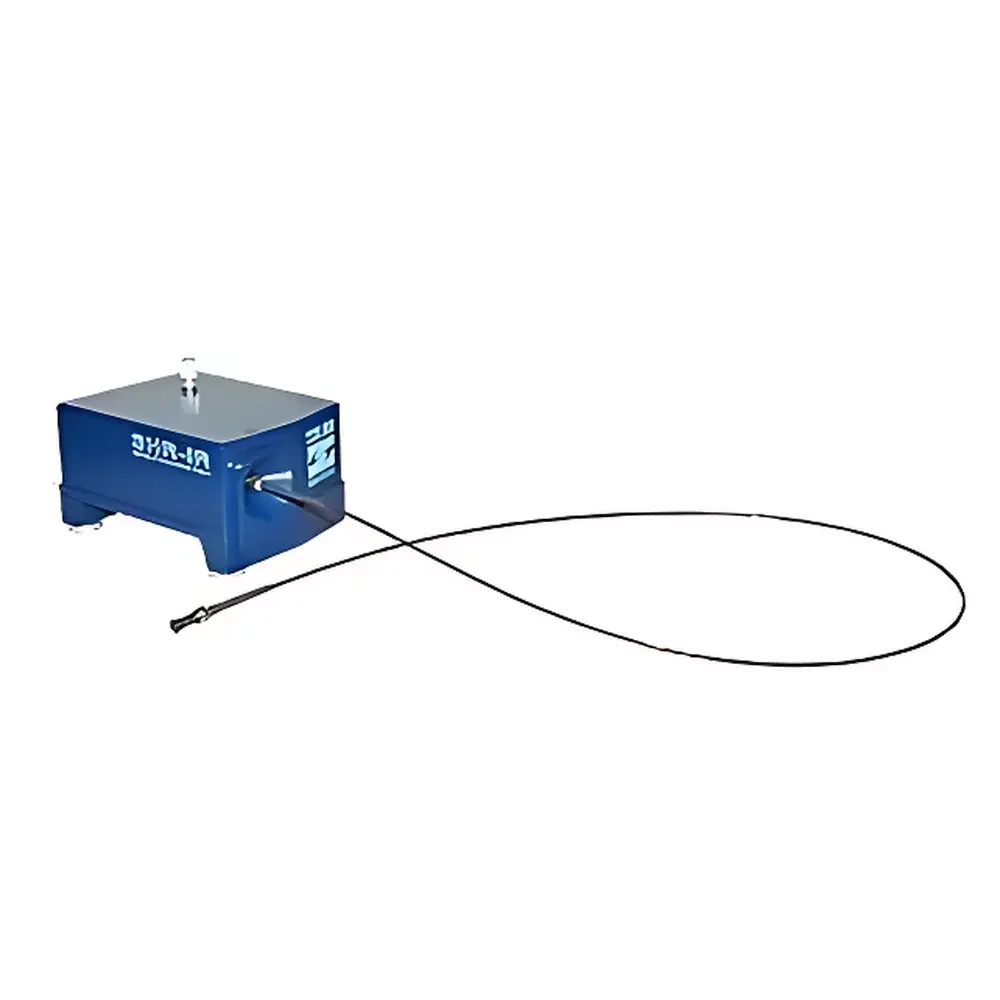
SOLARS SHR-IR High-Precision Wavelength Meter
| Brand | SOLARS |
|---|---|
| Model | SHR-IR |
| Origin | Belarus |
| Spectral Range | 600–1800 nm |
| Absolute Accuracy | ±20 pm |
| Spectral Resolution (λ/Δλ FWHM) | 4,000 |
| Line Width Acceptance | ≤125 cm⁻¹ |
| Input Interface | SMA-905 quartz fiber (400 µm core, 1 m length) + integrated FA-3 diffuser attenuator |
| Trigger Mode | Continuous & externally triggered pulsed operation |
| Minimum Exposure Time | 7 ms |
| Sensitivity | <0.5 µW @ 632.8 nm |
| Computer Interface | Full-Speed USB |
| Software | WLMeter v3.x |
| Dimensions | 142 × 110 × 80 mm |
| Weight | 1.2 kg |
Overview
The SOLARS SHR-IR is a high-precision, compact wavelength meter engineered for accurate and repeatable measurement of continuous-wave (CW) and pulsed laser sources in the near-infrared (NIR) spectral region. Based on a fixed-grating, non-scanning interferometric architecture—free of moving parts—the instrument delivers robust performance in demanding laboratory, industrial calibration, and R&D environments. Unlike scanning monochromators or Fourier-transform spectrometers, the SHR-IR employs a static optical path with a high-stability diffraction grating and optimized CCD detection, enabling real-time wavelength determination without mechanical wear or thermal drift-induced recalibration cycles. Its design prioritizes metrological integrity: absolute wavelength accuracy better than ±20 pm across 600–1800 nm ensures traceability to NIST-traceable standards when operated under controlled ambient conditions (20–25 °C, <50% RH). The device is particularly suited for characterizing tunable diode lasers, fiber lasers, OPOs, and broadband ASE sources where spectral stability, mode-hop detection, and longitudinal mode analysis are critical.
Key Features
- Fixed-optics architecture with no moving components—ensures long-term calibration stability and shock resistance
- Integrated SMA-905-compatible quartz optical fiber input (400 µm core, 1 m length) for flexible beam delivery and spatial decoupling from source vibration
- Dedicated FA-3 diffuser attenuator with SMA-905 interface—enables safe, linearity-preserving attenuation of high-power NIR pulses without spectral distortion
- Real-time external triggering support for synchronization with Q-switched, mode-locked, or gain-switched laser systems
- Full-speed USB 2.0 interface with deterministic latency (<10 ms round-trip), compatible with Windows 10/11 x64 and LabVIEW™ drivers (NI-VISA)
- Onboard firmware with automatic dark-current subtraction, pixel binning options, and real-time signal-to-noise optimization
- Compact footprint (142 × 110 × 80 mm) and low mass (1.2 kg) facilitate integration into optical tables, vacuum chambers, or portable test benches
Sample Compatibility & Compliance
The SHR-IR accepts collimated or fiber-coupled NIR radiation within its specified spectral window. It supports both single-longitudinal-mode (SLM) and multi-mode lasers, provided the instantaneous linewidth remains ≤125 cm⁻¹ (equivalent to ~4 nm at 600 nm and ~40 nm at 1800 nm). The instrument complies with IEC 61326-1:2013 for electromagnetic compatibility in laboratory environments and meets RoHS 2011/65/EU material restrictions. While not certified for ISO/IEC 17025 calibration laboratories out-of-the-box, its documented repeatability (<±5 pm over 8 hours) and factory calibration certificate (traceable to PTB/NIST reference lines) enable user-established uncertainty budgets compliant with ISO/IEC 17025 Clause 6.4.2. No FDA 21 CFR Part 11 compliance is required, as the device functions solely as a metrological readout instrument—not a clinical or process-control system.
Software & Data Management
WLMeter v3.x provides a dedicated GUI for acquisition, visualization, and export of wavelength data. Key capabilities include: real-time spectrum display with peak-fitting (Gaussian/Lorentzian convolution), automated FWHM calculation, multi-peak tracking with centroid interpolation, and time-stamped measurement logging (CSV/TXT/Excel-compatible). The software supports batch acquisition with user-defined trigger delays and exposure durations (7 ms minimum), and includes built-in statistical tools for Allan deviation analysis of wavelength drift. All raw detector frames and processed metadata are stored with embedded timestamps and instrument configuration parameters—enabling full audit trails per GLP/GMP documentation requirements. Exported datasets include wavelength (nm), intensity (a.u.), FWHM (nm), and SNR—formatted for direct import into MATLAB®, Python (NumPy/Pandas), or JMP® for advanced spectral modeling.
Applications
- Verification and stabilization feedback for external cavity diode lasers (ECDLs) and distributed feedback (DFB) lasers operating in telecom C- and L-bands
- Characterization of ultrafast fiber laser harmonics and supercontinuum generation spectra
- Wavelength monitoring during optical parametric oscillator (OPO) tuning sweeps
- Calibration of NIR spectrometers and monochromators using known atomic/molecular emission lines (e.g., Ar, Kr, Hg, or CH₄ absorption features)
- Quality control of VCSEL arrays in datacom transceivers and LiDAR modules
- Academic research in quantum optics, cavity ring-down spectroscopy (CRDS), and frequency-comb referenced measurements
FAQ
Is the SHR-IR suitable for measuring femtosecond laser pulses?
Yes—provided pulse energy exceeds the sensitivity threshold (<0.5 µW average power at 632.8 nm equivalent) and repetition rate allows sufficient signal averaging. External triggering ensures precise temporal alignment.
Can the SHR-IR be used without a computer?
No—the device requires host software (WLMeter) for data acquisition, processing, and display; it does not feature onboard storage or standalone display.
What is the recommended warm-up time before achieving specified accuracy?
A minimum 30-minute thermal stabilization period is advised after power-on to reach steady-state detector and grating temperature, ensuring adherence to ±20 pm accuracy specification.
Does the SHR-IR support OEM integration?
Yes—DLL-based API and LabVIEW™ drivers are provided for custom automation in manufacturing test stands or embedded metrology subsystems.
How often must the instrument be recalibrated?
Annual recalibration is recommended for applications requiring metrological traceability; field verification using a stabilized HeNe laser (632.816 nm) or methane absorption line (1650.96 nm) can extend intervals per internal quality protocols.





