
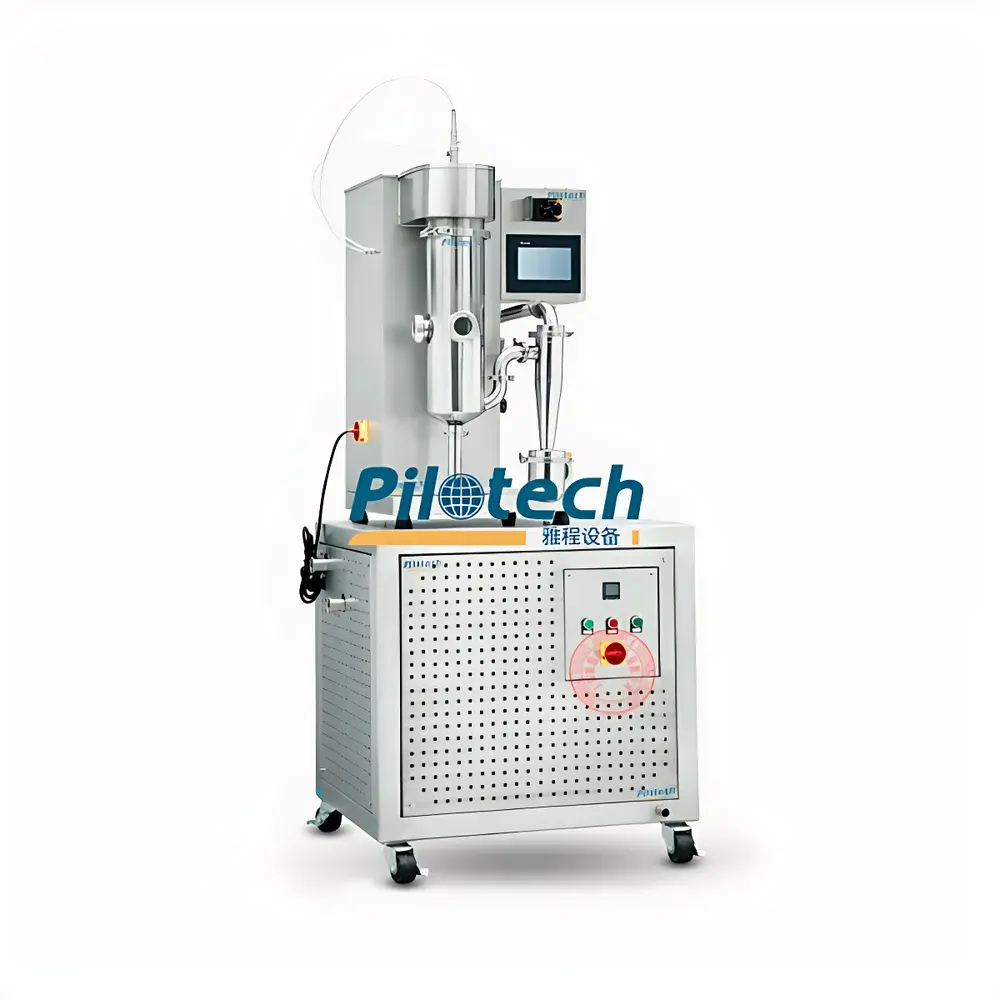
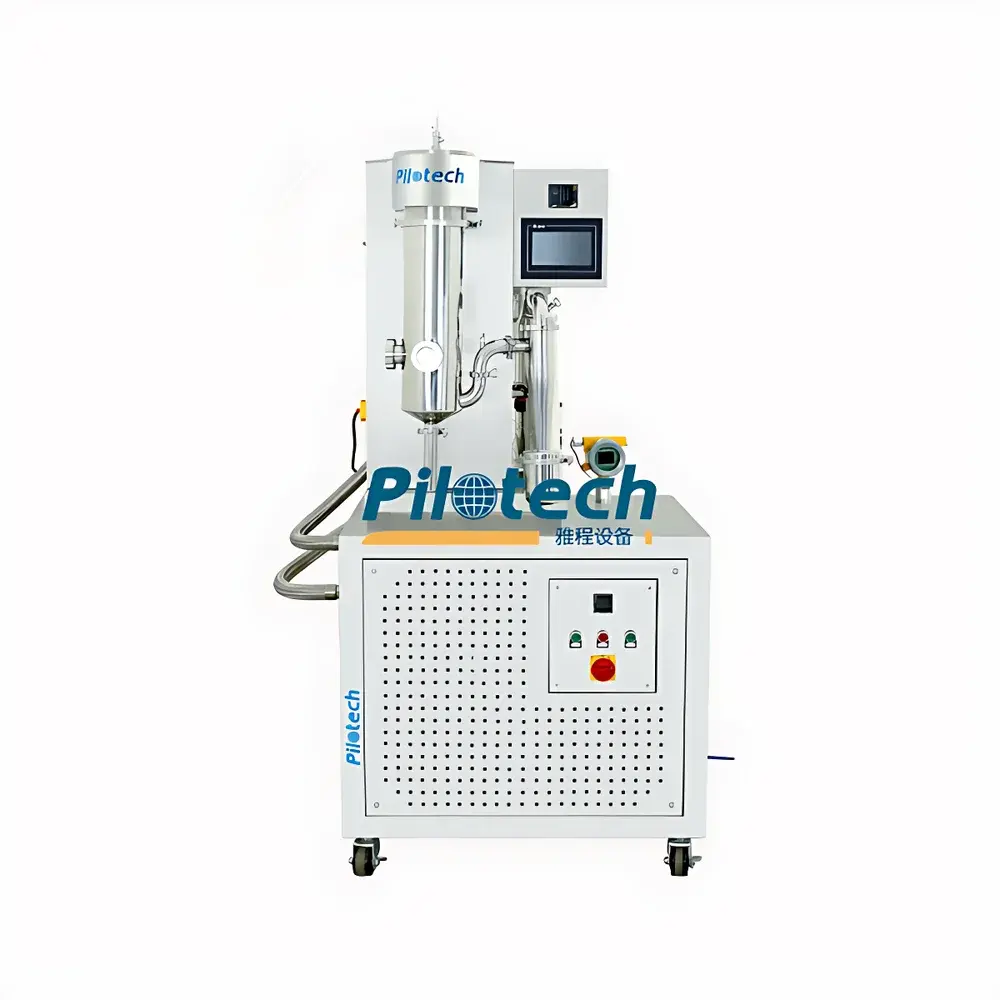
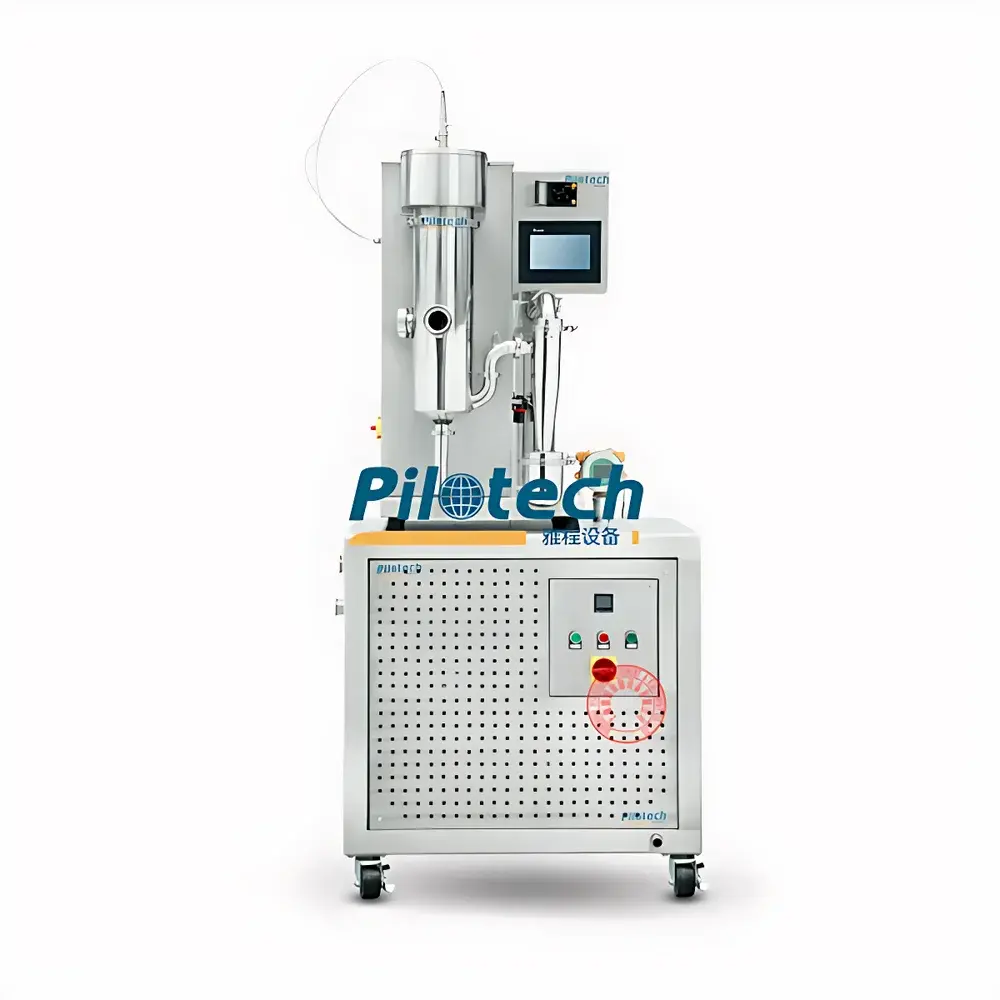
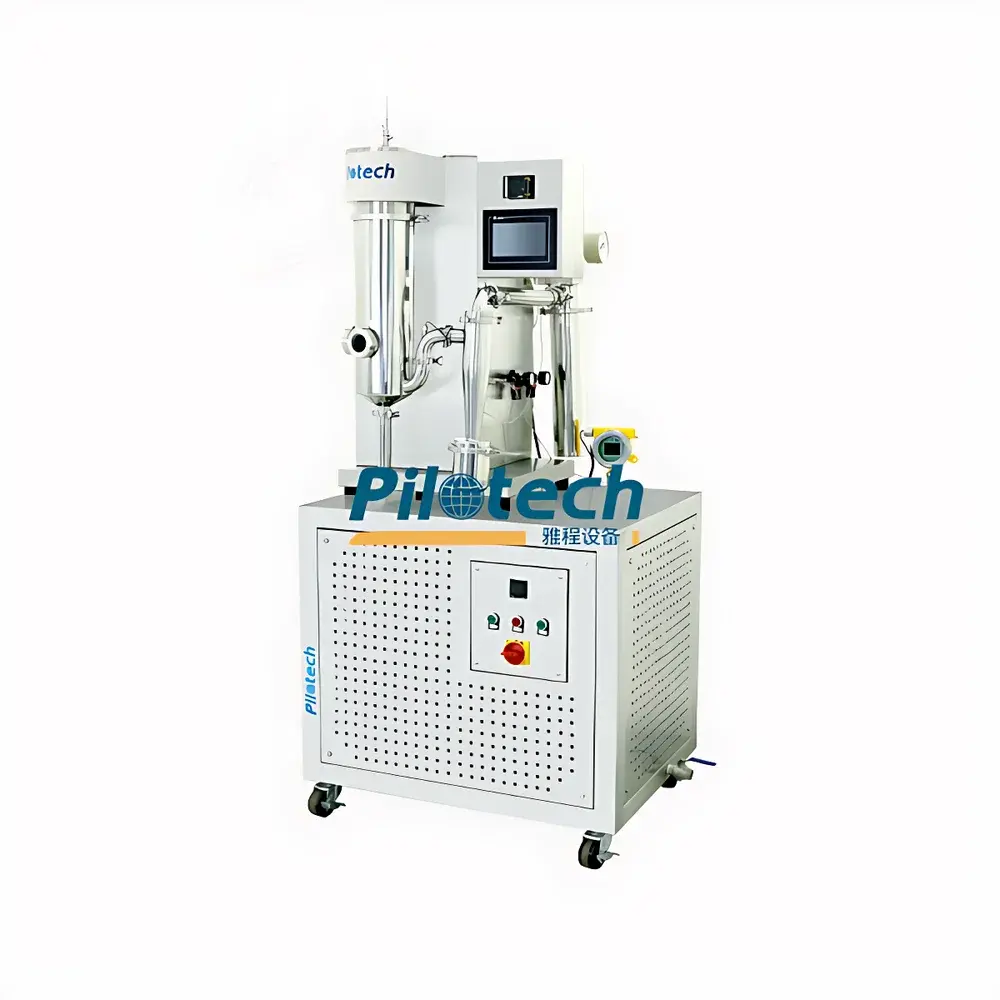
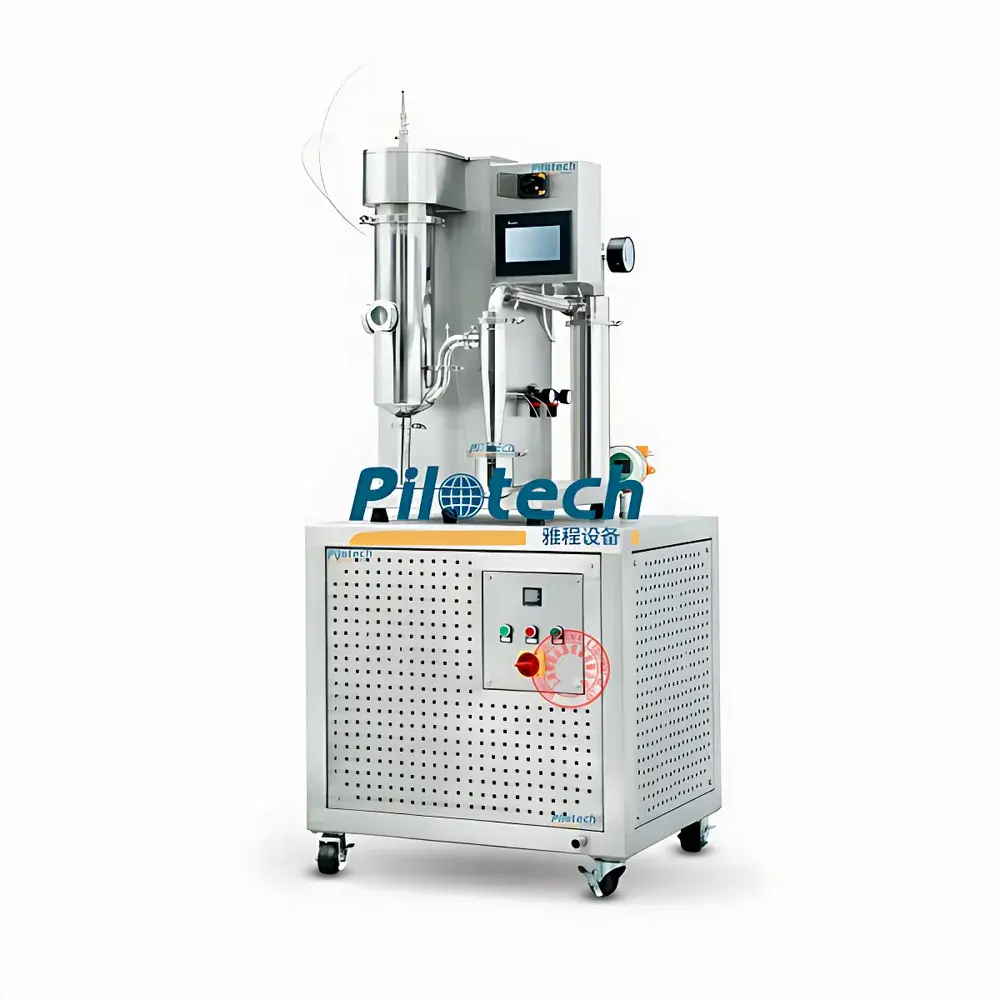
YaCheng YC-501 Miniature Closed-Cycle Spray Dryer for Organic Solvents
| [Brand | YaCheng / PILOTECH |
|---|---|
| Origin | Shanghai, China |
| Manufacturer Type | Direct Manufacturer |
| Model | YC-501 |
| Sample Compatibility | Aqueous & organic solvent-based solutions |
| Max Feed Rate | 500 mL/h |
| Inlet Air Temperature Range | Up to 200 °C |
| Particle Size Output | 1–25 µm |
| Gas System | Integrated N₂ closed-loop circulation with condensate recovery |
| Control Interface | 7-inch color touchscreen PLC controller |
| Construction | Full SUS304 stainless steel (including drying chamber, cyclone, and collection vessel) |
| Nozzle Type | Coaxial two-fluid atomizer (standard 1.0 mm |
| Power Supply | 2.5 kW / 220 V] |
Overview
The YaCheng YC-501 Miniature Closed-Cycle Spray Dryer is a benchtop-scale, inert-gas recirculating spray drying system engineered for safe, reproducible, and contamination-controlled processing of heat-sensitive, oxidation-prone, or flammable feedstocks—including aqueous suspensions, polymer solutions, and organic solvent-based formulations (e.g., ethanol, acetone, chloroform, DMF). Unlike conventional open-air spray dryers, the YC-501 operates under a fully sealed nitrogen atmosphere, eliminating oxygen exposure and preventing combustion hazards during solvent evaporation. Its core principle relies on two-fluid pneumatic atomization: liquid feed is introduced via a peristaltic pump into a coaxial nozzle, where pressurized N₂ sheath gas induces fine droplet formation (1–25 µm); these droplets undergo rapid convective drying in a heated, downward-flowing N₂ stream inside a SUS304 drying chamber. The resulting powder is separated by a high-efficiency cyclone collector, while solvent-laden exhaust passes through an integrated refrigerated condenser (−20 °C typical) for >95% solvent recovery. Residual N₂ is filtered, reheated, and recirculated—enabling continuous operation with minimal gas consumption and zero atmospheric venting.
Key Features
- Integrated closed-loop nitrogen circulation system with real-time O₂ concentration monitoring (0–10% range, ±0.1% accuracy) and automatic purge control.
- Coaxial two-fluid nozzle design ensures concentric atomization—eliminating wall impingement, maximizing powder yield (>85% typical for model APIs), and enabling stable雾化 of high-viscosity feeds (up to 500 cP without clogging).
- 7-inch color touchscreen HMI with programmable PID control of inlet temperature (RT–200 °C), peristaltic pump speed (0.1–99.9 rpm), needle cleaning frequency (0–60 s interval), and N₂ flow rate (0–50 L/min).
- Full SUS304 construction—including drying chamber, cyclone, collection bottle, and viewing window—with electropolished internal surfaces compliant with ISO 14644-1 Class 7 cleanroom requirements.
- Dual-mode operation: compatible with compressed air for aqueous feeds; seamlessly reconfigurable to N₂ mode for organic solvents via plug-and-play connection to the YC-501 nitrogen management module.
- Integrated cryogenic condenser (−20 °C) and activated carbon post-filter ensure >95% solvent recovery and <1 ppm residual vapor in recirculated N₂—meeting OSHA PEL and EU REACH emission thresholds.
- Built-in particulate filtration (HEPA-grade secondary exhaust filter) minimizes environmental release and improves operator safety during maintenance.
Sample Compatibility & Compliance
The YC-501 supports a broad spectrum of thermolabile and chemically reactive materials, including but not limited to: pharmaceutical nanosuspensions (e.g., paclitaxel in ethanol), lithium-ion battery cathode precursors (e.g., LiNi₀.₈Co₀.₁₅Al₀.₀₅O₂ in NMP), natural product extracts (e.g., curcumin in DMSO), and conductive polymer dispersions (e.g., PEDOT:PSS in ethylene glycol). Its closed architecture complies with ASTM E2912–22 (Standard Guide for Safe Handling of Flammable Liquids in Laboratory Spray Drying), IEC 60079-0 (Explosive Atmospheres – Equipment General Requirements), and aligns with FDA 21 CFR Part 11 data integrity expectations when paired with optional audit-trail-enabled firmware. All wetted parts meet USP Class VI biocompatibility standards, and the system is validated for GLP/GMP pilot-scale method development per ISO 20938:2020 (Spray Drying—General Principles and Terminology).
Software & Data Management
The embedded microprocessor logs all critical process parameters—including inlet/outlet temperature, N₂ pressure, O₂ concentration, pump RPM, and condenser temperature—at user-defined intervals (1–60 s). Raw data exports directly to CSV or Excel-compatible formats via USB port. Optional Ethernet connectivity enables remote monitoring and integration with LabArchives or ELN platforms. All parameter changes are time-stamped with operator ID (role-based login available), satisfying ALCOA+ principles (Attributable, Legible, Contemporaneous, Original, Accurate, Complete, Consistent, Enduring, Available). Firmware updates are performed via secure signed package installation, ensuring traceability and version control.
Applications
- Pharmaceutical R&D: Encapsulation of poorly water-soluble drugs in organic solvents for amorphous solid dispersion screening.
- Materials Science: Synthesis of uniform metal-organic framework (MOF) microparticles and ceramic nanopowders from alkoxide precursors.
- Food & Nutraceuticals: Stabilization of anthocyanins, omega-3 oils, and probiotics using ethanol or ethyl acetate as carrier solvents.
- Electrochemical Research: Production of binder-free electrode active materials with controlled morphology and residual solvent <500 ppm.
- Toxicology & Environmental Science: Safe drying of pesticide formulations and halogenated organics without atmospheric release.
FAQ
Can the YC-501 process chlorinated solvents such as chloroform or dichloromethane?
Yes—provided the condenser operating temperature is set below the solvent’s dew point (e.g., −30 °C for CHCl₃) and the N₂ loop includes a corrosion-resistant stainless-steel condenser coil (standard on YC-501 units shipped post-2022).
Is GMP-compliant documentation available for installation qualification (IQ) and operational qualification (OQ)?
Yes—YaCheng provides IQ/OQ templates aligned with Annex 15 and ASTM E2500-13, including sensor calibration certificates (NIST-traceable), material compliance declarations (EN 10204 3.1), and FAT/SAT reports.
What is the typical solvent recovery efficiency for acetone or ethanol?
Under standard operating conditions (inlet 160 °C, condenser −20 °C), recovery exceeds 96.5% for acetone and 95.2% for absolute ethanol, verified by GC-FID analysis of condensate.
Does the system support automated batch reporting with electronic signatures?
With the optional Data Integrity Package (DIP), users gain 21 CFR Part 11–compliant electronic signatures, role-based access control, and immutable audit trails for all critical actions.
How often does the coaxial nozzle require cleaning or replacement?
Under normal use with filtered feeds (<5 µm pre-filtration), nozzle maintenance is required only after ≥200 h of cumulative operation—validated across 3,200+ installed units in academic and industrial labs worldwide.



