
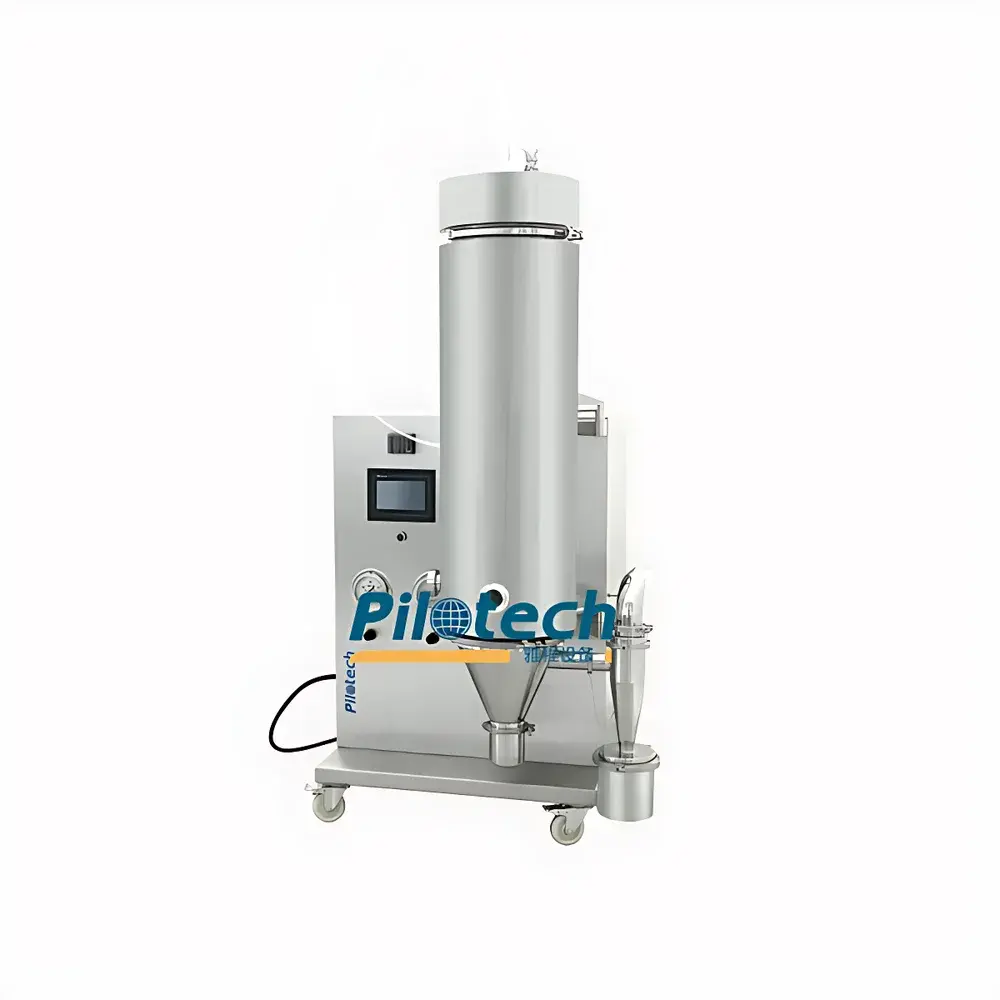
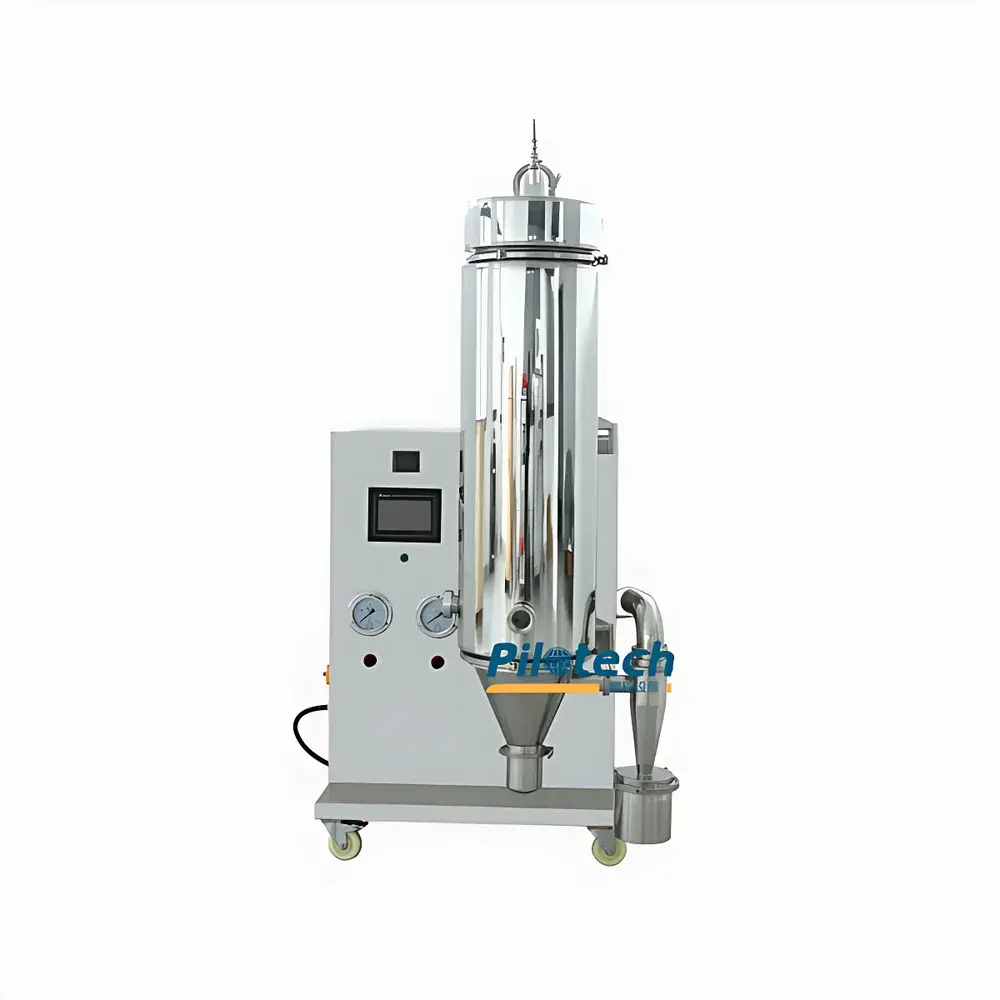
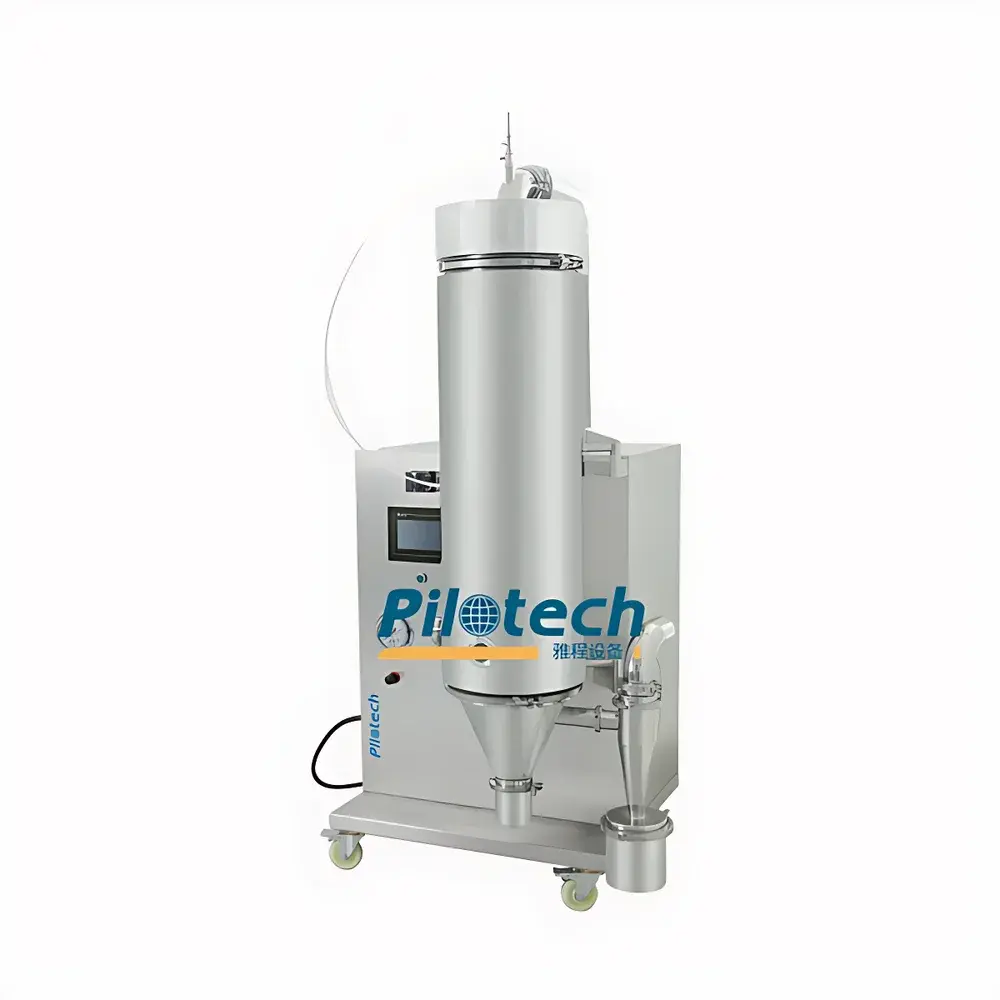
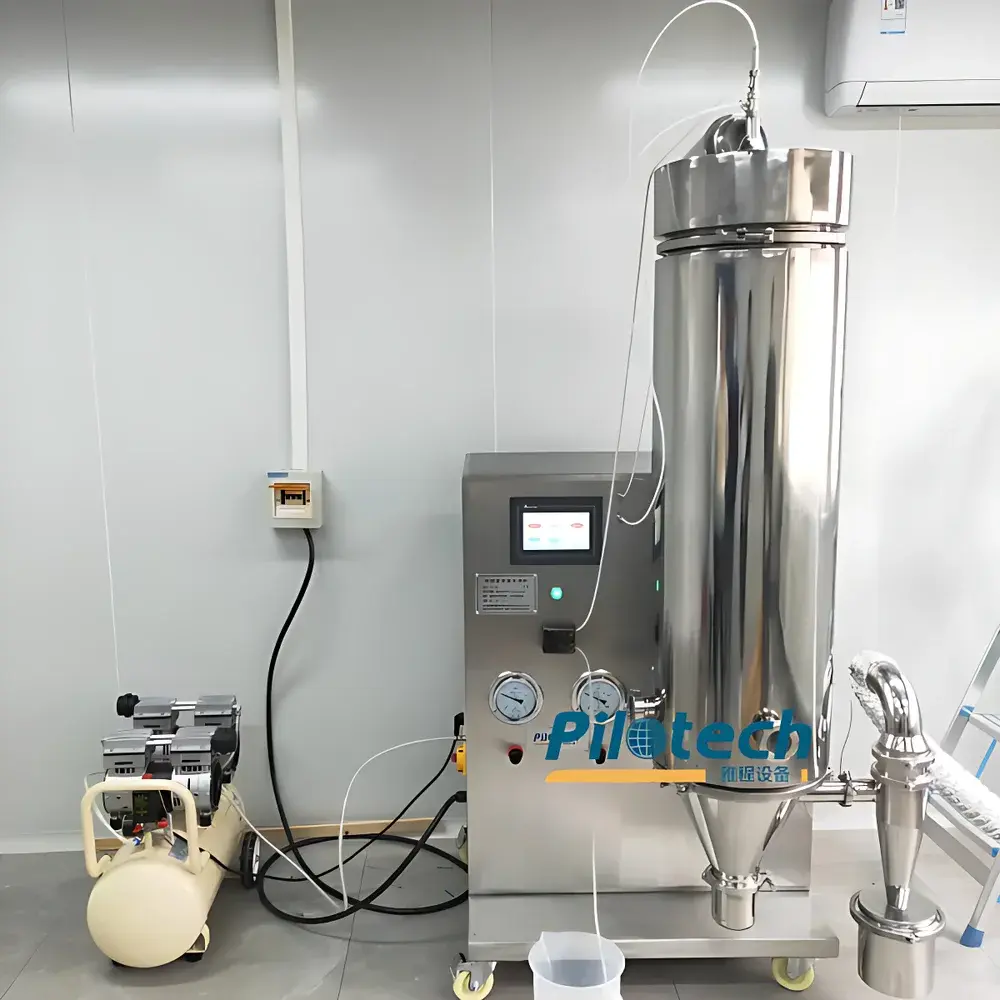
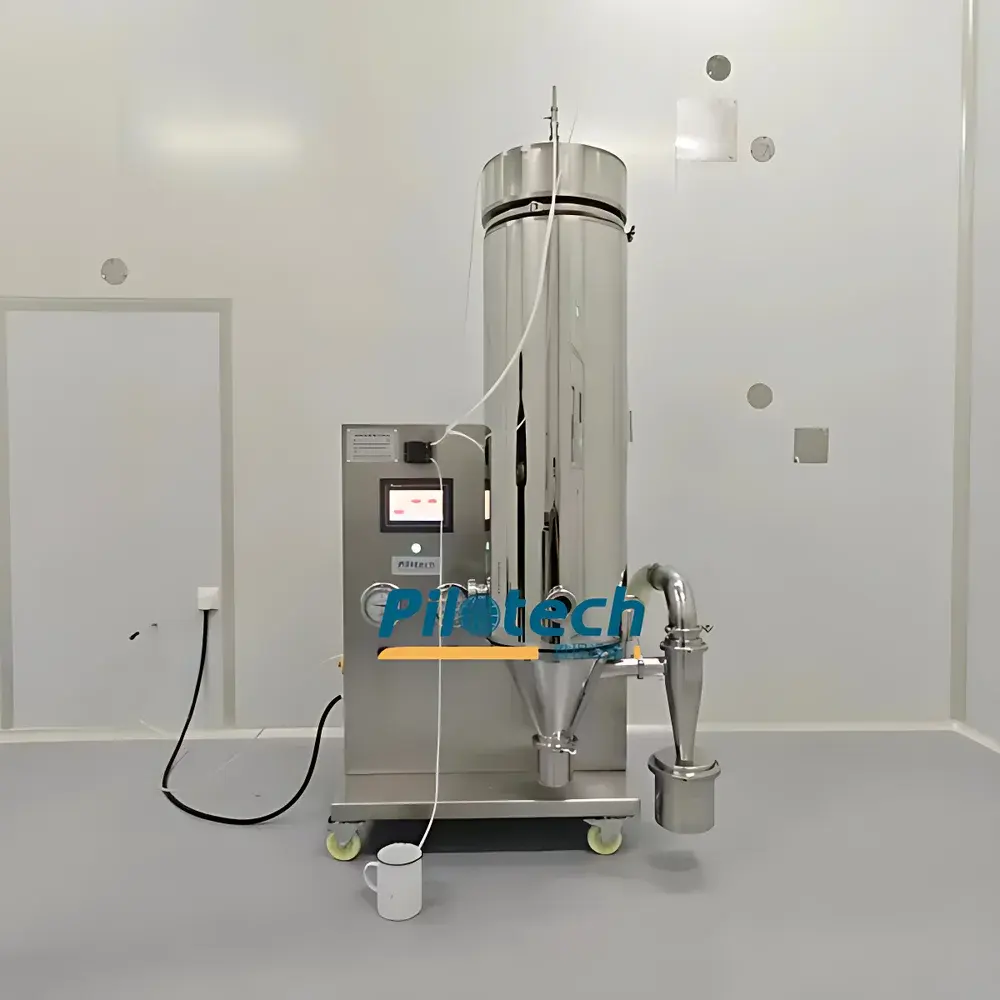
雅程 YC-019 Pilot-Scale Spray Dryer
| Brand | YaCheng / PILOTECH |
|---|---|
| Origin | Shanghai, China |
| Manufacturer Type | Direct Manufacturer |
| Product Origin | Domestic (China) |
| Model | YC-019 |
| Sample Type Compatibility | Aqueous solutions only |
| Maximum Feed Rate | 5000 mL/h |
| Inlet Air Temperature Range | 105–350 °C |
| Particle Size Output | 1–100 µm |
Overview
The YaCheng YC-019 Pilot-Scale Spray Dryer is an engineered solution for laboratory-scale and early-stage process development in pharmaceutical, nutraceutical, food, and advanced materials research. It operates on the principle of single-stage concurrent-flow spray drying: liquid feed is atomized into fine droplets via a pneumatic nozzle, rapidly exposed to controlled hot air, and dried within 1.0–1.5 seconds—minimizing thermal degradation of thermolabile compounds such as enzymes, peptides, probiotics, and botanical extracts. Unlike conventional benchtop units limited to sub-25 µm output or low recovery efficiency, the YC-019 bridges the gap between small-batch feasibility studies and pilot-line readiness, supporting continuous operation at up to 5 L/h while maintaining precise thermal control, high powder yield, and scalable particle morphology.
Key Features
- Wide inlet air temperature range (105–350 °C): enables processing of both heat-sensitive biologics (e.g., herbal extracts, protein solutions) and refractory inorganic precursors (e.g., ceramic slurries, metal oxide colloids).
- High solids recovery rate up to 92%: achieved through re-engineered cyclonic separation geometry and optimized airflow dynamics—significantly exceeding typical 60–75% recovery in standard lab-scale dryers.
- Adjustable nozzle configuration: standard 2.0 mm stainless steel two-fluid nozzle; optional interchangeable nozzles (0.5/0.8/1.0/1.5 mm) for targeted droplet size distribution and final particle diameter control (1–100 µm).
- Integrated automatic nozzle cleaning system (“needle clearance” function): programmable frequency-controlled needle actuation prevents nozzle clogging during extended runs with viscous or particulate-laden feeds.
- Real-time PID-controlled thermal management: inlet air temperature stabilized to ±2 °C accuracy; full parameter monitoring via 7-inch color LCD touchscreen (inlet temp, blower frequency, peristaltic pump speed, nozzle pulse rate).
- Compact footprint (<1 m² floor space) with full 304 stainless steel wetted parts (drying chamber, cyclone, collection vessel, tubing), compliant with basic Good Manufacturing Practice (GMP)-aligned lab hygiene standards.
- Oil-free diaphragm air compressor: ensures contaminant-free atomization gas supply and supports consistent, narrow particle size distribution (near-normal PSD) and superior powder flowability.
Sample Compatibility & Compliance
The YC-019 is validated for aqueous-based feeds only—including aqueous suspensions, emulsions, colloidal dispersions, and true solutions—with total dissolved solids (TDS) content compatible with peristaltic pumping (100 mL minimum batch volume). It is not rated for organic solvents, corrosive media, or explosive vapors. While not certified to ISO 22000 or FDA 21 CFR Part 11 out-of-the-box, its architecture supports audit-ready documentation: all operational parameters are timestamped and logged internally; user access levels can be defined; and shutdown sequences include fail-safe thermal protection (fan-cooling delay prevents heater coil burnout). The unit meets CE electromagnetic compatibility (EMC) and low-noise emission requirements (<65 dB(A)), aligning with ISO 14040 environmental lab infrastructure guidelines.
Software & Data Management
The embedded HMI interface provides real-time visualization of process variables and animated drying chamber status. All settings and runtime data—including temperature ramps, pump speed profiles, and cycle duration—are exportable via USB to CSV format for traceability and batch record compilation. Optional RS-485 Modbus RTU connectivity allows integration into centralized lab information management systems (LIMS) or SCADA platforms for automated reporting and long-term trend analysis. Audit trails (user logins, parameter changes, emergency stops) are retained for ≥30 days and support GLP-compliant workflow validation when paired with external electronic lab notebooks (ELN).
Applications
- Pharmaceutical formulation: microencapsulation of APIs, excipient drying, amorphous solid dispersion screening.
- Natural product R&D: stabilization of polyphenols, flavonoids, and essential oil emulsions from plant extracts.
- Catalyst synthesis: preparation of spherical, free-flowing catalyst precursors (e.g., Ni/Al₂O₃, Co-Mo/SiO₂) in the 60–100 µm range required for fixed-bed reactor testing.
- Food ingredient engineering: dairy protein powders, probiotic beadlets, instant beverage blends with controlled hygroscopicity.
- Materials science: precursor powders for battery cathodes (LiCoO₂, NMC), ceramic granules for tape casting, and functional polymer microparticles.
FAQ
What is the minimum batch volume the YC-019 can process effectively?
The system supports minimum feed volumes of 100 mL, subject to feed viscosity and total solids concentration. For optimal atomization and thermal efficiency, a minimum TDS of 2–5% w/w is recommended.
Can the YC-019 handle organic solvent-based feeds?
No. The YC-019 is designed exclusively for aqueous-phase feeds. Organic solvents require explosion-proof construction, inert gas purging, and condensate recovery—features not included in this model.
Is particle size distribution adjustable without changing nozzles?
Yes—via coordinated adjustment of inlet temperature, feed rate, and atomization air pressure. However, achieving >60 µm median particle size consistently requires larger-diameter nozzles (≥1.5 mm) and lower drying kinetics.
Does the unit comply with FDA or EU GMP requirements?
It meets foundational equipment design principles referenced in Annex 15 (EU GMP) and USP , but formal qualification (IQ/OQ/PQ) must be performed by the end user in their specific environment. Full 21 CFR Part 11 compliance requires third-party software validation.
What maintenance intervals are recommended for the peristaltic pump tubing and nozzle?
Pump tubing should be replaced every 200–300 operating hours; nozzle inspection and ultrasonic cleaning are advised after each run with high-viscosity or particulate-containing feeds. Stainless steel components require passivation per ASTM A967 after extended use with saline or acidic solutions.



