
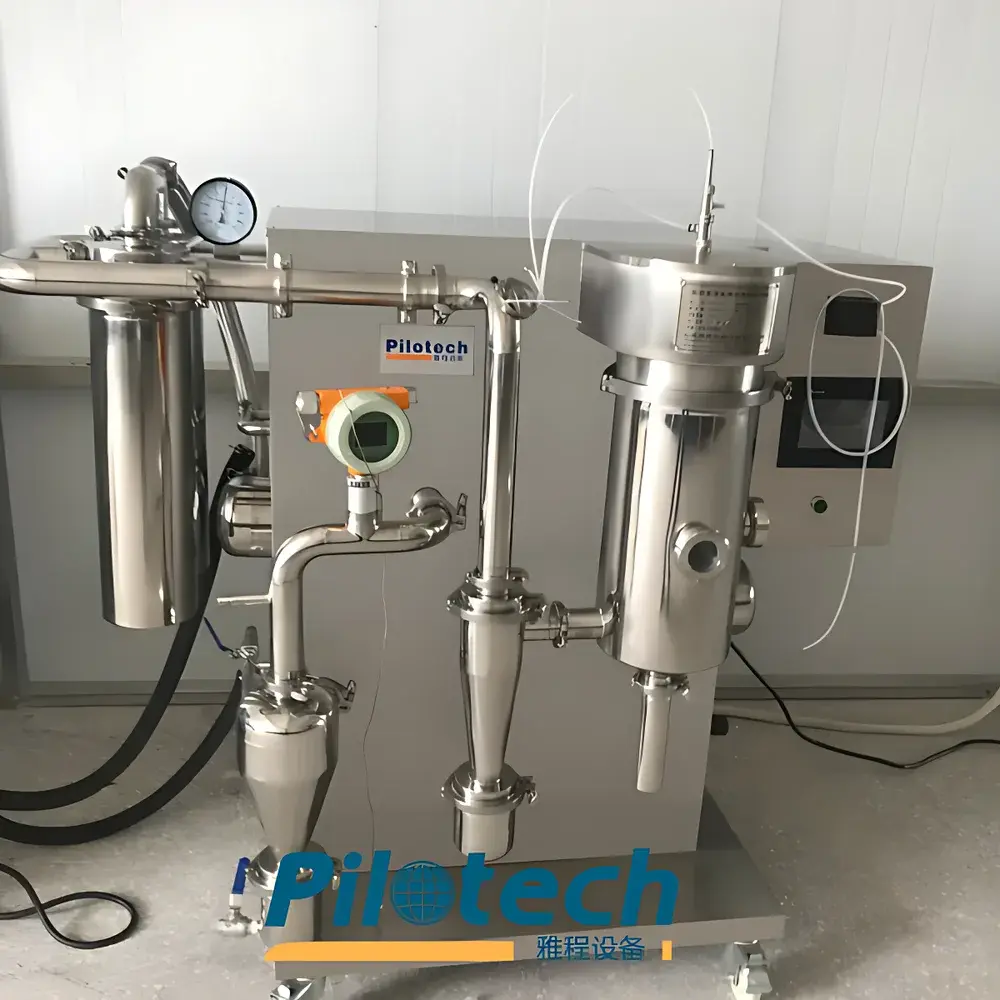
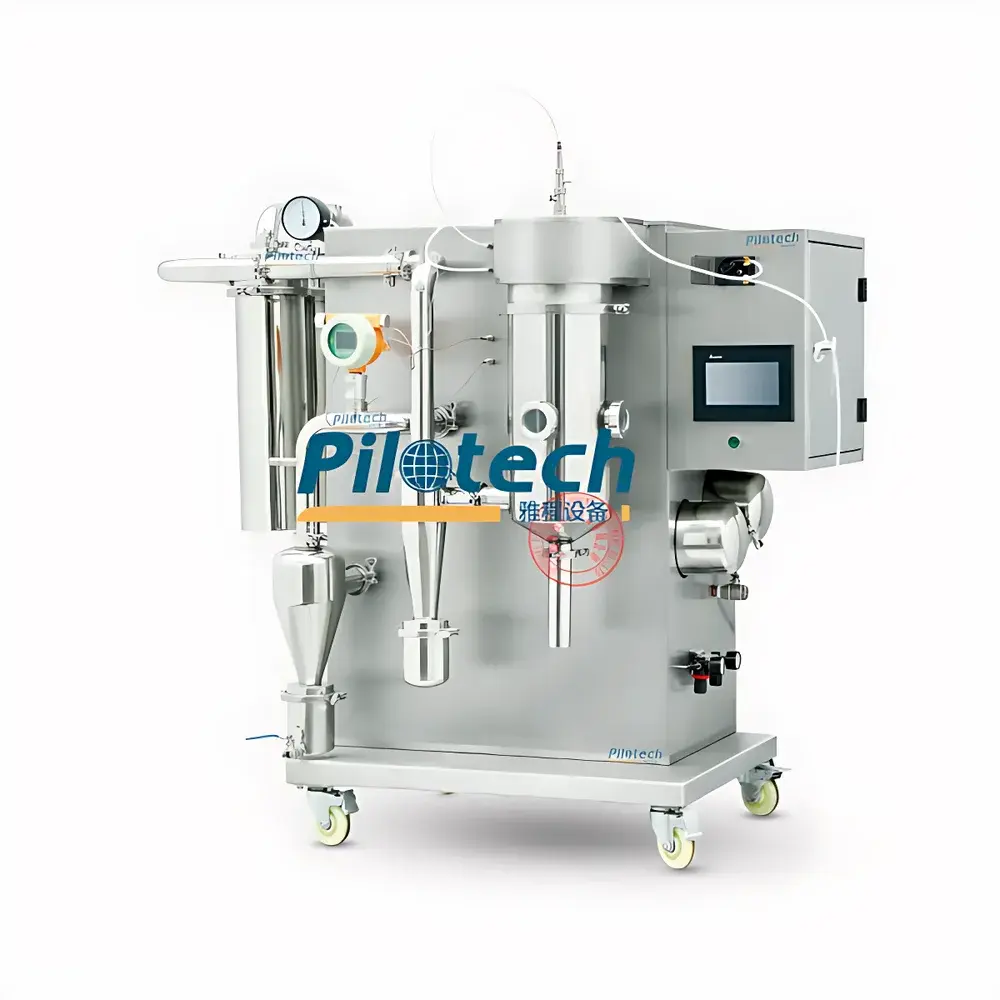
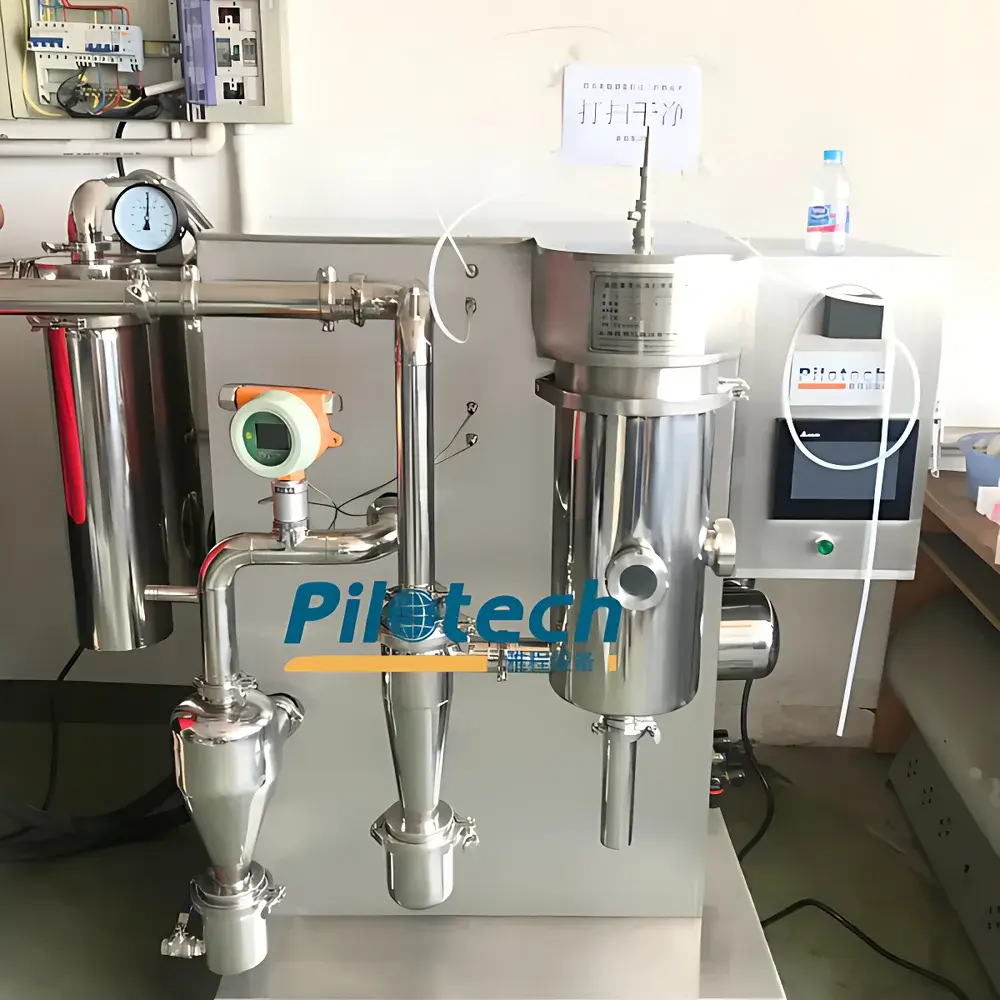
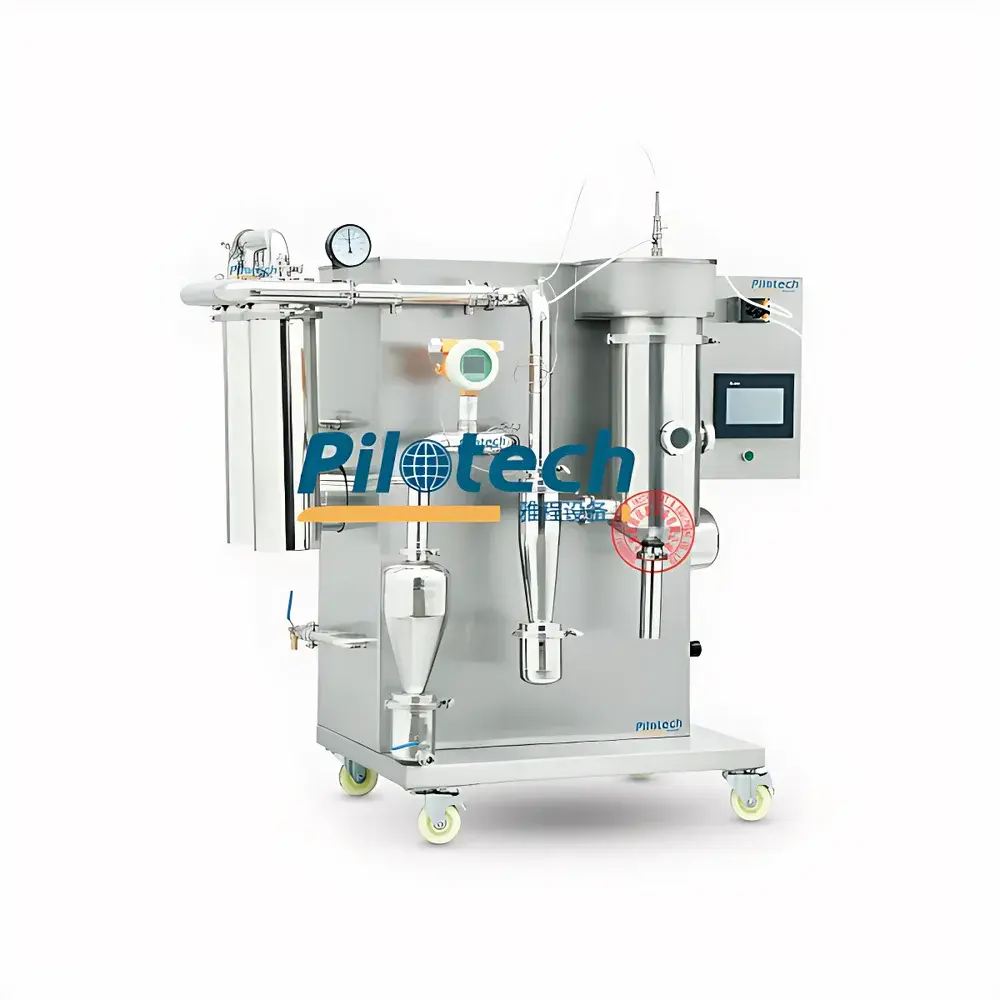
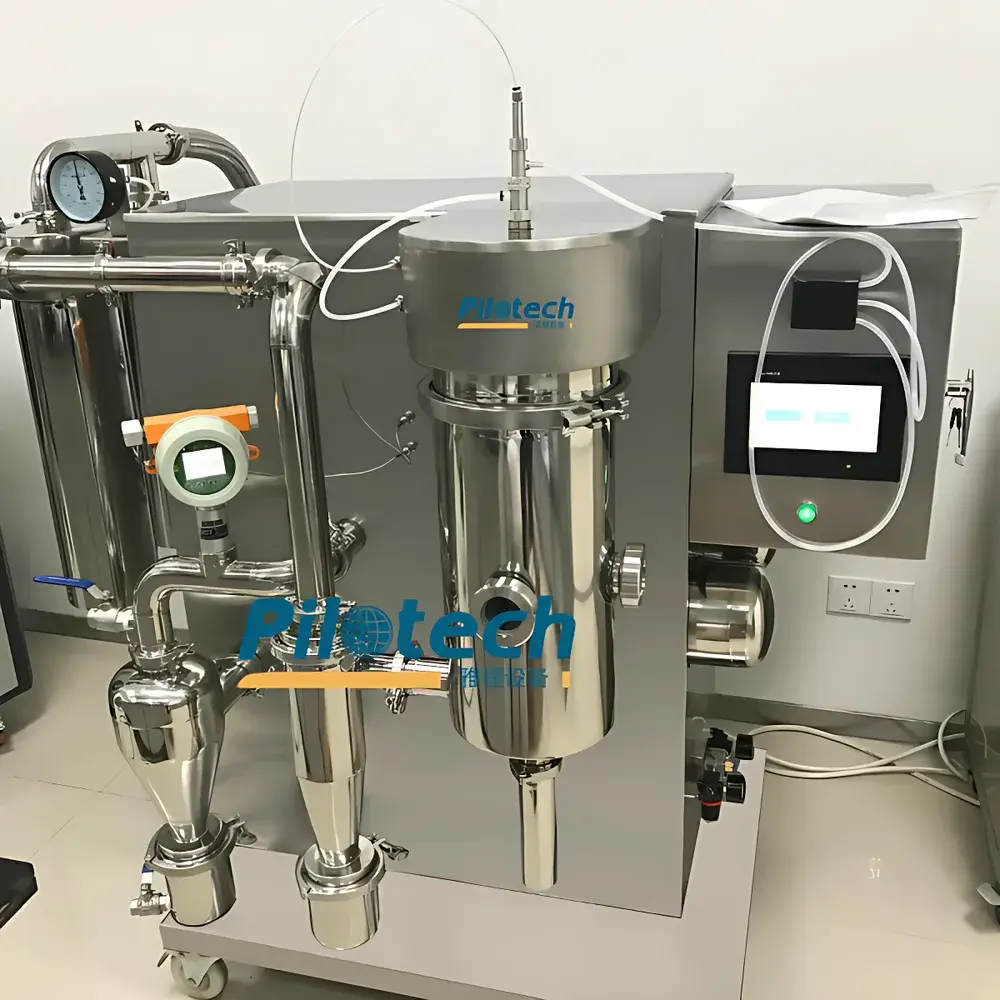
YaCheng YC-015A Closed-Cycle Organic Solvent Spray Dryer
| Brand | YaCheng / PILOTECH |
|---|---|
| Origin | Shanghai, China |
| Manufacturer Type | Direct Manufacturer |
| Model | YC-015A |
| Max Feed Rate | 1500 mL/h |
| Inlet Air Temperature Range | Ambient to 200 °C |
| Particle Size Output | 1–25 µm |
| Solvent Compatibility | Water & Common Organic Solvents (e.g., ethanol, acetone, chloroform, ethyl acetate) |
| Oxygen Monitoring | Real-time O₂ concentration control with auto-shutdown at ≥2.5% vol |
| Nitrogen Recirculation | Integrated closed-loop N₂ system with solvent condensation recovery |
| Safety Certification | Designed for Class I, Division 1 hazardous location compliance per IEC 60079-0 (inert atmosphere operation) |
Overview
The YaCheng YC-015A Closed-Cycle Organic Solvent Spray Dryer is an engineered laboratory-scale spray drying system specifically designed for the safe, reproducible, and scalable conversion of heat-sensitive, oxidation-prone, or toxic organic solutions into free-flowing microparticulate powders. Unlike conventional open-air spray dryers, the YC-015A operates under a fully sealed, nitrogen-purged recirculating environment—eliminating oxygen exposure and mitigating explosion risks associated with volatile organic solvents (VOCs). Its core principle relies on two-phase coaxial atomization: pressurized nitrogen sheath gas surrounds the liquid feed stream, generating fine, uniform droplets via a concentric nozzle; these droplets are then rapidly dried by precisely controlled heated nitrogen entering the drying chamber tangentially. Residual solvent vapor is condensed in an integrated refrigerated heat exchanger, enabling >95% solvent recovery and continuous inert-gas reuse. This architecture supports strict adherence to intrinsic safety requirements for handling flammable solvents (e.g., ASTM E681, NFPA 497), while maintaining thermal integrity for thermolabile actives such as peptides, nucleic acid carriers, enzyme inhibitors, and natural product extracts.
Key Features
- Full closed-loop nitrogen recirculation with real-time oxygen monitoring (0–10% range, ±0.1% accuracy); automatic emergency shutdown triggered at ≥2.5% O₂
- Coaxial concentric spray nozzle (standard 1.0 mm orifice; optional 0.5/0.8/1.5/2.0 mm) ensuring non-offset atomization and minimal wall deposition
- 7-inch color touchscreen HMI with intuitive Chinese/English bilingual interface; PLC-based control logic supporting dynamic parameter adjustment during operation
- Integrated solvent recovery unit featuring a high-efficiency refrigerated condenser (−20 °C minimum) and cryogenic trap for low-boiling solvents (e.g., dichloromethane, diethyl ether)
- Patented post-drying cooling protocol: automatic fan continuation until chamber temperature drops below 60 °C, independent of user input
- Corrosion-resistant blower assembly constructed from 316L stainless steel and fluoropolymer-coated impellers; zero contact between process aerosol and moving parts
- Minimal sample requirement: as low as 30 mL per run, compatible with early-stage formulation screening and API salt optimization
- PID-controlled inlet air heating with ±1 °C stability across full 30–200 °C operating range
Sample Compatibility & Compliance
The YC-015A accommodates aqueous solutions, polar protic/aprotic organic solvents (e.g., methanol, THF, DMF), and binary solvent mixtures commonly used in pharmaceutical nanocrystal synthesis, polymer nanoparticle fabrication, and catalyst precursor drying. It meets foundational design criteria aligned with ISO 22000 (food safety), USP (pharmaceutical drying), and GLP-compliant documentation workflows. While not certified to ATEX or UL 60079 out-of-the-box, its inerted architecture satisfies prerequisite engineering controls for use in ISO Class 5–7 cleanrooms and GMP-aligned pilot labs when operated within validated nitrogen purity thresholds (<100 ppm O₂). All electrical components—including touch panel, heater relays, and oxygen sensor—are rated for continuous operation in non-oxidizing atmospheres per IEC 60079-14 guidelines.
Software & Data Management
The embedded controller logs timestamped records of all critical process variables—including inlet/outlet temperature, feed rate, atomization pressure, O₂ concentration, and condenser temperature—at 1-second intervals. Exportable CSV files support traceability for regulatory submissions (FDA 21 CFR Part 11–compliant when paired with networked audit trail software). Optional Ethernet/IP connectivity enables remote monitoring via Modbus TCP or OPC UA protocols, facilitating integration into centralized lab informatics platforms (e.g., LabVantage, STARLIMS). No cloud dependency or proprietary software licensing is required; raw data remains fully accessible without vendor lock-in.
Applications
- Pharmaceutical R&D: Production of amorphous solid dispersions, inhalable dry powder formulations, and solvent-shifted nanosuspensions
- Biotechnology: Stabilization of monoclonal antibodies, viral vectors, and mRNA-LNPs without aggregation or hydrolysis
- Materials Science: Synthesis of metal-organic framework (MOF) precursors, conductive polymer microspheres, and battery cathode active materials
- Food & Nutraceuticals: Encapsulation of omega-3 oils, probiotics, and anthocyanins using GRAS-certified solvents
- Agrochemical Development: Formulation of water-dispersible granules (WDGs) and controlled-release pesticides from organic solution stocks
FAQ
Can the YC-015A handle chlorinated solvents such as chloroform or DCM?
Yes—its all-stainless-steel fluid path, PTFE-sealed valves, and cryogenic condenser (-20 °C) are chemically compatible with halogenated solvents; recommended nitrogen purge flow rate increases by 20% for optimal vapor removal.
Is validation documentation (IQ/OQ/PQ) available?
Factory-issued IQ/OQ protocols are provided; PQ templates follow ASTM E2500 and can be customized for client-specific performance criteria (e.g., residual solvent limits per ICH Q3C).
What maintenance intervals are recommended for the oxygen sensor?
Electrochemical O₂ sensors require calibration every 90 days and replacement every 12 months under continuous operation; spare sensors ship with NIST-traceable calibration certificates.
Does the system support GMP-compliant electronic signatures?
The base controller does not include digital signature functionality; however, it exports audit-ready CSV logs that integrate seamlessly with third-party e-signature platforms meeting 21 CFR Part 11 requirements.
Can particle size distribution be tuned without changing nozzles?
Yes—via coordinated adjustment of feed rate, inlet temperature, and nitrogen flow velocity; narrower distributions (span <1.8) are achievable using the 0.5 mm nozzle option combined with optimized cyclone geometry.



