
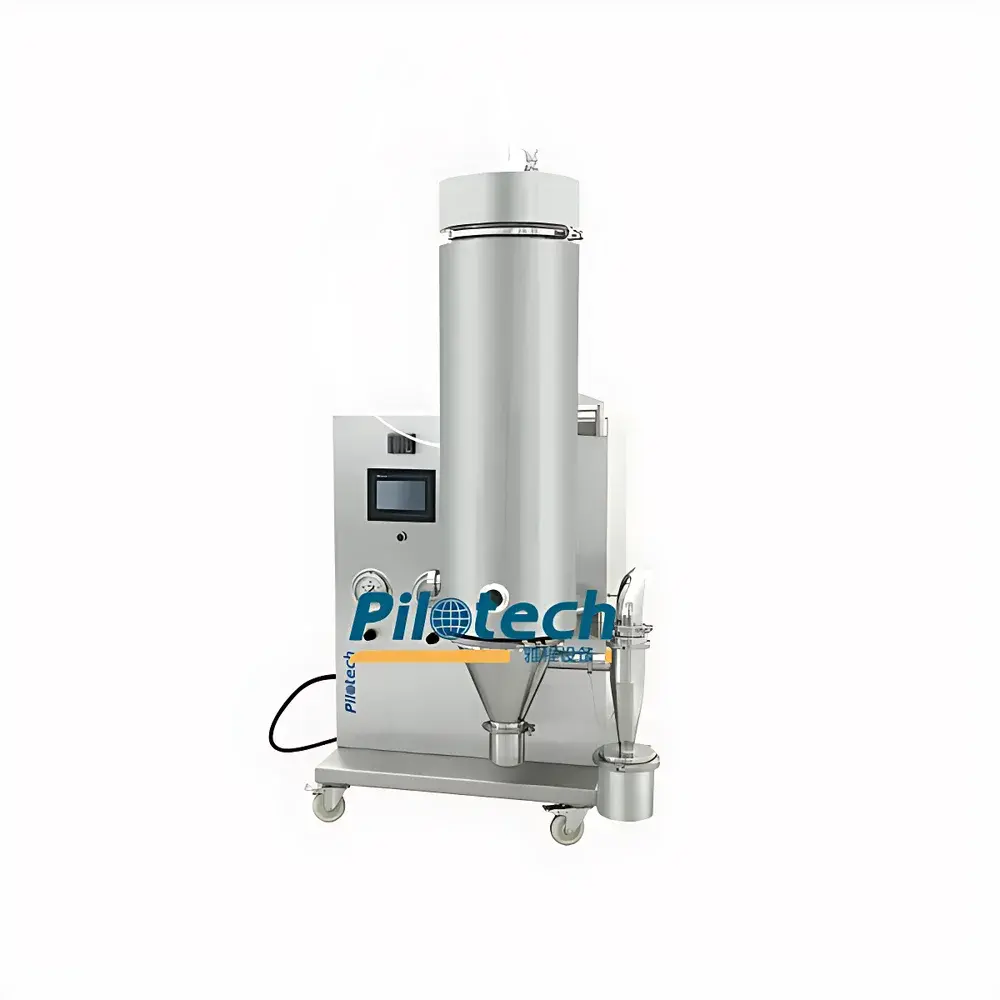
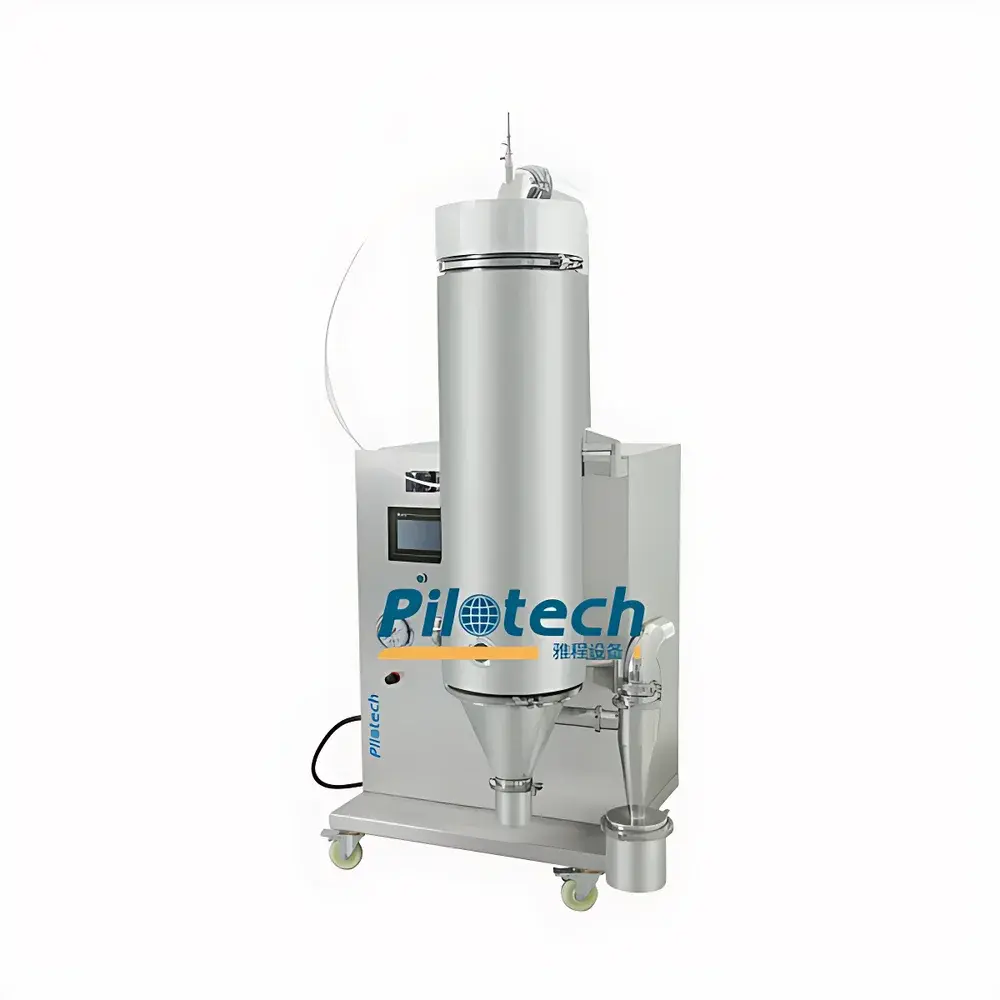
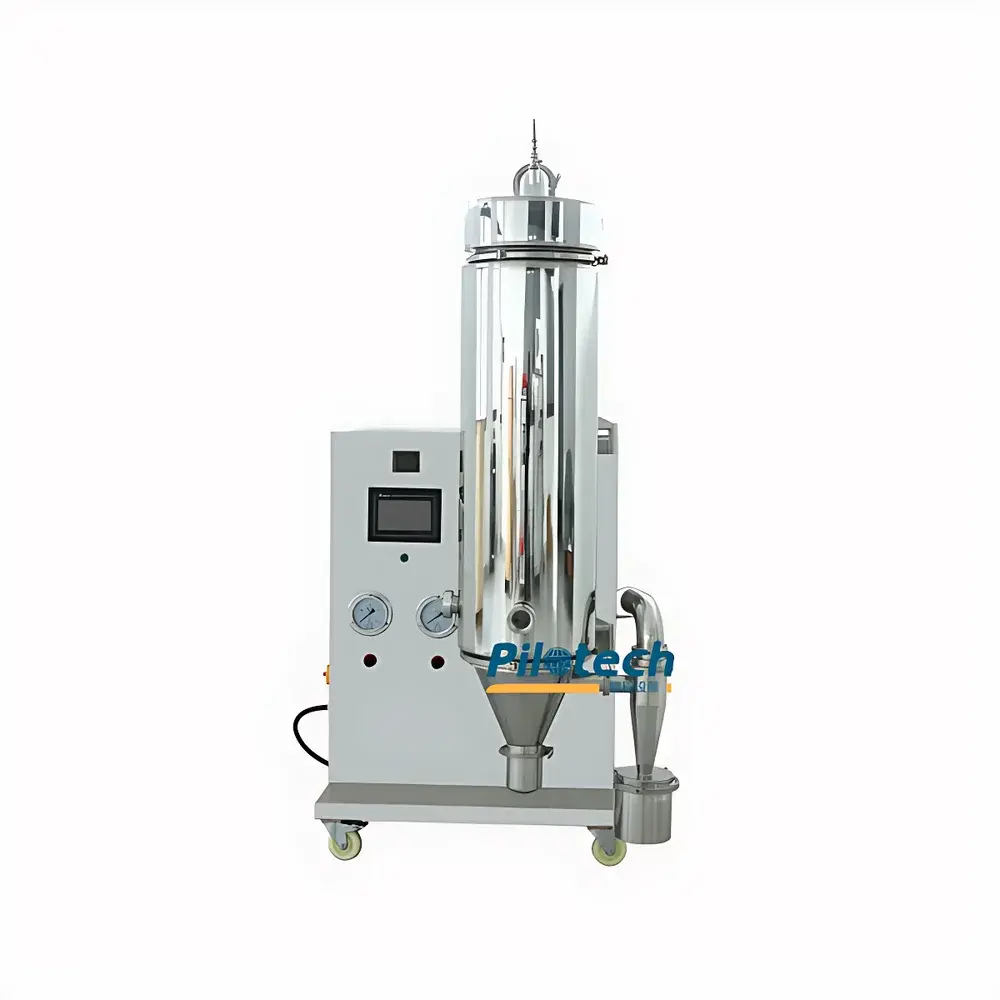
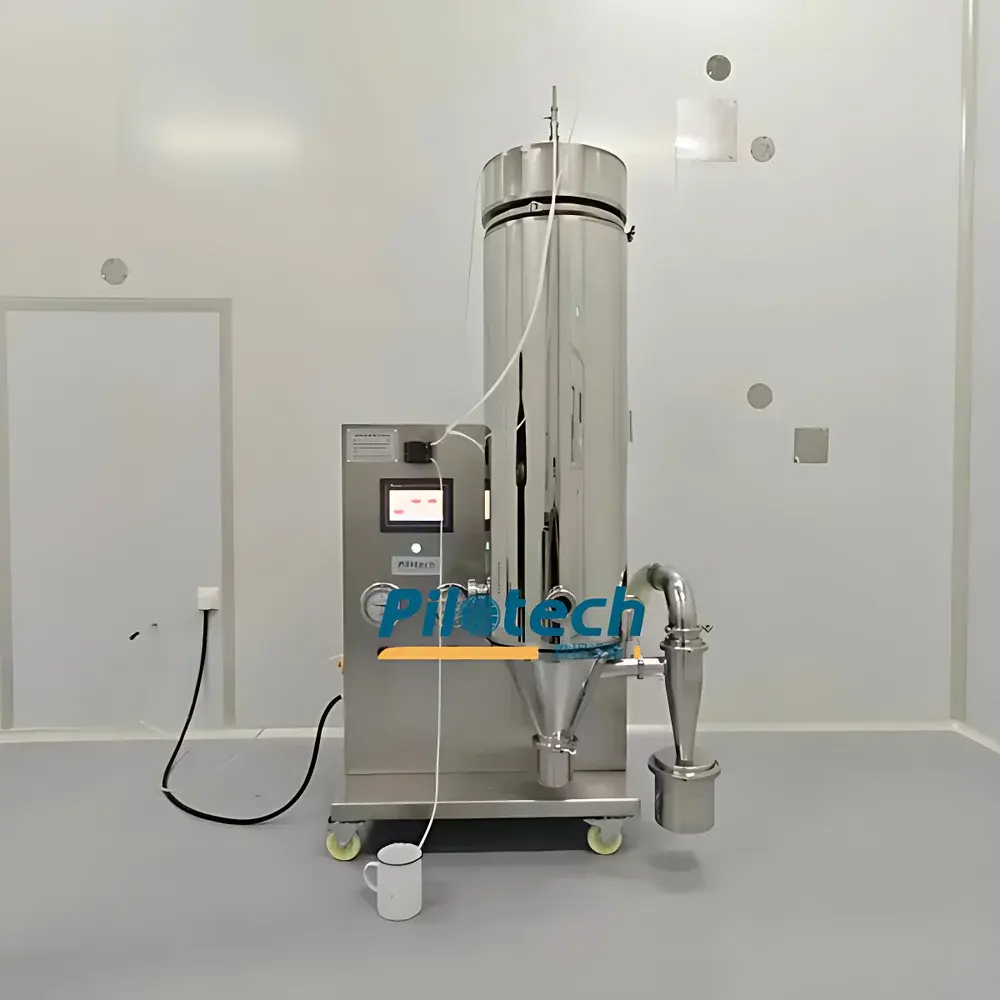
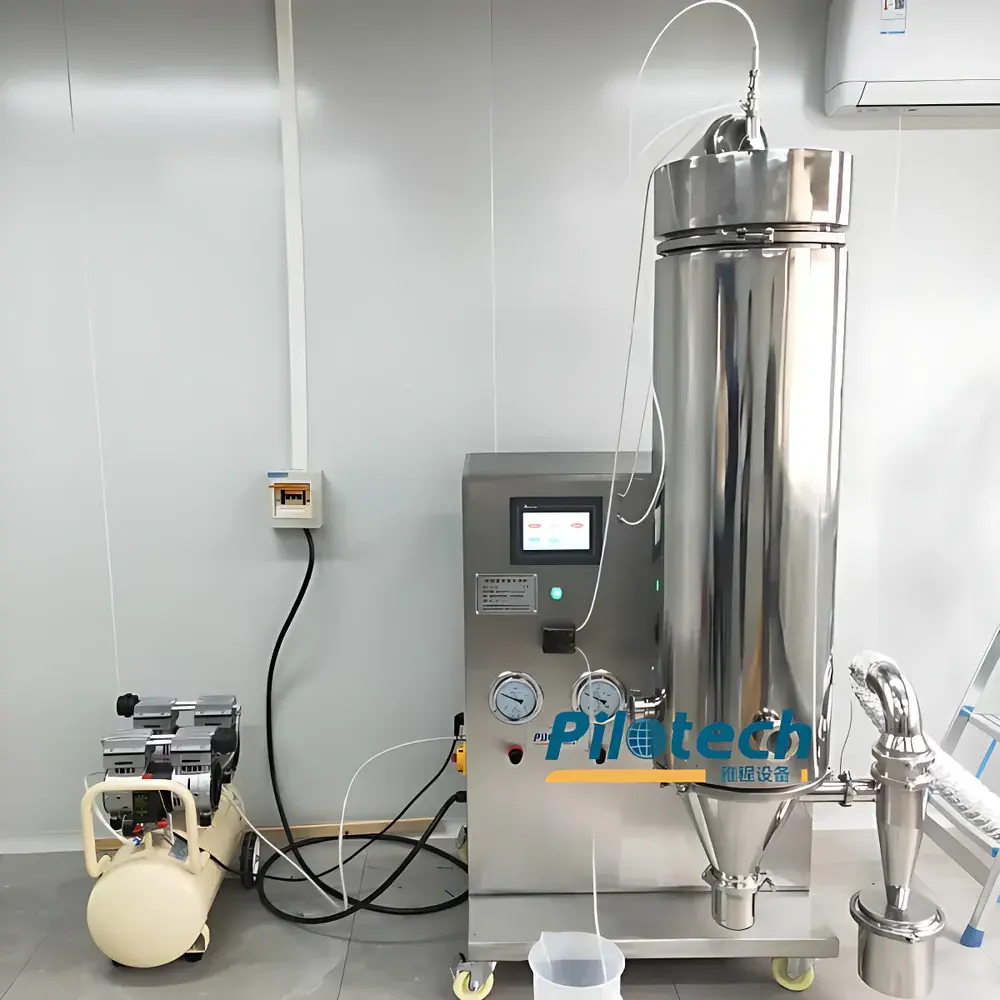
YaCheng YC-019 Pilot-Scale Spray Dryer
| Brand | YaCheng / PILOTECH |
|---|---|
| Origin | Shanghai, China |
| Manufacturer Type | Direct Manufacturer |
| Product Category | Domestic |
| Model | YC-019 |
| Sample Compatibility | Aqueous Solutions Only |
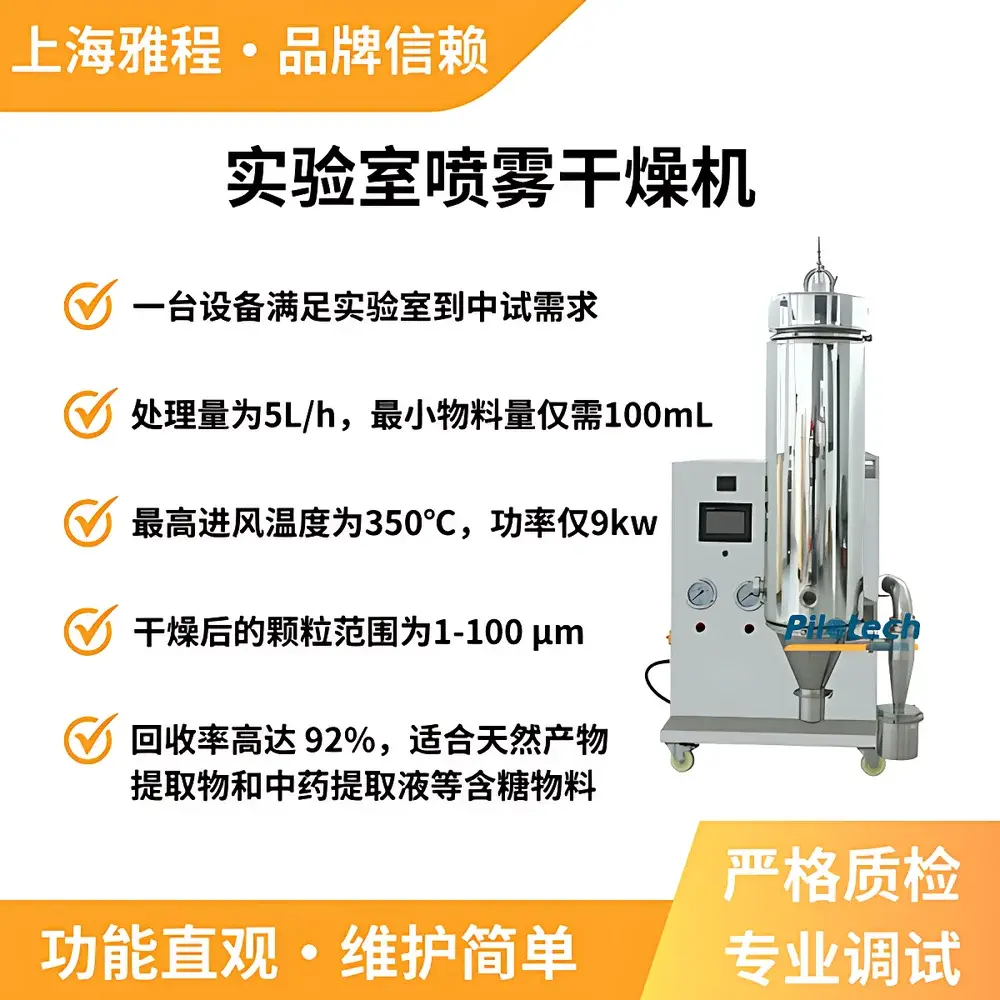
| Maximum Feed Rate | 5000 mL/h |
| Inlet Air Temperature Range | 105–350 °C |
| Particle Size Output | 1–100 µm |
Overview
The YaCheng YC-019 Pilot-Scale Spray Dryer is an engineered solution for laboratory-scale process development and transitional scale-up from benchtop to pilot production. It operates on the principle of single-stage concurrent spray drying—atomizing liquid feed into fine droplets within a heated air stream, enabling rapid solvent evaporation in 1.0–1.5 seconds. This transient thermal exposure preserves thermolabile compounds, including enzymes, probiotics, natural extracts, and biopharmaceutical actives, while delivering consistent particle morphology and flowability. Designed for reproducible operation under GLP-aligned workflows, the YC-019 bridges the gap between analytical-scale drying (e.g., ≤500 mL/h) and industrial pilot trials (≥10 L/h), supporting formulation optimization, stability studies, and regulatory batch documentation.
Key Features
- Ultra-low acoustic signature: Integrated noise-dampened blower assembly and oil-free compressor meet ISO 7779-compliant laboratory ambient noise limits (<55 dB(A) at 1 m).
- Compact footprint: Occupies <0.8 m² floor space without compromising structural rigidity or thermal containment integrity.
- Extended temperature envelope: Precise PID-controlled inlet air heating from 105 °C (optimized for sugar-rich botanical extracts and viscous suspensions) to 350 °C (suitable for ceramic precursors, metal oxides, and high-decomposition-threshold materials).
- Broad operational flexibility: Supports feed volumes from 100 mL (single-batch screening) to continuous 5000 mL/h throughput via calibrated peristaltic pump (0–5000 mL/h, ±1% volumetric accuracy).
- Engineered particle size control: Standard 2.0 mm nozzle with optional interchangeable tips (0.5/0.8/1.0/1.5 mm) enables targeted median particle diameter (D50) tuning across 1–100 µm—critical for catalyst supports, inhalable powders, and sustained-release matrices.
- Enhanced collection efficiency: Redesigned cyclonic separation architecture with dual-stage stainless-steel (AISI 304) collection vessels achieves ≥92% solid recovery—minimizing sample loss during low-yield API or high-value natural product processing.
- Automated nozzle maintenance: Programmable “needle clearing” (通针) function prevents nozzle clogging during high-solids or polymer-containing feeds; frequency adjustable from 0.1–5 Hz.
Sample Compatibility & Compliance
The YC-019 is validated for aqueous-based feeds only—including solutions, colloidal suspensions, emulsions, and nano-dispersions—with total dissolved solids (TDS) up to 60 wt%. It excludes organic solvents, halogenated media, or corrosive acids due to material-of-construction constraints (304 stainless steel drying chamber, cyclone, and collection lines). All electrical components comply with IEC 61000-6-3 (EMC emission standards) and IEC 61000-6-2 (immunity). The system supports audit-ready documentation when integrated with external data loggers compliant with FDA 21 CFR Part 11 requirements for electronic records and signatures.
Software & Data Management
A 7-inch color LCD touchscreen provides real-time visualization of critical process parameters: inlet/outlet air temperature, blower frequency (Hz), peristaltic pump speed (rpm), and needle-clearing cycle timing. Dynamic animated schematics illustrate airflow path, atomization zone, and particle trajectory—enhancing operator situational awareness. All parameter sets are timestamped and exportable via USB to CSV format. While the embedded controller does not include built-in audit trail or user-role management, its analog/digital I/O ports enable integration with third-party SCADA or LIMS platforms supporting ALCOA+ data integrity principles.
Applications
- Pharmaceutical development: Lyophilization alternative for heat-stable biocatalysts, vaccine adjuvants, and amorphous solid dispersions.
- Nutraceutical R&D: Encapsulation of omega-3 oils, polyphenols, and probiotic strains using maltodextrin or gum arabic matrices.
- Materials science: Synthesis of spherical metal oxide nanoparticles (e.g., TiO₂, SiO₂) and ceramic microspheres for battery cathodes or thermal barrier coatings.
- Food science: Production of instant tea powders, dairy protein aggregates, and encapsulated flavors with controlled hygroscopicity.
- Agrochemical formulation: Preparation of water-dispersible granules (WDG) and controlled-release pesticide carriers.
FAQ
Is the YC-019 suitable for organic solvent-based feeds?
No. The system is constructed exclusively for aqueous-phase processing. Solvent compatibility requires explosion-proof modifications and alternative wetted materials (e.g., 316L SS, Hastelloy), which are not part of the standard configuration.
What is the minimum recommended solids content for stable atomization?
For reliable nozzle performance and uniform droplet formation, a minimum total dissolved solids (TDS) of 2–5 wt% is advised. Viscosity should remain below 500 cP at processing temperature.
Can particle size distribution be narrowed beyond the standard 1–100 µm range?
Yes—through coordinated optimization of feed concentration, inlet temperature, atomization pressure (via optional air compressor upgrade), and nozzle selection. Narrower distributions (span <1.8) are achievable for monodisperse applications such as diagnostic reagent powders.
Does the system support GMP-compliant operation?
The base unit meets mechanical and electrical safety prerequisites for GMP environments (e.g., cleanable surfaces, no dead legs, non-shedding components). Full GMP compliance requires supplementary validation protocols (IQ/OQ/PQ), environmental monitoring integration, and qualified electronic record systems.
What maintenance intervals are recommended for long-term reliability?
Daily: Visual inspection of nozzle tip, cyclone seals, and collection vessel gaskets.
Weekly: Lubrication-free operation eliminates grease points; however, air filter elements must be replaced every 100 operating hours.
Annually: Calibration verification of temperature sensors (±1 °C traceable to NIST standards) and peristaltic pump tubing replacement.
Related Products



