
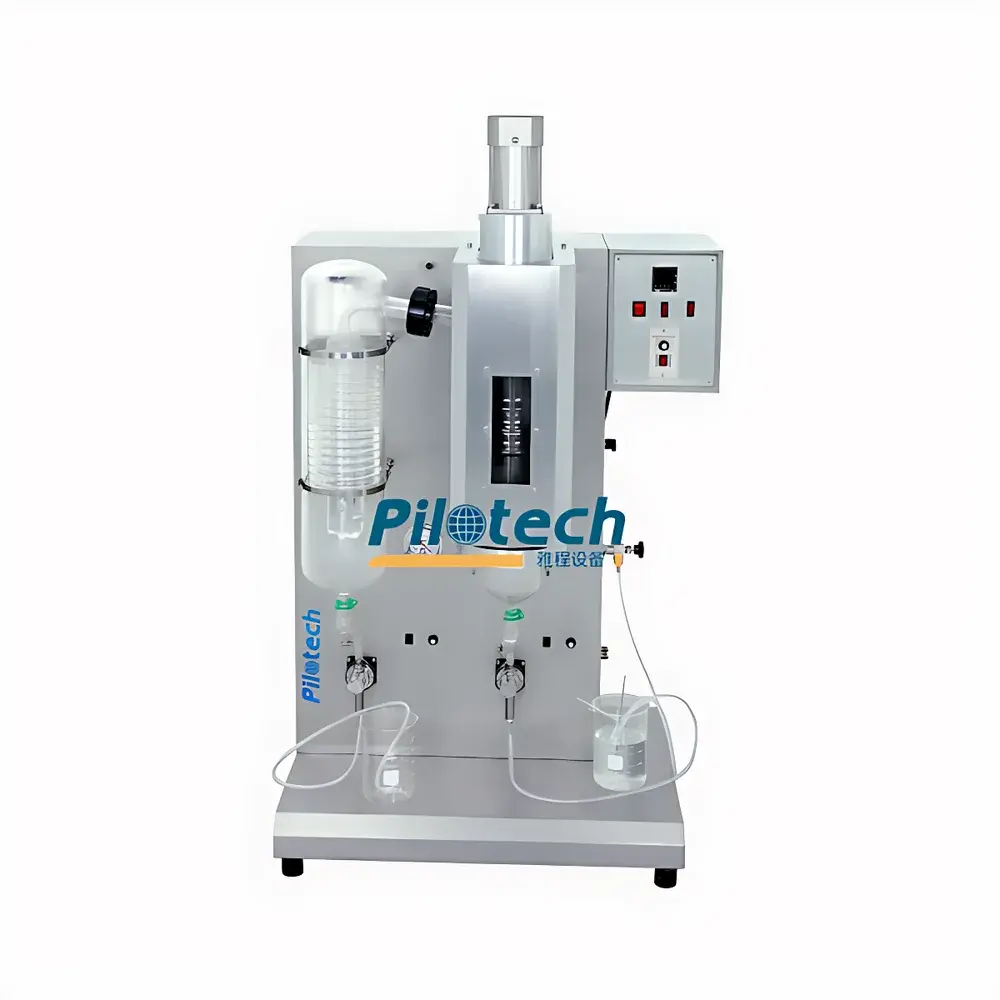
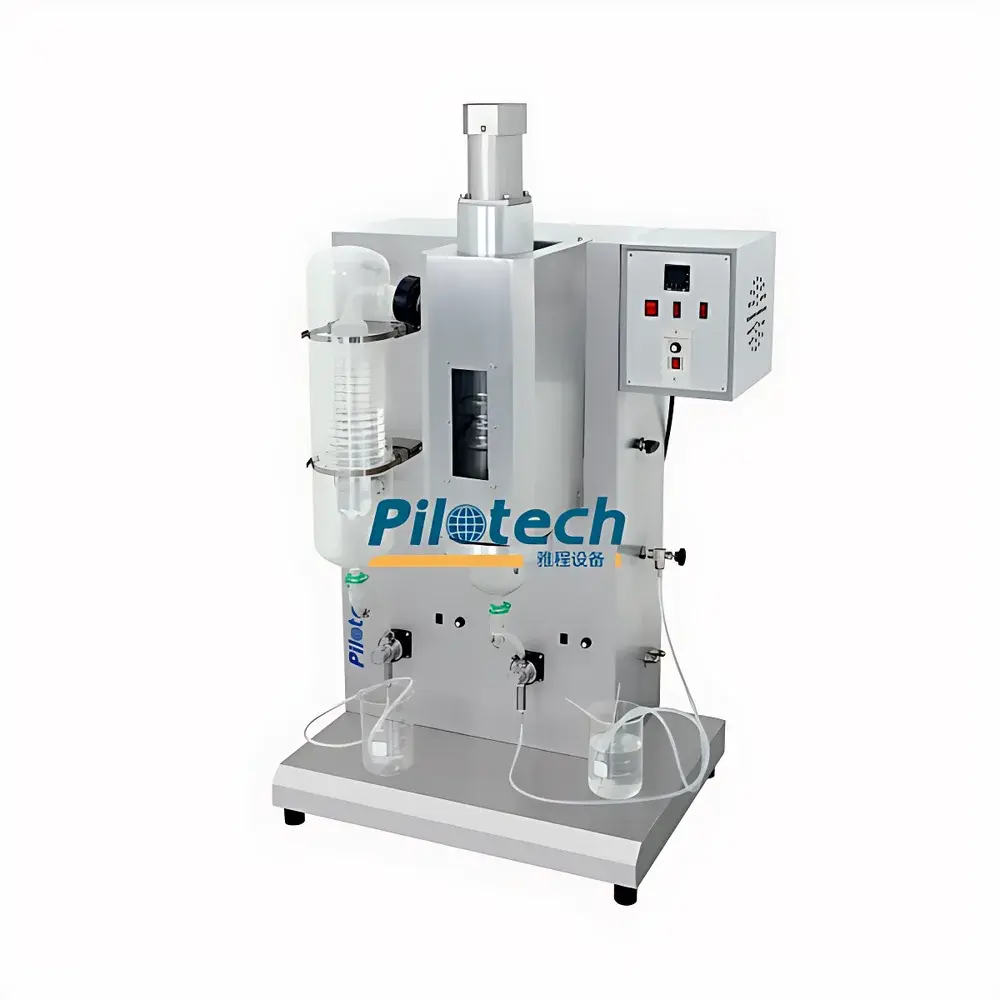
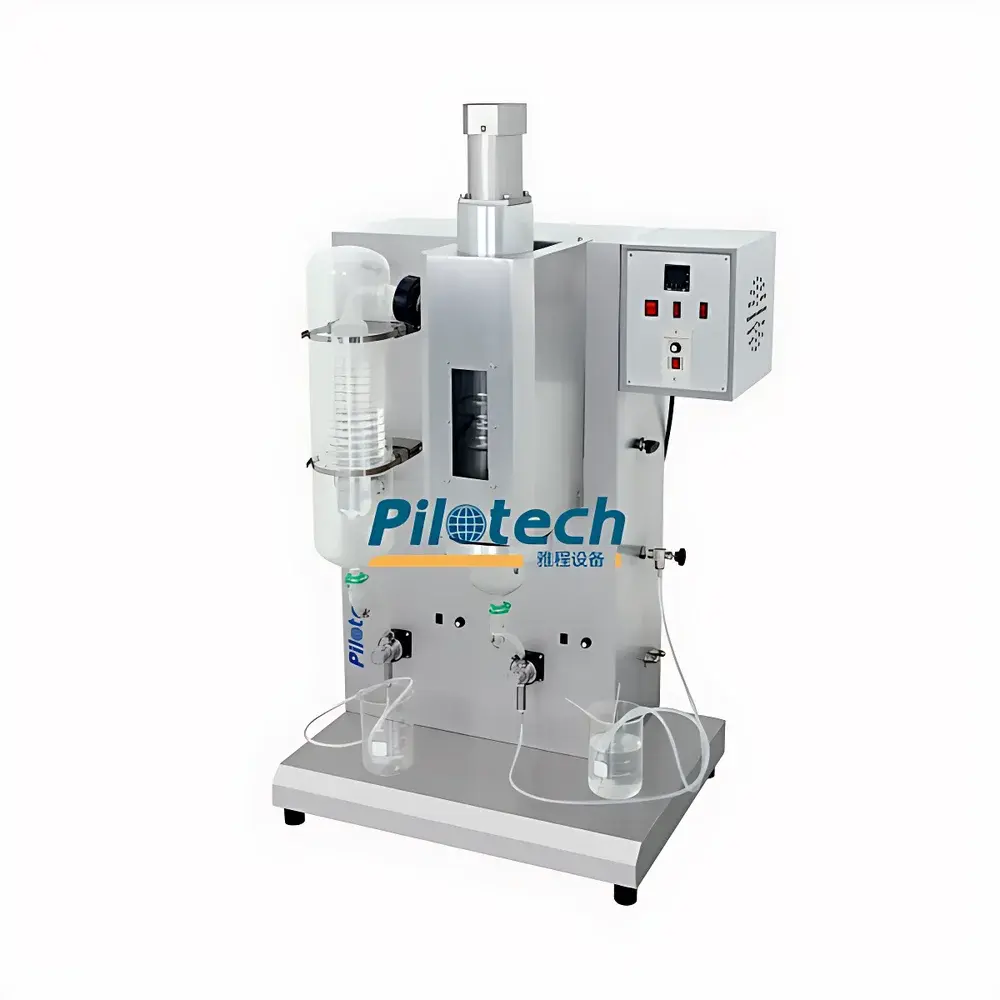
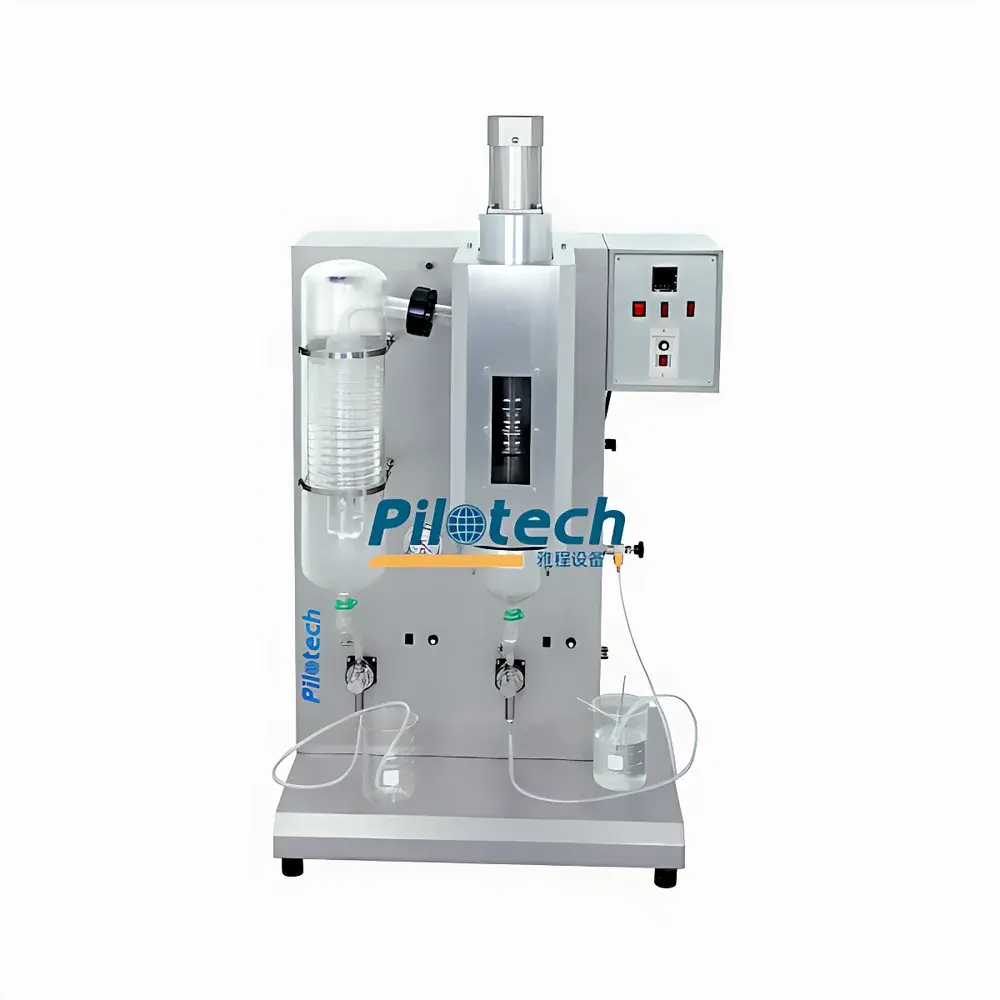
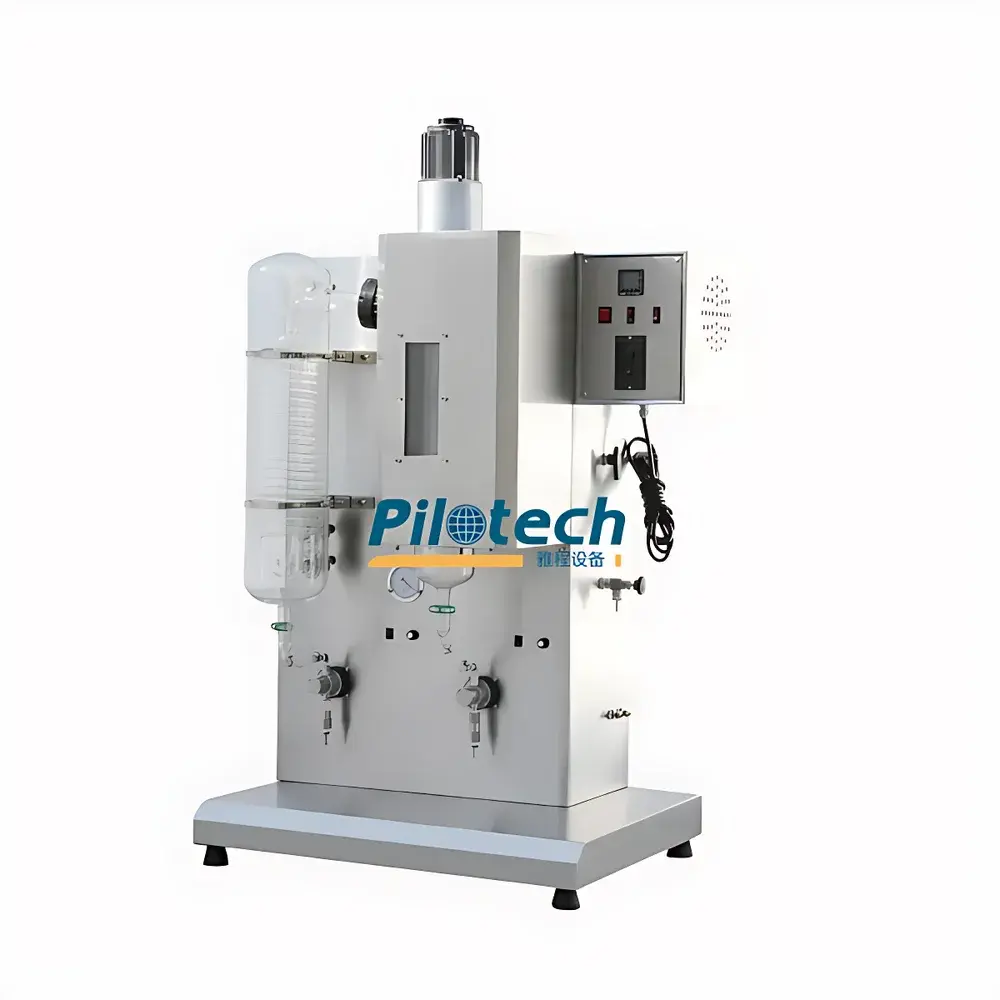
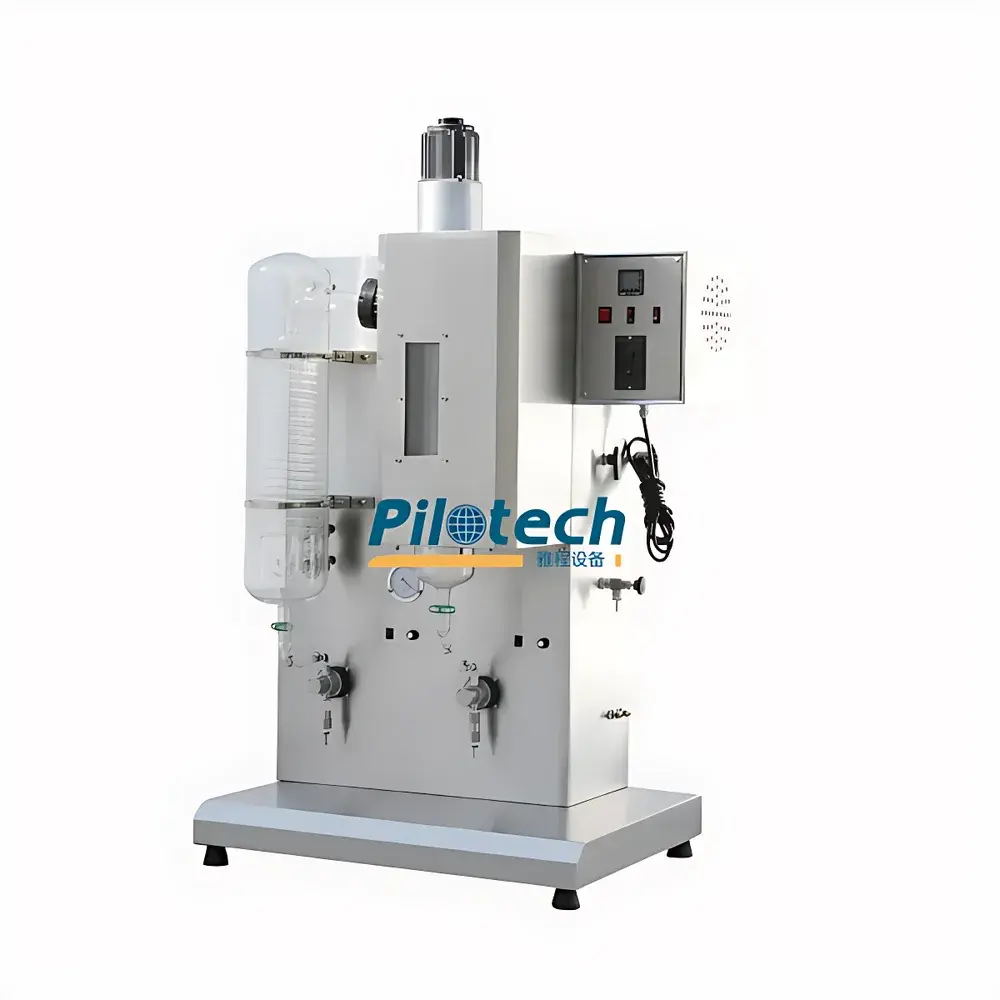
Yacheng YC-210 Wiped-Film Flash Evaporator
| Brand | Yacheng / PILOTECH |
|---|---|
| Origin | Shanghai, China |
| Manufacturer Type | Direct Manufacturer |
| Country of Origin | China |
| Model | YC-210 |
| Instrument Type | Automated Quantitative Concentrator |
| Key Feature | Continuous-feed wiped-film evaporation under vacuum |
| Typical Residence Time | <30 s |
| Construction Material | Borosilicate glass (custom-machined, corrosion-resistant) |
| Application Scope | Heat-sensitive, high-viscosity, and foaming liquids |
Overview
The Yacheng YC-210 Wiped-Film Flash Evaporator is an advanced continuous-feed thin-film evaporation system engineered for rapid, low-thermal-stress concentration and solvent recovery of thermolabile compounds. Unlike batch-mode rotary evaporators—where samples reside in heated flasks for minutes—this instrument operates on the principle of controlled falling-film and mechanically assisted wiped-film evaporation under deep vacuum (typically 0.1–5 mbar). Liquid feed is distributed uniformly onto the inner wall of a vertically oriented, jacketed heating cylinder; a high-precision PTFE-coated rotor assembly rotates at adjustable speed to generate a uniform, sub-millimeter liquid film. This geometry maximizes surface-to-volume ratio and minimizes conductive heat transfer distance, enabling near-instantaneous phase change upon contact with the heated surface. The resulting vapor is rapidly separated from the concentrate via a short-path condenser and directed to solvent recovery vessels. With total sample residence time consistently below 30 seconds, the YC-210 preserves labile functional groups, glycosidic bonds, and chiral integrity—critical for botanical extracts, monoclonal antibody formulations, and unstable APIs.
Key Features
- Continuous-feed architecture eliminates manual batch loading/unloading, supporting unattended operation for multi-hour processing of large-volume feeds (up to 5 L/h typical throughput).
- Patented borosilicate glass construction: all wetted parts—including evaporator body, condenser, feed distributor, and collection vessels—are made from ASTM E438 Type I, Class A borosilicate glass, ensuring chemical inertness against organic solvents, acids, and bases.
- Motorized rotor speed control (0–300 rpm) enables precise film thickness modulation—critical for handling viscosities ranging from 1 cP (aqueous buffers) to >10,000 cP (crude plant extracts or polymer solutions).
- Integrated vacuum management system with digital pressure controller and dual-stage oil-free diaphragm pump maintains stable sub-mbar conditions without backstreaming risk.
- Modular thermal jacket design allows independent temperature control of evaporation zone (up to 200 °C) and condenser (−20 °C to +40 °C), optimizing separation selectivity for multi-solvent systems.
- CE-compliant electrical architecture with IP54-rated enclosure and emergency stop circuitry meets IEC 61010-1 safety requirements for laboratory instrumentation.
Sample Compatibility & Compliance
The YC-210 accommodates complex matrices routinely encountered in regulated environments: protein-containing bioprocess streams, ethanol-water botanical distillates, viscous fermentation broths, and emulsified reaction mixtures. Its non-metallic fluid path prevents catalytic degradation and metal leaching—making it suitable for USP compliant extractables/leachables studies. The system supports full traceability per FDA 21 CFR Part 11 when paired with optional audit-log-enabled software (see Software & Data Management). All glass components conform to ISO 3585 specifications, and vacuum seals meet ASTM F2391 helium leak test standards (<1×10⁻⁹ mbar·L/s). Validation protocols align with ICH Q5C (stability), Q7 (GMP for APIs), and ISO 13485 (medical device manufacturing support).
Software & Data Management
The YC-210 operates via an embedded industrial-grade HMI touchscreen (7″ capacitive, glove-compatible) with real-time display of vacuum level, jacket temperature, rotor speed, feed rate, and condensate volume. Optional Ethernet/RS485 interface enables integration into LabVantage, STARLIMS, or custom SCADA platforms. Data logging records all operational parameters at 1-second intervals, with CSV export and encrypted local storage (SD card, 32 GB). Audit trail functionality—activated via password-protected admin mode—captures user logins, parameter changes, and system alarms with timestamp, operator ID, and reason-for-change fields—fully satisfying ALCOA+ data integrity principles for GLP/GMP workflows.
Applications
- Rapid desolvation of natural product extracts (e.g., curcuminoids, anthocyanins, terpenes) without Maillard browning or epimerization.
- Concentration of heat-sensitive biologics (e.g., enzymes, vaccines, mRNA-LNPs) prior to lyophilization or sterile filtration.
- Solvent exchange in peptide synthesis workflows (DMF → acetonitrile → tert-butanol).
- Dehydration of food-grade emulsions (e.g., citrus oils, fish oil concentrates) while retaining volatile flavor compounds.
- Pilot-scale purification of fine chemicals where fractional distillation would induce thermal decomposition.
- Removal of residual ethyl acetate or dichloromethane from GMP-compliant API intermediates.
FAQ
What is the maximum allowable feed viscosity for stable film formation?
The YC-210 maintains consistent film dynamics up to 12,000 cP at 150 rpm and 80 °C using its optimized rotor geometry and feed distribution ring.
Can the system handle foaming solutions without carryover?
Yes—the vertical wiped-film configuration combined with a demister-equipped vapor path and adjustable condenser temperature suppresses foam entrainment effectively.
Is cleaning validation supported?
All glass components are fully disassemblable; residue testing protocols (e.g., swab recovery of residual ethanol or DMSO) are documented in the IQ/OQ/PQ package.
Does the instrument comply with explosion-proof requirements for Class I, Division 1 environments?
No—the standard configuration is not rated for hazardous locations; however, ATEX-certified variants with intrinsically safe motor controls are available upon request.
What maintenance intervals are recommended?
Rotor bearing inspection every 1,000 operating hours; vacuum pump oil replacement every 500 hours (if oil-lubricated option selected); glass component visual inspection before each use per SOP-CONC-007.



