
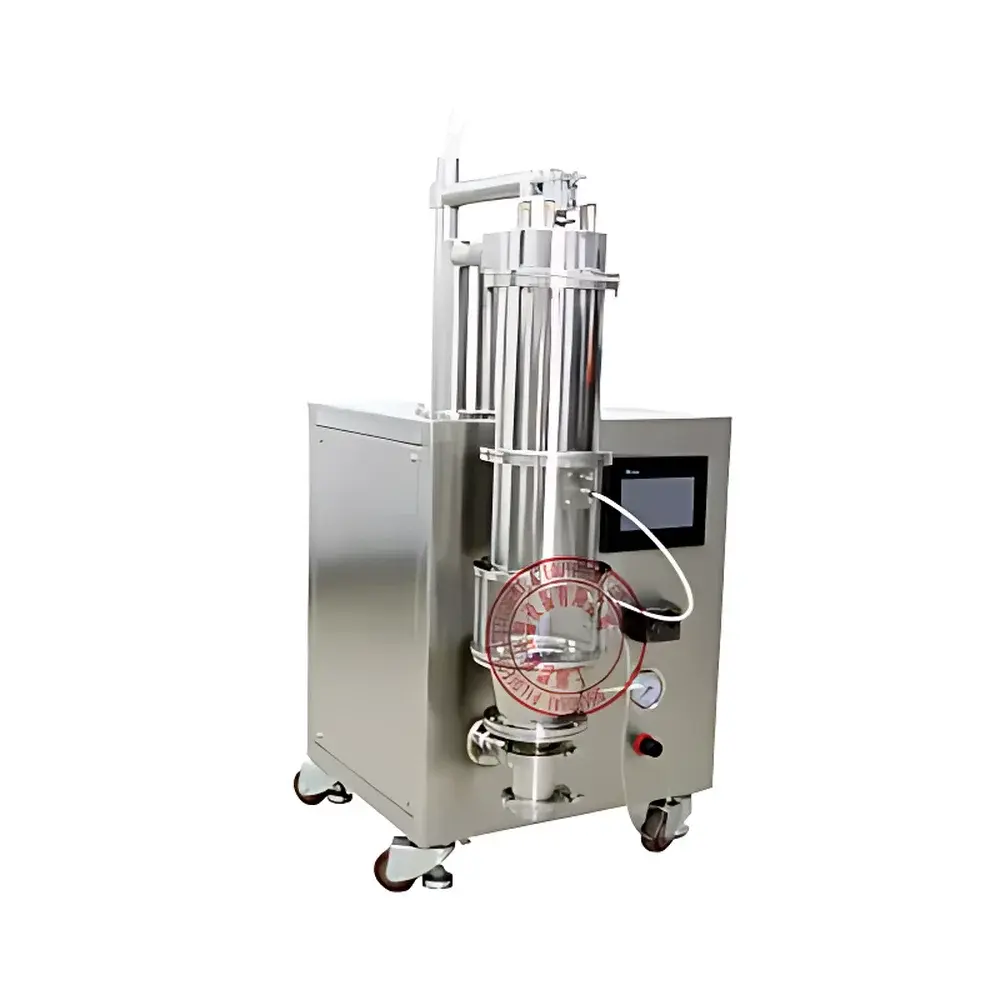
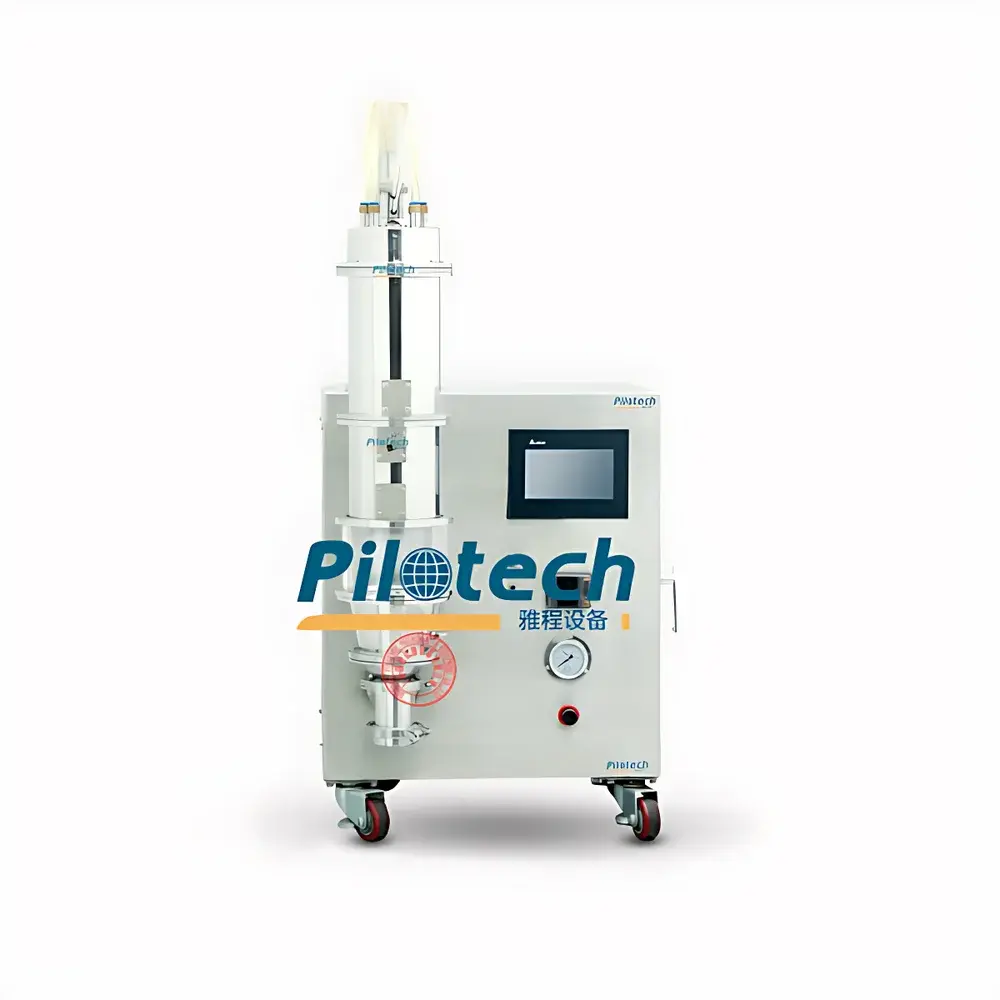
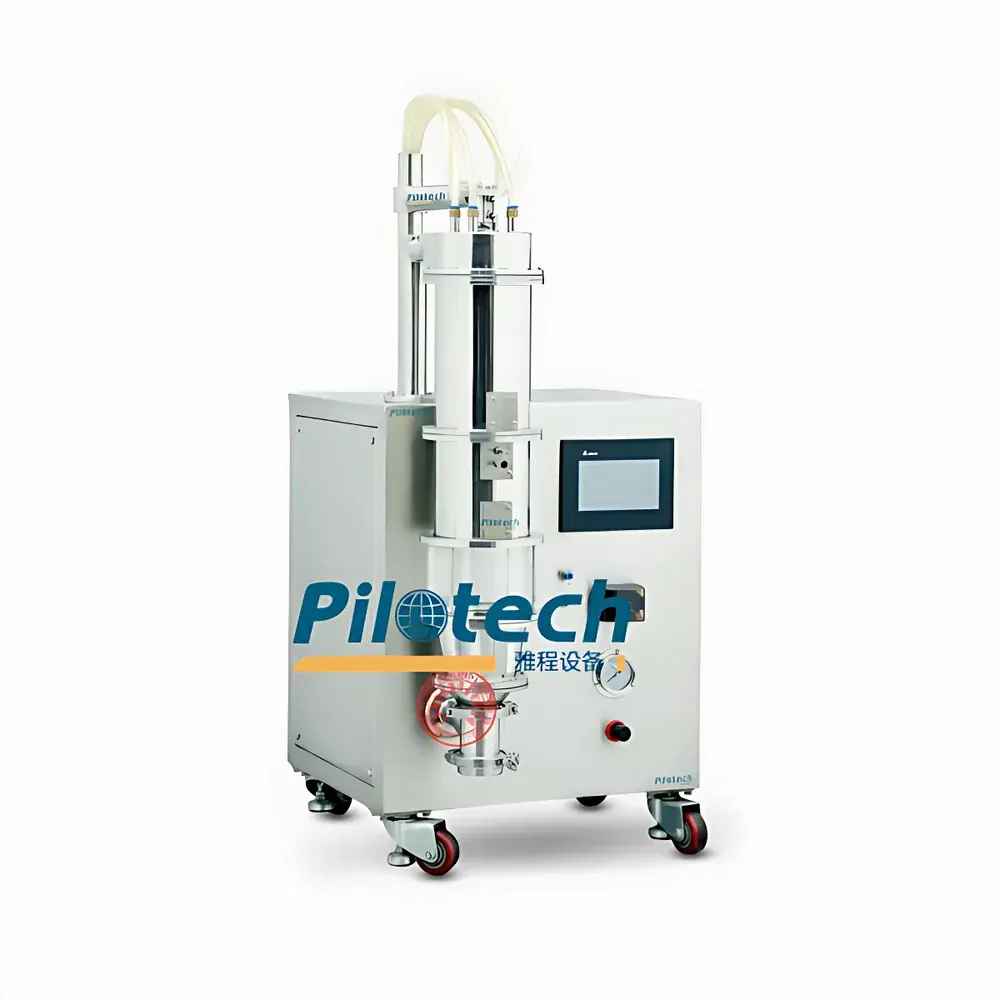
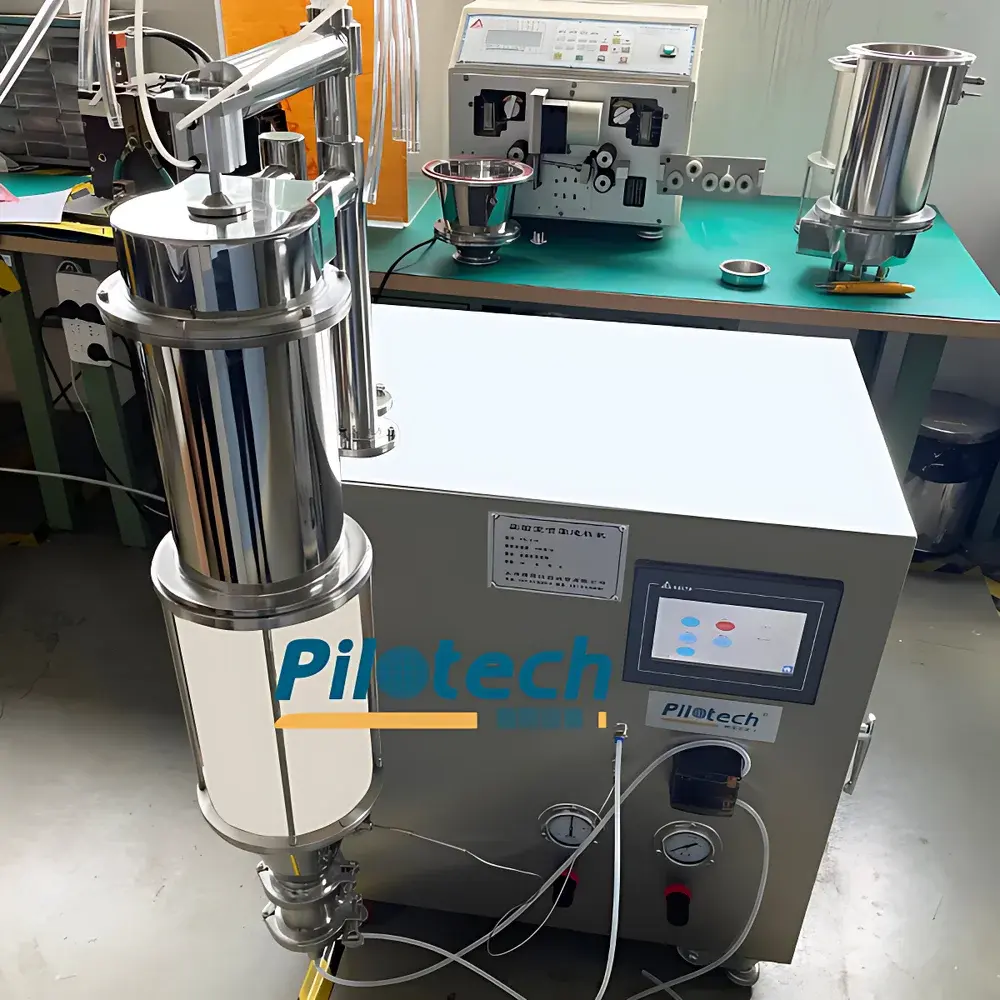
雅程 YC-310 Laboratory Fluid Bed Granulator & Coater
| Brand | YaCheng / PILOTECH |
|---|---|
| Origin | Shanghai, China |
| Manufacturer Type | OEM Manufacturer |
| Model | YC-310 |
| Pricing | Upon Request |
Overview
The YaCheng YC-310 Laboratory Fluid Bed Granulator & Coater is an integrated, bench-scale fluidized bed processing system engineered for precision granulation, top-spray and bottom-spray coating, and controlled drying of pharmaceutical, nutraceutical, and fine chemical powders. It operates on the principle of fluidization dynamics—where upward airflow suspends particulate material in a turbulent yet homogeneous state—enabling uniform heat and mass transfer during simultaneous spray application and solvent evaporation. This unit implements both top-spray (for agglomeration and film coating) and bottom-spray (for functional enteric or sustained-release microsphere coating) configurations within a single modular platform. Its design adheres to core principles of powder science: particle mobility under aerodynamic forces, liquid bridge formation via binder solution atomization, capillary-driven moisture migration, and thermodynamically balanced drying kinetics. The YC-310 supports development workflows aligned with ICH Q5A–Q5E, USP , and FDA Process Validation Guidance, making it suitable for formulation screening, process parameter mapping, and GMP-compliant pilot-scale batch documentation.
Key Features
- Modular dual-mode operation: configurable for top-spray granulation/coating or bottom-spray microsphere coating via interchangeable fluid bed assemblies
- PLC-based control system with 7-inch color touchscreen HMI; real-time adjustment of inlet air temperature (RT–120 °C), blower frequency (0–50 Hz), product temperature, peristaltic pump speed (0.1–99.9 rpm), and pulse reverse-jet cleaning intervals
- Integrated PID temperature control with feed-air/product temperature cascade feedback loop for stable thermal profiles across all process stages
- Customizable fluid bed bowls: available in multiple geometric volumes (standard 3–5 L working capacity) with conical base and expansion chamber to ensure fountain-type fluidization and minimal dead zones
- High-efficiency reverse-jet cleaning system reduces filter cake buildup and improves granule yield consistency over extended runs
- Critical components—including industrial-grade EC blower, tubular heating elements, and touch interface—are sourced from Tier-1 international suppliers for long-term operational reliability
- USB data export capability (CSV format) supports ALCOA+ compliant record retention; optional RS485/Modbus RTU interface for integration into centralized lab data acquisition systems
Sample Compatibility & Compliance
The YC-310 accommodates a broad spectrum of hygroscopic, heat-sensitive, and cohesive powders—including herbal extracts, amorphous APIs, lactose-based excipients, and polymer dispersions—without degradation or channeling. Its fluidization behavior is validated for particles ranging from sub-10 µm fines to initial agglomerates up to 300 µm, supporting final granule size distributions between 100 µm and 3 mm as required for direct compression tabletting. The system meets mechanical safety standards per ISO 12100 and electrical compliance per IEC 61000-6-2/6-4. While not certified for Class A cleanroom use out-of-the-box, its stainless-steel 316L contact surfaces, smooth-welded internal geometry, and absence of crevices support validation per ASME BPE-2022 and cleaning verification per PDA TR29. For regulated environments, audit trails, electronic signatures, and 21 CFR Part 11 readiness can be implemented via optional software modules.
Software & Data Management
The embedded control firmware logs timestamped process variables at 1-second resolution, including inlet/outlet air temperatures, relative humidity, pressure drop across filters, bed temperature, and pump flow rate. All datasets are time-stamped, user-ID tagged, and stored locally with automatic backup to external USB media. Exported CSV files contain column headers compliant with ASTM E2500-13 for raw data traceability. Optional LabView-compatible drivers enable live streaming into LIMS or MES platforms. Batch reports include summary statistics (mean, SD, min/max) for critical quality attributes (CQAs) such as granule moisture content (validated by Karl Fischer titration correlation), particle size distribution (PSD), and bulk/tapped density—all essential for QbD-based development per ICH Q8(R2).
Applications
- Pharmaceutical solid dosage development: rapid screening of binder types/concentrations, optimization of granule growth kinetics, and functional coating of pellets for pH-dependent release
- Nutraceutical processing: agglomeration of vitamin C or probiotic powders to improve flowability and reduce dust generation during capsule filling
- Food ingredient engineering: production of instant coffee granules, powdered dairy blends, and soluble tea extracts with enhanced reconstitution properties
- Chemical catalyst support preparation: immobilization of metal nanoparticles onto porous carriers via fluid-bed-assisted deposition
- Process transfer support: bridging lab-scale data to pilot-scale fluid bed processors (e.g., Glatt GPCG, Freund Vector) using dimensionless scaling parameters (e.g., Geldart classification, Froude number, spray rate-to-fluidization ratio)
FAQ
What is the maximum allowable inlet air temperature during bottom-spray coating?
The system supports inlet air temperatures up to 120 °C; however, for thermolabile actives or polymer films (e.g., Eudragit® L100), recommended setpoints range from 40–65 °C to prevent premature film coalescence or API degradation.
Can the YC-310 be used for continuous fluid bed processing?
No—it is designed exclusively for batch operation. Continuous fluid bed granulation requires separate feed/split/discharge mechanisms not present in this configuration.
Is the equipment compatible with organic solvents such as ethanol or acetone?
Yes, provided explosion-proof upgrades (ATEX Zone 21-rated motors, intrinsically safe sensors, and nitrogen inerting option) are specified at order stage.
What validation documentation is supplied with the instrument?
Factory acceptance test (FAT) report, IQ/OQ templates aligned with ASTM E2500, and calibration certificates for all embedded temperature and pressure transducers are included.
How is filter cleaning performance verified?
Reverse-jet efficiency is assessed via differential pressure decay curves before and after cleaning cycles; typical recovery exceeds 95% of baseline ΔP within three pulses.






