
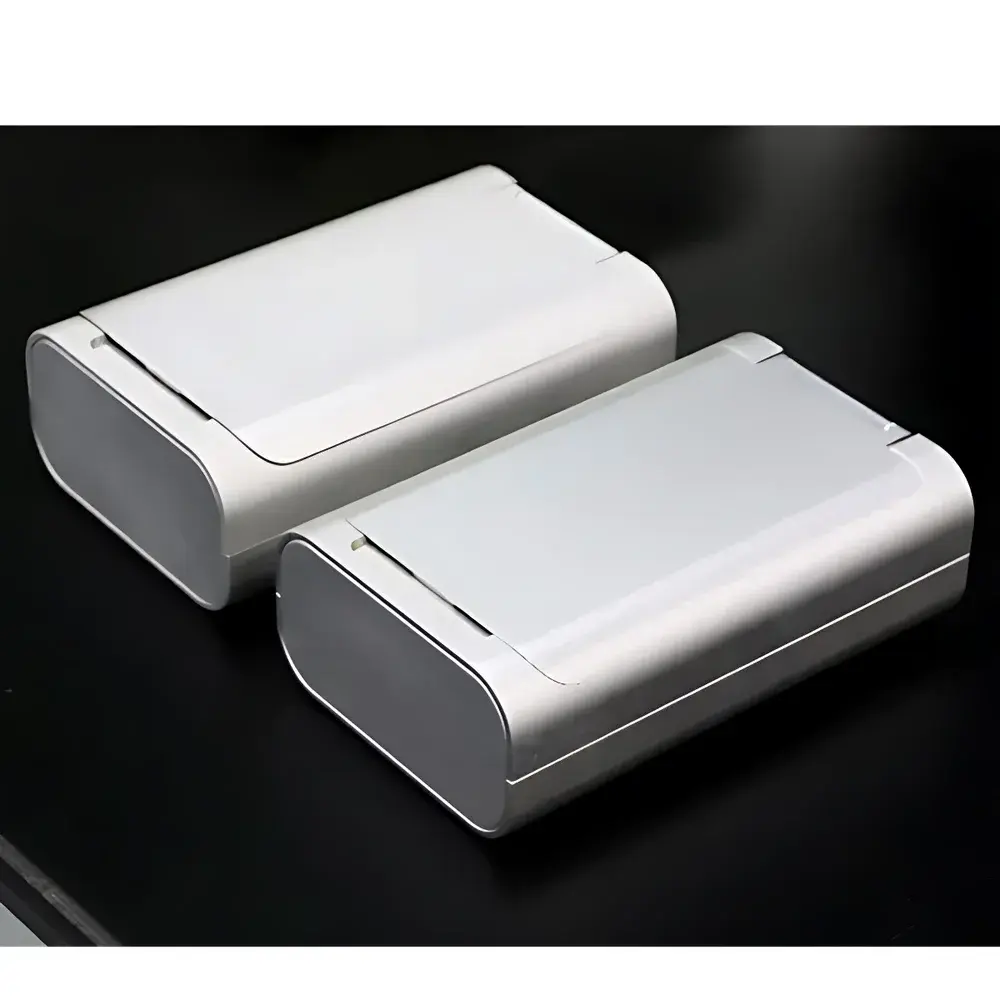
Zealquest CM100-α Real-Time Cell Analysis System
| Brand | Zealquest |
|---|---|
| Origin | Shanghai, China |
| Model | CM100-α |
| Type | Fully Automated |
| Compliance | CE-marked for in vitro research use only |
| Sensor Technology | Integrated microelectrode impedance biosensing (xCELLigence platform–class architecture) |
| Detection Principle | Label-free, non-invasive real-time measurement of cellular impedance across gold microelectrode arrays embedded in culture plate bottom |
| Throughput | 16-well parallel monitoring per plate |
| Environmental Operation | Designed for continuous operation inside standard CO₂ incubators (37 °C, 5% CO₂, >95% RH) |
| Software Platform | Windows-based control & analysis suite with audit trail capability (21 CFR Part 11 compliant module optional) |
Overview
The Zealquest CM100-α Real-Time Cell Analysis System is an engineered solution for label-free, kinetic monitoring of adherent mammalian cell behavior under physiologically relevant culture conditions. It operates on the principle of electric cell-substrate impedance sensing (ECIS), wherein a low-magnitude, high-frequency alternating current is applied across interdigitated gold microelectrodes integrated into the base of specialized 16-well culture plates. As cells attach, spread, proliferate, migrate, or undergo morphological or junctional changes—such as those induced by cytotoxic agents, receptor agonists/antagonists, or viral infection—their interaction with the electrode surface alters local impedance. These dynamic shifts are quantified as dimensionless Cell Index (CI) values, enabling continuous, quantitative tracking of cell status without perturbation. Unlike endpoint assays requiring lysis, fixation, or fluorescent labeling, the CM100-α captures functional responses in real time over hours to days—providing temporal resolution unattainable with conventional ELISA, MTT, or immunostaining workflows.
Key Features
- Fully automated impedance acquisition with sub-minute temporal resolution and <1% coefficient of variation across replicate wells
- Incubator-integrated hardware design: compact, fanless, EMI-shielded analyzer unit rated for continuous operation at 37 °C and 5% CO₂
- 16-well detection plates featuring lithographically patterned, sterilizable gold microelectrode arrays (250 µm pitch, 10 kΩ baseline impedance)
- Real-time visualization of CI curves synchronized with experimental interventions (e.g., drug addition, cytokine stimulation, or pathogen challenge)
- Onboard data buffering and encrypted local storage; no dependency on network uptime during long-term assays
- Optional 21 CFR Part 11-compliant audit trail software module supporting electronic signatures, user access controls, and immutable record retention
Sample Compatibility & Compliance
The CM100-α supports a broad spectrum of adherent human and animal cell lines—including HEK293, A549, HeLa, U87MG, primary endothelial cells, iPSC-derived cardiomyocytes, and macrophage-like THP-1 derivatives—provided they exhibit measurable electrode coverage-dependent impedance modulation. Suspension cells may be assessed indirectly via co-culture or adhesion-inducing matrices (e.g., fibronectin-coated plates). The system complies with IEC 61000-6-3 (EMC emission standards) and IEC 61010-1 (safety requirements for laboratory equipment). All components intended for sterile environments meet ISO 13485-derived manufacturing controls. Regulatory positioning: For research use only (RUO); not intended for diagnostic or therapeutic use. Validated per ASTM E3127-18 guidelines for impedance-based cell viability assessment.
Software & Data Management
The Zealquest Real-Time Cell Analysis Software (v4.2+) provides intuitive experiment setup, live dashboard visualization, and advanced curve analytics—including slope derivation, area-under-curve (AUC) quantification, lag-phase detection, and dose–response modeling. Raw impedance data (Zreal, Zimag, phase angle) are stored in HDF5 format with embedded metadata (timestamp, well ID, environmental log). Export options include CSV, Excel, and GraphPad Prism-compatible files. Optional cloud synchronization enables cross-site collaboration while maintaining local data sovereignty. The audit trail module logs all user actions—including parameter edits, data exports, and report generation—with hashed timestamps and operator IDs, satisfying GLP/GMP-aligned documentation requirements for preclinical assay validation.
Applications
- Drug Discovery & Toxicology: Quantify IC50/EC50 values from kinetic response profiles; distinguish cytostatic vs. cytotoxic mechanisms based on CI decay kinetics
- Tumor Biology: Monitor invasion through extracellular matrix–coated electrodes; assess epithelial–mesenchymal transition (EMT) via impedance hysteresis patterns
- Immunooncology: Track real-time NK or CAR-T cell–mediated lysis of target monolayers; calculate killing rate constants independent of LDH release or calcein AM leakage
- Virology: Detect cytopathic effect onset post-infection; evaluate neutralizing antibody titers by inhibition of virus-induced impedance collapse
- Barrier Function: Measure transepithelial/transendothelial electrical resistance (TEER)-equivalent parameters using dual-electrode configurations; assess tight junction integrity under inflammatory stimuli
- Stem Cell Differentiation: Identify lineage-specific impedance signatures during spontaneous or directed differentiation without transcriptional reporters
FAQ
What cell types are compatible with the CM100-α?
Adherent cell lines and primary cells that form confluent monolayers on standard tissue-culture-treated or extracellular matrix–coated plates. Suspension cells require adaptation strategies such as centrifugal adhesion or hydrogel embedding.
Can the system operate outside a CO₂ incubator?
No—the analyzer is calibrated and thermally stabilized for use exclusively within humidified, temperature- and gas-controlled incubators (37 °C, 5% CO₂). Ambient operation compromises sensor stability and biological relevance.
Is the impedance signal affected by media composition or pH shifts?
Yes—baseline impedance is sensitive to conductive ion concentration. Use consistent, buffered media formulations (e.g., DMEM + 10% FBS + 25 mM HEPES) and avoid phenol red–free variants unless validated. Media exchange must be performed carefully to minimize meniscus-induced artifacts.
How is data reproducibility ensured across instruments?
Each unit undergoes factory calibration against NIST-traceable impedance standards. Inter-unit CV for identical cell lines under matched conditions is ≤3.2% (n = 12 instruments, 3 independent labs).
Does the system support GMP-regulated workflows?
With the optional Audit Trail Software License activated, the platform meets ALCOA+ data integrity principles and supports FDA inspection readiness for IND-enabling studies.



