
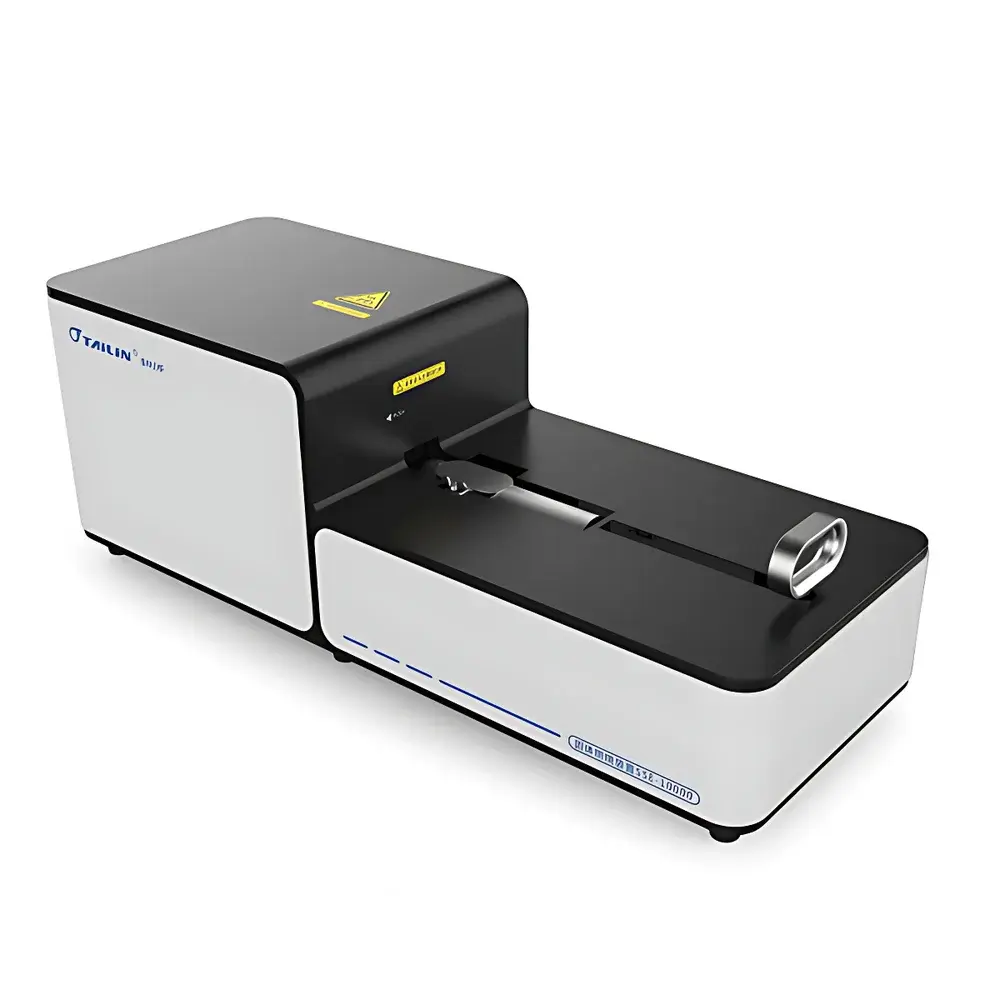
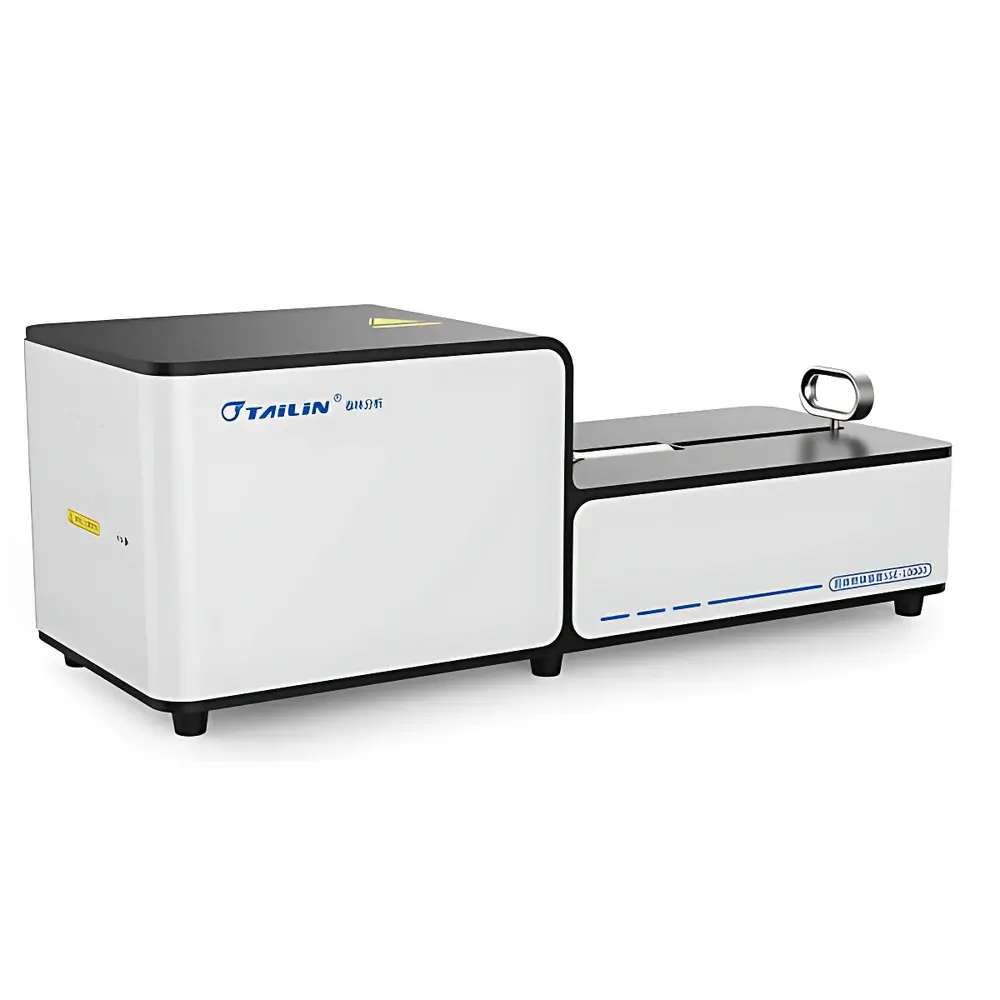
Tailin SSE-10000 Solid-Sample Combustion Module for Total Organic Carbon Analyzers
| Brand | Tailin |
|---|---|
| Origin | Zhejiang, China |
| Manufacturer Type | OEM Producer |
| Country of Origin | China |
| Model | SSE-10000 |
| Maximum Sample Carbon Load | 0.1–30.0 mg C |
| Sample Form Compatibility | Solid and Liquid |
| Oxidation Efficiency | ≥99% |
| Repeatability (RSD) | ≤5% |
| Dimensions | 800 × 310 × 270 mm |
Overview
The Tailin SSE-10000 is a high-efficiency solid-sample combustion module engineered for integration with standalone or modular total organic carbon (TOC) analyzers—specifically designed to extend the sample capability of aqueous-focused TOC platforms (e.g., HTY-CT1000B/S series) to heterogeneous, non-dissolved, and particulate-rich matrices. Unlike conventional high-temperature catalytic oxidation (HTCO) systems that rely on direct catalyst contact or liquid-only injection, the SSE-10000 employs a quartz-lined, controlled-atmosphere combustion chamber with spatially decoupled catalyst positioning. This architecture ensures that solid samples—including soils, metal powders, polymers, and filter-retained particulates—are thermally decomposed in an inert carrier gas stream prior to catalytic post-oxidation, minimizing catalyst fouling and enabling long-term operational stability. The module operates at programmable furnace temperatures up to 950 °C and delivers quantitative carbon conversion across complex organic matrices with ≥99% oxidation efficiency, validated per ASTM D7573-22 and ISO 8245:1999 protocols.
Key Features
- Non-contact catalytic oxidation design: Solid samples are combusted in a dedicated quartz reaction zone; catalyst remains physically isolated from particulate load, extending service life and reducing scheduled maintenance intervals by >60% versus conventional solid-handling TOC accessories.
- Universal sample introduction: Accepts both solid and liquid specimens without hardware reconfiguration—enabling seamless transition between soil cores (dried or freeze-dried), plastic fragments, metal shavings, sucrose standards, and high-salinity brines (up to 25% w/v NaCl).
- Precision micro-dosing capability: Integrated ceramic crucible carousel and gravimetric sample loading support accurate carbon mass delivery within 0.1–30.0 mg C range, with automated weight verification traceable to NIST-traceable balances.
- Robust thermal management: Dual-zone furnace control ensures uniform heating profiles and eliminates cold spots during heterogeneous sample ignition; cooling time between runs <8 min (typical).
- Modular interface: Standardized pneumatic and electrical connectors (24 V DC, RS-485, dry contact I/O) enable plug-and-play integration with major TOC analyzer platforms compliant with ASTM D5905 and USP <643>.
Sample Compatibility & Compliance
The SSE-10000 supports regulatory-compliant analysis of environmental, pharmaceutical, and industrial solid-phase samples under GLP and GMP frameworks. It accommodates EPA Method 415.3 and ISO 20268:2020 requirements for solid matrix TOC quantification, including contaminated soils (EPA SW-846 9060A), activated carbon filters, polymer leachables, and biopharmaceutical process residues. All wetted surfaces are quartz or high-purity alumina; no stainless steel exposure to corrosive volatiles. Device firmware supports audit trail logging per FDA 21 CFR Part 11 when paired with compliant host software.
Software & Data Management
Module operation is coordinated via the host TOC analyzer’s embedded control system or optional Tailin T-Link™ PC software (v3.2+). Real-time furnace temperature profiling, carbon mass calibration curves, and run-specific oxidation efficiency calculations are auto-recorded. Data export formats include CSV, XML, and PDF reports compliant with LIMS ingestion standards (ASTM E1468). Electronic signatures, user access levels (admin/operator/auditor), and electronic batch records (EBR) are supported when deployed in validated environments.
Applications
- Environmental labs: Quantifying TOC in sediment cores, landfill leachate solids, and remediation site soils per EPA Region 10 guidance.
- Pharmaceutical QA/QC: Residual carbon assessment on stainless steel surfaces, silicone tubing, and single-use bioreactor bags per USP <643> and PDA TR#92.
- Materials science: Carbon content verification in battery electrode powders, carbon black additives, and recycled polymer feedstocks.
- Academic research: Coupled with isotope-ratio mass spectrometry (IRMS) for δ13C tracing in soil organic matter turnover studies.
FAQ
Can the SSE-10000 be used with non-Tailin TOC analyzers?
Yes—it interfaces via standard analog/digital I/O and Modbus RTU; integration kits and protocol documentation are provided for Shimadzu TOC-L, GE Sievers, and Elementar enviro TOC platforms.
What is the recommended maintenance schedule?
Quartz tube inspection every 200 runs; catalyst replacement every 1,500–2,000 runs (dependent on sample matrix); full system calibration quarterly per ISO/IEC 17025 internal procedure.
Does it meet USP <643> requirements for solid sample TOC?
Yes—the module’s oxidation efficiency (≥99%), repeatability (≤5% RSD), and system suitability testing (SST) protocol satisfy all performance criteria outlined in USP <643> Annex 1 for solid-phase analysis.
Is method validation support available?
Tailin provides IQ/OQ documentation templates, blank recovery data, and spike recovery studies (n = 6 per matrix) aligned with ICH Q2(R2) and ASTM D7573-22 Annex A3.







