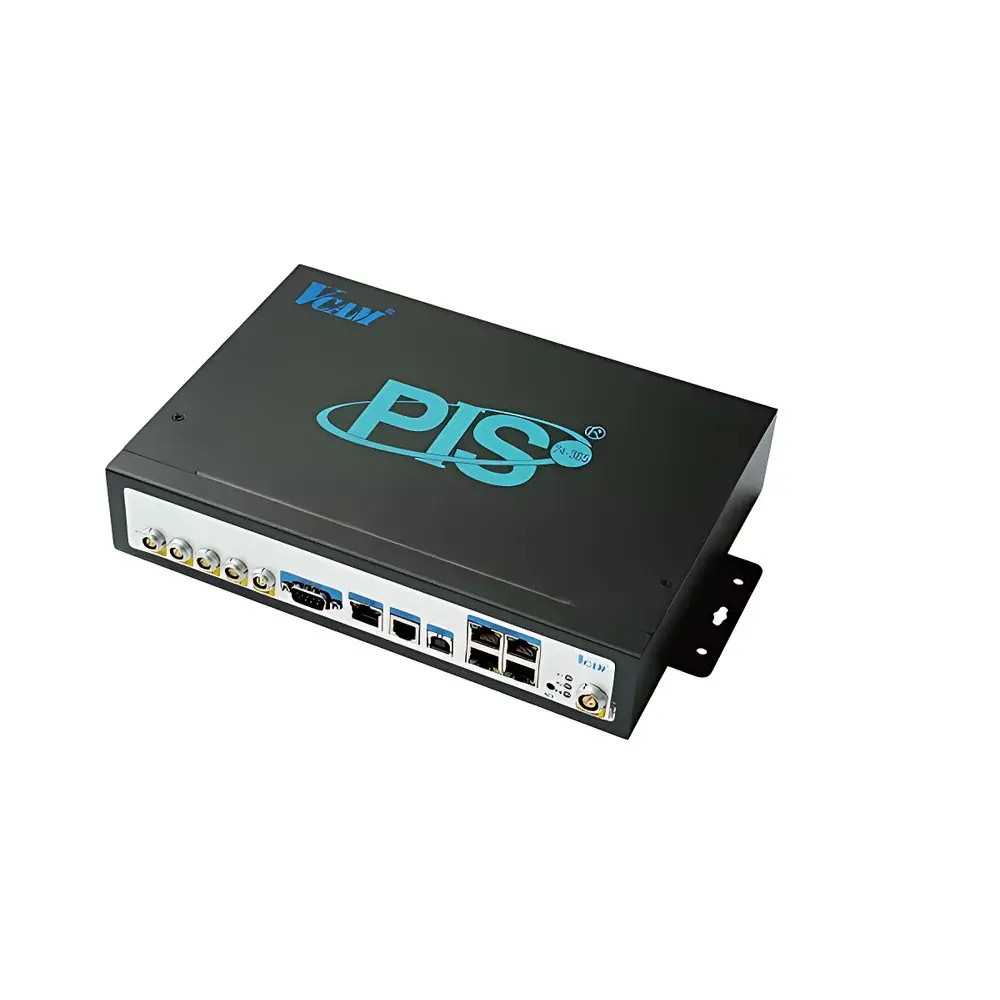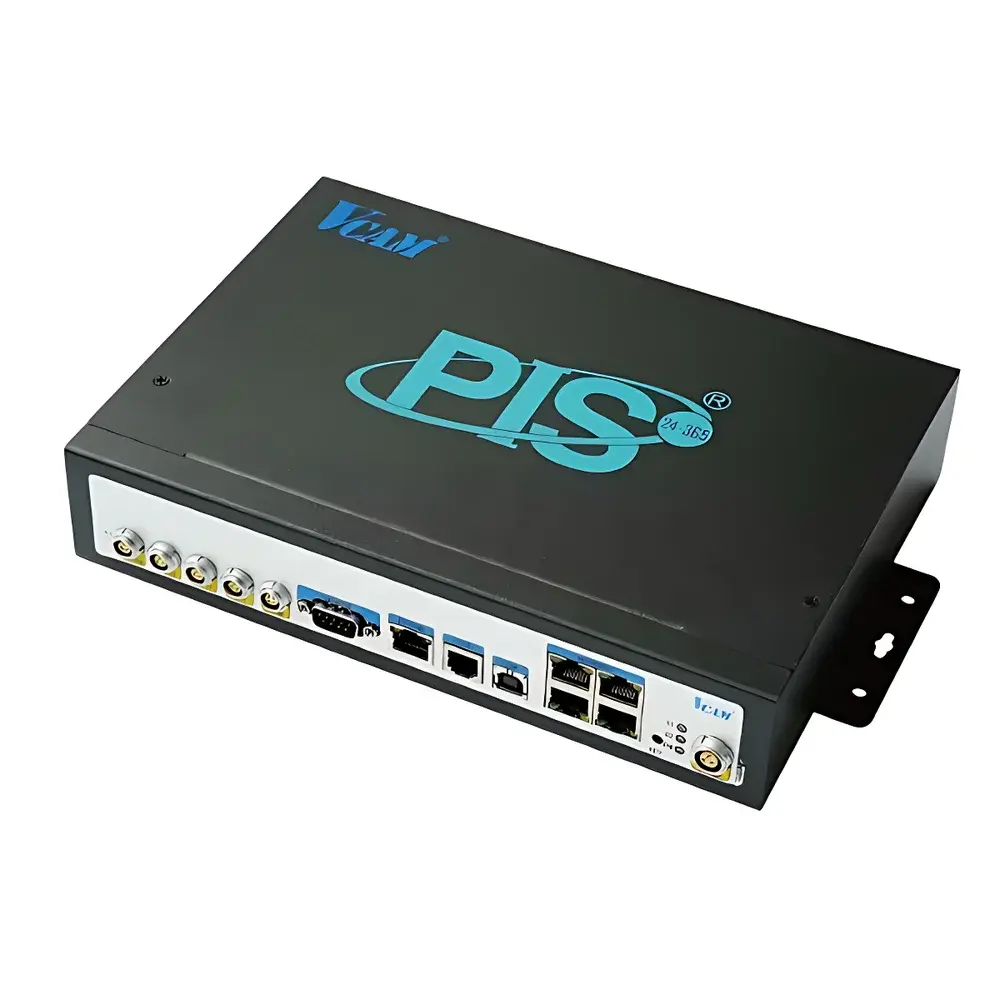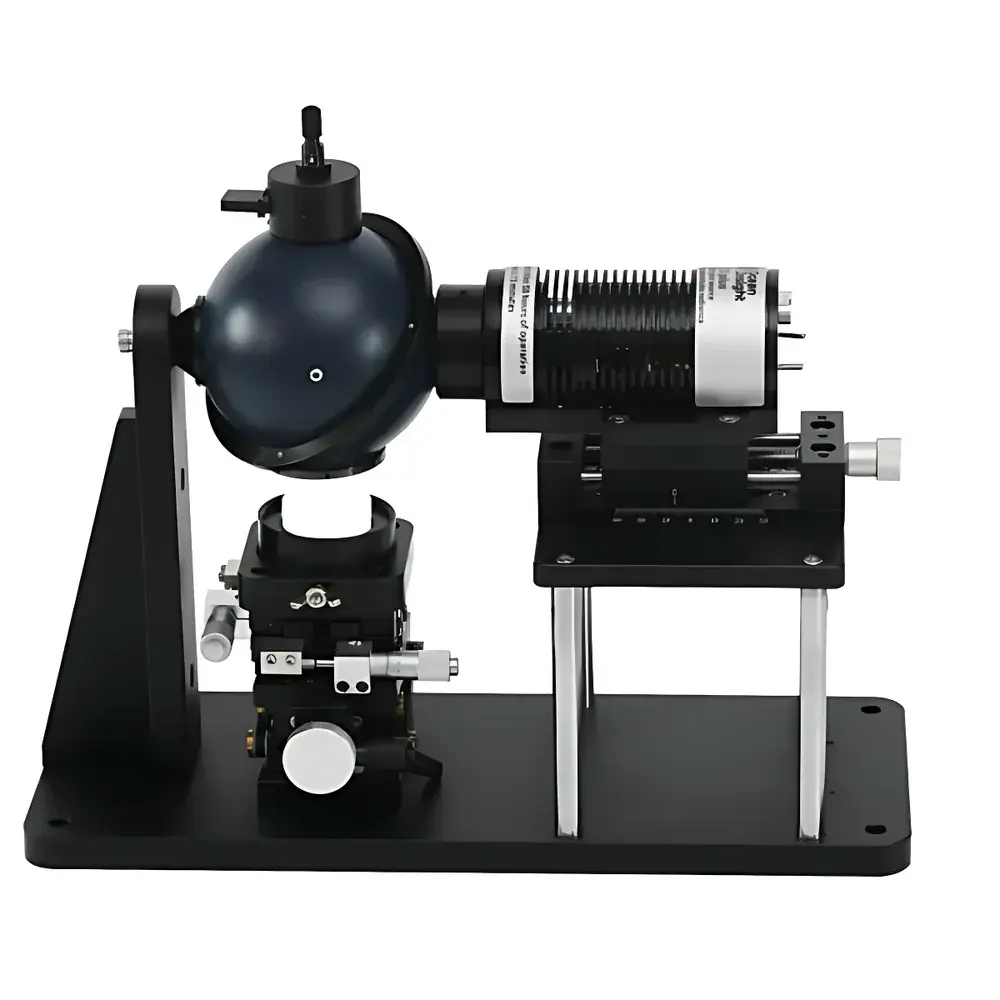
Ocean Optics SpectrumTEQ-EQY-PL Photoluminescence Quantum Yield Measurement System
| Brand | Ocean Optics |
|---|---|
| Origin | USA |
| Manufacturer | Ocean Insight (formerly Ocean Optics) |
| Model | SpectrumTEQ-EQY-PL |
| Configuration | Benchtop, Glovebox-Compatible Modular PL Quantum Yield System |
| Calibration | NIST-traceable excitation source |
| Measurement Type | Absolute photoluminescence quantum yield (PLQY), CIE chromaticity coordinates, dominant wavelength, spectral radiance, radiant flux, luminous flux, PLQY vs. excitation power |
| Sample Environment | Inert-atmosphere glovebox compatible (O₂ < 1 ppm, H₂O < 0.1 ppm) |
| Optical Architecture | Integrating sphere-based, dual-detector (excitation + emission) with spectral deconvolution |
| Excitation Flexibility | Interchangeable bandpass filters (250–850 nm range) for laser or LED excitation sources |
| Stability | Mechanical rigidity optimized for repeatable sample positioning (±5 µm vertical repeatability via motorized Z-stage) |
Overview
The Ocean Optics SpectrumTEQ-EQY-PL is a benchtop photoluminescence quantum yield (PLQY) measurement system engineered for high-fidelity, absolute quantum efficiency characterization of luminescent materials under controlled inert atmospheres. Built upon an integrating sphere architecture with dual-spectrometer detection—separate channels for excitation monitoring and emission collection—the system implements rigorous spectral deconvolution to eliminate excitation scatter artifacts and quantify absolute PLQY with traceable accuracy. Its modular design enables seamless integration into nitrogen- or argon-purged gloveboxes (O₂ < 1 ppm, H₂O < 0.1 ppm), supporting in situ evaluation of air-sensitive emissive layers during OLED, QLED, and perovskite light-emitting diode (PeLED) fabrication. Unlike relative-intensity systems, the SpectrumTEQ-EQY-PL employs NIST-traceable calibration standards to deliver certified absolute PLQY values across the 250–1600 nm spectral range, conforming to ASTM E1948 and ISO 11670 guidelines for luminescence quantum yield determination.
Key Features
- Glovebox-optimized footprint (35 × 25 × 20 cm) with front-access sample chamber and motorized Z-axis stage for reproducible sample positioning (±5 µm vertical repeatability)
- Integrated excitation filter wheel with standardized M25.5 threaded slots—supports interchangeable bandpass filters (FWHM ≤ 10 nm) for precise excitation wavelength selection (250–850 nm)
- Dual-channel spectral acquisition: one spectrometer calibrated for excitation intensity monitoring; second optimized for high-SNR emission spectra (UV-VIS-NIR, 200–1700 nm coverage optional)
- Automated PLQY calculation engine that corrects for sphere wall reflectance non-uniformity, detector responsivity drift, and excitation leakage using reference-standard measurements
- Rigid aluminum-alloy chassis with vibration-damped optical baseplate—no routine recalibration required between sessions under stable lab conditions
- Compliant with GLP data integrity requirements: full audit trail, electronic signatures, and 21 CFR Part 11–ready software configuration available upon request
Sample Compatibility & Compliance
The SpectrumTEQ-EQY-PL accommodates solid-state thin films (spin-coated, vacuum-deposited, blade-coated), powder samples in quartz cuvettes, and encapsulated device chips (up to 25 mm × 25 mm). It supports quantitative PLQY analysis of inorganic phosphors (e.g., YAG:Ce³⁺), organic small-molecule emitters (e.g., Ir(ppy)₃), colloidal quantum dots (CdSe/ZnS, InP/ZnS), and halide perovskites (FAPbBr₃, CsPbBr₃). All measurements adhere to ISO/IEC 17025–accredited calibration protocols when paired with Ocean Insight’s certified reference standards (e.g., quinine sulfate in 0.1 M H₂SO₄, anthracene in cyclohexane). The system meets ASTM D7868 for photoluminescence quantum yield reporting and supports documentation packages compliant with ICH Q5C and USP for pharmaceutical-grade luminescent excipients.
Software & Data Management
Controlled via Ocean Insight’s SpectraSuite Pro v4.x platform, the system delivers automated workflows for PLQY mapping, excitation-power-dependent quantum yield profiling (0.1–500 mW/cm²), and CIE 1931 chromaticity tracking. Raw spectral datasets are stored in HDF5 format with embedded metadata (wavelength calibration, integration time, temperature, atmospheric conditions). Export options include CSV, JSON, and XML schemas compatible with LIMS and ELN platforms (e.g., LabArchives, Benchling). Audit logs record user actions, parameter changes, and calibration events with timestamped digital signatures—fully configurable for 21 CFR Part 11 compliance in regulated environments.
Applications
- Development and QC of emissive layers in next-generation displays: PLQY screening of host-dopant systems pre-encapsulation
- In-process validation of perovskite precursor solutions and film formation kinetics inside gloveboxes
- Quantitative comparison of surface passivation efficacy on quantum dot nanocrystals
- Stability assessment under controlled illumination: time-resolved PLQY decay tracking at fixed excitation fluence
- Correlation of PLQY with electroluminescent (EL) efficiency in hybrid EL/PL test benches using shared optical mounts and detectors
- Reference material certification for national metrology institutes requiring absolute quantum yield traceability
FAQ
What excitation sources are compatible with the SpectrumTEQ-EQY-PL?
The system accepts collimated CW or pulsed lasers (355–808 nm), high-power LEDs (265–940 nm), and broadband xenon arc lamps with appropriate filtering. All sources must be fiber-coupled (SMA905) and operate within the specified irradiance limits of the integrating sphere.
Can PLQY be measured for scattering or highly absorbing samples?
Yes—the dual-detector configuration and proprietary sphere correction algorithm account for non-ideal sample geometries, including turbid films and strongly absorbing matrices, provided the sample fits within the 25 mm diameter sample port and does not exceed 80% diffuse transmittance at the excitation wavelength.
Is the system suitable for GMP-regulated R&D environments?
When configured with validated software modules and documented IQ/OQ protocols, the SpectrumTEQ-EQY-PL supports GMP-aligned workflows per FDA guidance on analytical instrument qualification and data integrity principles.
How often must the system be recalibrated?
Under stable environmental conditions (±1°C, <40% RH), annual recalibration using Ocean Insight’s NIST-traceable standards is recommended; however, daily reference checks with a stable PL standard (e.g., BaSO₄-coated reflectance tile + quinine sulfate solution) ensure ongoing measurement fidelity.
Does the system support time-resolved PL measurements?
No—the SpectrumTEQ-EQY-PL is optimized for steady-state quantum yield quantification. Time-resolved PL requires synchronization-capable detectors and pulsed excitation hardware, which are outside this system’s scope but can be integrated via third-party TCSPC modules using shared optical interfaces.
Related Products