
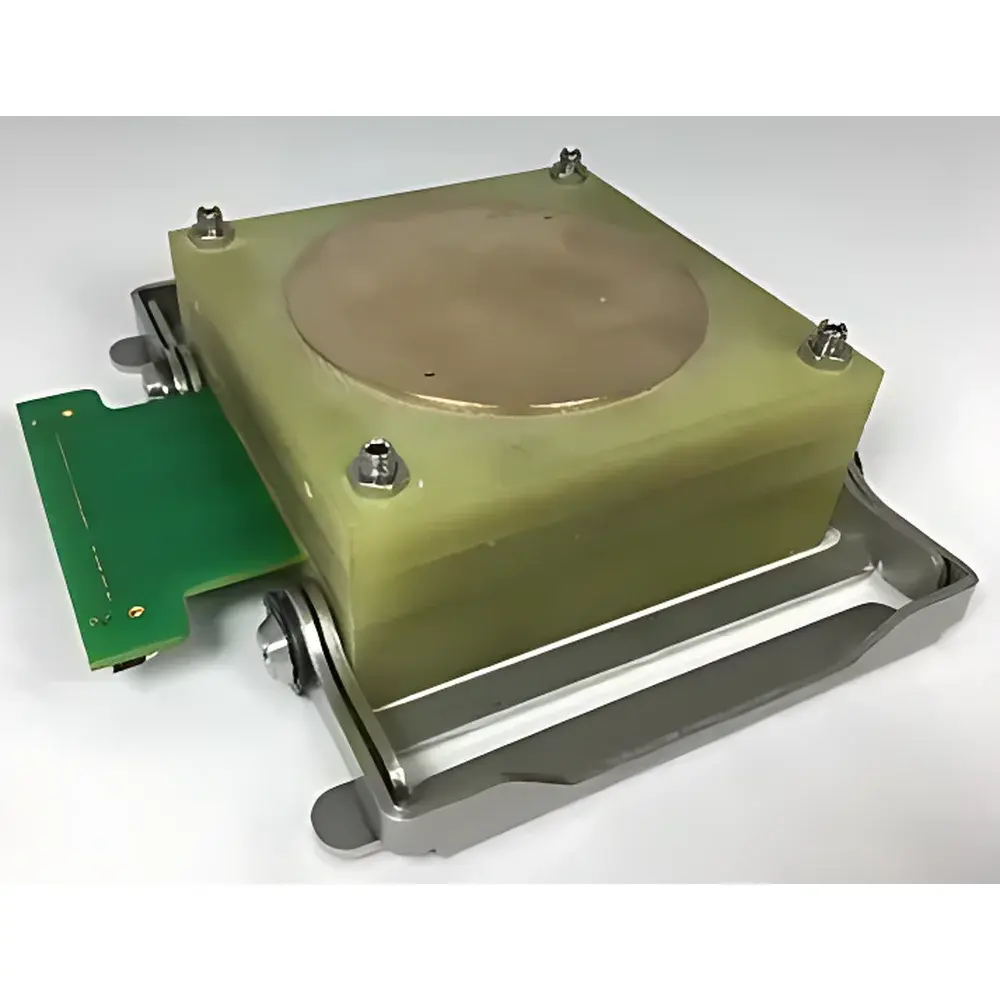
Baltic FuelCells DiLiCo CURR TEMP Current Density & Temperature Distribution Measurement System
| Brand | Baltic FuelCells |
|---|---|
| Origin | Germany |
| Model | DiLiCo CURR TEMP |
| Instrument Type | Electrochemical Workstation |
| Channel Count | Single-Channel |
| Current Range | ±3 A/cm² |
| Current Accuracy | ±0.01 A (1% of reading) |
| Voltage Range | ≤2.5 V |
| Voltage Resolution | Not specified |
| Potentiostatic Range | 25 V |
| AC Impedance Frequency Range | 10 Hz |
| Temperature Range | ≤120 °C |
| Temperature Accuracy | ±0.5 °C |
| Temperature Scan Interval | 2.0 s |
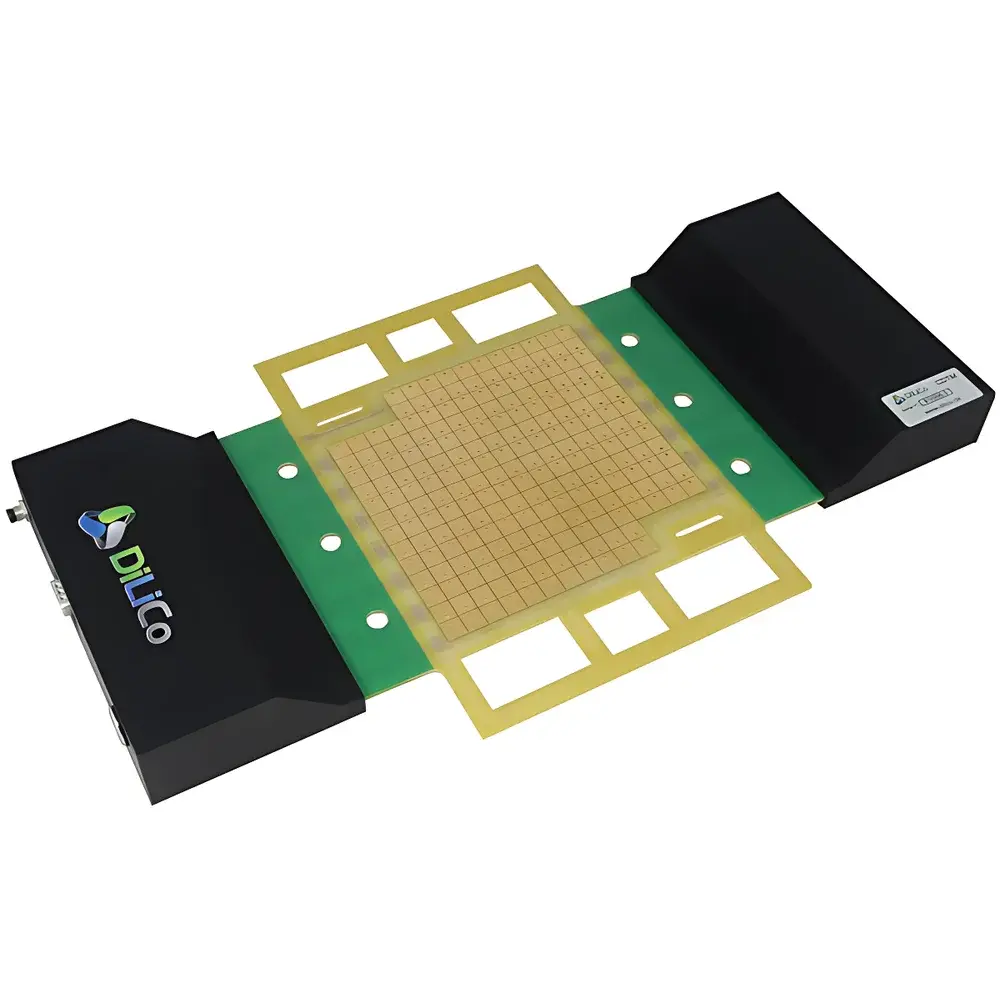
| Sensor Array | 48 nodes (6 × 8) |
| Node Size | 7 mm × 7 mm (0.5 cm²) |
| Node Material | Gold-plated |
| Communication Interface | CAN, USB |
| External Temperature Inputs | Up to 5 (PT-100/PT-500/PT-1000) |
Overview
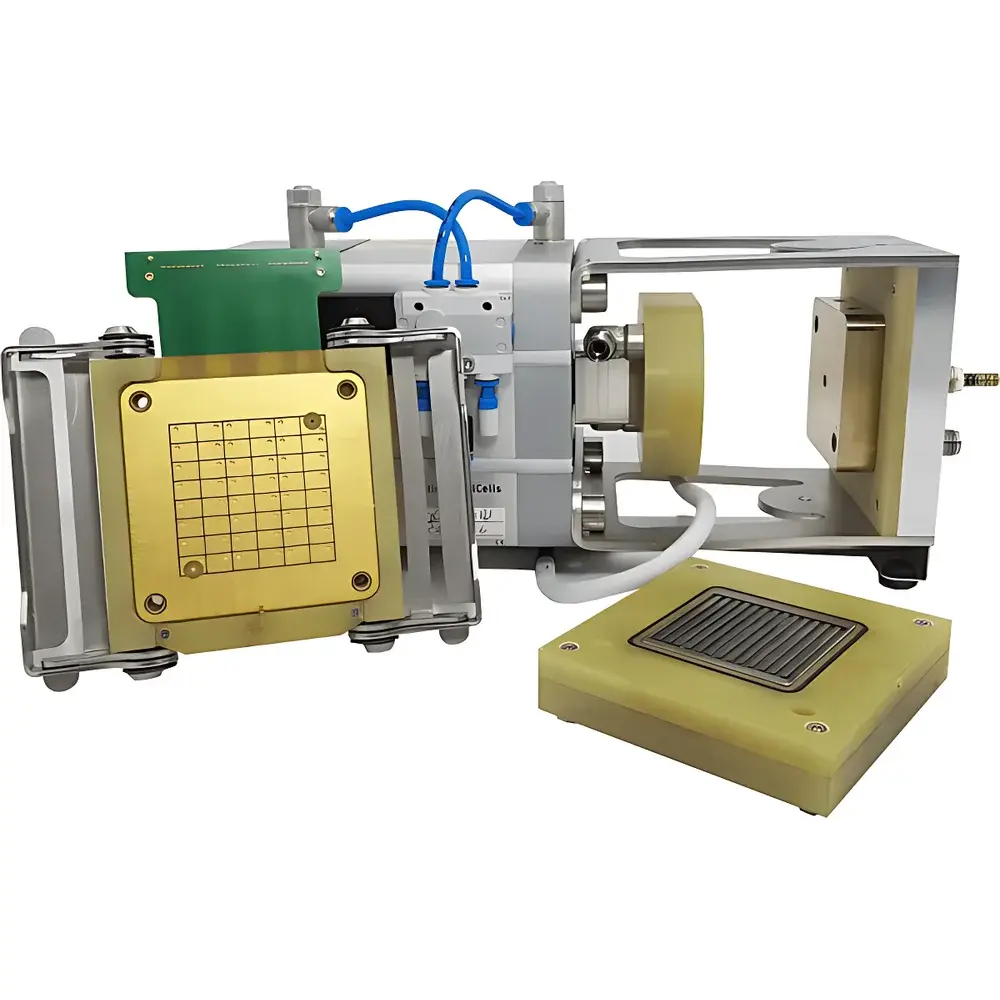
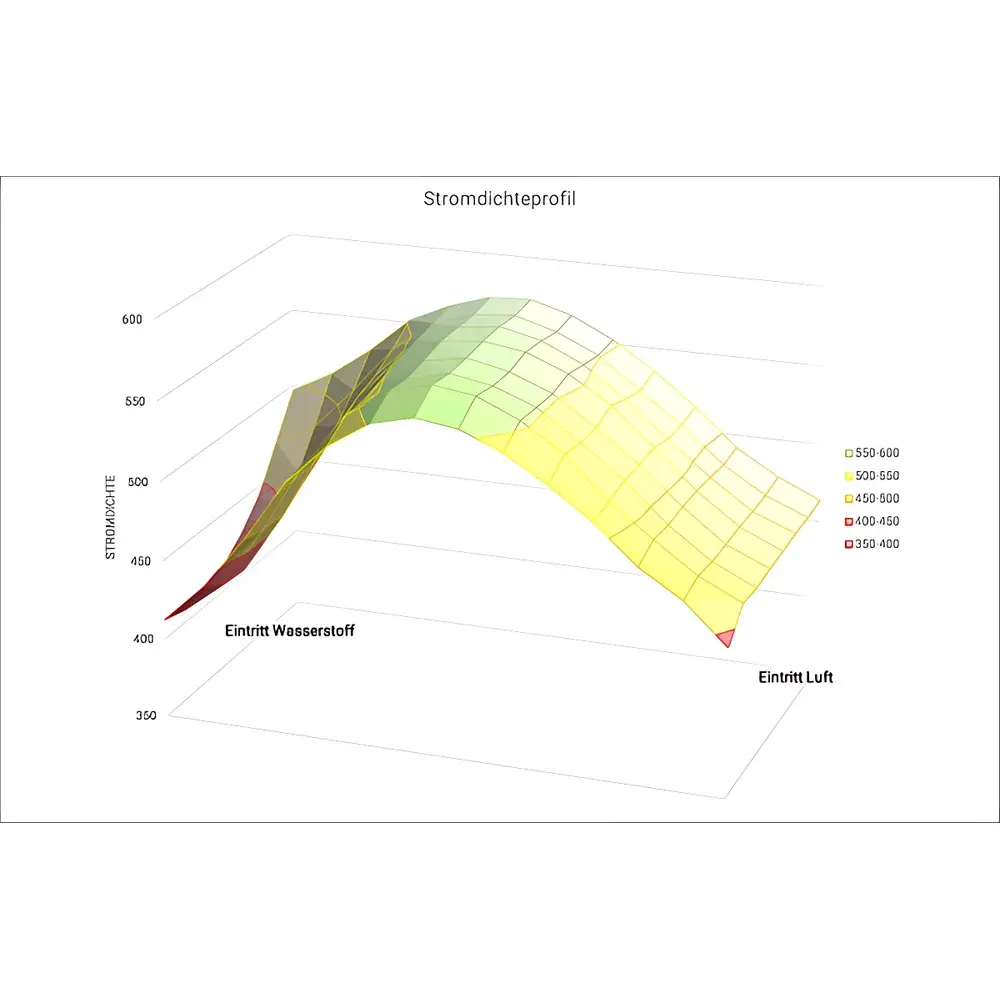
The Baltic FuelCells DiLiCo CURR TEMP Current Density & Temperature Distribution Measurement System is a purpose-built, single-channel electrochemical workstation engineered for high-resolution spatial characterization of proton exchange membrane (PEM) fuel cells and electrolyzers. Unlike conventional potentiostats or galvanostats that report only bulk cell voltage or total current, the DiLiCo CURR TEMP employs an integrated planar sensor array embedded directly within the gas diffusion layer (GDL) or interfacial stack position to resolve local current density and temperature distributions across the active membrane area. Its measurement principle relies on discrete, gold-plated micro-electrode nodes arranged in a 6 × 8 matrix (48 nodes), each independently measuring local current contribution and thermal state under operational conditions. This enables quantitative mapping of electrochemical activity gradients, localized mass transport limitations, thermal hotspots, and contact resistance anomalies—critical parameters for diagnosing degradation mechanisms such as membrane dry-out, catalyst layer delamination, or bipolar plate corrosion. Designed and manufactured in Germany by DiLiCo GmbH—a spin-off from technical university research focused on diagnostics for long lifetime and cost reduction—the system supports R&D laboratories, component suppliers, and system integrators seeking traceable, spatially resolved data compliant with ISO 8528-12, ASTM D7282, and IEC 62282-2 test frameworks.
Key Features
- Integrated 48-node current density and temperature mapping array (6 × 8 grid, 7 mm × 7 mm per node, gold-plated electrodes)
- Simultaneous acquisition of local current density (±3 A/cm² range) and node-level temperature (up to 120 °C, ±0.5 °C accuracy)
- Built-in single-cell voltage measurement (≤2.5 V) synchronized with spatial data
- Real-time scanning: 0.5 s per current density sweep, 2.0 s per full temperature map
- Dual communication interface: CAN bus for integration into stack control systems and USB for PC-based configuration and logging
- Expandable external thermometry: up to five additional PT-100/PT-500/PT-1000 inputs for coolant, inlet gas, or housing temperature monitoring
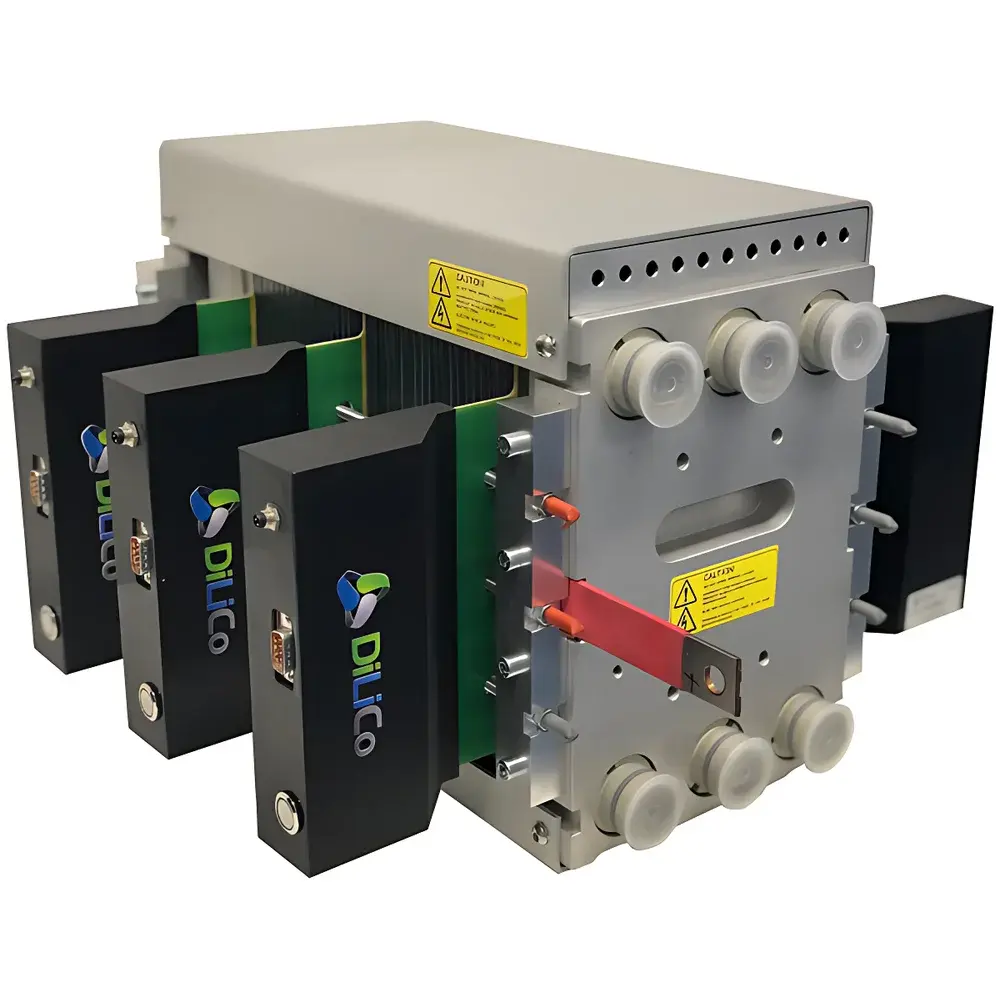
- Modular mechanical design compatible with Baltic FuelCells’ quickCONNECT FC25/100 and FC50/125 fast-mounting fixtures
- Configurable node geometry and array layout available upon request for custom MEA or flow-field geometries
Sample Compatibility & Compliance
The DiLiCo CURR TEMP is validated for use with low-temperature PEM fuel cells (LT-PEMFC), anion exchange membrane fuel cells (AEMFC), and PEM electrolyzers operating at temperatures up to 120 °C and pressures up to 3 bar absolute. It interfaces directly with standard 25 cm², 100 cm², and 125 cm² active-area test stations without requiring hardware modification. All electrical isolation, grounding, and signal conditioning meet IEC 61000-6-3 (EMC emission) and IEC 61000-6-2 (immunity) standards. Data acquisition firmware implements timestamped, non-volatile storage with optional audit trail logging—supporting GLP-compliant workflows and alignment with FDA 21 CFR Part 11 requirements when deployed with validated software environments. Calibration certificates traceable to PTB (Physikalisch-Technische Bundesanstalt) are provided for both current and temperature channels.
Software & Data Management
The system ships with DiLiCo ControlSuite v4.x—a Windows-based application supporting real-time visualization of 2D current density heatmaps, thermal contour overlays, and time-series trending of individual nodes. Raw data exports in HDF5 and CSV formats preserve metadata including timestamp, environmental setpoints, and hardware configuration. The API supports Python and MATLAB integration via TCP/IP socket protocol for automated test sequencing and model validation. All measurement sessions include embedded checksums and digital signatures to ensure data integrity. Optional add-ons include statistical process control (SPC) modules for trend analysis and DOE-ready export templates aligned with DOE Hydrogen Program’s data submission guidelines.
Applications
- Diagnostics of local stoichiometric imbalance and reactant starvation zones undetectable by global voltage monitoring
- Quantitative assessment of membrane hydration status through spatial correlation of current density and temperature gradients
- Evaluation of GDL compression uniformity and contact resistance distribution across bipolar plate interfaces
- Validation of flow-field design performance under dynamic load cycling and start-stop conditions
- Accelerated stress testing (AST) protocol development with spatially resolved failure mode identification
- Support for MEA durability benchmarking per DOE targets and ISO/TS 14687-2 impurity tolerance testing
- Thermal management system co-design using empirical boundary condition inputs derived from measured surface heat flux profiles
FAQ
Is the DiLiCo CURR TEMP compatible with automated test stands?
Yes—it supports CAN 2.0B communication for bidirectional integration with commercial fuel cell test systems (e.g., Greenlight, Scribner, Gaskatel) and programmable load banks.
Can the sensor array be reused across multiple MEAs?
The gold-plated array is designed for ≥500 thermal cycles between 20–120 °C and may be reinstalled with new gasket sets; however, physical repositioning requires recalibration due to node-to-MEA alignment sensitivity.
Does the system support impedance spectroscopy?
No—this model does not include frequency response analysis capability; AC impedance functionality is available only in the DiLiCo CUSTOM variant (10 Hz–10 kHz range).
What is the minimum detectable current density resolution?
At full scale (±3 A/cm²), the system achieves 0.01 A absolute resolution per node, corresponding to ~0.02 A/cm² for a 0.5 cm² node area.
Are calibration services available outside Germany?
Yes—Baltic FuelCells maintains certified service partners in the US, Japan, and South Korea offering on-site verification and NIST-traceable recalibration.





