
FBF FBF9160 High-Pressure Homogenizer System
| Brand | FBF |
|---|---|
| Origin | Italy |
| Model | FBF9160 |
| Flow Rate | 40,000–160,000 L/h |
| Operating Pressure | 100–600 bar |
| Primary Homogenization Pressure | ≤250 bar (adjustable) |
| Secondary Homogenization Pressure | ≤50 bar (adjustable) |
| Pump Type | Triplex Plunger Pump |
| Plunger Diameter | 83 mm |
| Speed | 176 rpm |
| Max. Viscosity | 500 cP |
| Max. Inlet Particle Size | 500 µm |
| Max. Product Temperature | 90 °C |
| Cleaning-in-Place (CIP) Time | 30 min |
| Sterilization-in-Place (SIP) Temp. | up to 145 °C |
| Motor Power | 160 kW |
| Dimensions | 190 × 260 × 180 cm |
| Weight | 5,500 kg |
Overview
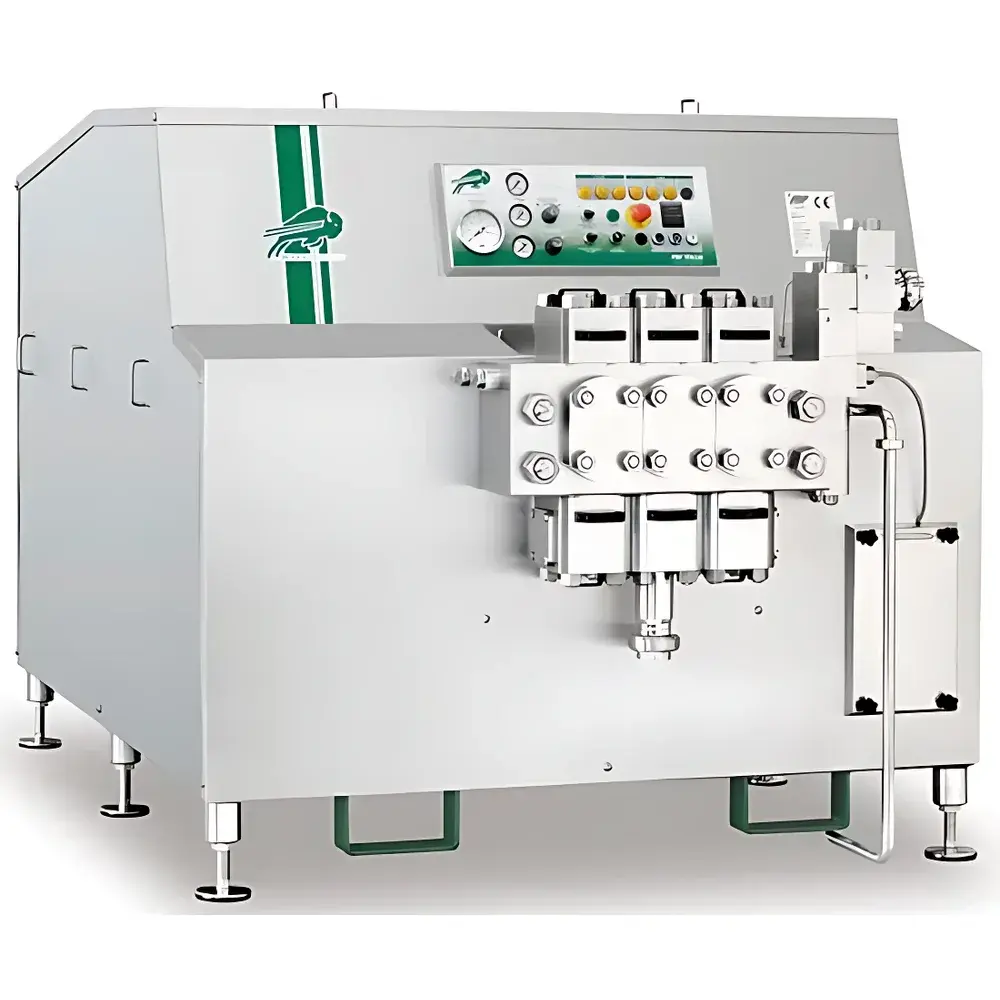
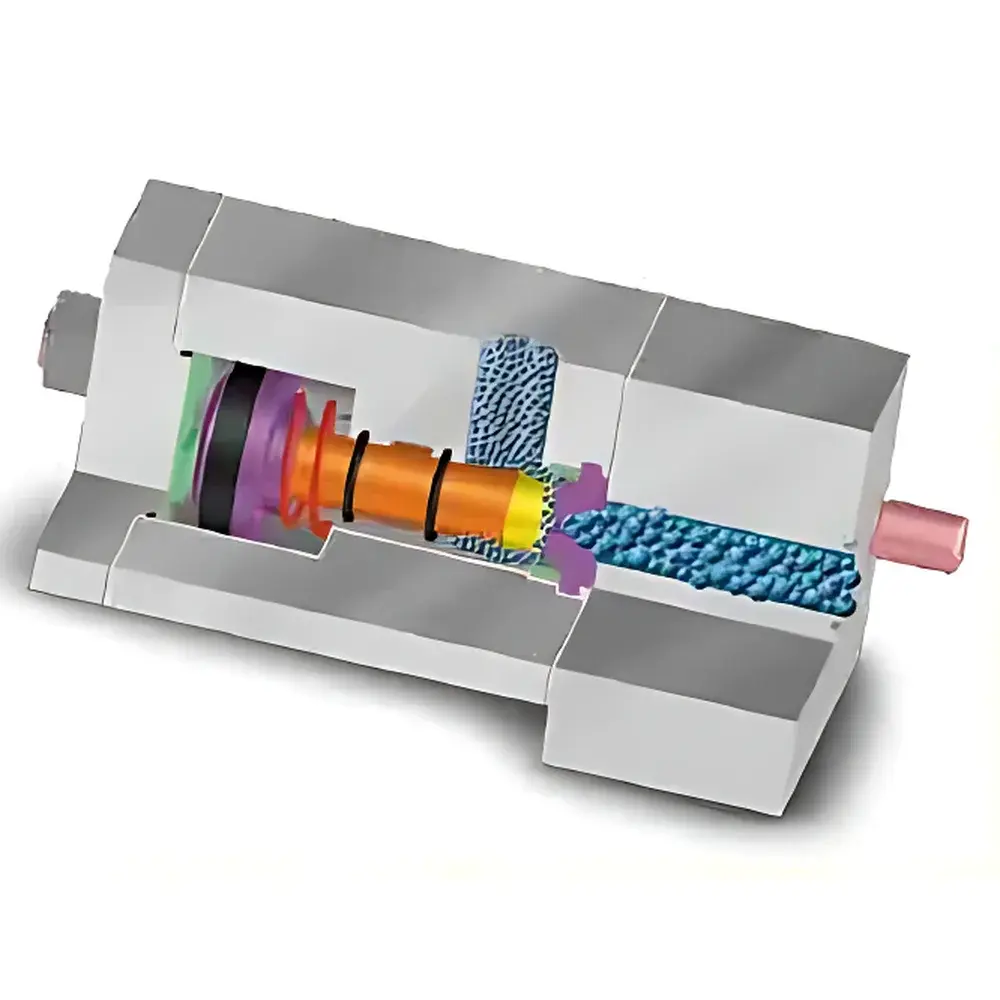
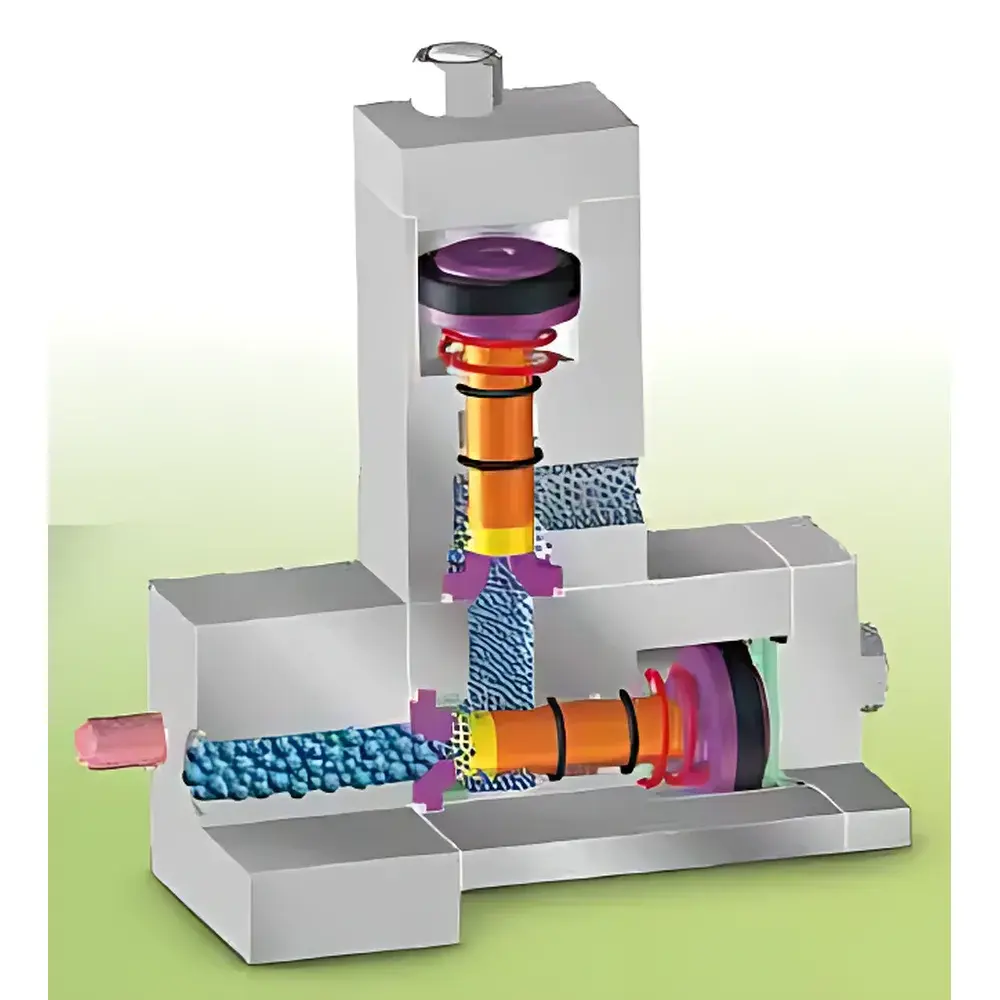
The FBF FBF9160 High-Pressure Homogenizer System is an industrial-scale, CE-certified homogenization platform engineered for continuous, high-integrity processing of demanding biopharmaceutical, nutraceutical, and advanced material suspensions and emulsions. Based on the principle of controlled turbulent shear and cavitation, the system subjects fluid streams to precisely regulated pressure differentials across a narrow, geometrically optimized homogenization valve—enabling consistent particle size reduction, cell disruption, lipid nanoparticle (LNP) formation, and stable emulsion generation. Designed for GMP-compliant environments, the FBF9160 integrates triplex plunger pumping architecture with dual-stage pressure control, sanitary AISI 316 stainless steel wetted surfaces, and full CIP/SIP capability—ensuring process repeatability, microbial control, and regulatory traceability across batch and continuous manufacturing workflows.
Key Features
- Triplex plunger pump with 83 mm diameter plungers operating at 176 rpm, delivering robust flow stability and low pulsation under sustained 600 bar load
- Dual-stage homogenization valve system: primary stage adjustable up to 250 bar; secondary stage independently controllable up to 50 bar for fine-tuning droplet/particle distribution
- Homogenization valves machined from certified AISI 316 stainless steel blocks, individually inspected for dimensional integrity and surface finish (Ra ≤ 0.4 µm)
- Cryogenically stabilized piston assembly with dual linear guides and low-temperature cast housing—ensuring axial alignment and thermal drift compensation during extended operation
- Sanitary spring-loaded safety relief valve compliant with PED 2014/68/EU and 2023/1230/EU directives, featuring replaceable seat and disc assemblies
- Integrated mechanical lubrication system (0.37 kW pump, IP55 rating) with oil level monitoring and temperature feedback
- Optional digital pressure transducers (4–20 mA output), programmable pressure alarms with automatic shutdown logic, and timed valve actuation sequences
- Full CIP/SIP validation support: validated cleaning cycle time ≤30 min; SIP temperature range 121–145 °C with integrated temperature mapping ports
Sample Compatibility & Compliance
The FBF9160 accommodates aqueous, organic, and mixed-phase formulations with viscosities up to 500 cP and inlet particle sizes ≤500 µm. It supports sterile processing via optional aseptic barrier integration (ISO 13408-1 compliant), including sterile inlet/outlet buffer vessels and diaphragm-sealed pressure transmitters. The system meets EU Machinery Directive 2006/42/EC, PED 2014/68/EU, and EMC Directive 2014/30/EU requirements. All wetted materials comply with FDA 21 CFR Part 177 and EC 1935/2004 food-contact regulations. Documentation packages include IQ/OQ protocols, material traceability dossiers (EN 10204 3.1), and CE Declaration of Conformity with technical file reference.
Software & Data Management
Standard configuration includes a PLC-based HMI (Siemens SIMATIC S7-1200) with password-protected user levels (Operator, Technician, Administrator). Process parameters—including pressure setpoints, flow rate, temperature, CIP/SIP cycle status, and alarm history—are logged with timestamped audit trails compliant with FDA 21 CFR Part 11 Annex 11 requirements. Optional Ethernet/IP or Modbus TCP connectivity enables integration into MES/SCADA systems. Data export is supported in CSV and PDF formats; electronic signatures are configurable per ALCOA+ principles. Firmware updates follow IEC 62443-3-3 cybersecurity guidelines.
Applications
- Biopharmaceutical: Mammalian cell lysis for monoclonal antibody purification, LNP formulation for mRNA vaccines, viral vector dispersion
- Nutraceuticals: Nanoemulsion development for fat-soluble vitamins (A, D, E, K), curcumin, and omega-3 delivery systems
- Materials Science: Exfoliation of graphene oxide dispersions, ceramic nanoparticle slurries for battery electrode coating
- Food & Beverage: Ultra-high-pressure homogenization (UHPH) of dairy alternatives, stabilization of plant-based protein emulsions
- Cosmetics: Submicron emulsions for active ingredient delivery, silicone-free microemulsion bases
FAQ
What is the maximum allowable feed temperature during continuous operation?
The system is rated for continuous product temperatures up to 90 °C. For CIP, temperature may reach 90 °C; for SIP, validated cycles operate between 121 °C and 145 °C.
Is the FBF9160 suitable for GMP manufacturing environments?
Yes—the unit is constructed to EHEDG Guideline Doc. 8 (2022) and ASME BPE-2022 standards, with fully drainable, crevice-free geometry, electropolished surfaces (Ra ≤ 0.4 µm), and complete documentation for qualification (IQ/OQ/PQ).
Can the homogenization pressure be adjusted in real time during operation?
Yes—both primary and secondary stage pressures are continuously adjustable via servo-controlled hydraulic regulators with ±0.5 bar repeatability and 0–100% stroke linearity.
What maintenance intervals are recommended for the plunger seals and homogenization valves?
Plunger seal replacement is scheduled every 2,000 operating hours under nominal load; homogenization valve service life exceeds 500 hours at 600 bar, verified by post-run metrology (valve seat concentricity ±2 µm).
Does the system support remote diagnostics and predictive maintenance?
With optional FBF Connect module, vibration spectra, motor current harmonics, and pressure transient profiles are transmitted to cloud-based analytics for anomaly detection and remaining useful life estimation per ISO 13374-2.
Related Products



