
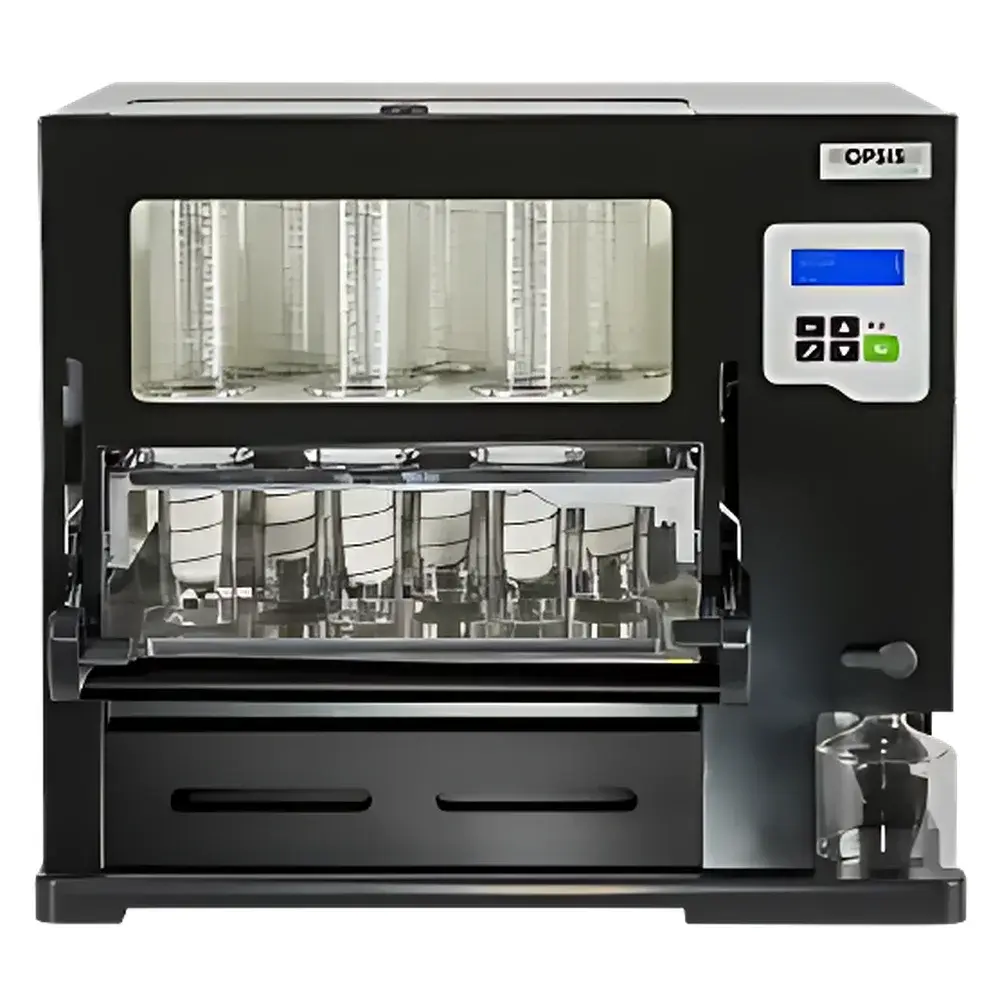
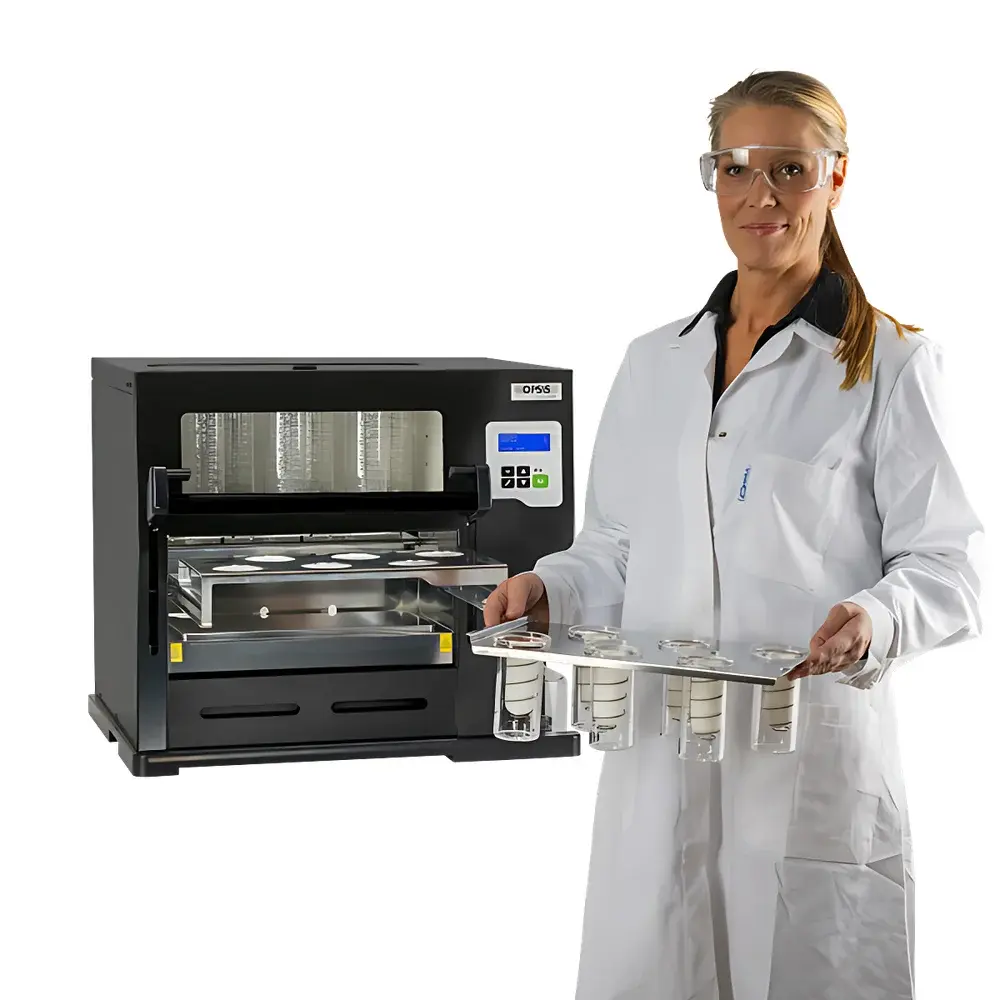
OPSIS SX-360 Automated 6-Position Fat Analyzer (Soxhlet Extractor)
| Brand | OPSEUS/OPSIS |
|---|---|
| Origin | Sweden |
| Manufacturer Type | Authorized Distributor |
| Origin Category | Imported |
| Model | SX-360 |
| Quotation | Upon Request |
| Extraction Chamber Volume | 300 mL |
| Receiving Flask Volume | 230 mL |
| Temperature Range | 30–300 °C |
| Temperature Control Accuracy | ±1 °C |
| Number of Channels | 6 |
Overview
The OPSEUS SX-360 is a fully automated, 6-position fat analyzer engineered for precision solvent extraction based on modified Soxhlet methodology. It implements a closed-loop, thermally controlled percolation process in which solvent vapor condenses and repeatedly washes solid or semi-solid samples contained in thimble cartridges. Unlike classical Soxhlet systems, the SX-360 integrates programmable heating, mechanical lifting, timed solvent reflux, automated solvent recovery, and post-extraction cooling—enabling high reproducibility (≤0.5% RSD), full walk-away operation, and compliance with standardized fat determination protocols including AOAC 920.39, EPA 3541, ISO 1444, DIN 10360, and USP <467>. Its maximum operating temperature of 300 °C supports low-boiling solvents (e.g., petroleum ether) as well as higher-boiling alternatives (e.g., chloroform, dichloromethane, or toluene), expanding applicability across food, feed, environmental, pharmaceutical, and polymer analysis.
Key Features
- Fully automated extraction cycle: programmable control of sample immersion, elevation, rinsing, solvent recovery, and pre-drying without manual intervention.
- 6-channel parallel processing: enables batch analysis of up to six samples simultaneously; daily throughput exceeds 42 determinations under standard 6-hr cycles.
- Dual-stage sealing system: manual lever compression followed by motorized rotational sealing ensures >90% solvent recovery efficiency and minimizes fugitive emissions.
- ATEX-certified explosion-proof architecture: all solvent-contact valves meet ATEX II 2G Ex db IIB T4 Gb classification; electronics housed in sealed stainless-steel enclosures; IP65-rated enclosure for dust and liquid ingress protection.
- Integrated safety interlocks: automatic extraction halt upon safety door opening; dual independent temperature monitoring circuits; overtemperature cutoff set at +30 °C above user-defined setpoint.
- Modular solvent management: front-access solvent recovery tank (230 mL capacity); programmable valve timing for precise solvent volume control during rinse/dry steps; optional solvent addition during active extraction via top-hinged access panel.
- Thermal performance: PID-controlled heating plate (30–300 °C, ±1 °C accuracy); optimized condenser design consumes <1 L/min tap water at 20 °C.
Sample Compatibility & Compliance
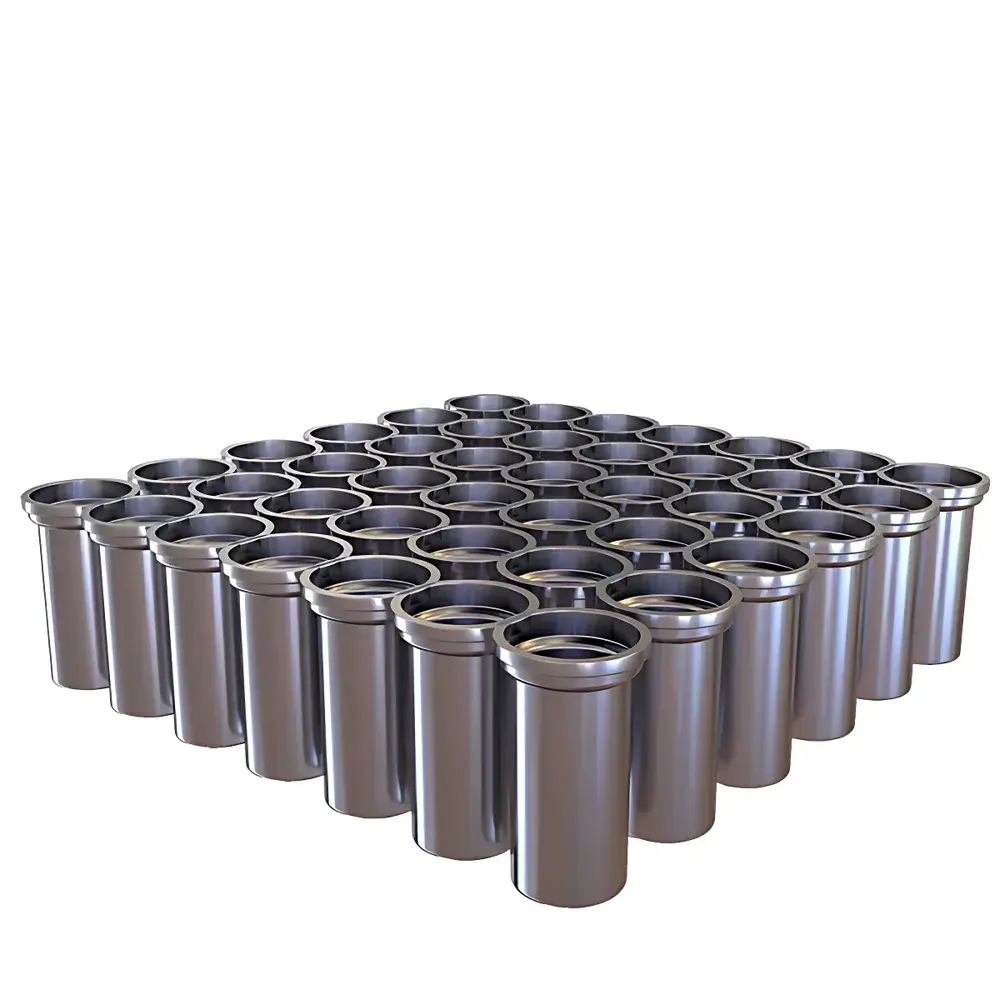
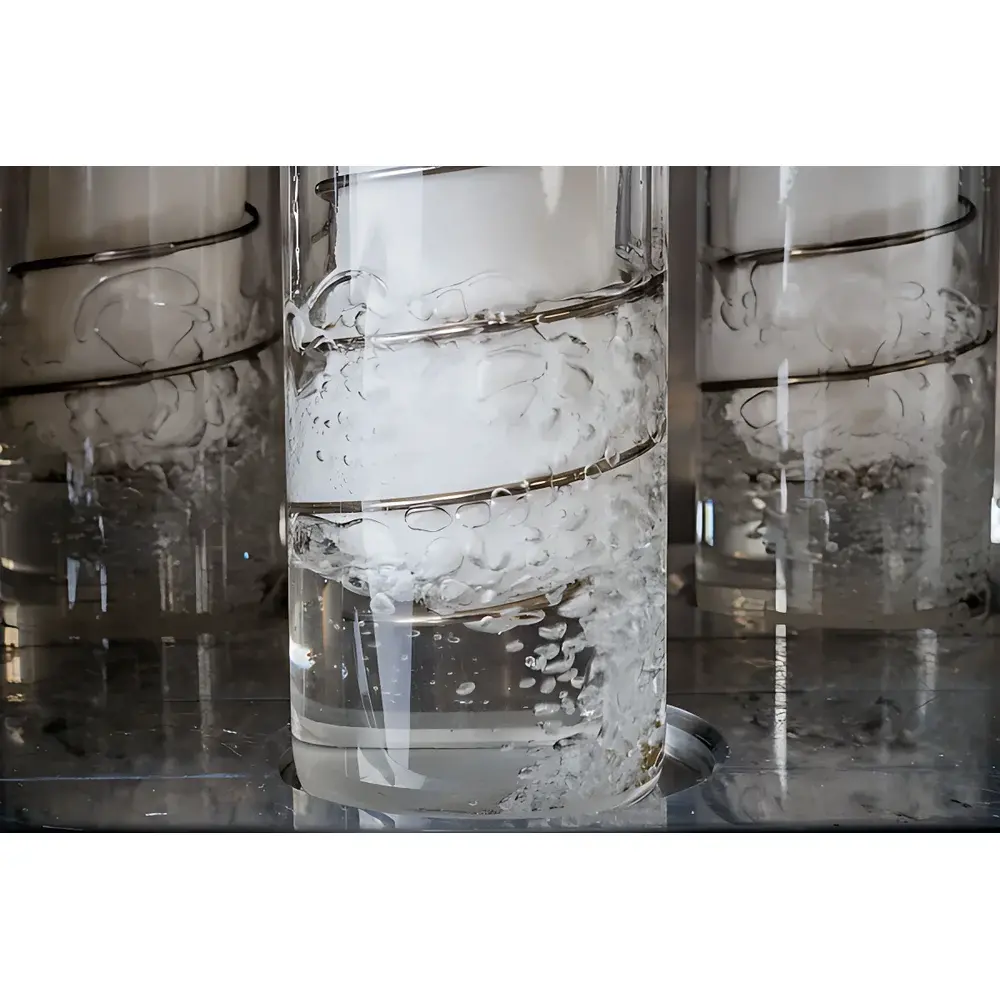
The SX-360 accommodates diverse matrices—including animal feed, cereal grains, dairy products, meat, soil, sludge, plastics, rubber, textiles, and pharmaceutical excipients—using standardized extraction thimbles (Ø25 mm × 60–100 mm; Ø33 mm × 80–100 mm) and interchangeable solvent cups (150 mL glass, 230 mL glass or aluminum). Aluminum cups enhance thermal transfer for low-temperature extractions; borosilicate glass cups permit real-time visual monitoring. All wetted parts are constructed from PTFE or chemically resistant elastomers (Viton®, Butyl, Resel®), ensuring compatibility with halogenated, aromatic, and aliphatic solvents. The system conforms to GLP documentation requirements through LabConnect software integration and supports audit-ready data trails compliant with FDA 21 CFR Part 11 when paired with validated networked configurations.
Software & Data Management
LabConnect software provides bidirectional communication with analytical balances and barcode scanners, auto-populating sample IDs, initial weights, and metadata into extraction method templates. Users define multi-step protocols—including soak time, reflux duration, rinse volume, dry time, and cooling delay—with resolution down to 1 minute across 0–999 minute ranges. All method parameters, run logs, temperature profiles, and solvent consumption metrics are timestamped and exportable in CSV or PDF format. Optional network deployment enables centralized instrument monitoring, remote diagnostics, and electronic signature support for regulated environments requiring traceability and version-controlled SOP execution.
Applications
- Quantitative fat determination in food and animal feed per AOAC 991.36 and ISO 6496.
- Extraction of plasticizers (e.g., phthalates) from polyvinyl chloride and other polymers.
- Recovery of hydrophobic organic contaminants (HOCs)—including PAHs, PCBs, organochlorine pesticides—from soil and sediment prior to GC or HPLC analysis.
- Isolation of rosin from paperboard, tannins from bark, or lipids from microbial biomass.
- Preparative solvent extraction for QC/QA in pharmaceutical manufacturing (e.g., residual solvent screening in excipients).
- Environmental monitoring of total petroleum hydrocarbons (TPH) in wastewater and sludge matrices.
FAQ
What solvents are compatible with the SX-360?
The system supports common extraction solvents including petroleum ether (bp 30–60 °C), diethyl ether, chloroform, dichloromethane, and toluene—provided boiling points fall within the 30–300 °C operational envelope and chemical compatibility with PTFE/Viton seals is confirmed.
Can extraction be interrupted and resumed?
Yes—via LabConnect interface or front-panel controls, users may pause active runs, manually adjust solvent volume, inspect thimbles, or modify remaining step durations without compromising data integrity.
Is method validation support available?
OPSIS provides IQ/OQ documentation templates, calibration certificates traceable to NIST standards, and application notes aligned with AOAC, EPA, and ISO reference methods.
How is solvent waste managed?
Recovered solvent is collected in an integrated, removable 230 mL reservoir located behind the front access panel; tanks feature quick-release latches and vapor-tight lids for safe transport to designated disposal stations.
What maintenance is required?
Routine tasks include periodic inspection of PTFE gaskets, cleaning of condenser coils and solvent pathways, verification of seal integrity using vacuum decay test, and annual recalibration of temperature sensors by authorized service personnel.



