
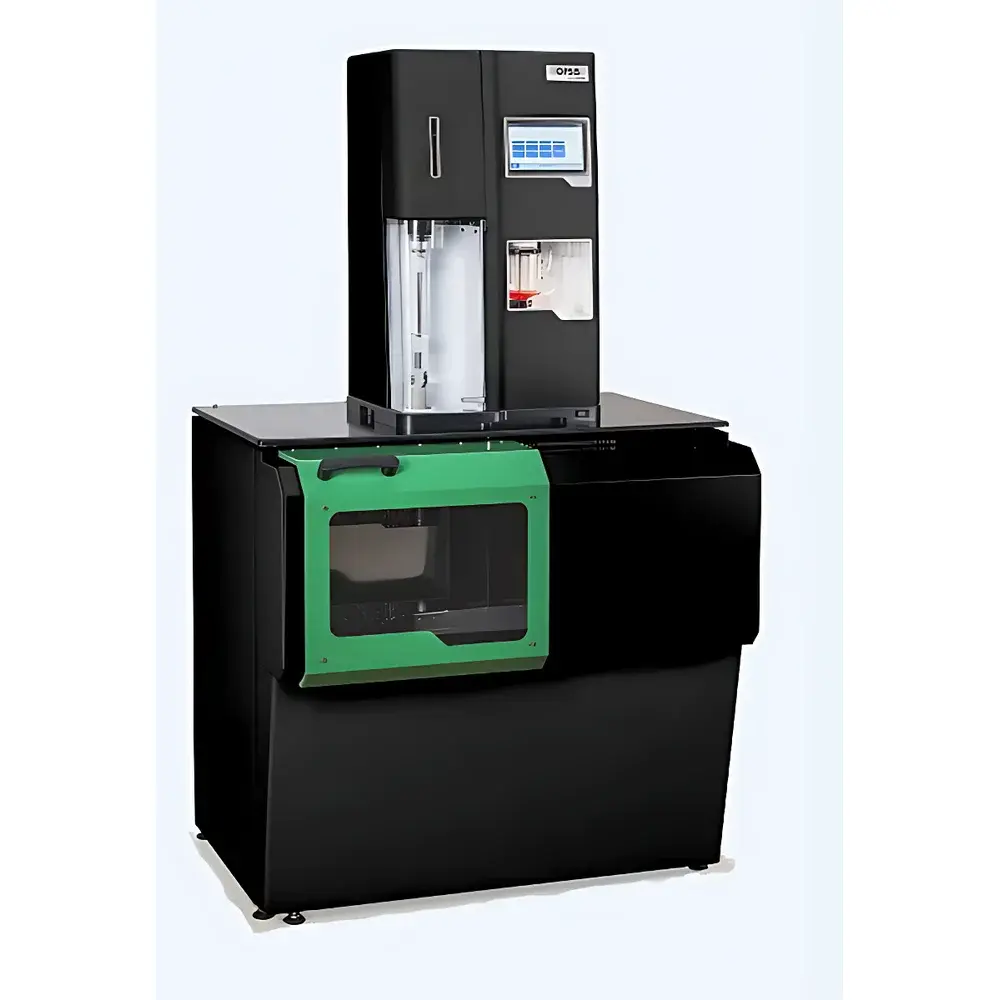
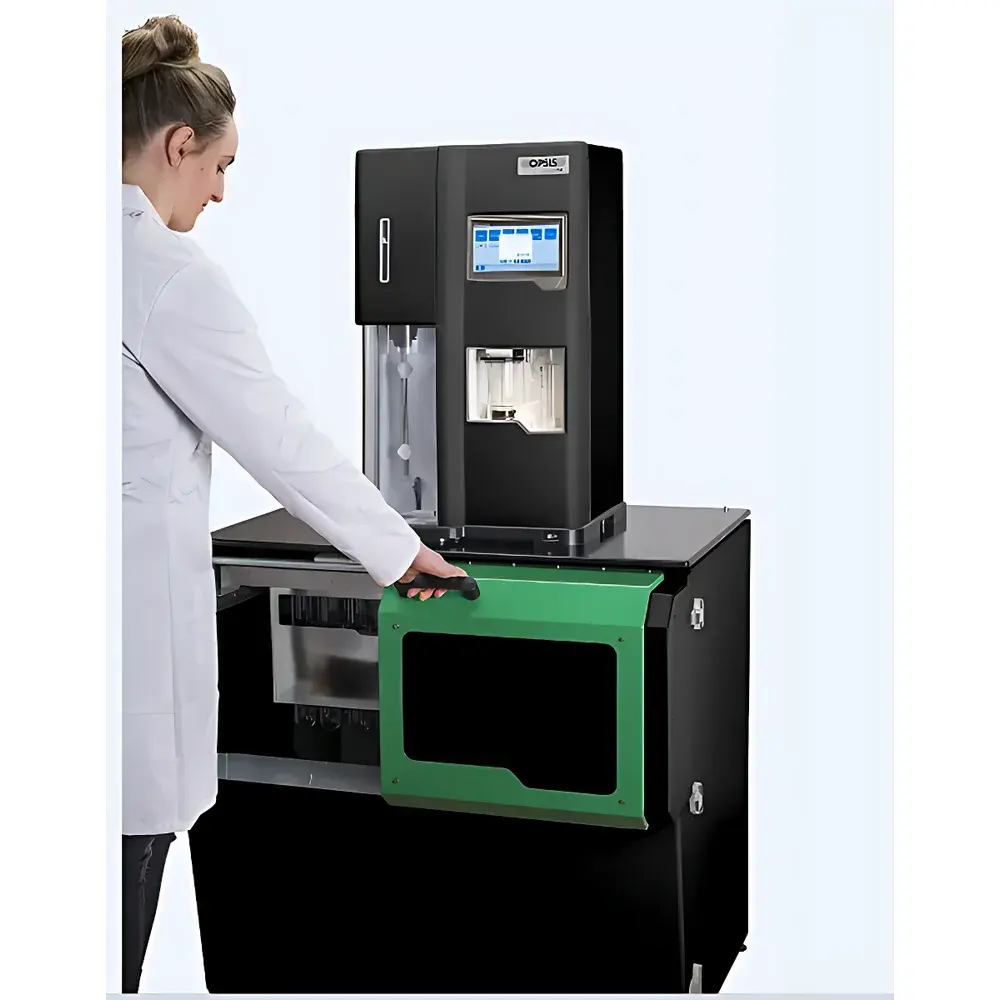
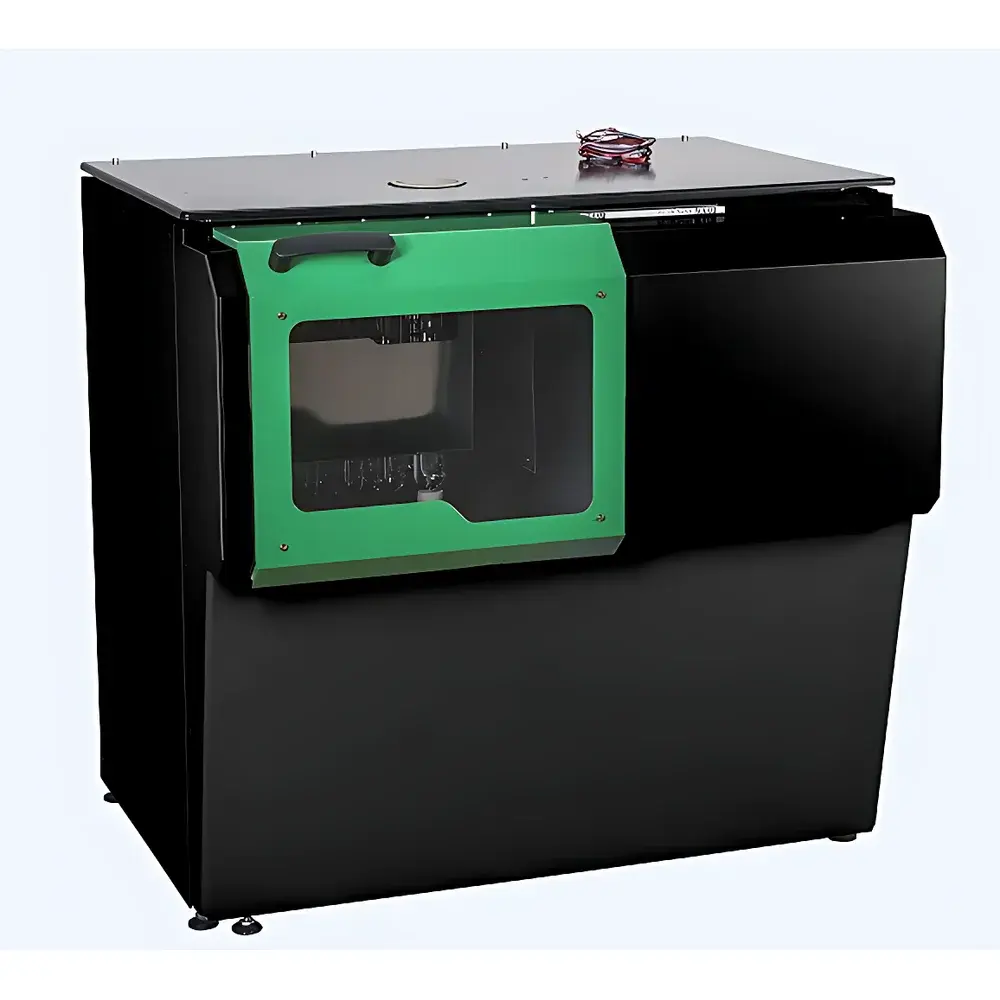
OPSIS KD-625 Automated Kjeldahl Nitrogen Determinator with Integrated Autosampler
| Brand | OPISIS |
|---|---|
| Country of Origin | Sweden |
| Model | KD-625 |
| Instrument Type | Automated Kjeldahl Nitrogen Determinator |
| Automation Level | Fully Automated |
| Nitrogen Determination Range | 0.05–240 mg N |
| Distillation Time | 2–4 min per sample |
| Repeatability | ≤ ±0.5% RSD |
| Sample Weight Capacity | ≤5 g (solid) or ≤20 mL (liquid) |
| Nitrogen Recovery Rate | ≥99.5% |
| Power Consumption | 2300 W |
| Dimensions (L×W×H) | 930 × 1610 × 730 mm |
| Titration Precision | 1.95 µL |
| Sample Capacity | 25 × 250 mL digestion tubes (standard autosampler), optional 65-position or 400 mL tube configurations |
Overview
The OPISIS KD-625 is a fully automated Kjeldahl nitrogen determinator engineered for high-throughput, regulatory-compliant nitrogen and crude protein analysis in food, feed, environmental, pharmaceutical, and chemical laboratories. It implements the classical Kjeldahl method—comprising digestion, distillation, and titration—in a single integrated platform with no manual intervention required after sample loading. The system combines a high-efficiency steam distillation unit with an AOAC-validated colorimetric endpoint titration module, all controlled via a robust embedded operating system. Its core architecture follows ISO 8968, AOAC Official Methods 981.10 and 984.27, and aligns with GLP/GMP data integrity requirements through full audit trail support, electronic signatures, and 21 CFR Part 11–compliant software functionality. Unlike semi-automated systems, the KD-625 eliminates inter-step transfer errors by accepting 20-position digestion racks directly into its autosampler—bypassing manual tube handling—and executing distillation, titration, calculation, and cleaning in sequence under programmable method control.
Key Features
- Fully integrated autosampler with 25-position standard capacity (expandable to 65 positions or 400 mL tubes), accepting digestion racks without tube repositioning
- Patented pre-titration technology enabling endpoint stabilization within ±0.5% relative deviation
- High-precision colorimetric endpoint detection using tri-stimulus RGB photometry, compliant with AOAC-recommended visual endpoint criteria
- 1.95 µL minimum titrant dispensing resolution with 50 mL calibrated burette and positive-pressure 2 L acid reservoir to eliminate bubble formation
- Wireless radar + pressure sensing system for real-time monitoring of distillation tube sealing force and positioning accuracy—ensuring consistent vapor-tight closure and eliminating optical sensor fouling from condensate or waste aerosols
- 7-inch industrial-grade touchscreen interface with bilingual (English/Chinese) navigation, multi-level password protection (operator, method editor, service, administrator), and editable method parameters including NaOH/water/boric acid volumes, delay times, steam intensity (10–100%), and condenser water flow modulation based on distillate temperature
- Comprehensive safety architecture: 12 independent sensors covering reagent levels (NaOH, H2O, boric acid, titrant), waste volume, instrument leveling, safety door status, digestion rack presence, steam generator liquid level, overtemperature/overpressure, distillate temperature, titration cell fill level, endpoint overflow, and drip tray status
Sample Compatibility & Compliance
The KD-625 accommodates solid samples up to 5 g and liquid samples up to 20 mL per digestion tube, compatible with standard 250 mL Kjeldahl digestion vessels. Its corrosion-resistant housing—constructed from electropolished stainless steel and chemically inert polymer composites—ensures long-term stability in aggressive alkaline and acidic environments typical of routine Kjeldahl workflows. The system meets ISO 5983-1:2021 (animal feeding stuffs), ISO 8968-1:2014 (milk and milk products), and EPA Method 351.2 (wastewater nitrogen analysis). All analytical outputs—including raw titrant volumes, calculated N content, crude protein equivalents (×6.25 or user-defined factor), and QC metrics—are timestamped, digitally signed, and stored with immutable audit trails. Data export adheres to ALCOA+ principles: attributable, legible, contemporaneous, original, and accurate—with native Excel (.xlsx) output via Wi-Fi or Ethernet, supporting seamless integration with LIMS and ERP platforms.
Software & Data Management
The embedded firmware supports multi-sequence method scheduling, dynamic weight entry during analysis, and real-time result visualization—including elapsed time, titrant consumption, and intermediate pH/color progression. Internal storage retains unlimited results with searchable metadata (sample ID, operator, date/time, method version, digest batch). All data modifications are logged with user ID, timestamp, and prior/post values. Remote diagnostics and firmware updates are supported over secure TLS-encrypted connections. The system provides full 21 CFR Part 11 compliance: role-based access control, electronic signature capture with biometric or token-based authentication options, and automatic generation of electronic records for validation documentation (IQ/OQ/PQ). Raw sensor data (e.g., distillate temperature profiles, pressure transients, reagent pump actuation logs) is available for forensic troubleshooting and method verification.
Applications
The KD-625 serves as a primary nitrogen quantification platform across regulated sectors: protein content verification in dairy, cereal, meat, and plant-based foods per Codex Alimentarius standards; total Kjeldahl nitrogen (TKN) determination in wastewater, soil, sludge, and lubricants per ASTM D1429 and ISO 11261; quality control of pharmaceutical excipients and active ingredients where nitrogen stoichiometry impacts purity assessment; and R&D applications requiring high reproducibility in catalyst-supported nitrogen fixation studies. Its ability to run blanks, standards, and unknowns in mixed batches—while maintaining individual calibration traceability—makes it suitable for ISO/IEC 17025-accredited testing laboratories.
FAQ
What digestion systems is the KD-625 compatible with?
The autosampler accepts standard 20-position digestion racks used with OPISIS and other major digestion blocks (e.g., Gerhardt, Buchi, VELP); no adapter kits or tube transfers are required.
Does the system support custom protein conversion factors?
Yes—users can define and store multiple nitrogen-to-protein conversion factors (e.g., 5.7 for wheat, 6.38 for dairy, or custom values) per sample group or method.
How is data integrity ensured during network transmission?
All wireless data exports use AES-256 encryption and certificate-based authentication; transmitted files include SHA-256 checksums and digital signatures verifiable by external audit tools.
Can the KD-625 be validated for GMP environments?
Yes—the system ships with a complete validation package including URS, FDS, SDS, IQ/OQ protocols, and CSV-ready documentation aligned with Annex 11 and ICH Q9/Q10 frameworks.
What maintenance intervals are recommended for the titration module?
The color sensor requires annual verification with NIST-traceable color standards; the 1.95 µL precision pump undergoes performance verification every 500 analyses using gravimetric calibration checks.
Related Products





