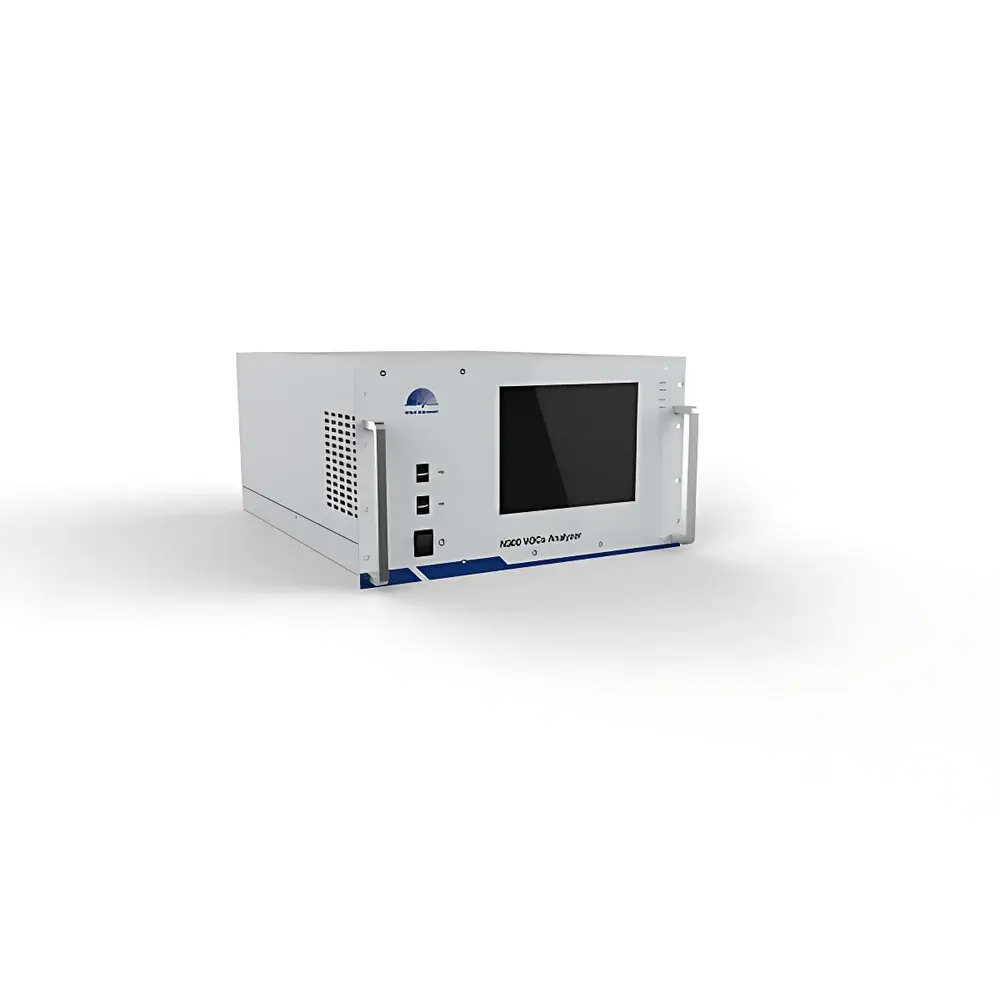
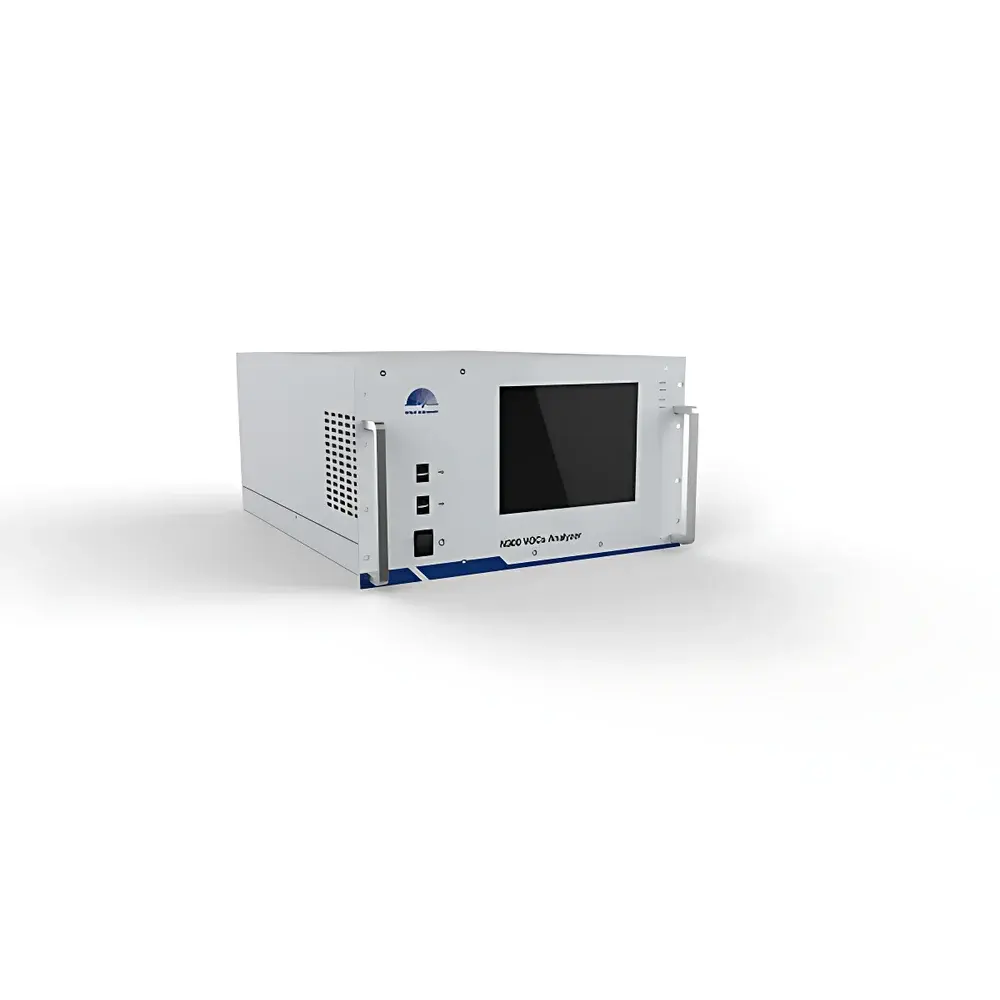
Synpec N300-VOCS Online Gas Chromatograph for Volatile Organic Compounds Analysis
| Brand | Synpec |
|---|---|
| Origin | Shanghai, China |
| Manufacturer Type | Original Equipment Manufacturer (OEM) |
| Country of Origin | China |
| Model | N300-VOCS |
| Price Range | USD 14,000 – 70,000 |
Overview
The Synpec N300-VOCS Online Gas Chromatograph is an industrial-grade, fully automated analytical system engineered for continuous, unattended monitoring of volatile organic compounds (VOCs) in emission stacks, ambient air, and process gas streams. It operates on the fundamental principle of gas chromatography (GC), combining cryogenic preconcentration, center-cut heart-cutting with backflush technology, and dual-detector detection (flame ionization detector, FID, and/or photoionization detector, PID) to achieve ppt-level sensitivity and compound-specific quantification. Designed for compliance with regulatory measurement requirements—including those aligned with EPA Method TO-15, ISO 16017-1, and EN 13649—the instrument delivers high reproducibility, low baseline drift, and robust performance under fluctuating environmental and operational conditions typical of industrial sites.
Key Features
- Integrated cryogenic preconcentration module with capillary trap column operating at −30 °C to −40 °C, enabling efficient enrichment of trace VOCs from large-volume gas samples (up to 5 L per cycle)
- Center-cut and backflush configuration for selective elution and removal of interfering matrix components (e.g., CO₂, H₂O, methane), minimizing column contamination and extending maintenance intervals
- Dual-detector capability: configurable FID for hydrocarbon quantification (C₂–C₁₂) and PID for aromatic and chlorinated VOCs (e.g., benzene, toluene, chloroform), with independent signal processing channels
- Electronic pressure control (EPC) and electronic flow control (EFC) systems ensuring precise carrier gas delivery (N₂ or He) with ≤0.5% flow stability over 72 hours
- Modular architecture with hot-swappable GC oven, detector, and sampling modules—reducing mean time to repair (MTTR) to under 30 minutes
- Onboard particulate filter (0.1 µm stainless-steel sintered frit) and moisture removal membrane integrated upstream of the concentrator, compatible with high-dust or humid sample streams
- Self-diagnostic firmware with real-time monitoring of gas supply pressure, detector status, temperature zones, and valve actuation cycles; automatic shutdown and alarm initiation upon critical fault detection
Sample Compatibility & Compliance
The N300-VOCS accepts gaseous samples across a wide concentration range (0.05–10,000 ppb for individual VOCs) and accommodates inlet pressures from 0.8 to 1.2 bar (gauge). It supports direct connection to standard ¼″ SS tubing and integrates seamlessly with existing stack probes, ambient air inlets, or process sidestream taps. The system meets mechanical and electrical safety standards IEC 61000-6-2/6-4 and carries CE marking for industrial environments. Its data integrity framework supports audit-ready operation under GLP and GMP guidelines, with optional 21 CFR Part 11-compliant software add-ons including electronic signatures, immutable audit trails, and user role-based access control.
Software & Data Management
The embedded Linux-based controller runs Synpec ChromoView™ v3.x firmware, providing intuitive web-browser interface (HTTPS-enabled) accessible via local network or secure remote VPN. Real-time chromatograms, retention time alignment, peak integration, and calibration curve management are handled automatically using adaptive baseline correction and iterative retention time locking (RTL). Quantitative reports conform to ISO/IEC 17025 reporting templates and export in CSV, PDF, and XML formats—including EPA-compliant DMR (Discharge Monitoring Report) structures. Scheduled auto-calibration (daily or weekly) uses certified gas standards (e.g., EPA TO-15 mixtures); calibration verification checks are logged with timestamp, operator ID, and deviation metrics.
Applications
- Continuous emissions monitoring (CEMS) for regulated VOC species (e.g., benzene, formaldehyde, styrene) from chemical manufacturing, paint & coating facilities, and pharmaceutical production lines
- Ambient air quality networks requiring speciated VOC data for ozone precursor analysis and source apportionment modeling
- Leak detection and repair (LDAR) program support with rapid turnaround of compositional profiles from fence-line or flare gas sampling points
- Process optimization in petrochemical refineries—tracking light hydrocarbons (C₂–C₅) and sulfur compounds during catalytic cracking or reforming operations
- Indoor air quality (IAQ) assessment in cleanrooms, semiconductor fabs, and battery manufacturing environments where solvent outgassing must be quantified at sub-ppb levels
FAQ
What detection limits does the N300-VOCS achieve for common VOCs like benzene and toluene?
Typical method detection limits (MDLs) are 0.03 ppb for benzene and 0.05 ppb for toluene (based on 5-L sample volume, FID detection, and 3× signal-to-noise ratio).
Can the system operate reliably in outdoor, unheated enclosures?
Yes—the GC oven and detector zones maintain ±0.1 °C thermal stability across −20 °C to +50 °C ambient; optional heated sample line and enclosure heater kits extend operational range.
Is method validation documentation provided for regulatory submissions?
Synpec supplies full IQ/OQ documentation packages, including system suitability test protocols, linearity studies (R² ≥ 0.999), and precision/recovery data per ISO 8466-1 and USP .
How often does the cryogenic trap require maintenance or replacement?
Under typical stack monitoring conditions (24/7 operation), the capillary trap column demonstrates >12 months service life before performance verification indicates regeneration or replacement.
Does the instrument support integration with SCADA or DCS systems?
Yes—Modbus TCP/IP and OPC UA interfaces are standard; analog 4–20 mA outputs (up to 8 channels) are configurable for key compound concentrations or system health parameters.
Related Products