
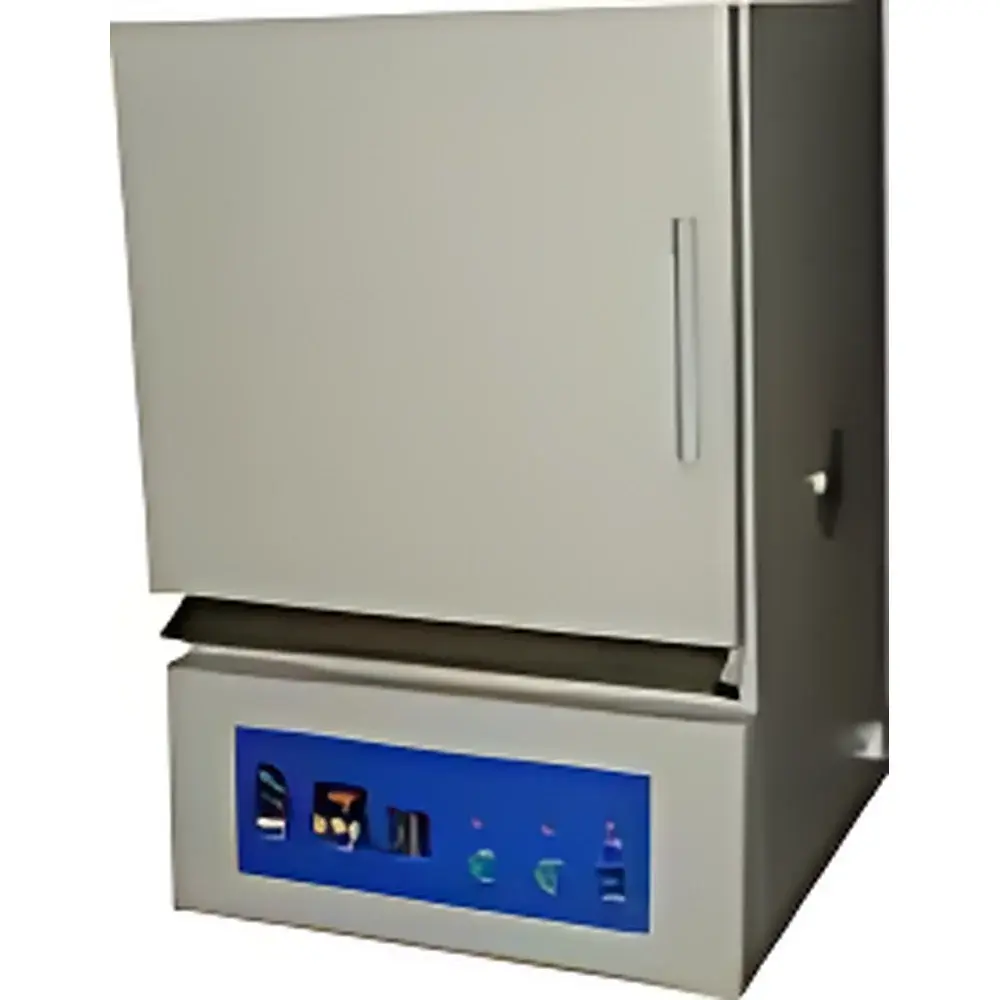
LabCompanion HH-138 High Temperature Aging Test Chamber
| Brand | LabCompanion |
|---|---|
| Origin | Guangdong, China |
| Manufacturer Type | Direct Manufacturer |
| Model | HH-138 |
| Temperature Range | RT to 260 °C |
| Control Accuracy | ±0.5 °C |
| Heating Rate | RT → 100 °C in ≈15 min |
| Internal Dimensions (W×D×H) | 900 × 500 × 600 mm |
| External Dimensions (W×D×H) | 1120 × 660 × 1300 mm (incl. casters & motor) |
| Input Power | 380 V, 50–60 Hz, 4 kW, 9.2 A |
| Heating Power | 3.8 kW |
| Controller | RKC REX-C100 digital PID + R temperature controller with dual PV/SV display |
| Safety Features | Over-temperature protection (ALM1 alarm), phase-loss & phase-sequence protection, timed cutoff, audible/visual alert |
| Insulation | Imported rock wool |
| Viewing Window | Dual-layer tempered glass |
| Air Circulation | Forced horizontal airflow with 1 HP high-temp motor, multi-blade turbine fan, adjustable baffle |
| Standard Accessories | 99.9 s – 999 h timer with temperature-triggered start and auto-heating cutoff |
Overview
The LabCompanion HH-138 High Temperature Aging Test Chamber is an engineered environmental test system designed for controlled thermal exposure of materials, components, and finished products under sustained elevated temperatures. It operates on the principle of forced convection heating within a thermally insulated chamber, enabling precise, repeatable, and stable thermal aging protocols essential for reliability testing, accelerated life assessment, and process validation. The chamber is calibrated and validated for continuous operation up to 260 °C — with optimal long-term stability recommended at ≤180 °C — making it suitable for applications aligned with ASTM D3045 (Standard Practice for Heat Aging of Plastics), IEC 60068-2-2 (Environmental Testing – Part 2-2: Tests – Test B: Dry Heat), and ISO 2133 (Rubber—Accelerated ageing tests). Its robust architecture supports both research-grade thermal profiling and production-line quality assurance workflows in compliance with GLP and GMP documentation requirements.
Key Features
- Stainless steel interior (SUS430, ≥1.2 mm thickness) and SECC cold-rolled steel exterior (≥1.5 mm, powder-coated finish) ensure corrosion resistance and structural integrity under prolonged thermal stress.
- PID + R (reset) control algorithm implemented via the RKC REX-C100 digital temperature controller delivers ±0.5 °C steady-state accuracy across the full operating range (RT to 260 °C).
- High-efficiency honeycomb-type heating elements provide uniform thermal distribution; combined with a 1 HP high-temperature-rated motor and multi-blade turbine fan, they enable rapid, laminar horizontal airflow and minimal temperature gradient (<±2 °C across working volume).
- Dual-layer tempered glass viewing window maintains optical clarity and thermal safety while permitting real-time visual monitoring without chamber interruption.
- Comprehensive safety architecture includes over-temperature cut-off (ALM1 activation), phase-loss and phase-sequence protection, and programmable time-based heating termination — all compliant with IEC 61000-4-11 and EN 61000-6-2 electromagnetic compatibility standards.
- Imported rock wool insulation (density ≥100 kg/m³, thermal conductivity ≤0.042 W/m·K) minimizes energy consumption and external surface temperature rise during extended operation.
Sample Compatibility & Compliance
The HH-138 accommodates diverse sample geometries within its 270 L internal volume (900 × 500 × 600 mm), supporting standardized test specimens per ASTM D573 (rubber), IPC-TM-650 (PCB laminates), or MIL-STD-202 (electronic components). Its design conforms to Class II environmental test chamber requirements per IEC 60068-3-5 and supports traceable calibration per ISO/IEC 17025 when used with accredited external reference sensors. The chamber’s operational envelope satisfies preconditioning and aging steps specified in USP (Sterility Assurance) and FDA 21 CFR Part 11-compliant data logging when integrated with validated third-party software platforms.
Software & Data Management
While the HH-138 features standalone operation via its front-panel RKC controller, it provides analog (4–20 mA) and digital (RS-485 Modbus RTU) outputs for integration into centralized laboratory information management systems (LIMS) or SCADA environments. Time-stamped temperature logs — including PV/SV values, alarm events (ALM1), and timer status — can be captured externally using compliant data acquisition hardware. For audit-ready workflows, users may configure external recording systems to maintain full electronic records with user authentication, change history, and tamper-proof timestamps — fulfilling ALCOA+ principles for regulated industries.
Applications
- Accelerated thermal aging of polymers, elastomers, adhesives, and composite matrices per ASTM D573 and ISO 188.
- Pre-baking and moisture removal of electronic assemblies prior to conformal coating or encapsulation.
- Stability testing of pharmaceutical excipients and packaging materials under ICH Q1A(R3) long-term and accelerated conditions.
- Heat treatment qualification of metal fasteners, gaskets, and sealing compounds in automotive and aerospace supply chains.
- Validation of thermal endurance in printed circuit board (PCB) substrates and solder mask materials per IPC-CC-830B.
- Bench-scale thermal sterilization process development for non-steam-compatible devices and materials.
FAQ
What is the maximum continuous operating temperature for the HH-138?
The chamber is rated for continuous operation up to 180 °C. While the upper limit is 260 °C, extended use above 180 °C may reduce heater lifespan and require more frequent calibration verification.
Does the HH-138 support automated data logging out of the box?
No — it ships with local display and manual control only. Data logging requires external hardware interfacing via RS-485 or 4–20 mA output signals.
Is the chamber compatible with nitrogen purge or inert atmosphere operation?
The standard configuration lacks gas inlet/outlet ports or pressure-rated seals. Custom modifications for inert gas purging are available upon engineering review and quotation.
How is temperature uniformity verified across the working volume?
Uniformity is validated per IEC 60068-3-5 using nine-point sensor mapping (center + eight corners) at 100 °C and 200 °C. Typical deviation is ≤±1.5 °C at steady state.
Can the timer be triggered only after temperature stabilization?
Yes — the “temperature-arrival” timer mode initiates countdown only when the setpoint is reached and maintained within ±1 °C for ≥30 seconds, preventing premature aging cycles.



