
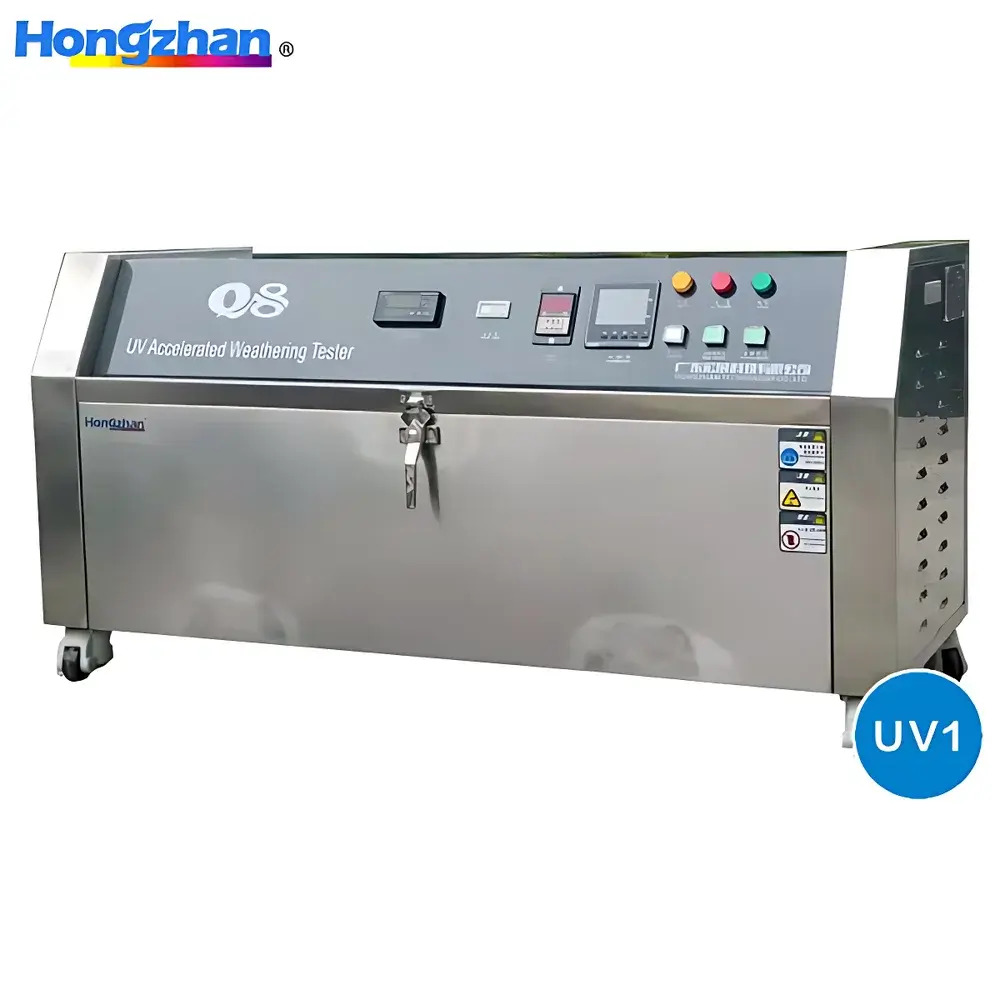
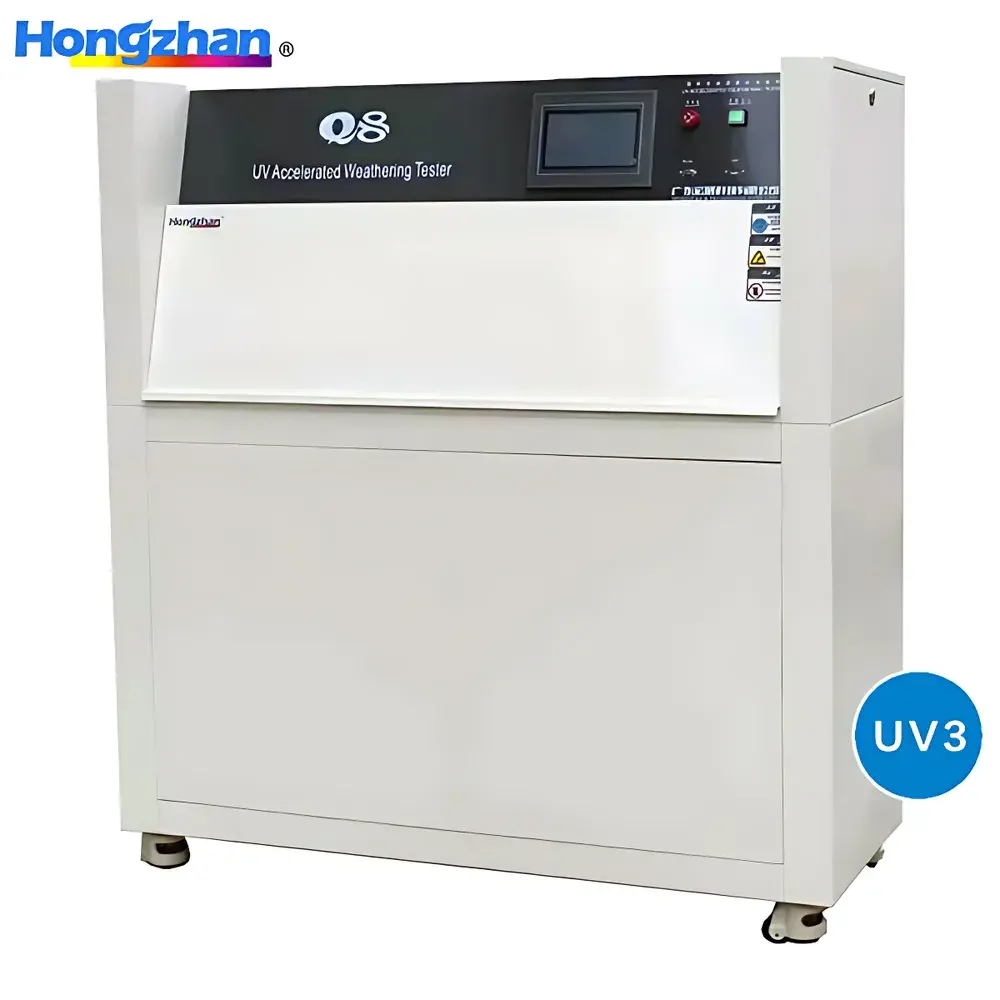
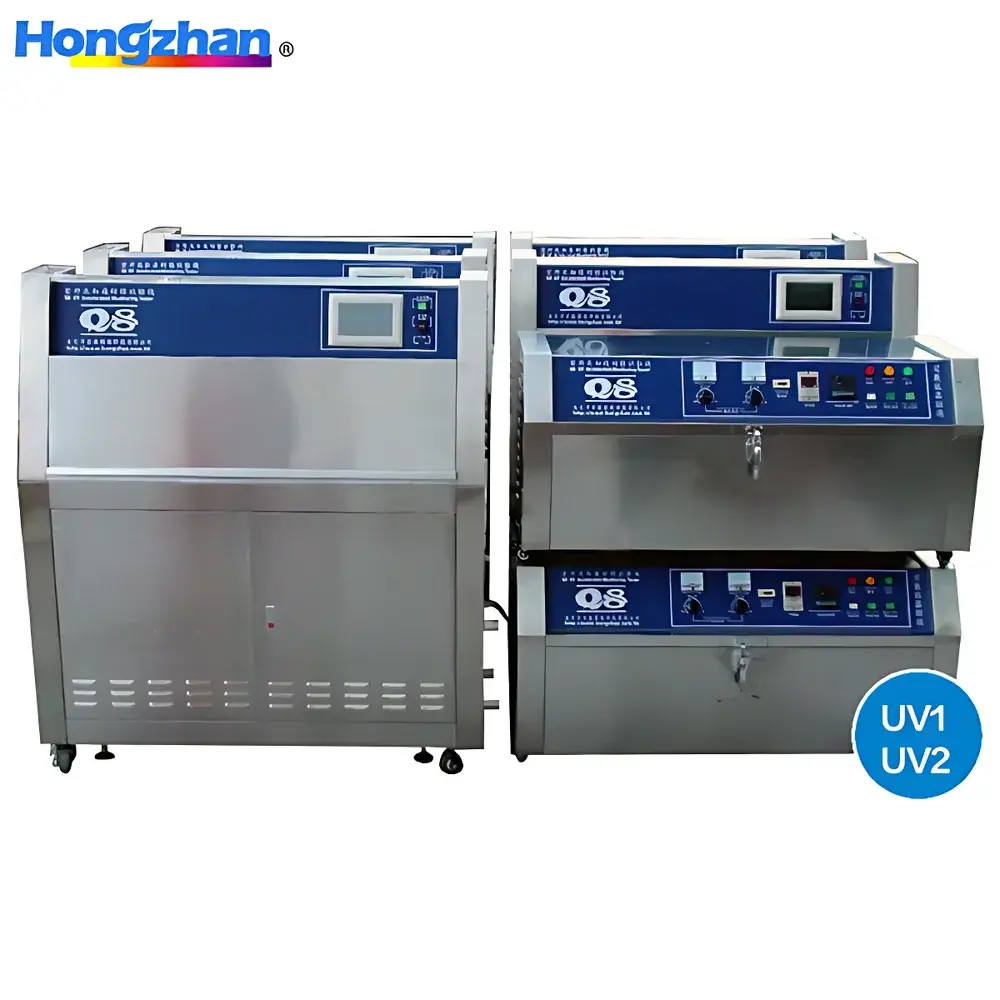
LabCompanion Q8-1 UV Aging Test Chamber
| Brand | LabCompanion |
|---|---|
| Origin | Guangdong, China |
| Manufacturer Type | Direct Manufacturer |
| Country of Origin | China |
| Model | Q8-1 |
| Lamp Power | 40 W per tube |
| Exposure Time Range | 1–9999 h (adjustable) |
| Humidity Range | ≥95% RH (actual chamber humidity) |
| Irradiance Range | 0.72 W/m² |
| Light Temperature Range | 50–70 °C |
| UV Wavelength Range | 290–400 nm |
| Chamber Dimensions | Customizable (L×W×H) |
Overview
The LabCompanion Q8-1 UV Aging Test Chamber is an engineered environmental simulation system designed to accelerate material degradation under controlled ultraviolet (UV) radiation, temperature, and humidity conditions. It replicates the photochemical effects of natural sunlight—specifically the short-wavelength UV-B and UV-A spectral bands (290–400 nm)—combined with cyclic condensation and thermal stress to evaluate long-term weathering resistance. Unlike broad-spectrum xenon arc or carbon arc testers, this chamber employs fluorescent UV lamps optimized for reproducible spectral output and stable irradiance (0.72 W/m² at specimen surface), making it particularly suitable for comparative durability testing in quality control and R&D laboratories. The system operates on the principle of photooxidation: UV photons initiate free-radical chain reactions in organic polymers, leading to measurable changes such as discoloration, embrittlement, chalking, cracking, and loss of tensile strength. Its design complies with core test method frameworks including ASTM G154 (Standard Practice for Operating Fluorescent Ultraviolet (UV) Lamp Apparatus for Exposure of Non-Metallic Materials), ISO 4892-3 (Plastics — Methods of exposure to laboratory light sources — Part 3: Fluorescent UV lamps), and GB/T 14522 (Chinese national standard for mechanical industry UV aging tests).
Key Features
- Stable UV irradiance output of 0.72 W/m² (measured at specimen plane), calibrated to NIST-traceable reference standards;
- Adjustable exposure duration from 1 hour to 9999 hours, programmable via integrated digital timer with memory retention;
- High-humidity operational capability (≥95% RH) achieved through integrated water reservoir and steam-based humidification, enabling realistic condensation cycles;
- Controlled light-zone temperature range of 50–70 °C, maintained via PID-regulated heating elements and forced-air circulation;
- Modular stainless-steel interior chamber with corrosion-resistant finish and UV-reflective surfaces to maximize uniform irradiance distribution;
- Customizable internal dimensions (L×W×H) to accommodate diverse sample configurations—from flat panels and molded specimens to multi-tier racks—without compromising radiant field homogeneity;
- Four 40 W UV-B/UV-A fluorescent lamps (UVA-340 or UVB-313 type, configurable per application requirements), with lamp life monitoring and automatic end-of-life alert;
- Compliance-ready architecture supporting audit trails, parameter logging, and user-access control when integrated with optional data acquisition modules.
Sample Compatibility & Compliance
The Q8-1 accommodates non-metallic materials across industrial sectors including automotive interiors, architectural coatings, packaging films, geotextiles, and medical device housings. Specimens up to 5 mm thick may be mounted vertically on adjustable sample holders. Compatible substrates include thermoplastics (e.g., ABS, PC, PP), elastomers (silicone, EPDM), textile fibers (polyester, nylon), paperboard, and solvent-borne or water-based coatings. The chamber supports standardized specimen mounting per ASTM D6675 (for plastic sheeting) and ISO 11341 (for paints and varnishes). All operational parameters—including irradiance, chamber humidity, and setpoint temperature—are traceable to internal calibration certificates and align with GLP documentation requirements. Optional IQ/OQ documentation packages are available for regulated environments requiring FDA 21 CFR Part 11 compliance or ISO/IEC 17025 accreditation.
Software & Data Management
The Q8-1 operates via a microprocessor-based controller with real-time display of irradiance, temperature, humidity, and elapsed exposure time. While the base unit features local keypad operation, it includes RS-485 communication ports for integration into centralized lab management systems. When paired with LabCompanion’s optional UV-Link™ software (v3.2+), users gain access to automated data logging at user-defined intervals (1 min to 60 min), exportable CSV reports, deviation alarms, and trend visualization for irradiance drift or humidity instability. Audit trail functionality records all parameter modifications, operator logins, and system events—essential for GMP-compliant stability studies. Data integrity safeguards include password-protected configuration modes and electronic signature support for critical test initiation.
Applications
- Evaluation of UV stabilizer efficacy in polymer formulations;
- Comparative ranking of pigment fade resistance in automotive clearcoats;
- Accelerated qualification of outdoor signage materials per SAE J2020;
- Pre-release validation of medical packaging barrier films against yellowing;
- Correlation studies between Q8-1 exposure cycles and real-world service life in tropical climates;
- Root-cause analysis of premature cracking in rubber gaskets exposed to solar UV + thermal cycling;
- Supporting ISO 11341 cyclic testing protocols (UV irradiation followed by condensation phases).
FAQ
What UV lamp types are compatible with the Q8-1?
The chamber accepts standard UVA-340 (peak 340 nm, simulates solar UV down to 295 nm) or UVB-313 (peak 313 nm, aggressive accelerated testing) fluorescent tubes—both rated at 40 W per lamp.
Is black panel temperature measurement supported?
No. The Q8-1 does not include a black panel thermometer (BPT) sensor; it monitors only chamber air temperature and relative humidity. For BPT-capable systems, consider the LabCompanion Q12 series.
Can the chamber perform dark-cycle condensation phases?
Yes. The system automatically initiates condensation cycles by cooling the chamber walls while maintaining high humidity, replicating nighttime dew formation per ASTM G154 Cycle 1 and ISO 4892-3 Method A.
How often must UV lamps be replaced?
Fluorescent UV lamps exhibit spectral decay after approximately 1600–2000 hours of operation. LabCompanion recommends replacement at 1800 hours or upon measured irradiance drop exceeding ±5% from initial calibration.
Does the Q8-1 meet IEC 60068-2-5 for environmental testing?
While not certified to IEC 60068-2-5 (which specifies solar radiation testing using xenon arc), the Q8-1 meets the functional intent of UV exposure simulation per Clause 4.2 of that standard when operated within its specified irradiance and spectral range.



