
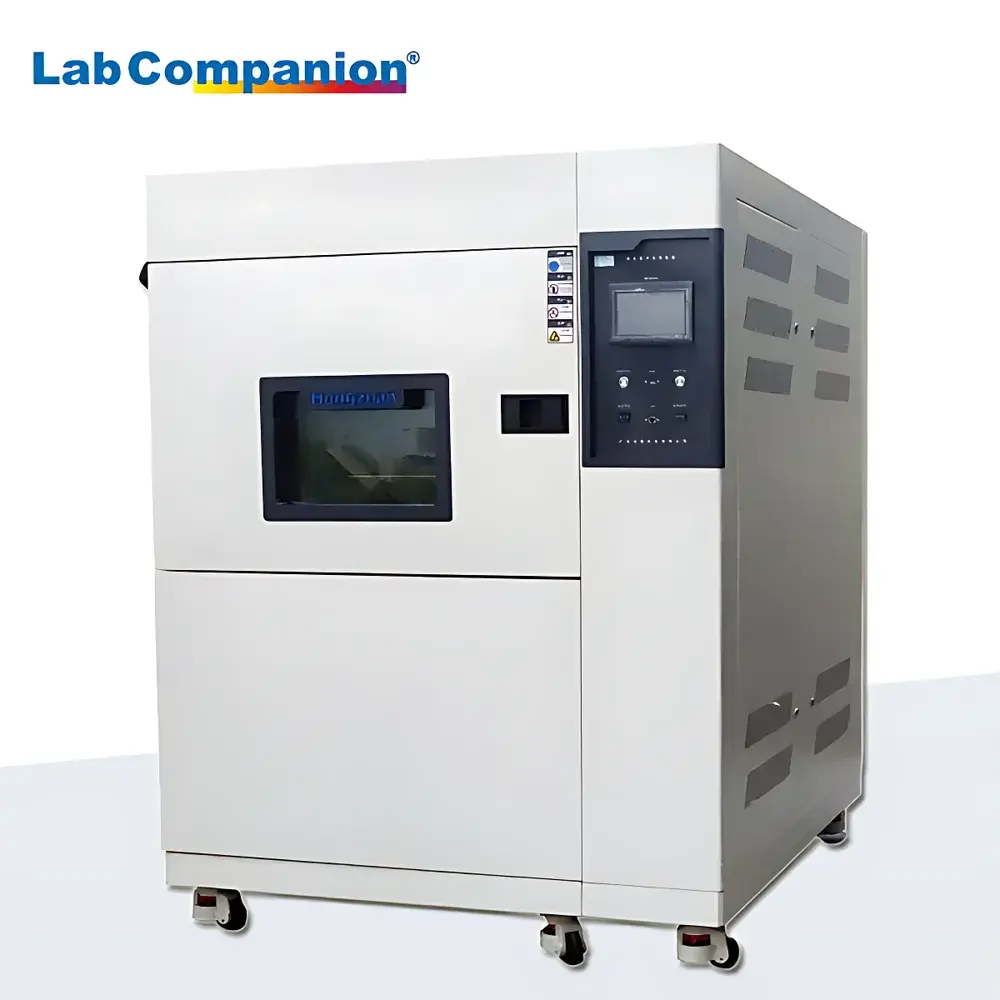
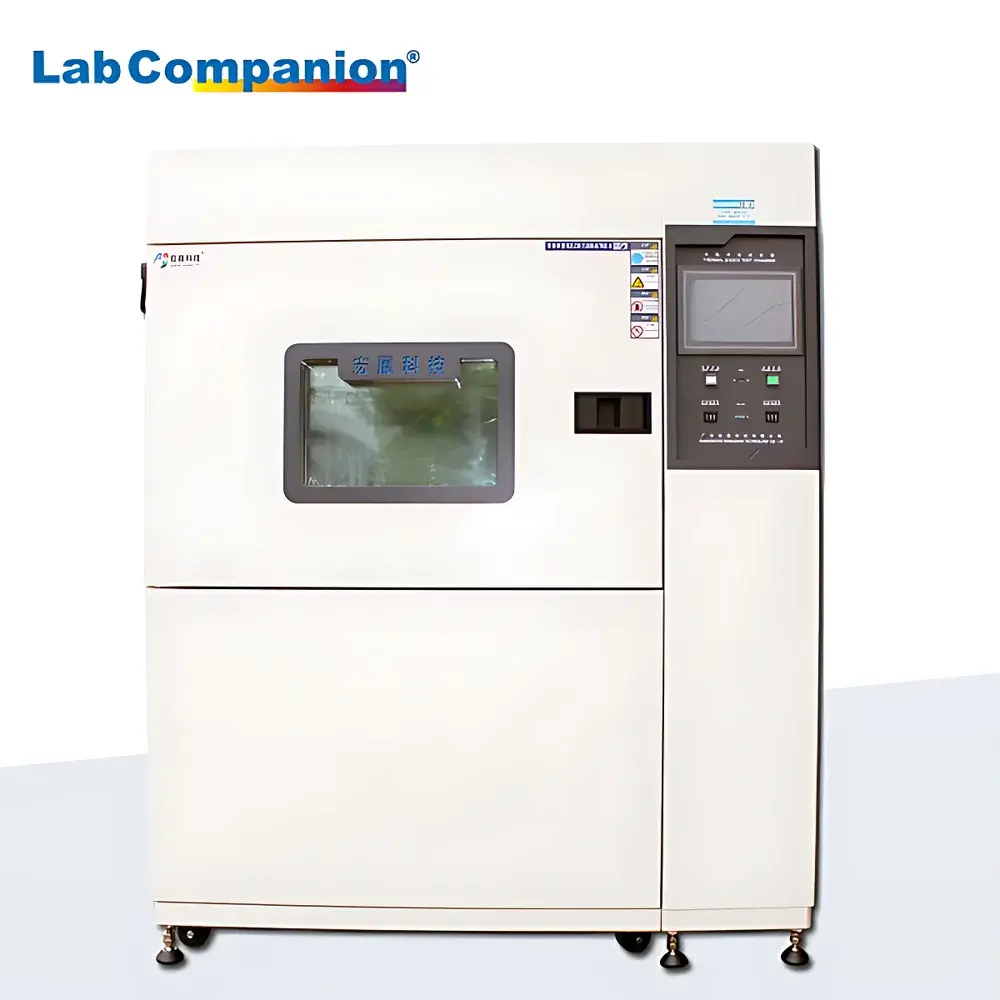
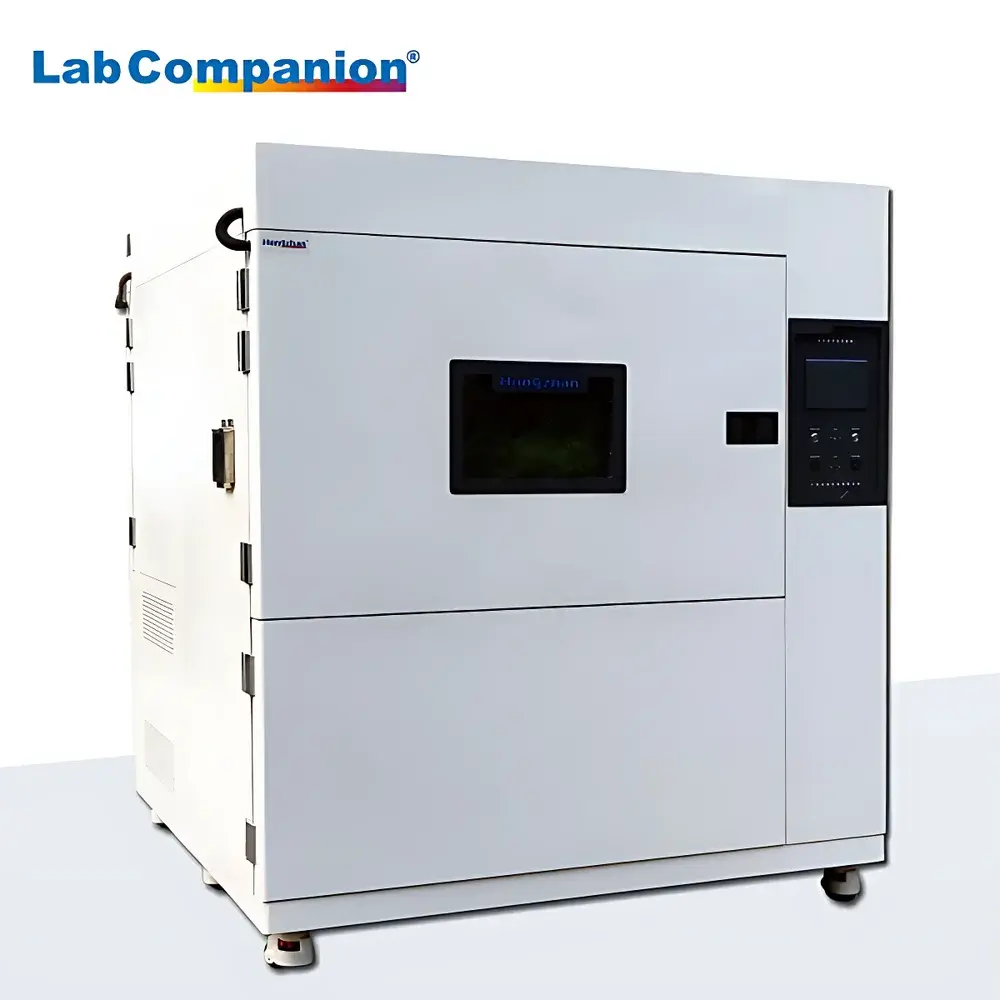
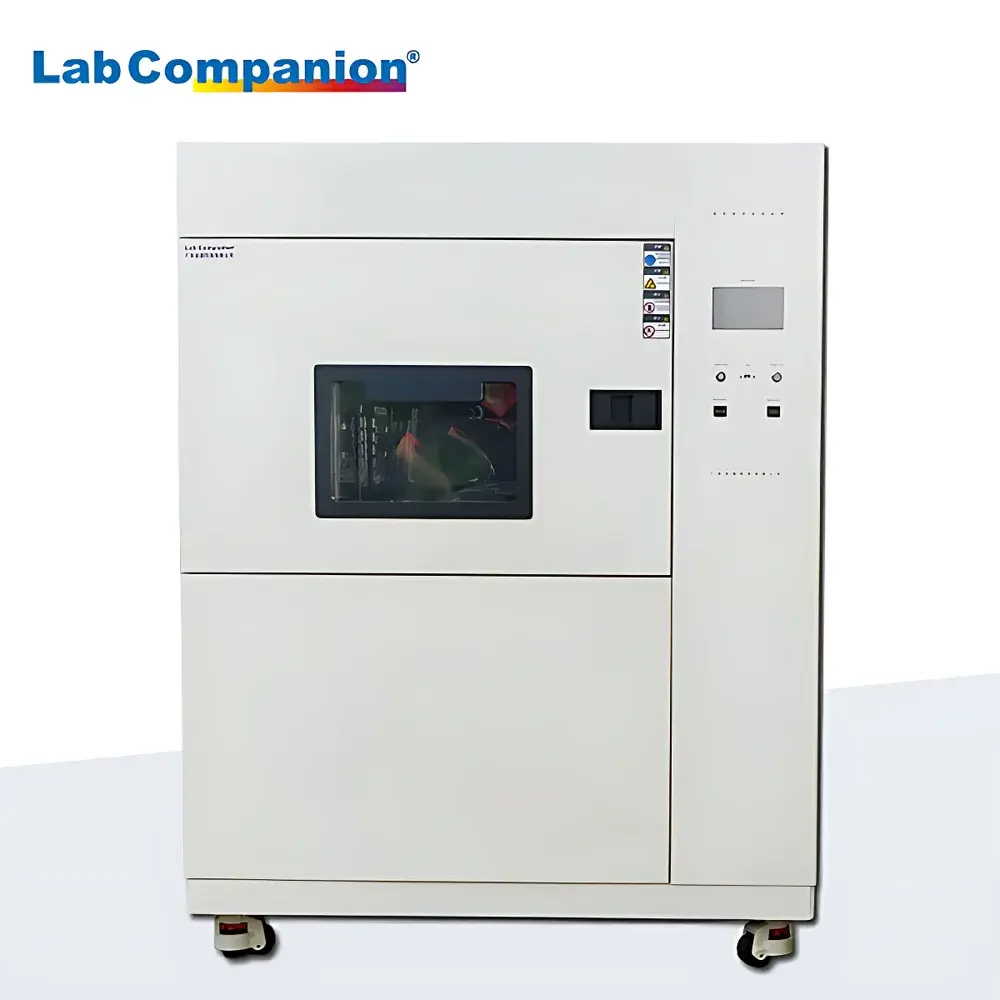
LabCompanion TSU-150W Three-Zone Thermal Shock Test Chamber
| Brand | LabCompanion |
|---|---|
| Origin | Guangdong, China |
| Manufacturer Type | Direct Manufacturer |
| Model | TSU-150W |
| High-Temperature Range | +60 °C to +200 °C |
| Low-Temperature Range | −78 °C to 0 °C |
| Thermal Shock Range | −55 °C to +150 °C |
| Temperature Stability | ±2 °C |
| Heating Rate | +60 °C to +200 °C ≤ 20 min |
| Cooling Rate | +20 °C to −75 °C ≤ 60 min |
Overview
The LabCompanion TSU-150W is a precision-engineered three-zone thermal shock test chamber designed for accelerated reliability assessment of electronic components, aerospace materials, automotive modules, and hermetically sealed packages under extreme transient temperature conditions. Unlike two-chamber systems that rely on mechanical transfer mechanisms, the TSU-150W employs independent, thermally isolated high-temperature (+60 °C to +200 °C), low-temperature (−78 °C to 0 °C), and test chamber zones—enabling rapid, repeatable thermal transitions without sample movement. This architecture eliminates mechanical wear, reduces thermal lag, and ensures high reproducibility across thousands of shock cycles. The system complies with core thermal shock test standards including MIL-STD-810H Method 503.7, IEC 60068-2-14, JESD22-A104E, and GB/T 2423.22—making it suitable for qualification testing in R&D labs, QC environments, and third-party certification facilities operating under ISO/IEC 17025 or AEC-Q200-aligned workflows.
Key Features
- Triple-zone architecture with fully independent heating and cooling circuits—eliminates cross-contamination between thermal zones and supports simultaneous pre-conditioning.
- High-efficiency cascade refrigeration system using environmentally compliant R404A/R23 mixed refrigerant, enabling stable operation down to −78 °C in the low-temperature zone.
- Precision PID-controlled forced-air circulation with dual centrifugal fans and optimized baffle design ensures uniform temperature distribution (≤ ±2 °C deviation) within the 600 × 500 × 500 mm (W × H × D) test chamber.
- Fast transition capability: achieves full thermal shock cycle (e.g., −55 °C ↔ +150 °C) with ≤5-minute temperature recovery time—verified per IEC 60068-2-14 Annex B requirements.
- Robust stainless-steel interior (SUS304) with seamless welding, anti-condensation insulation (≥150 mm polyurethane foam), and industrial-grade pneumatic door actuators rated for ≥500,000 cycles.
- Integrated safety suite including over-temperature cut-off, refrigerant pressure monitoring, phase failure protection, and door interlock with emergency stop circuitry.
Sample Compatibility & Compliance
The TSU-150W accommodates samples up to 10 kg mass and 30 kg static load on its reinforced adjustable shelf—optimized for PCB assemblies, plastic-encapsulated ICs, MEMS sensors, battery cells, and molded optical components. Its thermal profile fidelity meets traceability requirements for GLP/GMP-regulated environments when paired with optional calibrated Class I RTDs (IEC 60751). The chamber’s performance validation protocol aligns with ASTM E2293-22 (Standard Practice for Calibration of Thermal Shock Chambers) and supports audit-ready documentation for FDA 21 CFR Part 11–compliant data integrity workflows when used with LabCompanion’s optional validated software package.
Software & Data Management
Equipped with LabCompanion’s TC-Studio v4.2 control and analysis platform, the TSU-150W delivers real-time multi-channel temperature logging (up to 16 external thermocouple inputs), programmable ramp-soak profiles, and automated cycle counting with timestamped event logs. All data are stored in encrypted SQLite databases with SHA-256 hash verification. Optional 21 CFR Part 11 compliance mode enables electronic signatures, role-based access control, and immutable audit trails—including user login history, parameter change records, and calibration certificate linkage. Export formats include CSV, PDF test reports (with embedded chamber ID and sensor calibration IDs), and XML for LIMS integration.
Applications
- Qualification testing of solder joint integrity and CTE mismatch in multilayer ceramic capacitors (MLCCs) and BGAs per JESD22-A104E.
- Failure mode analysis of conformal-coated electronics subjected to rapid ambient cycling in automotive ECUs.
- Validation of hermetic seal reliability in medical implant housings per ISO 11607-2 Annex C.
- Accelerated aging studies of lithium-ion battery electrolyte stability at extreme cold-to-hot transitions.
- Material screening for thermal fatigue resistance in composite aircraft skins under simulated flight envelope extremes.
FAQ
What is the difference between a two-chamber and a three-chamber thermal shock system?
A two-chamber system moves samples mechanically between hot and cold zones, introducing inertia-related delays and positional variability. The TSU-150W’s three-zone design keeps the sample stationary while transferring air via high-speed pneumatic dampers—reducing thermal overshoot, improving repeatability, and extending mechanical service life.
Does the TSU-150W support custom test profiles beyond standard MIL-STD or IEC cycles?
Yes. TC-Studio allows users to define multi-step profiles with variable ramp rates, dwell times, and conditional triggers (e.g., “hold until internal sensor reaches target ±0.5 °C”), supporting proprietary reliability protocols.
Is remote monitoring and alarm notification available?
Standard Ethernet (TCP/IP) and optional RS-485 Modbus RTU interfaces enable integration with building management systems (BMS) or centralized lab monitoring platforms. Email/SMS alerts can be configured for critical fault events via LabCompanion’s CloudLink gateway (sold separately).
What maintenance intervals are recommended for long-term operational stability?
Refrigerant oil replacement every 24 months, condenser coil cleaning quarterly, and annual verification of sensor calibration traceable to NIST standards are advised. Full preventive maintenance kits and certified technician dispatch services are available through LabCompanion’s global support network.



