
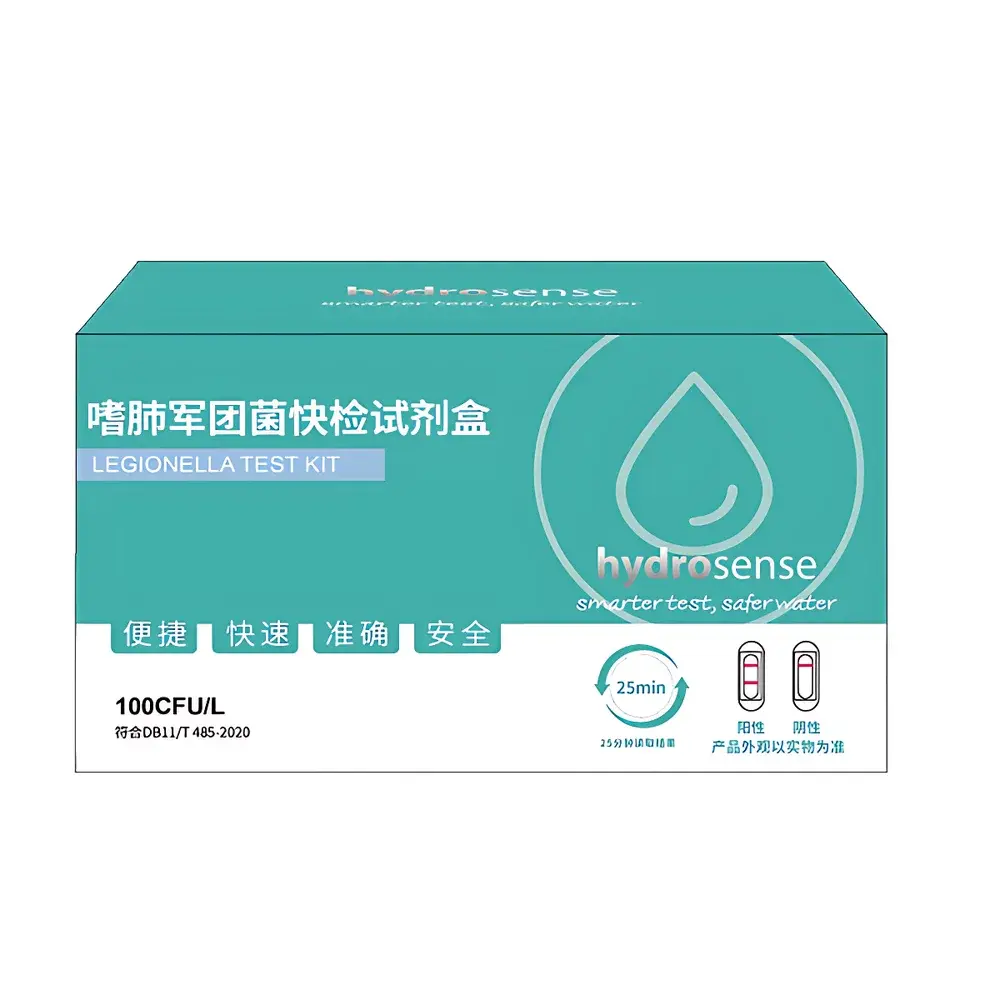
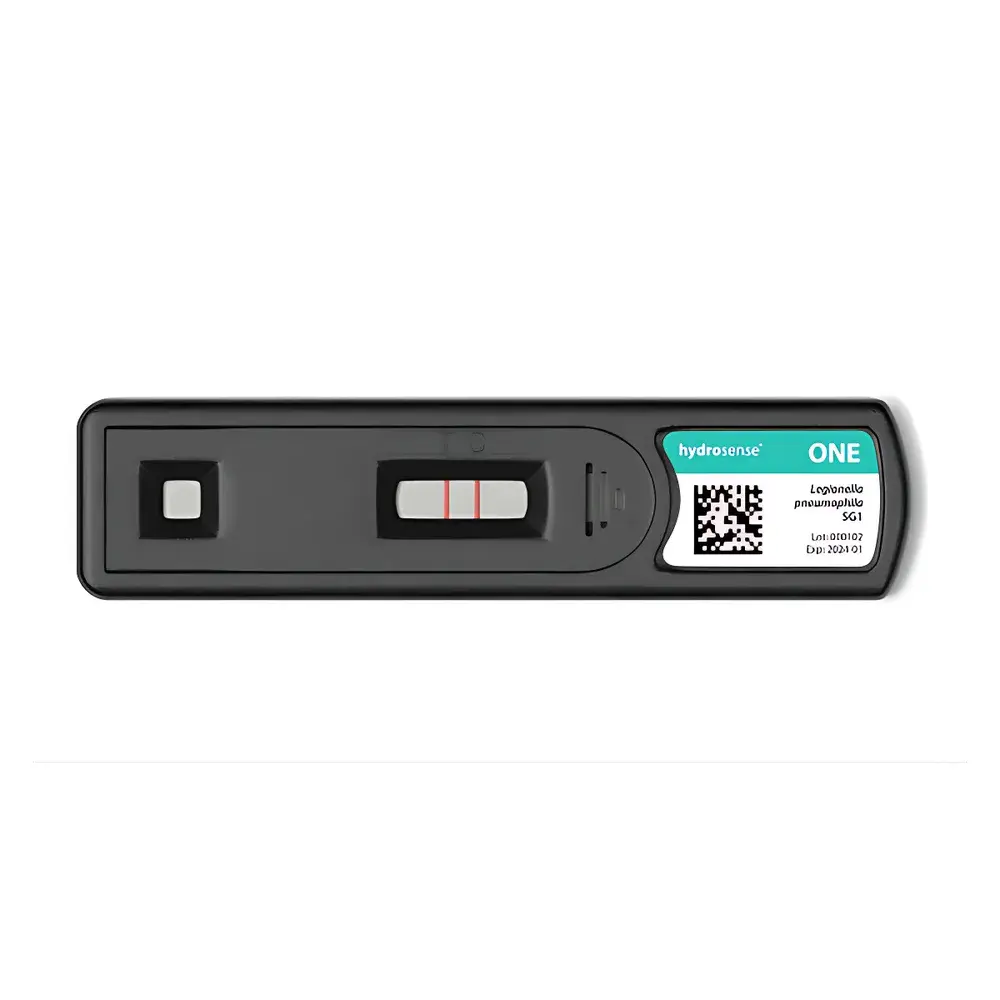
Palintest Legionella ONE On-Site Rapid Test Kit
| Brand | Palintest |
|---|---|
| Origin | United Kingdom |
| Model | Legionella ONE |
| Detection Principle | Lateral Flow Immunoassay (Colloidal Gold Conjugate) |
| Target Analyte | *Legionella pneumophila* Serogroup 1 |
| Time-to-Result | ≤25 minutes |
| Limit of Detection | 100 CFU/L |
| Regulatory Compliance | DB/T 485–2020 (China), UK HSE Legionella Control Guidance, ISO 11731:2019 (supporting methodology), GLP-aligned workflow |
| VBNC Detection Capability | Yes |
| Format Options | Syringe-based Water Sampling Kit |
| Batch Traceability | Full lot-number registration (e.g., 1005010056) |
| Intended Use | Field-deployable qualitative detection in potable water systems, cooling towers, spa pools, hot water distribution networks, and premise plumbing |
Overview
The Palintest Legionella ONE On-Site Rapid Test Kit is an immunoassay-based field diagnostic system engineered for the qualitative detection of *Legionella pneumophila* serogroup 1—the predominant cause of legionellosis—in water and surface samples. Unlike culture-based methods requiring 7–10 days for colony isolation and identification, or PCR-based assays demanding centralized laboratory infrastructure and nucleic acid extraction, the Legionella ONE leverages a validated lateral flow immunoassay platform utilizing colloidal gold–labeled monoclonal antibodies. This design enables direct antigen recognition in native aqueous matrices without enrichment, centrifugation, or filtration—making it suitable for immediate deployment by facility engineers, environmental health officers, and onsite maintenance personnel. The assay detects both culturable and viable-but-non-culturable (VBNC) forms of *L. pneumophila*, a critical capability given that VBNC cells retain virulence potential yet evade conventional plating techniques per ISO 11731:2019 Annex A. Its ≤25-minute turnaround supports real-time risk assessment during routine surveillance or incident response, aligning with UK Health and Safety Executive (HSE) ACOP L8 requirements for prompt intervention in high-risk water systems.
Key Features
- Field-ready operation: No external power supply, instrumentation, or reagent preparation required—results visualized via naked-eye interpretation of control and test lines.
- VBNC-sensitive detection: Antibody affinity optimized to bind conserved epitopes expressed during metabolic dormancy, enabling identification of stress-adapted *L. pneumophila* not recoverable on BCYE agar.
- Dual-format flexibility: Syringe-based kit for direct aspiration and analysis of bulk water from cooling towers, hot water returns, or storage tanks; swab-based kit for surface sampling of showerheads, faucet aerators, and tank interiors.
- Regulatory traceability: Each kit carries a unique batch code (e.g., 1005010056) linked to manufacturing records, stability validation data, and performance verification against reference strains (ATCC 33152, NCTC 11192).
- Robust matrix tolerance: Validated across pH 6.5–8.5, turbidity ≤10 NTU, and free chlorine ≤0.5 mg/L—minimizing false negatives from common disinfectant residuals or particulate interference.
Sample Compatibility & Compliance
The Legionella ONE is validated for use with cold/hot potable water, recirculated cooling water, spa pool fill water, and swab eluates from stainless steel, PVC, and ceramic surfaces. It meets the analytical performance criteria outlined in China’s DB/T 485–2020 “Rapid Detection Method for *Legionella* in Water” for limit of detection (100 CFU/L), specificity (>98% vs. 22 non-*Legionella* species), and repeatability (CV ≤15% intra-run). While not intended as a standalone replacement for ISO 11731-compliant culture confirmation in regulatory reporting, its results are admissible for Tier 1 screening under HSE L8, WHO Guidelines for Safe Use of Recreational Water, and EU Council Directive 98/83/EC Annex I parametric values. All kits are manufactured in the UK under ISO 13485-certified quality management systems and comply with CE marking requirements for in vitro diagnostic devices (IVDD legacy framework).
Software & Data Management
As a non-instrumented qualitative assay, the Legionella ONE does not generate digital output natively. However, Palintest provides optional companion tools—including the Palintest LogBook mobile application—for standardized recording of sample location, date/time, operator ID, batch number, and result interpretation (positive/negative/invalid). Entries are timestamped and exportable as CSV or PDF reports compliant with GLP audit trails. For enterprise clients, API integration with CMMS platforms (e.g., IBM Maximo, Fiix) enables automated flagging of positive results into work order queues. All digital logs retain full chain-of-custody metadata and support 21 CFR Part 11–compliant electronic signature modules when deployed with validated authentication protocols.
Applications
- Routine monitoring of domestic hot water systems in hospitals, hotels, and aged-care facilities per ASHRAE Guideline 12–2020.
- Pre-commissioning verification of newly installed cooling towers prior to operational handover.
- Post-shock chlorination efficacy checks following biocide treatment protocols.
- Surface contamination mapping in outbreak investigations involving decorative fountains or humidification units.
- Third-party verification audits conducted by accredited environmental consultancies under UKAS ISO/IEC 17020 accreditation scope.
FAQ
Does the Legionella ONE detect all *Legionella* species?
No—it is specifically calibrated for *Legionella pneumophila* serogroup 1, responsible for >84% of reported legionellosis cases globally.
Can results be used for regulatory submission to public health authorities?
Yes, as preliminary evidence supporting urgent remediation; however, confirmatory culture per ISO 11731 remains mandatory for formal notification in most jurisdictions.
What is the shelf life and storage requirement?
24 months from manufacture when stored at 2–30°C; no refrigeration required. Kits must remain sealed until use and protected from humidity.
How is cross-reactivity with environmental microbes controlled?
Antibody pairs were screened against 22 non-target Gram-negative bacteria (including *Pseudomonas*, *Acinetobacter*, *Mycobacterium*) showing no observable signal at concentrations up to 10⁶ CFU/mL.
Is training required for reliable interpretation?
Minimal—operators complete a 30-minute competency assessment using Palintest’s certified e-learning module (P-LEARN-LG-01), covering line intensity thresholds, invalid result triggers, and documentation standards.







