
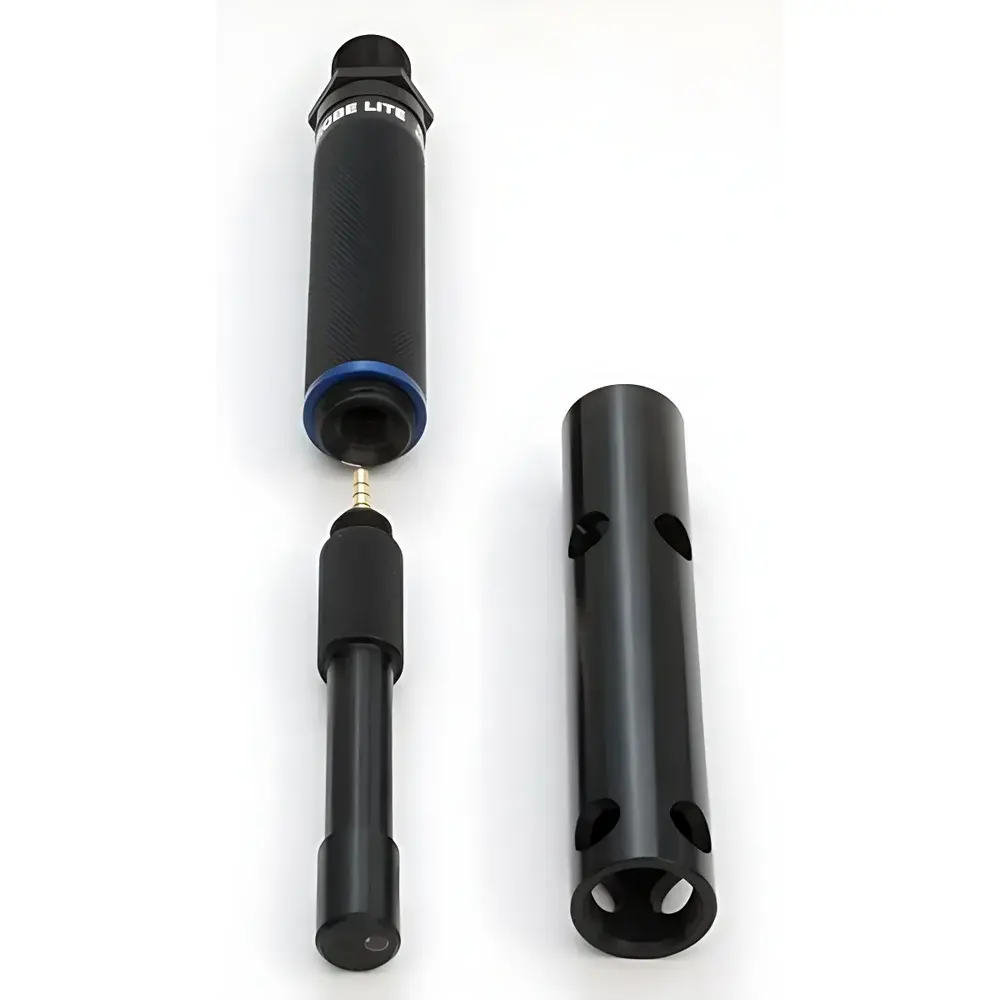
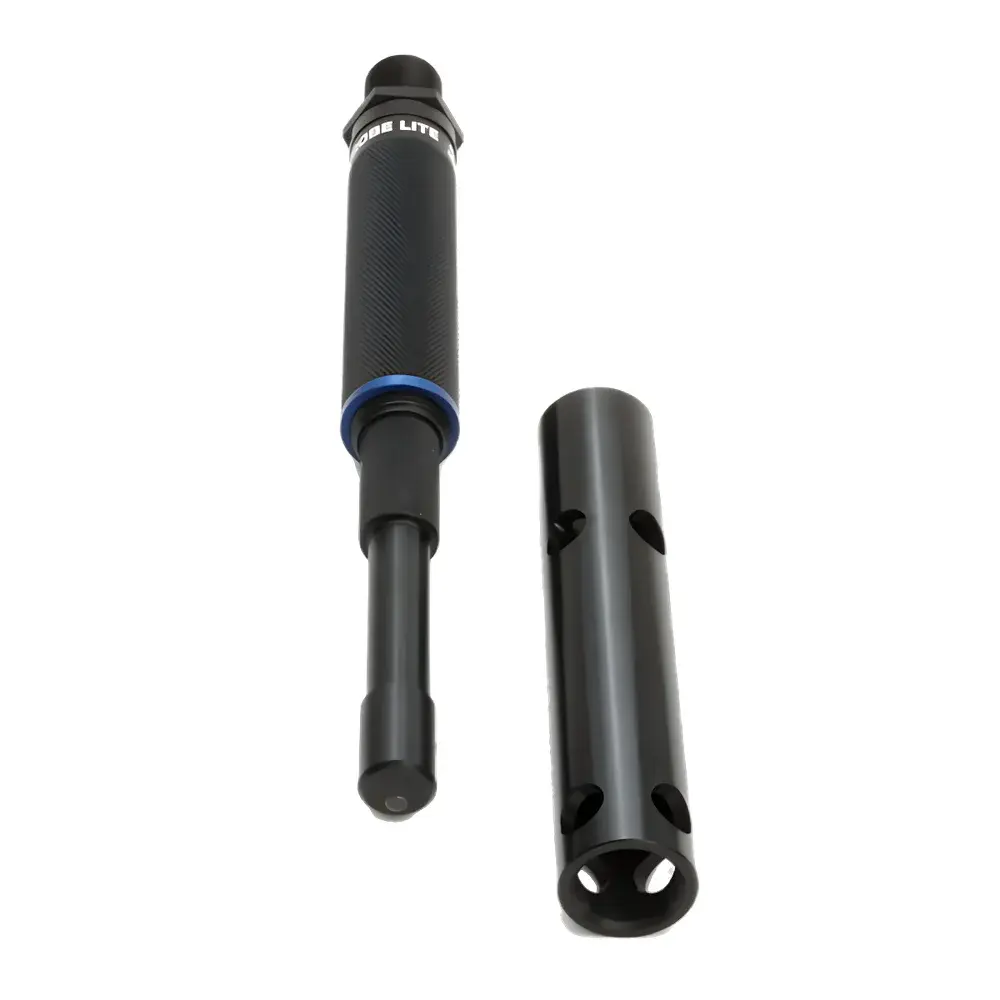
Palintest Macro 900 Chlorophyll a Fluorometric Analyzer
| Brand | Palintest |
|---|---|
| Origin | United Kingdom |
| Model | Macro 900 |
| Detection Principle | In-situ fluorescence excitation/emission (685 nm emission, 470 nm excitation) |
| Probe Type | APLite multi-parameter probe with integrated chlorophyll fluorometer electrode |
| Display | 80-character backlit LCD |
| Data Storage | 1,000 measurement records (including GPS-tagged entries) |
| GPS | 12-channel receiver, ±10 m 3D positional accuracy |
| Barometric Pressure Range | 150–1150 mbar (±1 mbar) |
| Power Supply | 5 × AA alkaline or NiMH rechargeable batteries |
| Battery Life | >20 h (alkaline), >40 h (NiMH) |
| Operating Temperature | −20 °C to +70 °C |
| Enclosure Rating | IP67 (submersible to 1 m for 30 min) |
| Dimensions | 90 × 180 × 39 mm |
| Weight | 450 g (with batteries) |
| Connectivity | USB interface with included cable |
| Cleaning System | Dual-motor brush self-cleaning probe assembly |
| Compliance | Designed for field-deployable environmental monitoring per ISO 10260, ASTM D3921, and EPA Method 445.0 (Chlorophyll a by fluorescence) |
Overview
The Palintest Macro 900 Chlorophyll a Fluorometric Analyzer is a field-deployable, battery-powered instrument engineered for rapid, in-situ quantification of chlorophyll a concentration in natural and treated waters. It operates on the principle of controlled fluorometric excitation—using a 470 nm LED to induce fluorescence in photosynthetic pigments, followed by detection of emitted light at 685 nm—enabling direct, real-time estimation of phytoplankton biomass without sample extraction or solvent-based extraction. Unlike spectrophotometric or HPLC-based lab methods, the Macro 900 delivers immediate results in situ, minimizing analytical delay and preserving sample integrity. Its architecture integrates an APLite multi-parameter probe housing and a dedicated chlorophyll fluorometer electrode into a single, ruggedized platform compatible with handheld operation or fixed-site deployment. The system meets the functional requirements of routine limnological surveys, wastewater effluent monitoring, reservoir management, and ecological baseline studies where spatial resolution, temporal responsiveness, and operational robustness are critical.
Key Features
- Integrated dual-sensor probe design: Combines APLite platform (supporting pH, conductivity, DO, temperature, turbidity, and ORP) with a purpose-built chlorophyll a fluorometer electrode—enabling concurrent multi-parameter profiling.
- Self-cleaning probe mechanism: Patented dual-motor brush system actively removes biofilm and particulate fouling during extended deployments, ensuring signal stability over weeks of unattended operation.
- GPS-georeferenced data acquisition: Built-in 12-channel GPS module logs position, altitude, and timestamp with every measurement, supporting GIS-integrated reporting and spatial trend analysis.
- Ruggedized field-grade construction: IP67-rated enclosure withstands immersion up to 1 m for 30 minutes; operating range spans −20 °C to +70 °C, suitable for arctic lakes, tropical estuaries, and desert aquifers.
- Long-duration power management: Optimized firmware and low-power sensor electronics enable >40 hours of continuous operation using rechargeable NiMH AA cells—reducing logistical burden in remote sampling campaigns.
- On-device data handling: 1,000-entry internal memory stores full parameter sets—including GPS coordinates, barometric pressure (150–1150 mbar), and sensor diagnostics—with time-stamped metadata compliant with GLP traceability standards.
Sample Compatibility & Compliance
The Macro 900 is validated for use across freshwater, brackish, and low-salinity marine environments—including rivers, lakes, wetlands, drinking water reservoirs, wastewater treatment lagoons, and aquaculture systems. Its fluorometric calibration is traceable to certified chlorophyll a standards (e.g., Palintest PT1773 calibration solution), and performance aligns with EPA Method 445.0 (Fluorometric Determination of Chlorophyll a in Water) and ISO 10260 (Water Quality — Guidelines for Measurement of Chlorophyll a). While not intended for high-turbidity or highly colored humic waters without empirical correction, the device supports user-defined compensation factors based on parallel Secchi depth or turbidity readings. All firmware and data export protocols adhere to ISO/IEC 17025 documentation requirements for field instrumentation used in accredited environmental testing laboratories.
Software & Data Management
Data retrieval is performed via standard USB connection using Palintest’s proprietary MacroLink software (Windows-compatible), which supports batch download, CSV export, geospatial mapping (KML/KMZ), and automated report generation. Each record includes embedded audit trail metadata: operator ID (configurable), calibration history, probe health status, and GPS-derived coordinate uncertainty. Software-generated reports comply with FDA 21 CFR Part 11 requirements when configured with electronic signature modules and user-access controls. Raw fluorescence intensity values (in arbitrary units) and calculated chlorophyll a concentrations (µg/L) are stored separately to support post-acquisition reprocessing using updated quenching or matrix-correction algorithms.
Applications
- Algal bloom early warning systems in municipal reservoirs and recreational lakes
- Seasonal phytoplankton dynamics assessment for watershed nutrient loading studies
- Effluent compliance monitoring at tertiary wastewater treatment plants
- Ecological impact assessments upstream/downstream of industrial discharge points
- Long-term climate-driven limnological monitoring in national park networks
- Calibration and validation of satellite-derived chlorophyll products (e.g., Sentinel-3 OLCI, Landsat-9 OLI-2)
FAQ
Does the Macro 900 require laboratory extraction prior to measurement?
No—the instrument performs direct in-situ fluorometric quantification and does not rely on acetone or methanol extraction.
Can it be deployed for unattended long-term monitoring?
Yes, when paired with optional external power and telemetry modules, and its self-cleaning probe enables stable operation for up to 30 days in moderate-fouling environments.
Is the chlorophyll calibration traceable to NIST standards?
While Palintest PT1773 calibration solution is certified against reference materials traceable to NIST SRM 1966 (Phytoplankton Pigments), end-user calibration verification must follow local QA/QC protocols.
What maintenance is required between field deployments?
Rinsing with deionized water, visual inspection of brush mechanism integrity, and quarterly verification against certified standard solution are recommended.
Does it support regulatory reporting under EU WFD or US Clean Water Act frameworks?
Data outputs meet minimum technical specifications for Annex V monitoring under the EU Water Framework Directive and can be submitted as part of TMDL-supporting datasets under US EPA guidance—subject to site-specific method validation.
Related Products







