
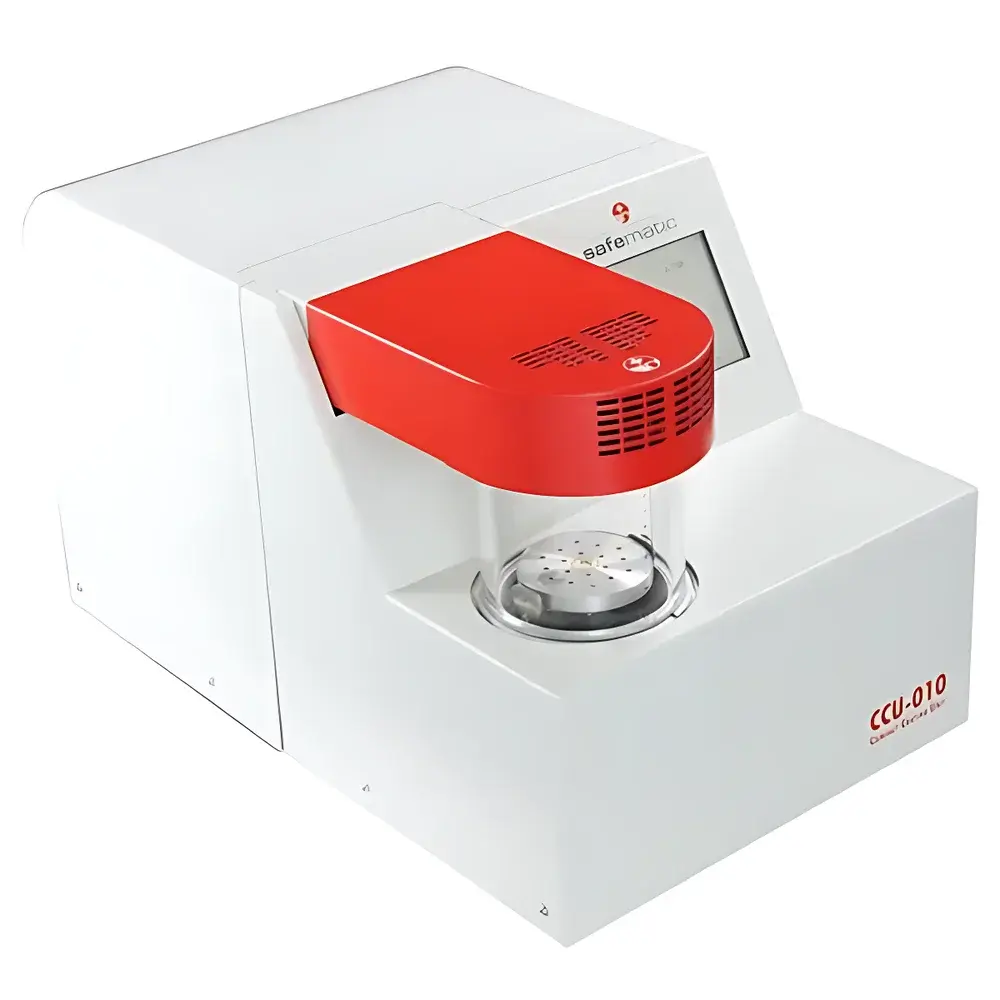
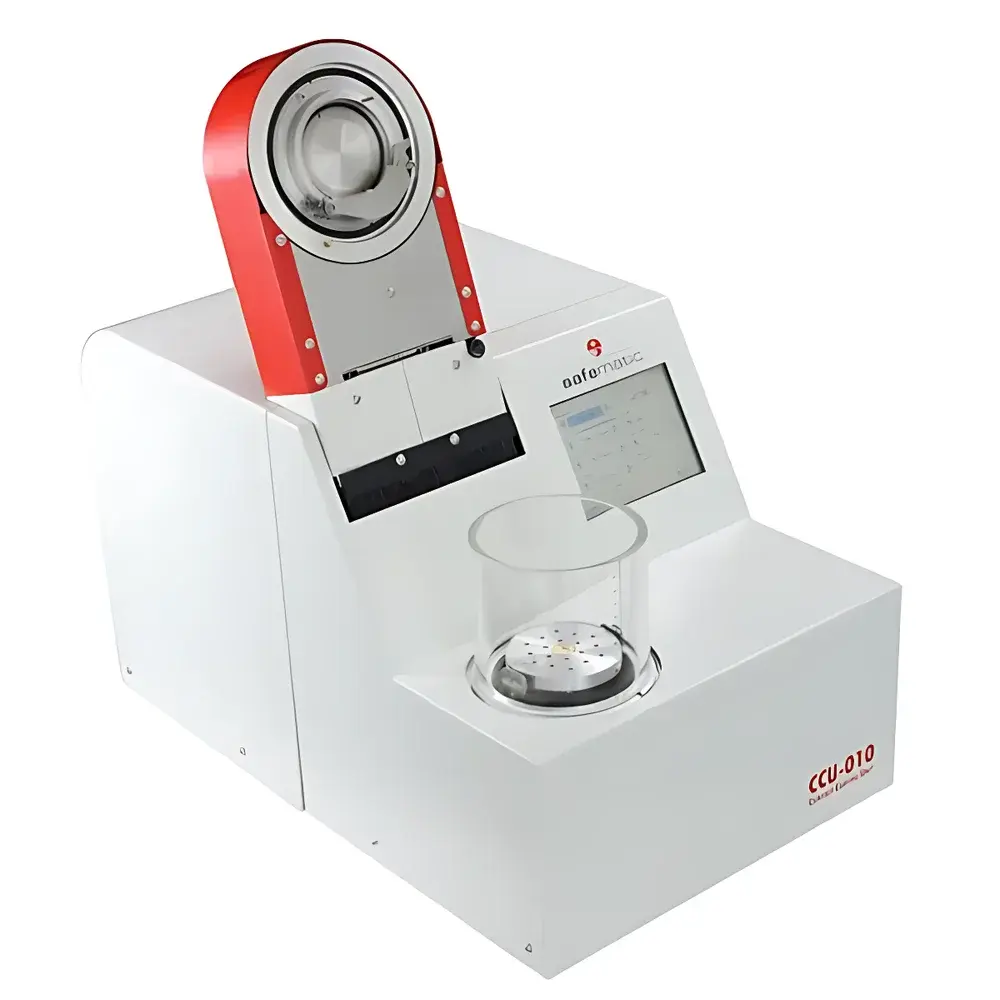
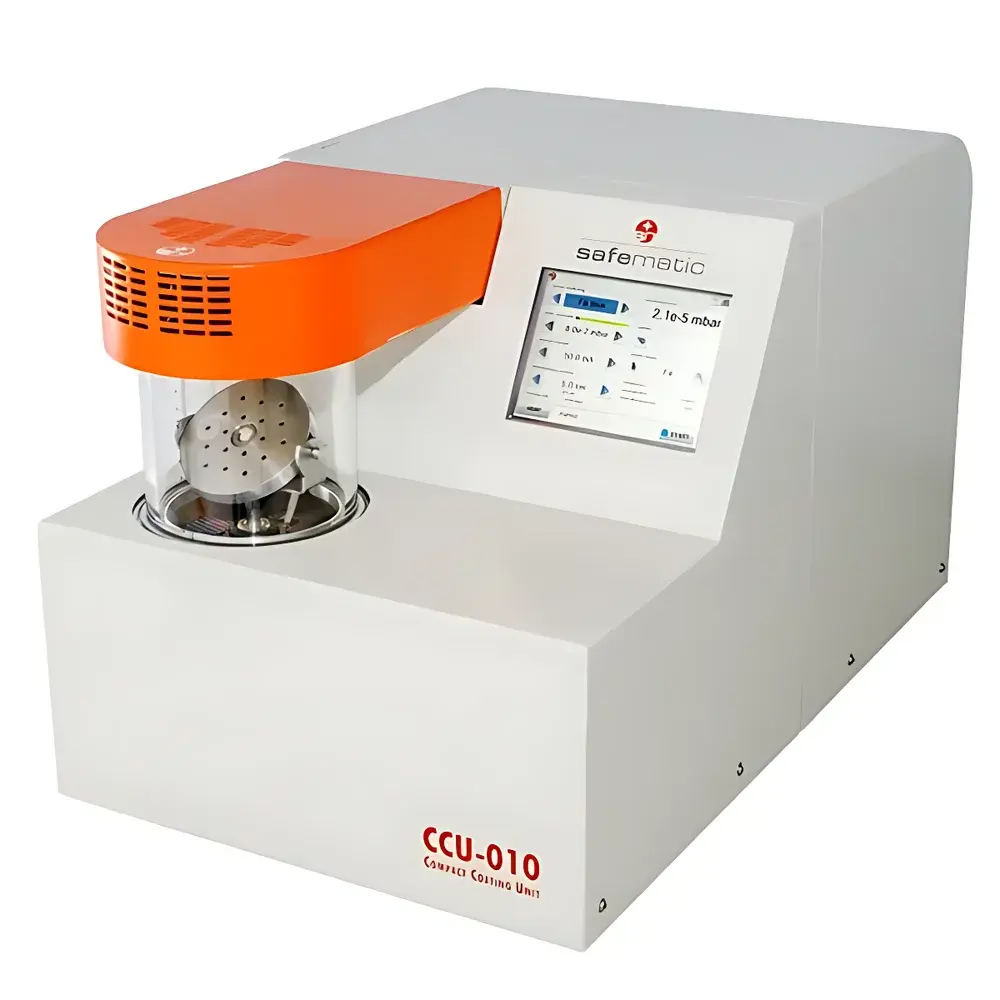
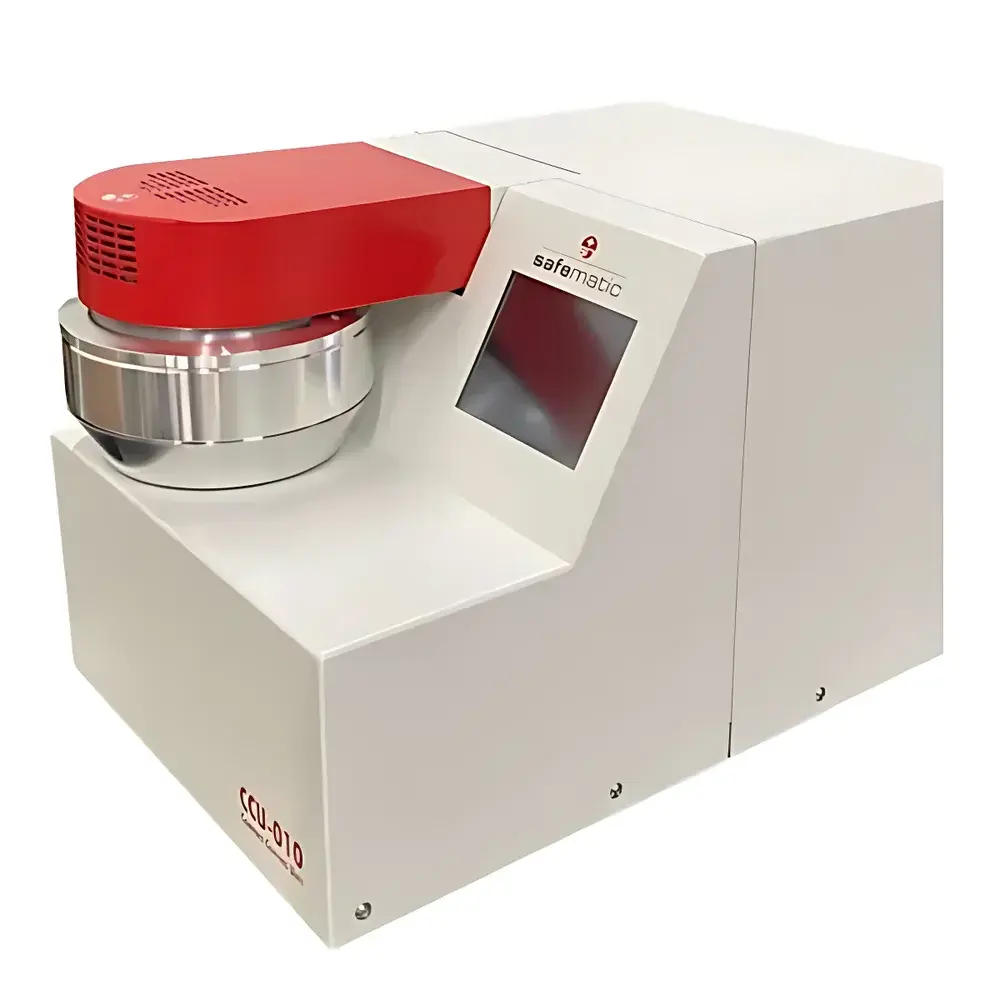
Safematic CCU-010 HV_SP-010 High-Vacuum Magnetron Sputter Coater
| Brand | Safematic |
|---|---|
| Origin | Switzerland |
| Model | CCU-010 HV_SP-010 |
| Sputtering Target Materials | Au, Pt, Cr, Al, Ir, W, C, ferromagnetic materials, ITO, DLC |
| Control Mode | Fully Automatic |
| Sample Stage Diameter | ≥60 mm |
| Sputtering Gas | Argon or Air |
| Vacuum System | Integrated diaphragm pump + turbomolecular pump |
| Vacuum Measurement | Full-range (Pirani + cold cathode gauge) |
| Film Thickness Monitoring | Dual-position FTM sensor with real-time feedback |
Overview
The Safematic CCU-010 HV_SP-010 is a high-vacuum magnetron sputter coater engineered for precision electron microscopy (EM) sample preparation and advanced thin-film deposition applications. Operating on the principle of DC/RF magnetron sputtering under ultra-high vacuum conditions (base pressure ≤5×10⁻⁷ mbar), it enables controlled, uniform, and low-damage metallization of non-conductive specimens for SEM, TEM, and FIB analysis. Its modular architecture integrates sputtering, optional plasma cleaning/etching, and carbon evaporation capabilities—within a single vacuum cycle—minimizing contamination risk and maximizing process reproducibility. Designed and manufactured in Switzerland, the system adheres to stringent mechanical tolerances, electromagnetic shielding standards, and material compatibility requirements for cleanroom-grade operation.
Key Features
- Fully automated high-vacuum operation with TFT touchscreen interface and programmable recipe management—ensuring inter-user and inter-session repeatability.
- Integrated dual-pump vacuum system: oil-free diaphragm pump (foreline) + turbomolecular pump (main chamber), enabling rapid pump-down (<3 min to 1×10⁻⁴ mbar) and stable base pressure maintenance without external plumbing.
- Modular SP-010 and SP-011 sputter heads featuring active water cooling, optimized magnetic field geometry, and extended target utilization—supporting both fine-grain noble metal coating (e.g., Au/Pt for high-resolution SEM) and high-rate deposition of challenging materials (e.g., ITO, DLC, ferromagnetic alloys).
- Dual-position film thickness monitor (FTM) with quartz crystal sensors—calibrated for common sputter targets—providing real-time thickness feedback and endpoint control for sub-nanometer to micrometer-scale depositions.
- Plasma-compatible chamber design with two auxiliary CF-40 flanges for integration of third-party diagnostics (e.g., residual gas analyzers) or process modules (e.g., load-lock interfaces).
- Optional ET-010 plasma etching unit allowing in-situ Ar/O₂/N₂ plasma treatment pre- or post-sputtering—enhancing surface wettability, removing hydrocarbons, improving adhesion, or modifying top-layer chemistry.
Sample Compatibility & Compliance
The CCU-010 HV_SP-010 accommodates standard EM stubs (up to 60 mm diameter), 6-inch wafers (with optional LC-006 aluminum chamber), TEM grids, and custom substrates up to 25 mm thickness. Its inert stainless-steel chamber, electropolished interior, and all-metal seals comply with ISO 14644-1 Class 5 cleanroom requirements when operated in controlled environments. The system supports GLP/GMP-aligned workflows through audit-trail-capable software logging (time-stamped recipes, vacuum logs, sensor readings). While not certified to FDA 21 CFR Part 11 by default, its RC-010 remote control software provides configurable user access levels, electronic signature support, and exportable raw data (CSV, Excel, PNG)—facilitating validation in regulated laboratories.
Software & Data Management
The Windows-based RC-010 control suite enables full remote operation, real-time parameter visualization, and granular process scripting. Users define multi-step protocols—including pump-down sequences, plasma pre-treatment duration, sputtering power ramping, thickness setpoints, and cooldown delays—with millisecond-level timing resolution. All operational data—including chamber pressure profiles, target current/voltage, FTM frequency shifts, and stage temperature—are timestamped and stored locally. Export functions support CSV (for statistical process control), Excel (for QA reporting), and PNG (for publication-ready figures). Firmware updates are delivered via encrypted USB key, maintaining system integrity and traceability per ISO/IEC 17025 calibration documentation requirements.
Applications
- High-fidelity conductive coating of biological tissues, polymers, ceramics, and geological samples prior to SEM imaging—preserving nanoscale morphology and minimizing charging artifacts.
- Deposition of ultrathin (50 nm) Cr or W layers for FIB lift-out support.
- In-situ plasma-assisted surface activation of PDMS, PET, or SiO₂ substrates before metallization—increasing interfacial bond strength by >40% (measured via peel testing per ASTM D903).
- Functional thin-film fabrication for MEMS, photovoltaics, and biosensor development—including ITO transparent electrodes and hydrogenated DLC wear-resistant coatings.
- Carbon-coating of TEM specimens using integrated carbon evaporation mode (optional CCU-010 HV_C variant), with automatic carbon fiber feed mechanism enabling >30 consecutive runs without venting.
FAQ
What vacuum level does the CCU-010 HV achieve, and how is it measured?
The system reaches a base pressure of ≤5×10⁻⁷ mbar using a combination of Pirani (10⁻³–10⁰ mbar) and cold cathode (10⁻⁷–10⁻³ mbar) gauges, providing continuous full-range monitoring.
Can the same chamber be used for both sputtering and carbon evaporation?
Yes—the CCU-010 HV platform supports interchangeable SP-series sputter heads and CE-series carbon evaporators; however, dedicated configurations (e.g., CCU-010 HV_SP-010 vs. CCU-010 HV_C) require hardware reconfiguration.
Is the ET-010 plasma unit compatible with reactive gases other than argon?
Yes—ET-010 accepts Ar, O₂, N₂, and air; gas flow is controlled via mass flow controller (MFC) with adjustable pressure regulation between 1×10⁻² and 1×10⁰ mbar.
How is cross-contamination prevented during multi-target sputtering?
Through physical isolation: each SP module is self-contained with independent shielding, cooling lines, and electrical feeds—allowing hot-swapping without breaking vacuum or exposing adjacent targets.
Does the system meet electromagnetic compatibility (EMC) standards for laboratory use?
Yes—it complies with EN 61326-1:2013 for EMC in laboratory environments and carries CE marking for safe operation within EU regulatory frameworks.



