
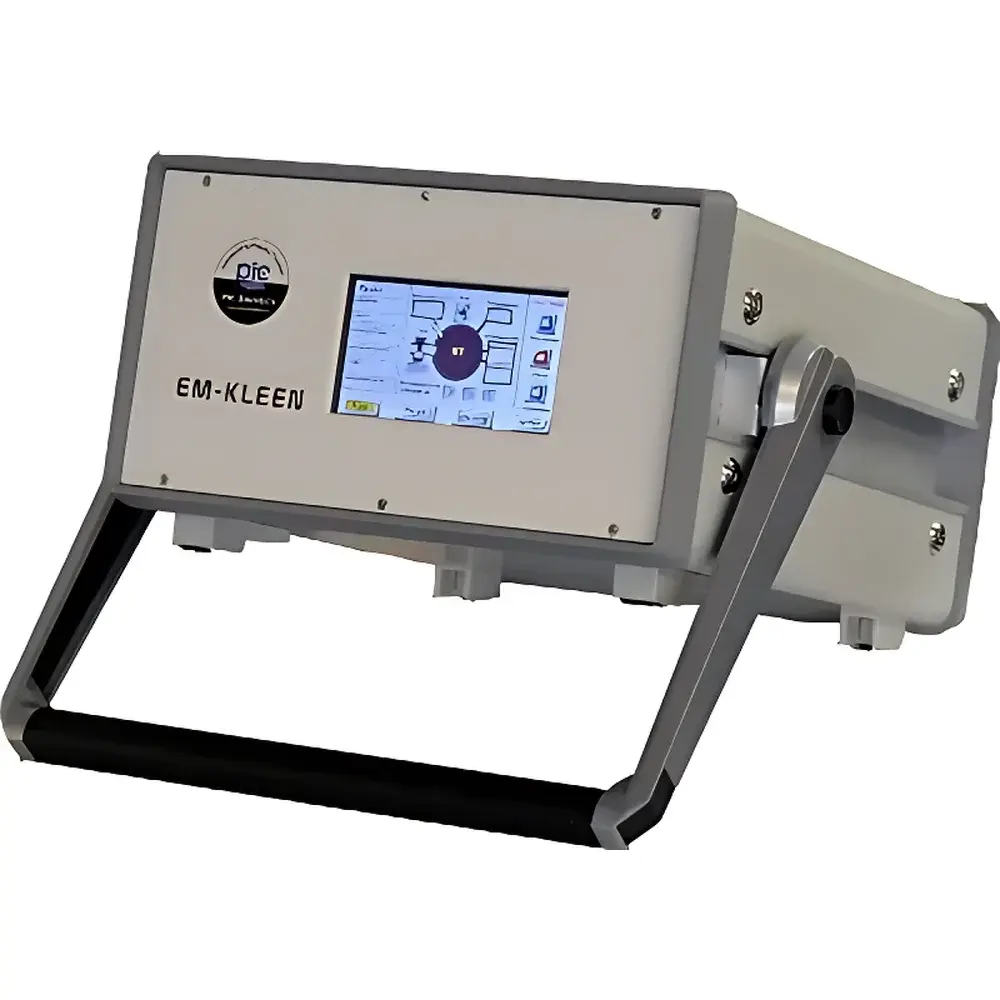
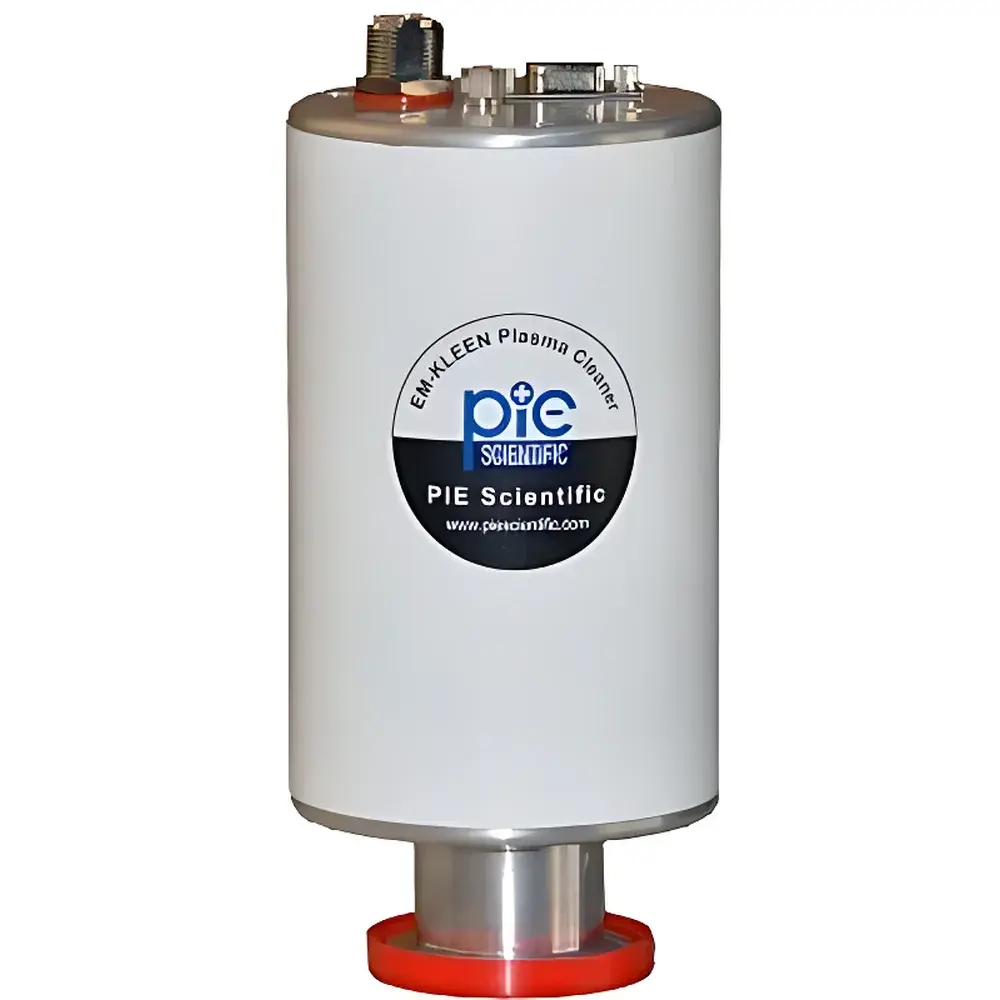
PIE EM-KLEEN Remote Plasma Cleaner for Electron Microscopy Vacuum Chambers
| Brand | PIE |
|---|---|
| Origin | USA |
| Model | EM-KLEEN |
| RF Frequency | 13.56 MHz |
| RF Power | 75 W |
| Control | Fully Automated |
| Gas Configuration | Single- or Triple-Gas Mixing System (O₂, H₂, Ar, N₂, CF₄, NF₃, NH₃, HF, H₂S) |
| Plasma Type | Remote Inductively Coupled Plasma (ICP), Non-Microwave, Non-Underfill, Non-Wafer-Specific |
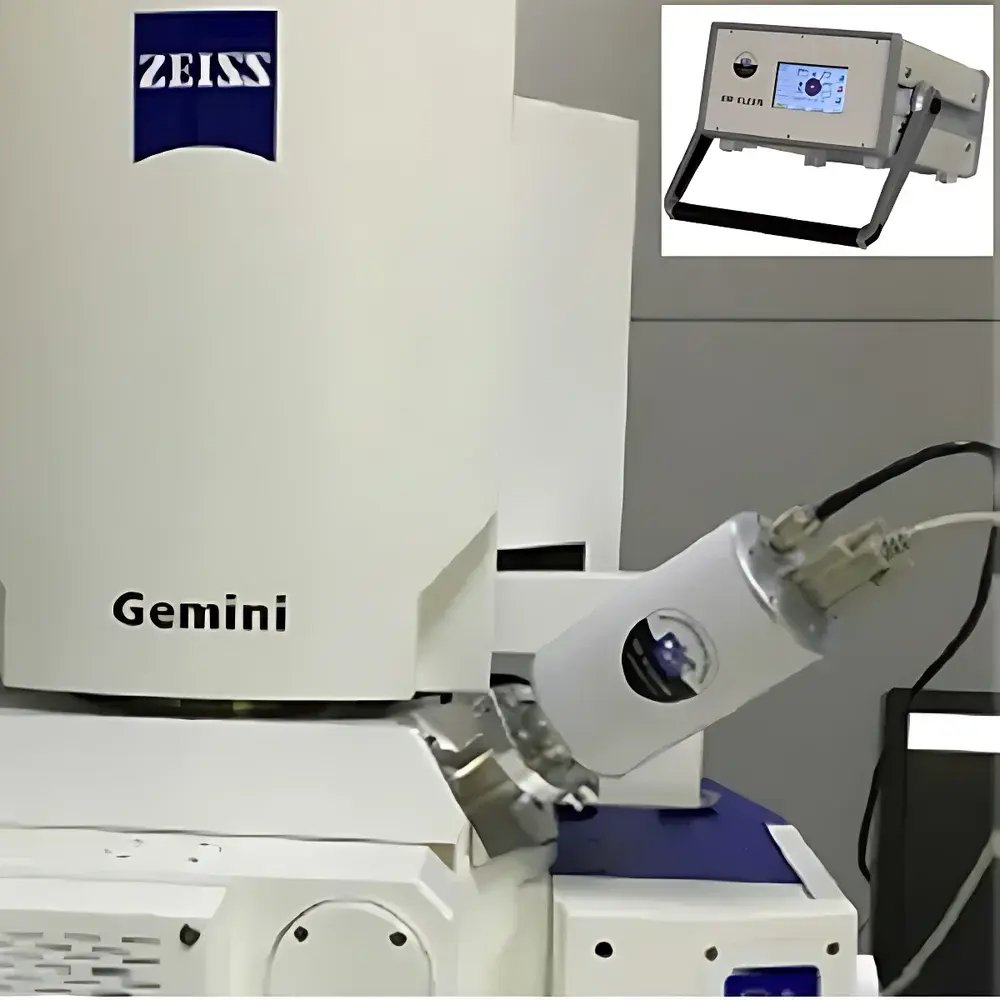
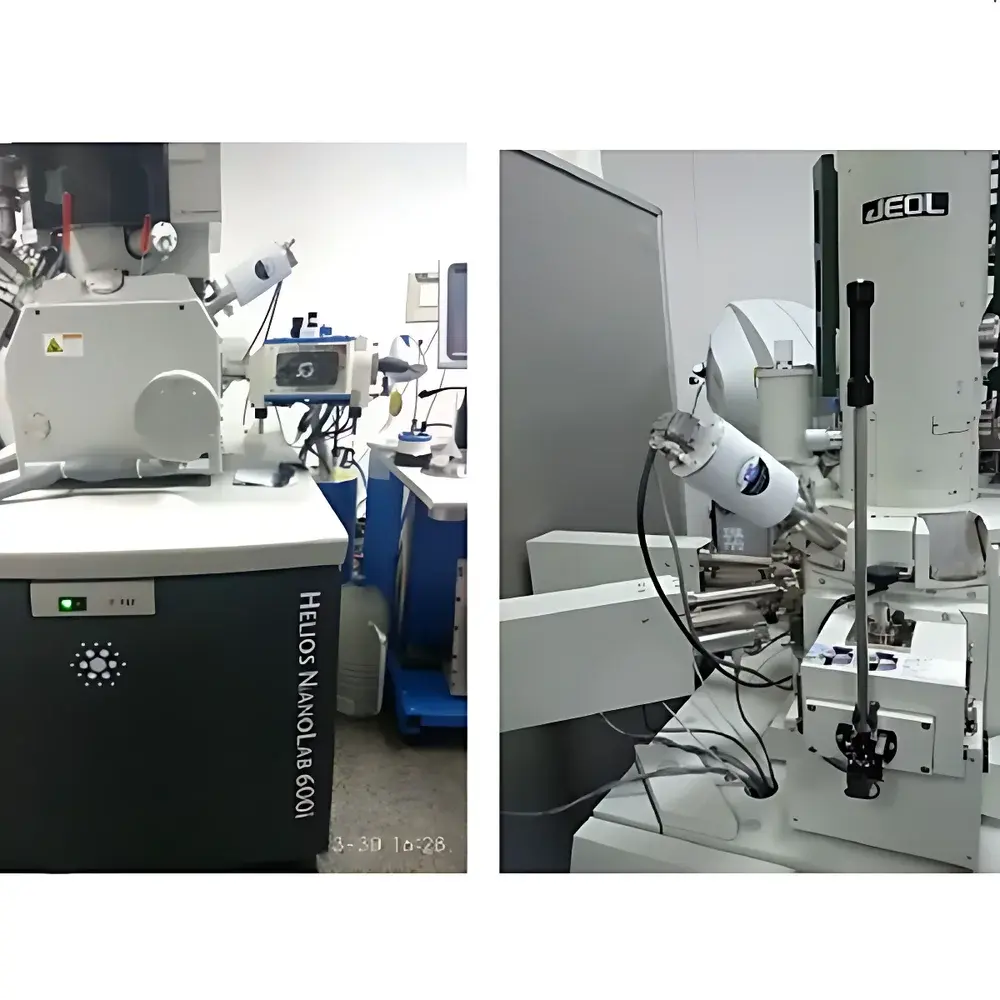
| Chamber Compatibility | Direct integration with SEM, FIB-SEM, TEM, XPS, ALD, CD-SEM, EBR, EBI, EUVL, and other UHV/XHV systems |
| Sample & Chamber Cleaning | Simultaneous in-situ cleaning of both specimen surface and vacuum chamber interior |
| Plasma Intensity Monitoring | Integrated real-time plasma emission sensor |
| Flow Control | Pressure-feedback-based automated mass flow control (no manual needle valve) |
| User Interface | Capacitive touchscreen with 60 programmable cleaning protocols |
| Safety Modes | Dual-mode operation (Smart Safety Mode + Expert Control Mode) |
| Scheduling | SmartSchedule™ logic triggered by chamber venting cycles, sample load count, or time-based intervals |
| Electromagnetic Compatibility | Low-EMI architecture |
| Optional Upgrades | Sapphire plasma tube assembly |
Overview
The PIE EM-KLEEN is a purpose-engineered remote inductively coupled plasma (ICP) cleaner designed exclusively for in-situ, non-invasive decontamination of ultra-high vacuum (UHV) and extreme-high vacuum (XHV) chambers used in electron microscopy and surface science instrumentation. Unlike direct plasma sources, the EM-KLEEN employs a physically separated plasma generation zone—mounted externally to the main vacuum chamber—where 13.56 MHz RF energy dissociates process gases (e.g., O₂, H₂, or reactive mixtures) into highly mobile neutral radicals (e.g., atomic oxygen, hydrogen atoms). These long-lived species diffuse downstream into the chamber under pressure gradient, reacting chemically with hydrocarbon contaminants without inducing ion bombardment, sputtering, or thermal damage. This mechanism ensures simultaneous, residue-free cleaning of optical apertures, detector windows, specimen stages, and sample surfaces—critical for maintaining imaging fidelity, spectroscopic accuracy, and thin-film nucleation integrity in SEM, TEM, FIB-SEM, XPS, and ALD platforms.
Key Features
- Remote ICP architecture operating at 13.56 MHz with precisely regulated 75 W RF power—optimized for radical-dominated chemistry and minimal ion flux.
- Fully automated gas delivery system supporting up to three independently controlled process gases, including aggressive chemistries such as CF₄, NF₃, NH₃, HF, and H₂S—enabled by optional corrosion-resistant mass flow controllers and sapphire plasma tube assembly.
- Real-time plasma intensity monitoring via integrated optical emission sensor, providing quantitative feedback on plasma ignition stability and radical generation consistency.
- Pressure-feedback-driven electronic mass flow control eliminates manual needle valve adjustment and ensures repeatable gas dosing across vacuum conditions from 10⁻⁷ to 10⁻³ mbar.
- Capacitive touchscreen interface with 60 user-definable cleaning protocols—each configurable for gas composition, exposure duration (2–60 s), power ramping, and purge sequence.
- Dual operational modes: Smart Safety Mode enforces interlock-driven constraints (e.g., pressure thresholds, door status, pump status); Expert Control Mode permits granular parameter override for method development and validation.
- SmartSchedule™ logic enables condition-based cleaning—triggered automatically by chamber venting events, cumulative sample load count, or elapsed time—reducing operator dependency and ensuring proactive contamination management.
- Low-EMI design compliant with CISPR 22 Class B limits; silent standby mode minimizes electromagnetic interference with sensitive electron optics and signal detection electronics.
Sample Compatibility & Compliance
The EM-KLEEN is compatible with all standard high-vacuum and ultra-high-vacuum chambers constructed from stainless steel, aluminum, or copper alloys—including those equipped with turbomolecular pumps, cryo-pumps, or ion getter pumps. It requires no interruption to pump operation during cleaning: molecular pumps remain at full speed, preserving base pressure and minimizing system downtime. The device meets SEMI S2-0201 safety guidelines for semiconductor tool integration and supports GLP/GMP-aligned documentation workflows via timestamped protocol execution logs. While not certified to ISO 14644-1 cleanroom classifications (as it operates inside vacuum systems, not ambient environments), its particle generation rate is validated to <0.1 particles ≥0.3 µm per cm²/hour when used with PIE’s proprietary multi-stage gas filtration system (SEMI-KLEEN filter suite), satisfying stringent requirements for contamination-sensitive applications in metrology-grade CD-SEM, EUVL mask inspection, and monolayer ALD.
Software & Data Management
The embedded controller firmware records full audit trails—including date/time stamps, executed protocol ID, gas flow rates, RF power setpoints, chamber pressure history, plasma sensor output, and trigger source (manual, timer, or load-count event). Logs are exportable via USB or Ethernet in CSV format for integration into LIMS or QMS platforms. The system supports 21 CFR Part 11-compliant electronic signatures when deployed with external authentication servers; user access levels (Operator, Technician, Administrator) are enforced through password-protected role assignment. No cloud connectivity is enabled by default—data residency remains fully on-device unless explicitly configured per site IT policy.
Applications
- Restoration of SEM/TEM image contrast and resolution degraded by carbonaceous deposits on apertures, detectors, and pole pieces.
- Pre-deposition conditioning of substrates in ALD and MBE systems to eliminate adventitious carbon and improve interfacial adhesion of atomic-layer films.
- In-situ cleaning of XPS sample stages and analyzer entrance cones to prevent spectral artifacts from hydrocarbon-induced peak broadening or false C 1s signals.
- Maintenance of EUVL reflective optics and mask handling chambers where sub-nanometer carbon growth directly impacts reflectivity at 13.5 nm wavelength.
- Removal of pump oil residues and silicone-based vacuum greases from FIB-SEM gas injection system nozzles and deposition precursors.
- Routine decontamination of EBR (electron beam lithography) columns to suppress beam drift caused by insulating hydrocarbon buildup on alignment electrodes.
FAQ
Does the EM-KLEEN require breaking vacuum to operate?
No. It is designed for continuous in-situ operation without venting the chamber or stopping turbomolecular pumps.
Can it be integrated with existing vacuum interlocks and PLC systems?
Yes. Digital I/O ports support hardwired interlock signaling (e.g., chamber pressure OK, door closed, pump running), and Modbus TCP is available for higher-level SCADA integration.
What is the typical lifetime of the plasma source tube?
With proper gas filtration and routine maintenance, the standard quartz tube exceeds 5,000 hours; optional sapphire tubes extend service life beyond 10,000 hours in corrosive gas environments.
Is ozone generation a concern during O₂ plasma operation?
Ozone formation is minimized by optimized residence time and downstream radical quenching; residual ozone is fully removed by standard vacuum pumping and does not accumulate in UHV chambers.
How is process reproducibility ensured across different instruments and labs?
Protocol standardization, pressure-compensated flow control, real-time plasma monitoring, and traceable calibration of RF power and gas delivery ensure method transferability per ASTM E2913-21 guidelines for plasma-based surface preparation.



