
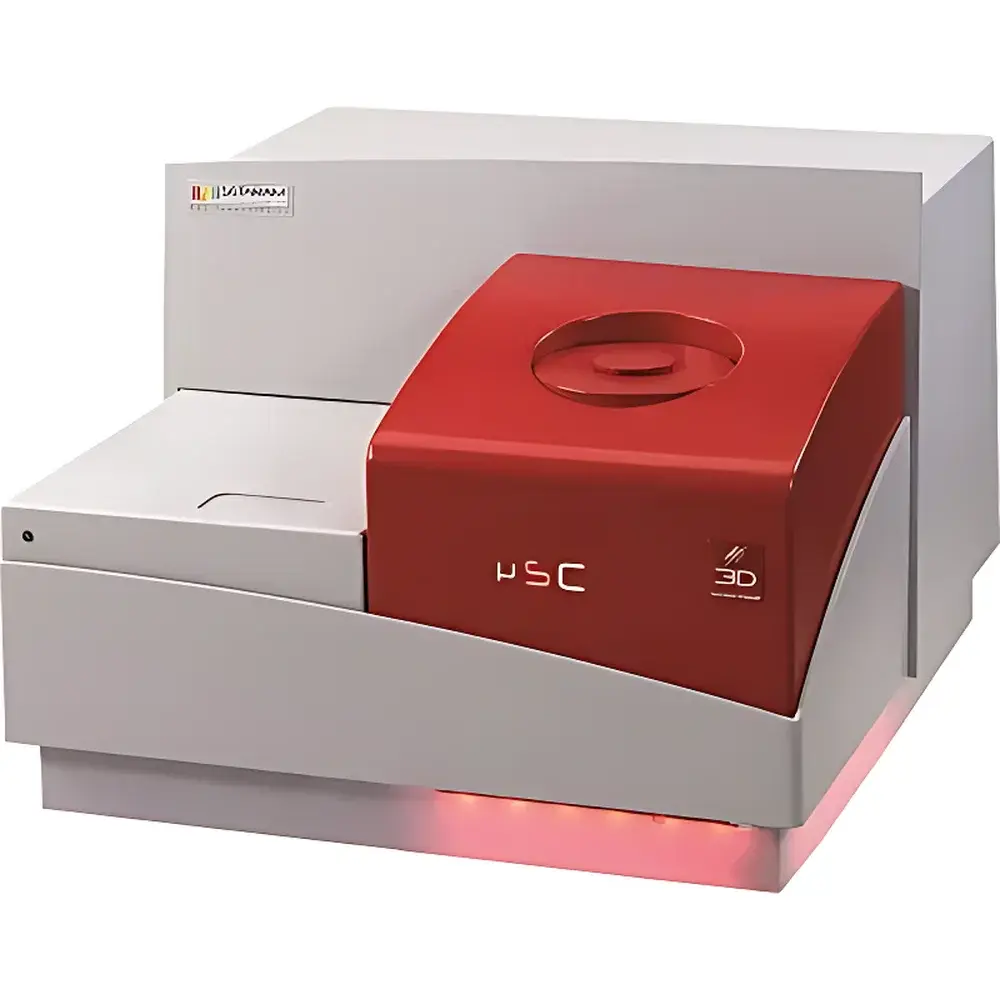
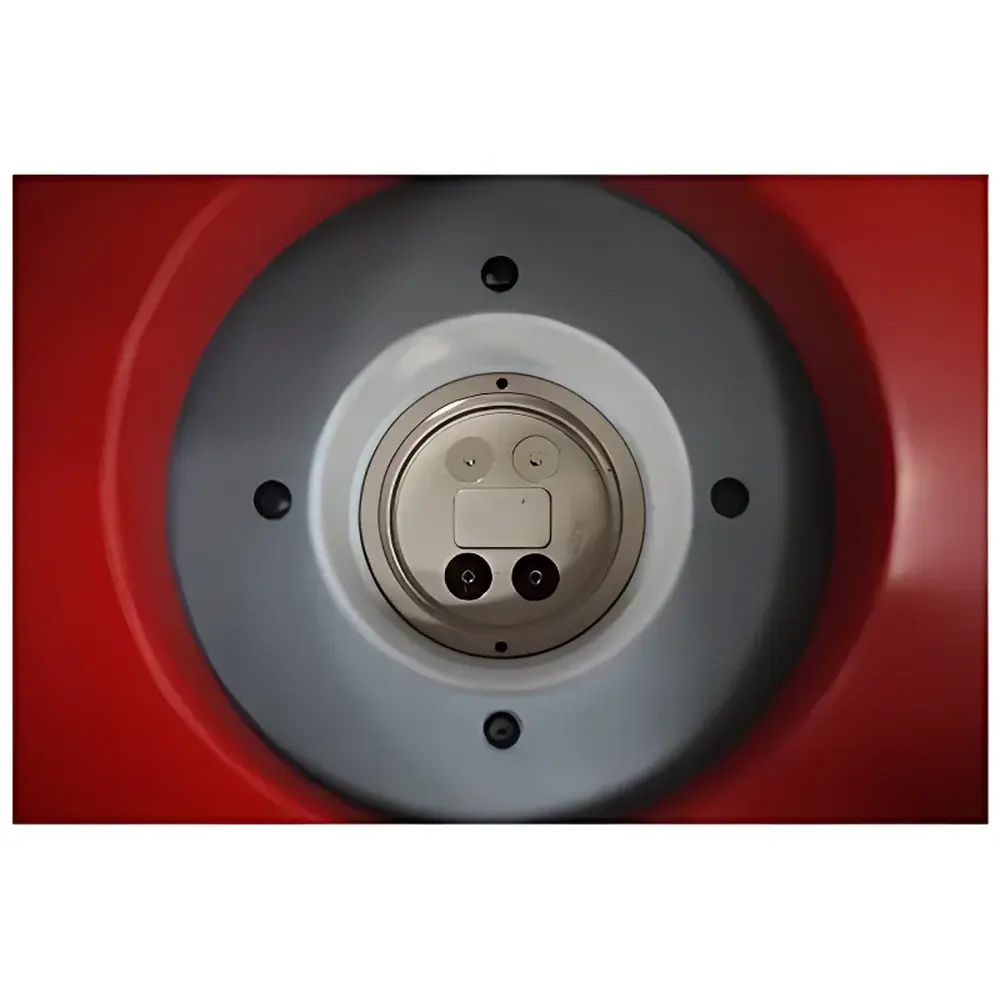
SETARAM uSC Microcalorimeter
| Brand | SETARAM |
|---|---|
| Origin | France |
| Model | uSC |
| Temperature Range | -40 °C to 200 °C |
| Temperature Accuracy | ±0.1 °C |
| Heating/Cooling Rate | 0.001–1.2 K/min |
| Calorimetric Channels | 4 (2 sample + 2 reference) |
| Sample Cell Volume | 850 µL |
| Baseline Noise | 0.2 µW RMS |
| Sensitivity (Joule effect at 30 °C) | 100 µV/mW |
| Enthalpy Accuracy | ±1% |
| Calorimetric Precision | ±0.1% RMS |
| DSC Resolution | 0.02 µW / 0.002 µW |
| Pressure Range (measurable & controllable) | 400 bar (5800 psi) |
Overview
The SETARAM uSC Microcalorimeter is a high-precision, four-channel heat-flow calorimeter engineered for quantitative thermodynamic characterization of biological, pharmaceutical, and soft-matter systems under controlled temperature and pressure conditions. Unlike conventional differential scanning calorimeters (DSC), the uSC implements SETARAM’s proprietary CALVET-based 3D-sensor technology — a true three-dimensional heat-flux detection architecture that captures total thermal power across all spatial directions. This design eliminates directional bias and ensures near-ideal thermal coupling between sample and sensor, delivering exceptional baseline stability (<0.2 µW RMS noise), high sensitivity (100 µV/mW at 30 °C), and reproducible enthalpy accuracy of ±1%. The instrument operates in both isothermal and dynamic temperature-scan modes over a wide range from –40 °C to 200 °C, with programmable heating/cooling rates spanning 0.001–1.2 K/min. Its ability to maintain ultra-low drift over extended periods (e.g., multi-day isothermal titrations or slow-phase transition monitoring) makes it uniquely suited for detecting weak, cumulative, or time-dependent thermal events—such as protein folding intermediates, enzyme kinetics, polymer crystallization nucleation, or low-energy adsorption/desorption processes.
Key Features
- True 3D-sensor calorimetry based on CALVET principle for isotropic heat detection and minimized thermal lag
- Four independent calorimetric channels (2 sample + 2 reference) enabling parallel experiments or internal referencing
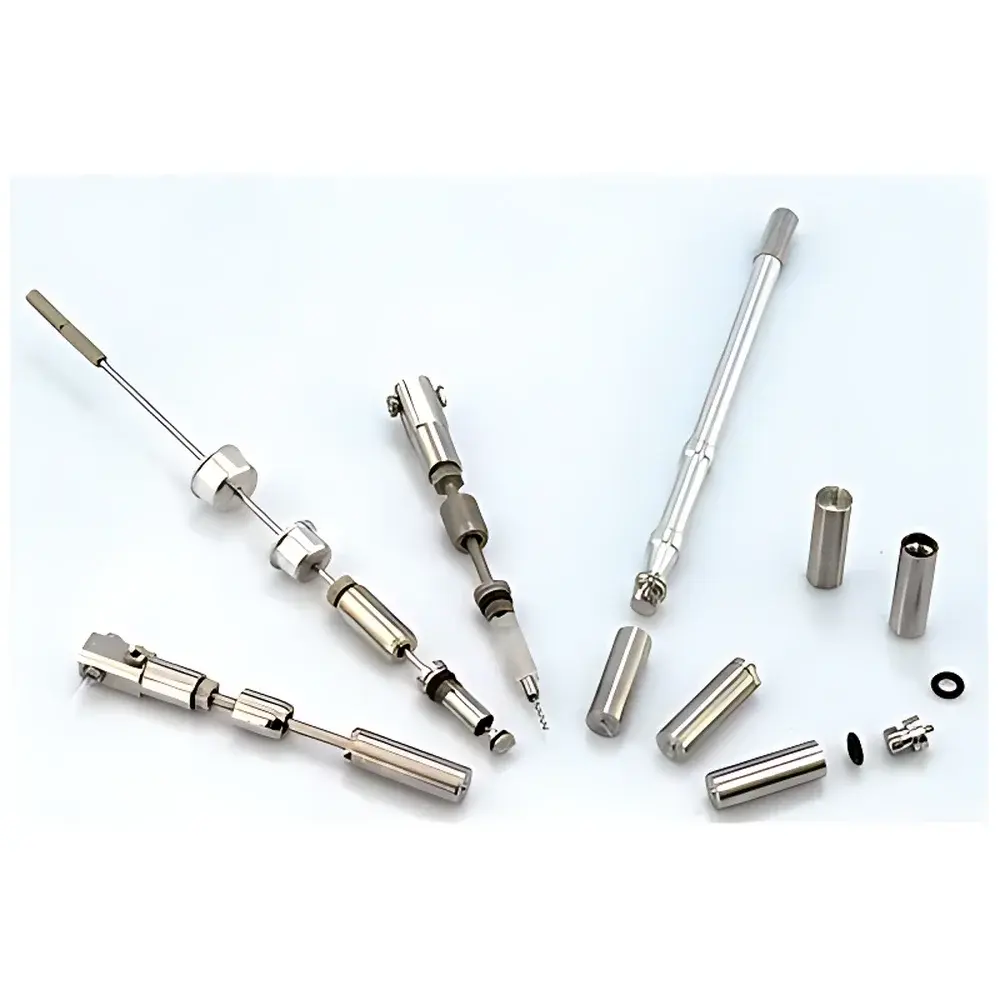
- Modular, application-specific reaction cells: sealed batch cells, mixing-intermittent cells, fluid circulation cells, ampoule cells, liquid heat-capacity cells, and Joule-effect verification cells
- Integrated fluid handling: programmable syringe-driven dosing, magnetic stirring, and continuous flow capability for real-time mixing, dilution, neutralization, and enzymatic reactions
- High-pressure operation up to 400 bar (5800 psi), fully monitored and regulated—enabling studies of gas dissolution, supercritical fluid interactions, or pressurized biocatalysis
- Large-volume sample compatibility (up to 850 µL) without compromising sensitivity, accommodating heterogeneous suspensions, gels, emulsions, and powdered solids
- Exceptional long-term baseline stability and sub-microwatt resolution (0.002 µW DSC resolution), validated per ISO 11357-1 and ASTM E1269
Sample Compatibility & Compliance
The uSC supports diverse physical states—including aqueous solutions, colloidal dispersions, lyophilized powders, hydrogels, viscous melts, and suspended particulates—without requiring extensive sample preparation. Its cell portfolio enables direct simulation of industrially relevant processes: solid–liquid hydration (e.g., excipient–API compatibility), liquid–liquid phase separation, gas–liquid absorption, and interfacial wetting dynamics. All cells are constructed from chemically inert, high-purity materials (e.g., Hastelloy C-276, sapphire, fused silica) to ensure compatibility with aggressive solvents, biological buffers, and acidic/basic reagents. The system complies with GLP and GMP documentation requirements; audit trails, electronic signatures, and full data integrity (per FDA 21 CFR Part 11) are supported via the integrated IAMS software platform. Calibration protocols follow ISO/IEC 17025 guidelines, with traceability to NIST-standard reference materials for temperature and enthalpy.
Software & Data Management
The uSC is operated through SETARAM’s Intelligent Application Management System (IAMS), a validated Windows-based platform designed for regulated environments. IAMS provides complete experiment scripting—including multi-step temperature ramps, automated titration sequences, pressure ramping profiles, and real-time feedback control loops. Raw heat-flow signals are acquired at 10 Hz with 24-bit resolution and stored in vendor-neutral HDF5 format, ensuring long-term accessibility and third-party analysis compatibility (e.g., Python, MATLAB, Origin). All data files embed metadata (user ID, timestamp, cell ID, calibration history, environmental logs), and changes to method parameters or post-acquisition processing are immutably logged. Batch reporting tools generate PDF/Excel summaries compliant with internal SOPs or regulatory submissions (e.g., ICH Q5C, USP , EP 2.2.43).
Applications
- Biopharmaceutical development: protein thermal stability (Tm, ΔH), aggregation onset, ligand-binding thermodynamics (ITC-mode equivalents), and formulation screening
- Food science: starch gelatinization kinetics, fat crystallization polymorphism, moisture sorption enthalpy, and enzyme inactivation profiles
- Materials science: polymer miscibility assessment, crosslinking exotherms, nanocomposite interfacial energy quantification, and catalyst deactivation thermodynamics
- Geochemical & environmental research: mineral hydration/dehydration, clay–water interaction enthalpies, and CO2 sequestration reaction calorimetry under elevated pCO2
- Academic enzymology: Michaelis–Menten parameter derivation from real-time calorimetric progress curves, cofactor binding stoichiometry, and allosteric modulation energetics
FAQ
What distinguishes the uSC from conventional DSC instruments?
The uSC employs CALVET-based 3D-sensor technology—not heat-flux or power-compensation DSC—providing absolute heat-flow measurement with minimal baseline drift, higher signal-to-noise ratio, and inherent compatibility with complex sample rheologies and high-pressure environments.
Can the uSC perform isothermal titration calorimetry (ITC)?
While not an ITC-dedicated platform, the uSC’s precise syringe-controlled dosing, real-time heat integration, and low-noise baseline enable robust thermodynamic titration experiments—including binding affinity (Kd), stoichiometry (n), and enthalpy (ΔH) determination—for proteins, nucleic acids, and supramolecular systems.
Is pressure control fully automated and logged?
Yes. Pressure is actively regulated via a digital servo-controlled pump, with continuous logging of setpoint, actual pressure, and safety interlock status—all embedded in the primary data file and audit trail.
How is calibration verified across the operating temperature range?
Temperature calibration uses certified indium, tin, zinc, and bismuth standards (ASTM E967); enthalpy calibration employs high-purity benzoic acid and potassium chloride solutions. Full validation reports are generated per run and archived with raw data.
Are custom cell geometries available for specialized applications?
SETARAM offers engineering collaboration for application-specific cell design—including microfluidic integration, electrochemical coupling, or optical access—subject to feasibility review and qualification testing per ISO 17025.



