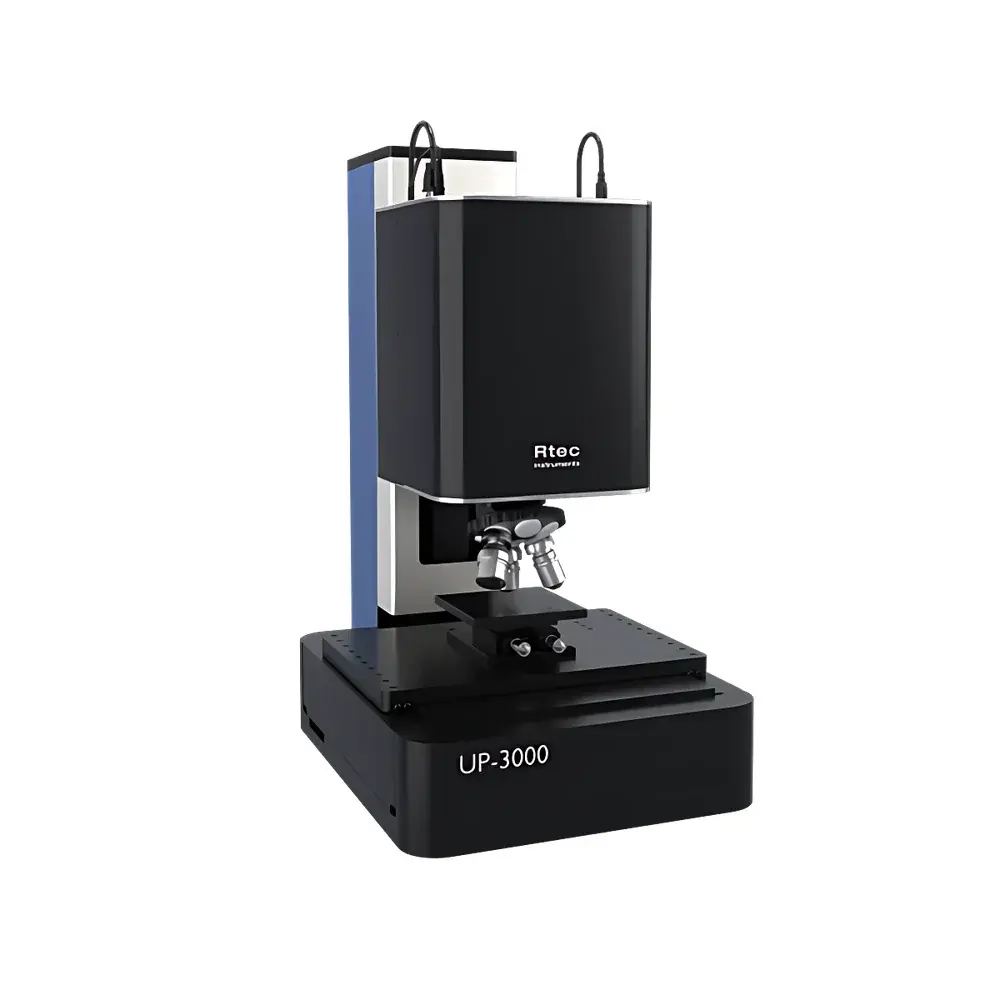
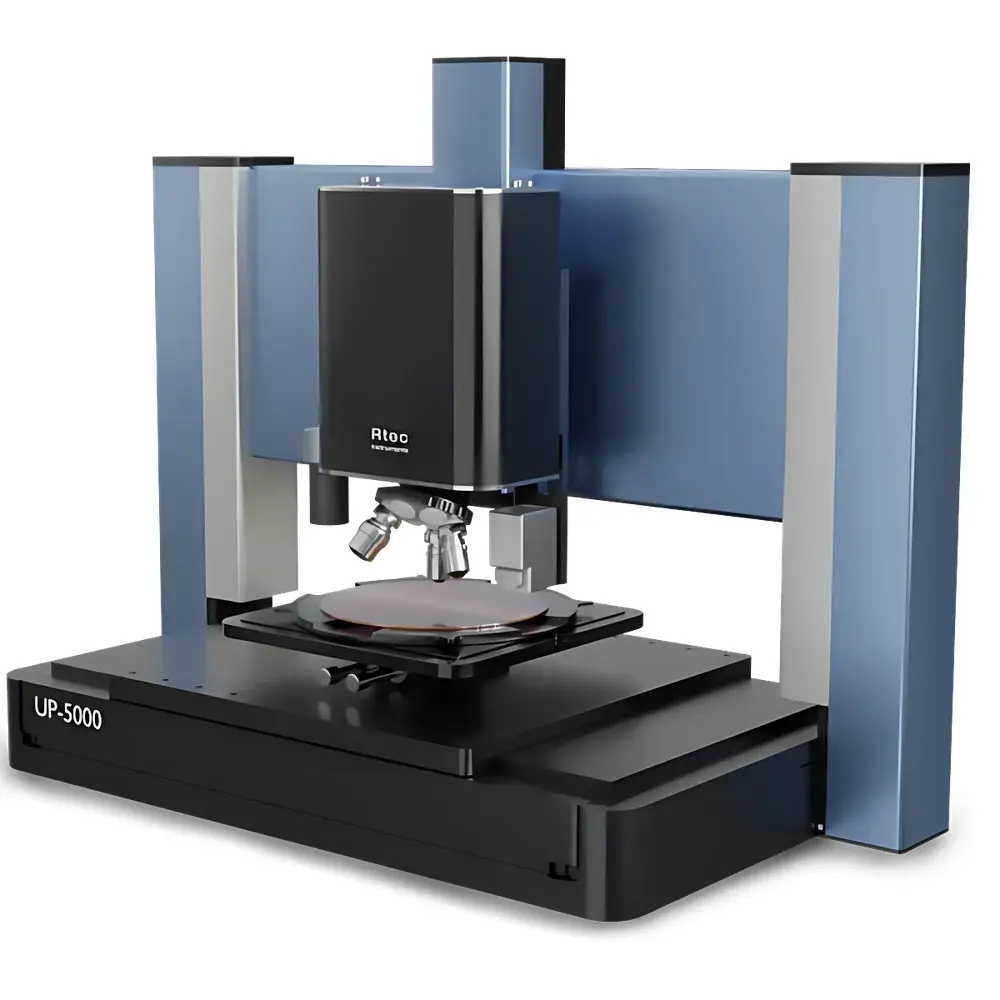
Rtec UP Series Confocal 3D Surface Profilometer
| Brand | Rtec |
|---|---|
| Origin | Switzerland |
| Model | UP Series |
| Product Type | Non-contact Profilometer / Roughness Analyzer |
| Working Principle | White-light Interferometry |
| Camera Resolution | 5 MP Auto-Focus CCD |
| Lateral Sampling Resolution | Adjustable down to 0.05 µm |
| Optical Contrast Modes | Brightfield, Darkfield, Optical DIC |
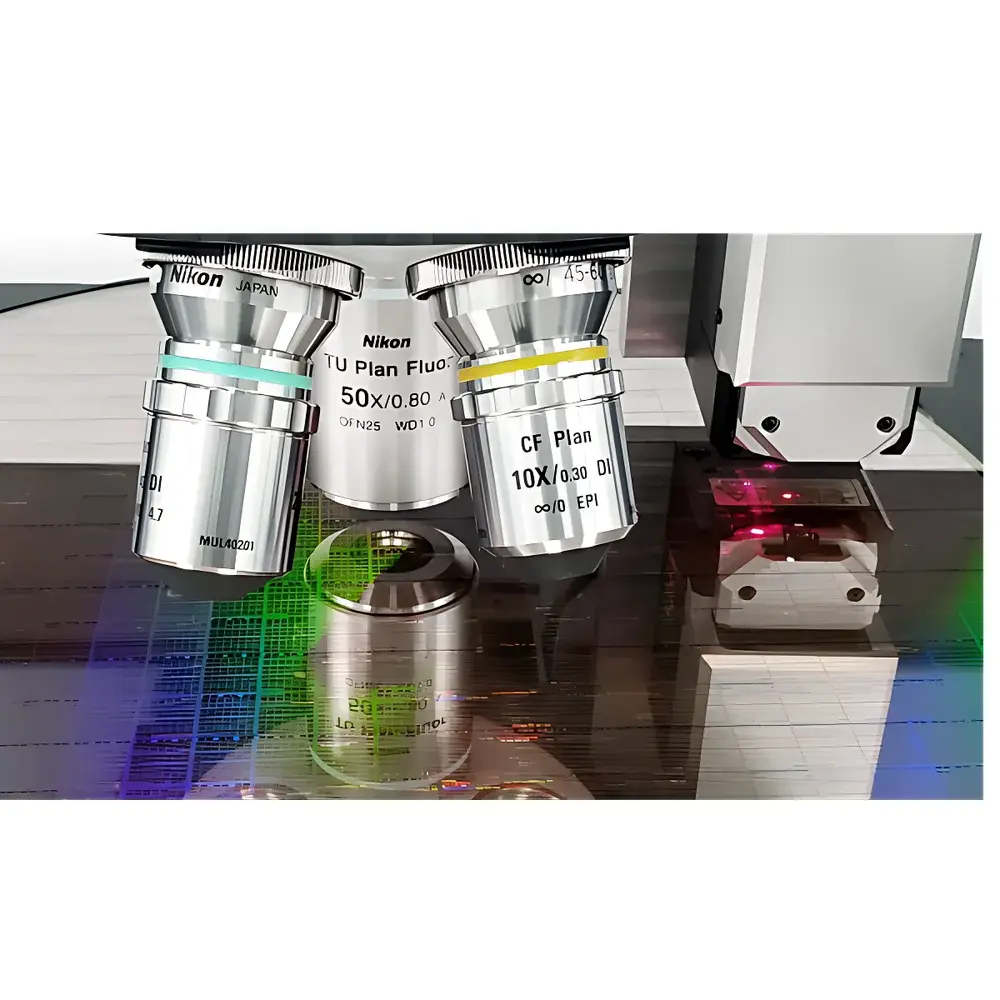
| Objective Compatibility | Long-working-distance telecentric objectives |
| Application Scope | Transparent thin films, high-aspect-ratio structures, steep slopes, reflectivity-agnostic surface topography |
| Stability | High mechanical and thermal stability |
Overview
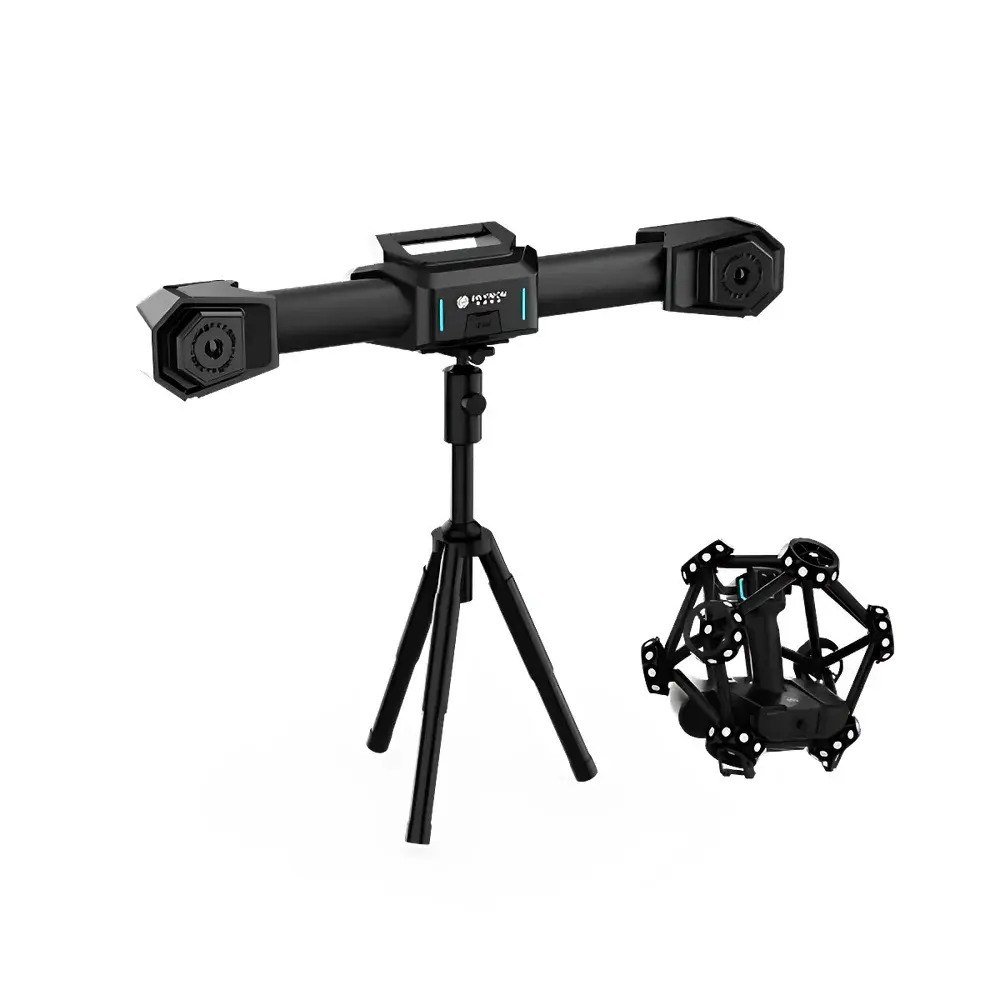
The Rtec UP Series Confocal 3D Surface Profilometer is an advanced non-contact metrology system engineered for high-fidelity, quantitative surface topography characterization at micro- and nanoscale resolution. Leveraging white-light interferometry combined with precision confocal scanning architecture, the instrument delivers sub-micron vertical repeatability and exceptional lateral resolution—down to 0.05 µm—without physical contact or sample preparation. Its core optical design integrates a high-speed rotating disk confocal unit with a 5-megapixel auto-focus CCD imaging sensor, enabling rapid acquisition of dense 3D point clouds across complex geometries. Unlike stylus-based profilometers, the UP Series eliminates tip wear, ploughing artifacts, and measurement uncertainty associated with probe-sample interaction. It is particularly suited for applications requiring traceable, ISO-compliant surface texture analysis—including roughness (Ra, Rq, Rz), step height, curvature, volume, and slope—across optically diverse materials such as silicon wafers, optical coatings, MEMS devices, biomedical implants, and transparent multilayer stacks.
Key Features
- Rotating-disk confocal scanning mechanism for high-speed, vibration-resistant vertical profiling
- 5 MP auto-focus CCD sensor with real-time image optimization and dynamic exposure control
- Lateral sampling resolution adjustable from 0.05 µm to >1 µm via objective selection and pixel binning
- Multi-contrast optical imaging: simultaneous brightfield, darkfield, and optical differential interference contrast (DIC) modes for enhanced edge detection and phase-sensitive features
- Long-working-distance telecentric objectives supporting measurements on high-aspect-ratio structures (e.g., trenches >50:1) and steep sidewalls (>70°)
- Reflectivity-agnostic operation: robust performance on low-reflectance (e.g., black silicon) and highly reflective (e.g., gold-coated) surfaces without gain adjustment or signal saturation
- Thermally stabilized optical bench and passive damping platform ensuring measurement reproducibility over extended acquisition sequences
Sample Compatibility & Compliance
The UP Series accommodates a broad range of sample types—including transparent thin films (SiO₂, SiNₓ, polymer layers), semiconductor substrates, ceramic components, and biocompatible coatings—without requiring conductive coating or vacuum environments. Its non-destructive methodology complies with ASTM E2921 (Standard Guide for Measuring Surface Topography Using Confocal Microscopy), ISO 25178-2 (Geometrical Product Specifications – Surface Texture), and supports GLP/GMP-aligned workflows through audit-trail-enabled software logging. All measurements are traceable to NIST-traceable reference standards, and the system supports calibration verification per ISO/IEC 17025 requirements when operated within accredited laboratory environments.
Software & Data Management
Controlled by Rtec’s proprietary MetroPro™ software suite, the UP Series provides intuitive workflow-driven acquisition, real-time 3D visualization, and standardized parameter extraction per ISO 4287 and ISO 25178-601. The software includes batch processing, multi-region-of-interest (ROI) analysis, cross-section generation, and automated report export in PDF, CSV, and XML formats. Full data provenance is maintained via embedded metadata (operator ID, timestamp, environmental conditions, calibration status), and optional 21 CFR Part 11 compliance modules support electronic signatures, role-based access control, and immutable audit trails for regulated industries.
Applications
- Quantitative roughness mapping of polished optical surfaces and laser optics
- Thickness and uniformity assessment of spin-coated polymer films and ALD-deposited layers
- Defect inspection and morphology analysis of microfluidic channel walls and photomask patterns
- Wear scar depth and volume quantification in tribological testing of coated bearings
- Surface finish validation of additive-manufactured metal parts (e.g., Ti-6Al-4V, Inconel 718)
- Topographic correlation with AFM and SEM datasets for multimodal metrology integration
FAQ
What surface materials can be measured without coating or preparation?
The UP Series measures bare metals, oxides, polymers, glasses, and biological tissues directly—no sputter coating or vacuum required.
Is the system capable of measuring transparent thin films on silicon substrates?
Yes. The white-light interferometric engine resolves film thickness and interfacial topography using spectral phase analysis, validated per ISO 15630-3 for optical thin-film metrology.
How is vertical resolution verified and maintained over time?
Calibration is performed using certified step-height standards (e.g., NIST SRM 2160); drift compensation algorithms correct for thermal expansion during long-duration scans.
Can the software generate ISO-compliant roughness reports automatically?
Yes. MetroPro™ exports fully annotated Ra, Rq, Rsk, Rku, and hybrid parameters aligned with ISO 25178-2 and ASME B46.1, including uncertainty estimates.
Does the system support integration into automated production lines?
Optional Ethernet/IP and Modbus TCP interfaces enable OEM-level integration with PLCs and MES platforms for inline SPC monitoring.