
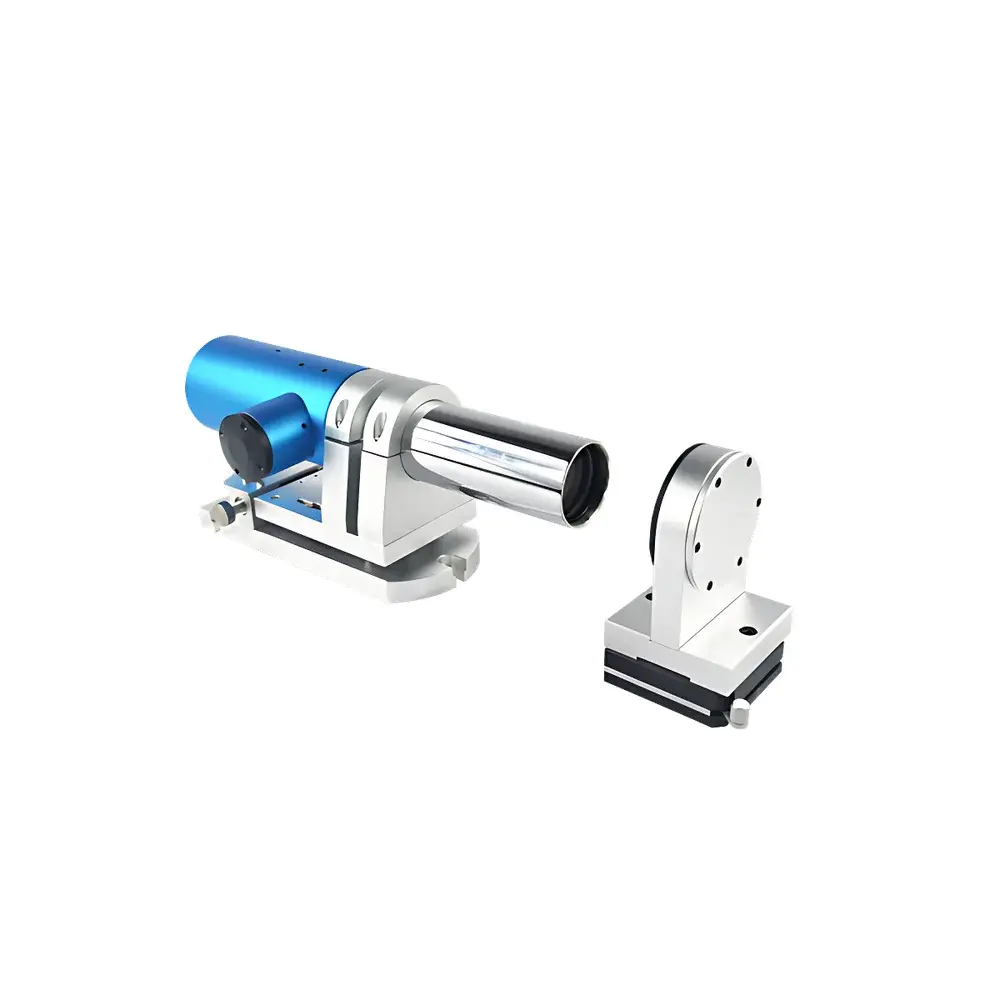
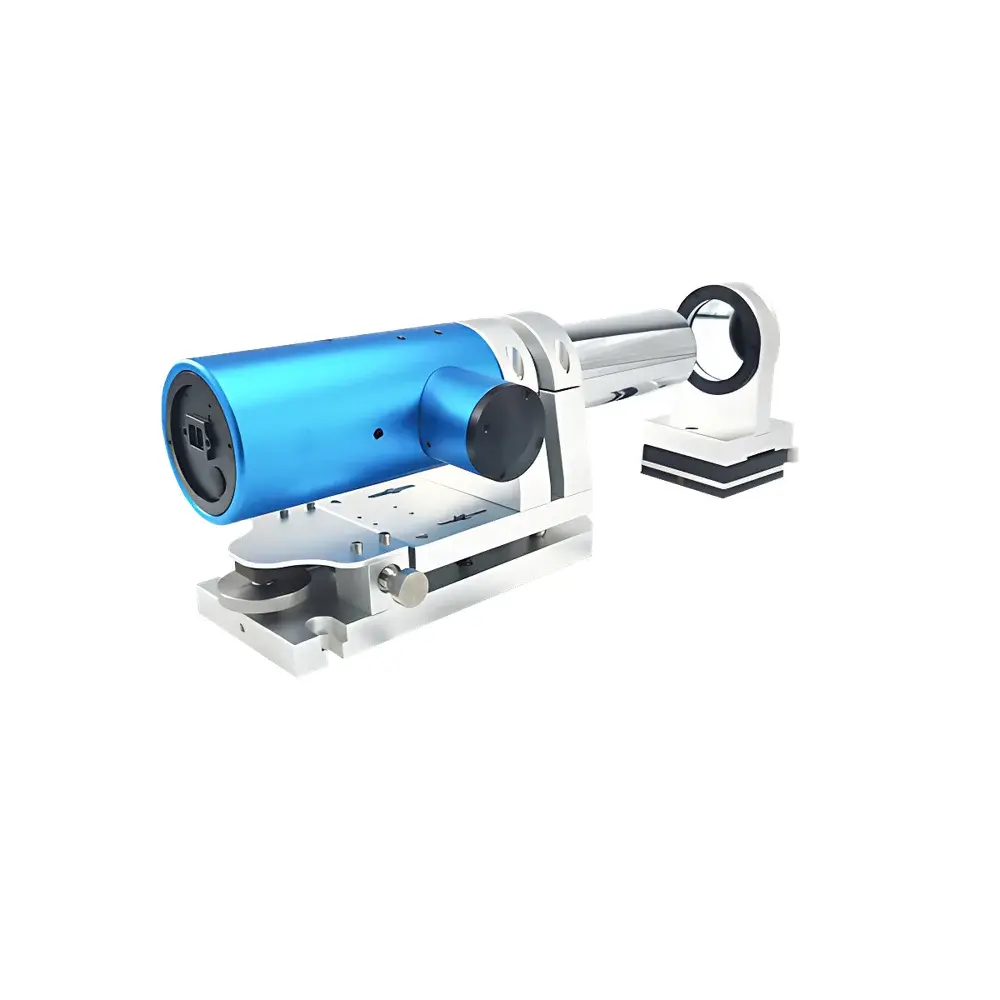
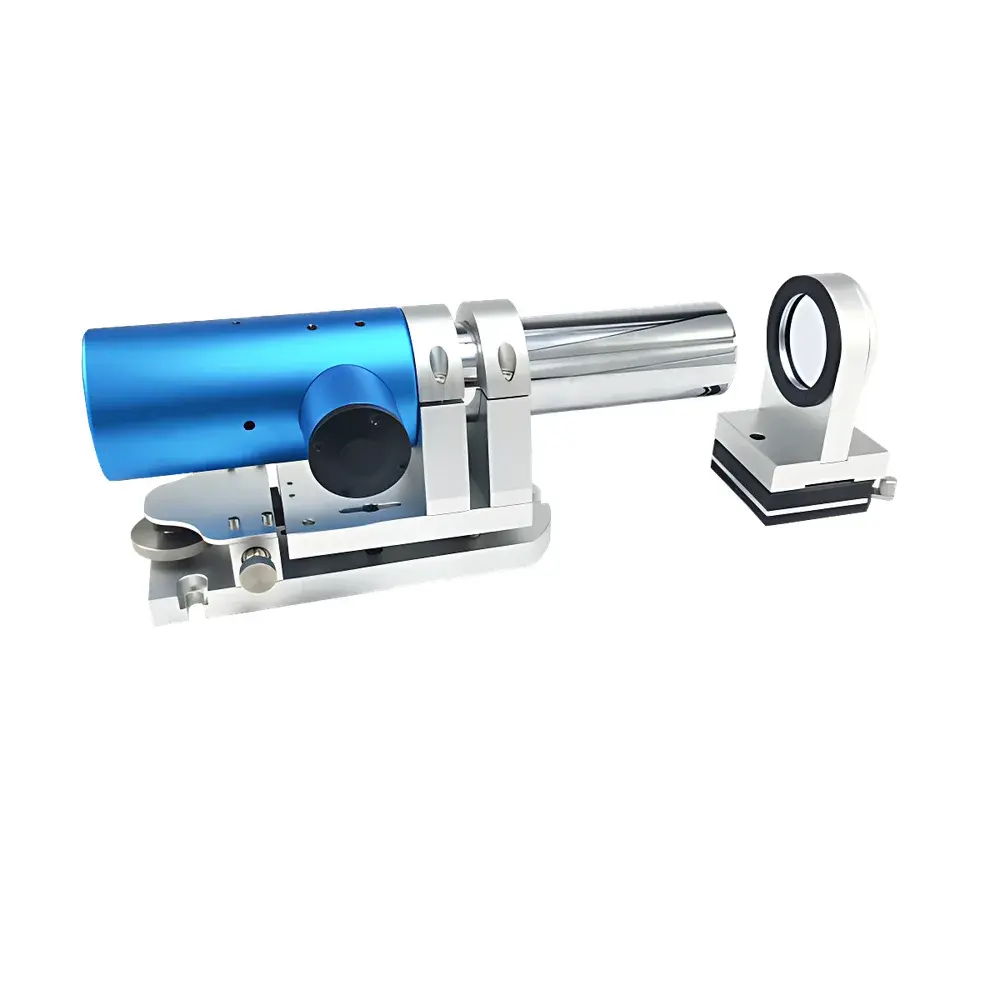
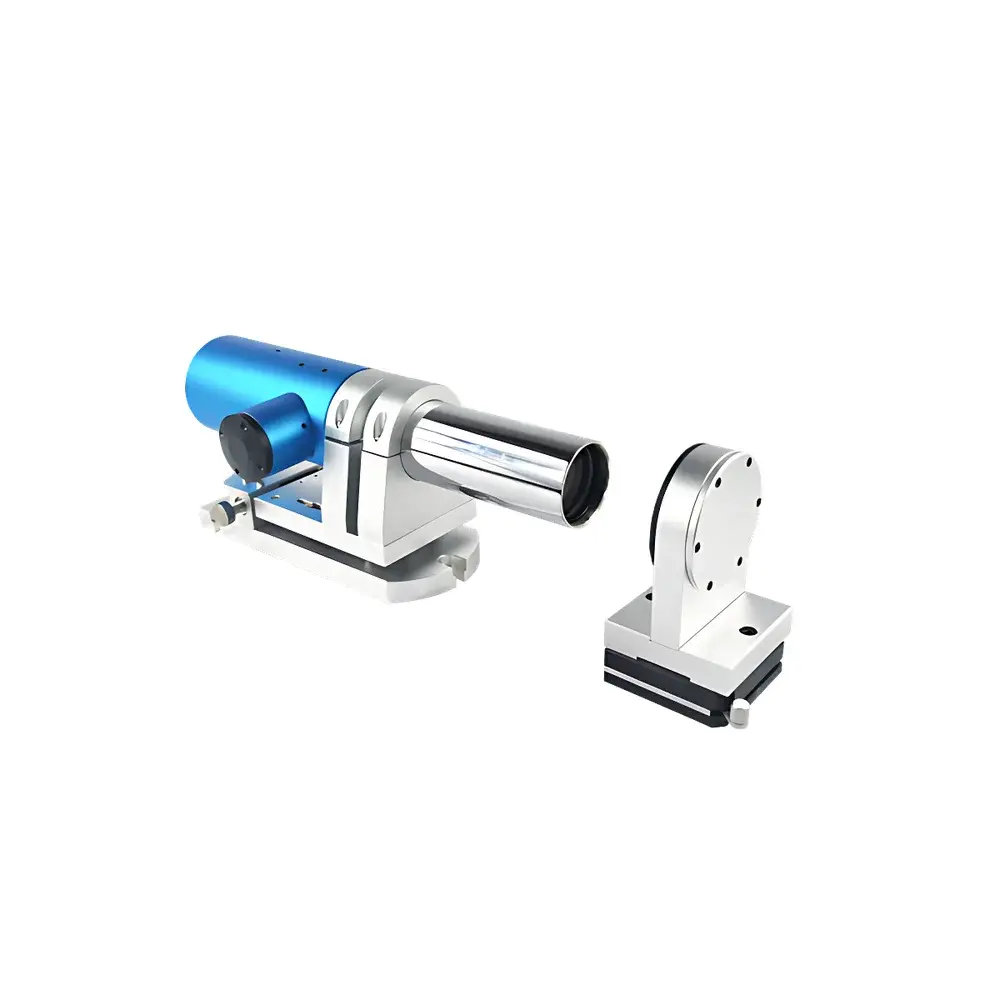
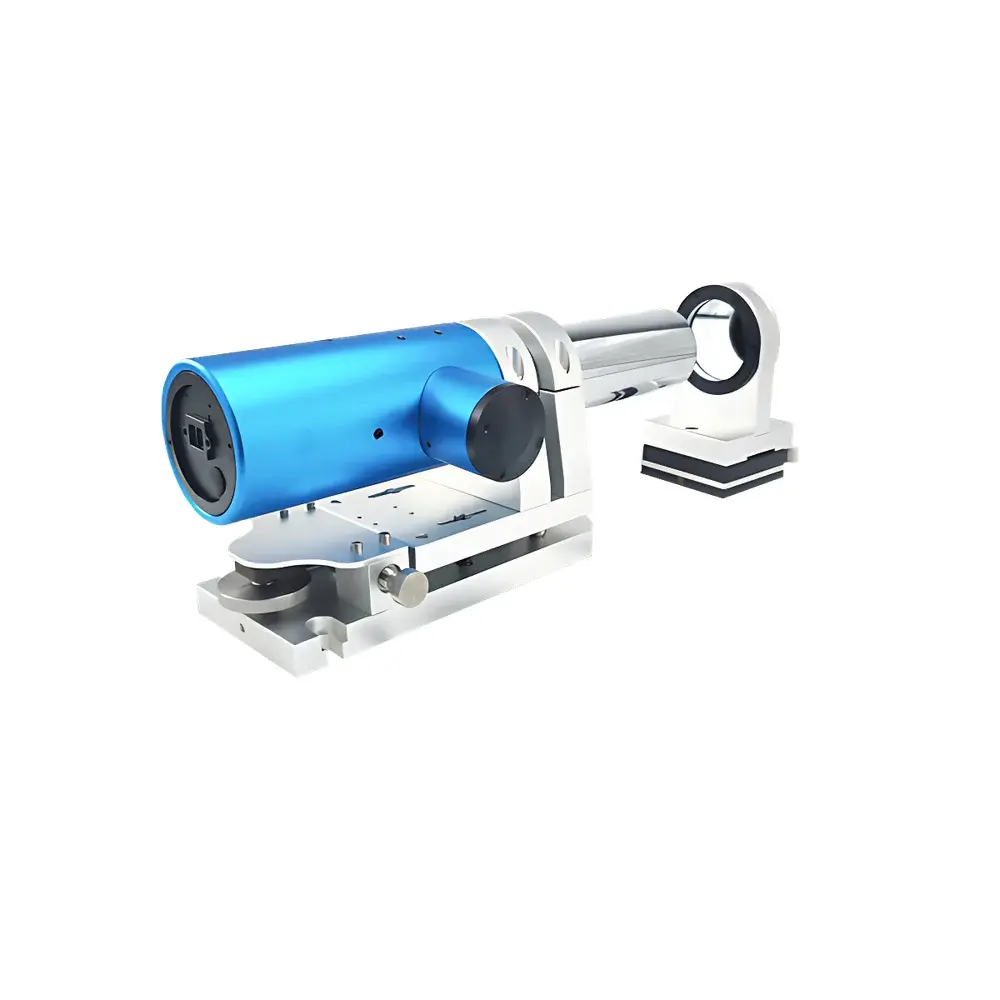
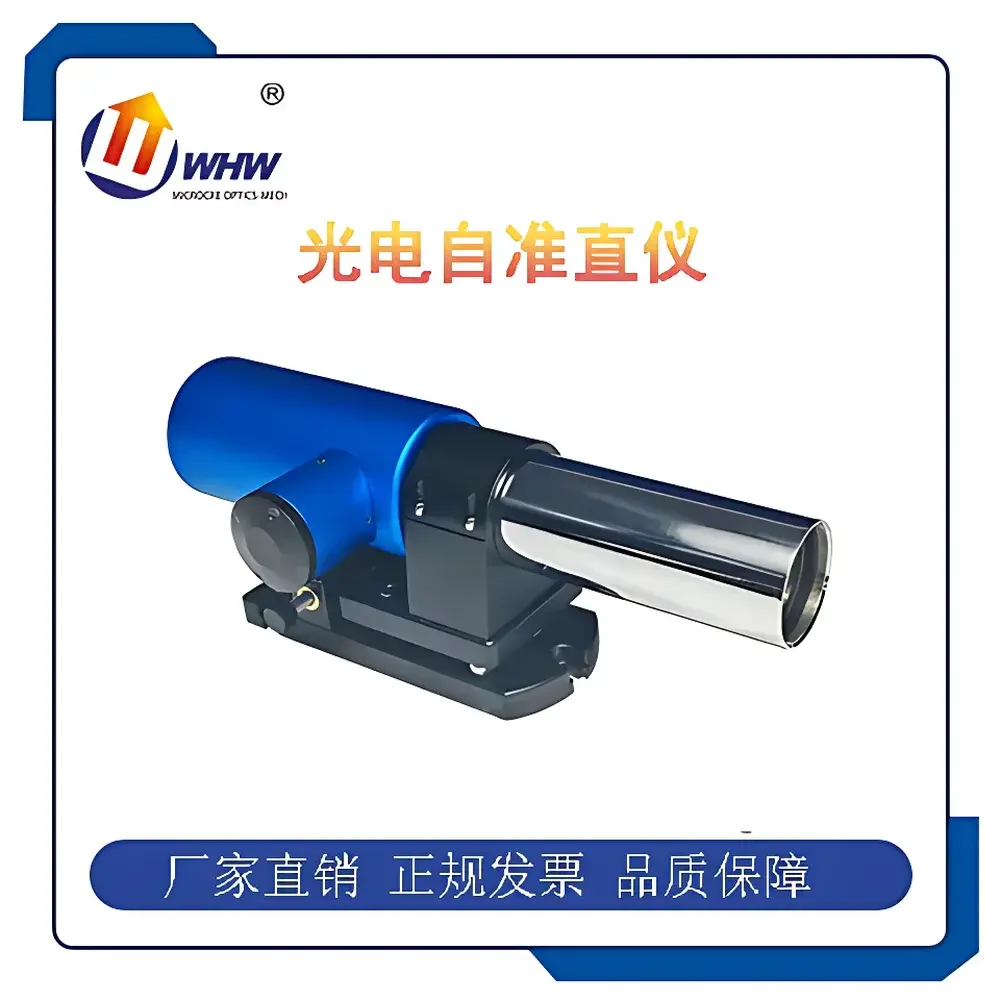
YANRUN MC030-MAT200/38/0.5 Dual-Axis Photoelectric Autocollimator
| Brand | YANRUN |
|---|---|
| Origin | Shanghai, China |
| Manufacturer Type | Manufacturer |
| Model | MC030-MAT200/38/0.5 |
| Focal Length | 200 mm |
| Aperture | 38 mm |
| Light Source | High-Stability Semiconductor LED |
| Measurement Range | 0–10 m |
| Angular Resolution | Adjustable down to 0.0001″ (arc second) |
| Field of View (X/Y) | 3200″ × 2400″ (arc sec) |
| Accuracy (Center) | ±0.5″ (0–±100″), ±1″ (0–±1000″) |
| Frequency Response | ≤30 Hz |
| Interface | USB 2.0 |
| Dimensions | 288 × 105 × 115 mm |
| Weight | 3.5 kg |
| Operating System | Windows 7 or later (64-bit), Intel Core i3-4th Gen or higher |
Overview
The YANRUN MC030-MAT200/38/0.5 Dual-Axis Photoelectric Autocollimator is a precision angular metrology instrument engineered for high-reproducibility measurement of small angular deviations in two orthogonal axes (X and Y) simultaneously. It operates on the fundamental principle of optical autocollimation: a collimated beam—generated by projecting a reticle located at the focal plane of a 200 mm focal-length objective lens—is reflected by a planar mirror and reimaged onto a high-resolution photoelectric sensor positioned at the same focal plane. When the mirror rotates by angle α, the returned image shifts by ΔS ≈ 2f·α (where f = 200 mm), enabling sub-arcsecond angular quantification via pixel-level centroid detection. This non-contact, drift-compensated methodology eliminates parallax and observer-dependent error inherent in traditional visual autocollimators. Designed for integration into controlled metrology environments—including calibration labs, aerospace assembly lines, and ultra-precision machine tool verification—the instrument delivers traceable angular measurements compliant with ISO 10360-2 (coordinate measuring machines) and supports uncertainty budgets aligned with ISO/IEC 17025 requirements.
Key Features
- Dual-axis simultaneous acquisition: Real-time synchronized measurement of pitch and yaw deviations without mechanical reorientation.
- High-stability semiconductor LED illumination: Rated for >50,000 hours lifetime; thermally stabilized to minimize intensity drift and wavelength shift during extended operation.
- Adjustable angular resolution: Configurable display resolution from 1″ down to 0.0001″ (arc second), supporting both rapid alignment checks and metrological-grade certification tasks.
- Wide dynamic field of view: 3200″ × 2400″ (arc sec) enables coarse-to-fine measurement workflows—from initial gross alignment to sub-arcsecond fine-tuning—within a single setup.
- USB 2.0 interface with deterministic latency: Ensures synchronization-critical applications (e.g., dynamic tilt monitoring of rotating stages) maintain ≤30 Hz sampling bandwidth under standard host conditions.
- Modular software architecture: Core measurement engine decoupled from analysis modules, allowing seamless integration of custom algorithms for straightness, flatness, squareness, and parallelism evaluation per ISO 230-1/6/7 standards.
- Compact form factor (288 × 105 × 115 mm, 3.5 kg): Facilitates portable deployment across production floors, cleanrooms, and field calibration sites without sacrificing optical rigidity or thermal stability.
Sample Compatibility & Compliance
The MC030-MAT200/38/0.5 is compatible with standard optical flats (λ/20 or better), kinematic mirror mounts, and retroreflector arrays used in multi-axis alignment systems. Its 38 mm clear aperture accommodates typical industrial-grade mirrors (≥25 mm diameter) while maintaining diffraction-limited performance. The system complies with electromagnetic compatibility requirements per CISPR 11 Group 1 Class B and meets safety standards IEC 61010-1 for laboratory electrical equipment. Data integrity protocols—including full audit trail logging, user access control, and electronic signature support—are implemented in accordance with FDA 21 CFR Part 11 and EU Annex 11 for regulated environments. Calibration certificates are issued traceable to NIM (National Institute of Metrology, China) or equivalent national metrology institutes (NMIs) upon request.
Software & Data Management
The included Windows-based control software (64-bit, Windows 7+) provides real-time visualization of the reflected reticle image, live coordinate readout (X, Y in arc seconds), and automated curve fitting for trend analysis. Raw sensor data (16-bit grayscale frames at up to 30 fps) is stored in HDF5 format to preserve metadata (timestamp, exposure, gain, environmental sensor readings). Export options include CSV, XML, and native Excel (.xlsx) with customizable templates conforming to ISO/IEC 17025 reporting clauses. Optional modules enable GD&T-compliant evaluation per ASME Y14.5—e.g., calculating deviation from ideal straightness over defined segments, or assessing perpendicularity between two measured axes. All software updates and firmware patches are digitally signed and distributed via secure HTTPS channels.
Applications
- Precision machine tool calibration: Verification of linear axis orthogonality, rotary table indexing accuracy, and guideway straightness per ISO 230-1.
- Aerospace component assembly: Alignment of optical benches, inertial sensor mounting platforms, and satellite payload interfaces requiring <1″ angular repeatability.
- Optical fabrication & testing: Centering error assessment of lenses and prisms, collimator alignment in interferometer setups, and cavity mirror tilt stabilization.
- Physics research laboratories: Monitoring thermal drift of cryogenic optical mounts, characterizing piezoelectric actuator hysteresis, and calibrating laser beam steering mechanisms.
- Quality assurance in high-value manufacturing: In-process verification of bearing seat angularity, gear housing bore alignment, and turbine blade root geometry.
FAQ
What is the minimum required warm-up time for metrological-grade measurements?
For measurements within specified accuracy (±0.5″), the instrument must be powered on for ≥15 minutes prior to use. For formal calibration or ISO/IEC 17025-compliant verification, the unit shall be thermally equilibrated in a temperature-stabilized environment (±0.5 °C) for ≥24 hours before measurement.
Does the system support external triggering or synchronization with other instruments?
Yes—via optional TTL-compatible trigger input (BNC), enabling synchronized capture with motion controllers, laser trackers, or vibration shakers for dynamic angular characterization.
Can measurement data be integrated into enterprise MES or LIMS platforms?
Yes—through RESTful API endpoints and OPC UA server add-on (sold separately), supporting bidirectional data exchange with Siemens Opcenter, LabVantage, or Thermo Fisher SampleManager.
Is the LED light source replaceable in the field?
No—the LED module is hermetically sealed and calibrated as part of the optical train; replacement requires factory recalibration and NIST-traceable verification.
What environmental conditions affect measurement stability?
Air turbulence (caused by drafts or thermal gradients >0.3 °C/m), floor vibration (exceeding ISO 230-2 Class 2 limits), and ambient light saturation (>100 lux at sensor plane) degrade signal-to-noise ratio and must be mitigated using enclosures, vibration isolation tables, or neutral-density filters.



