
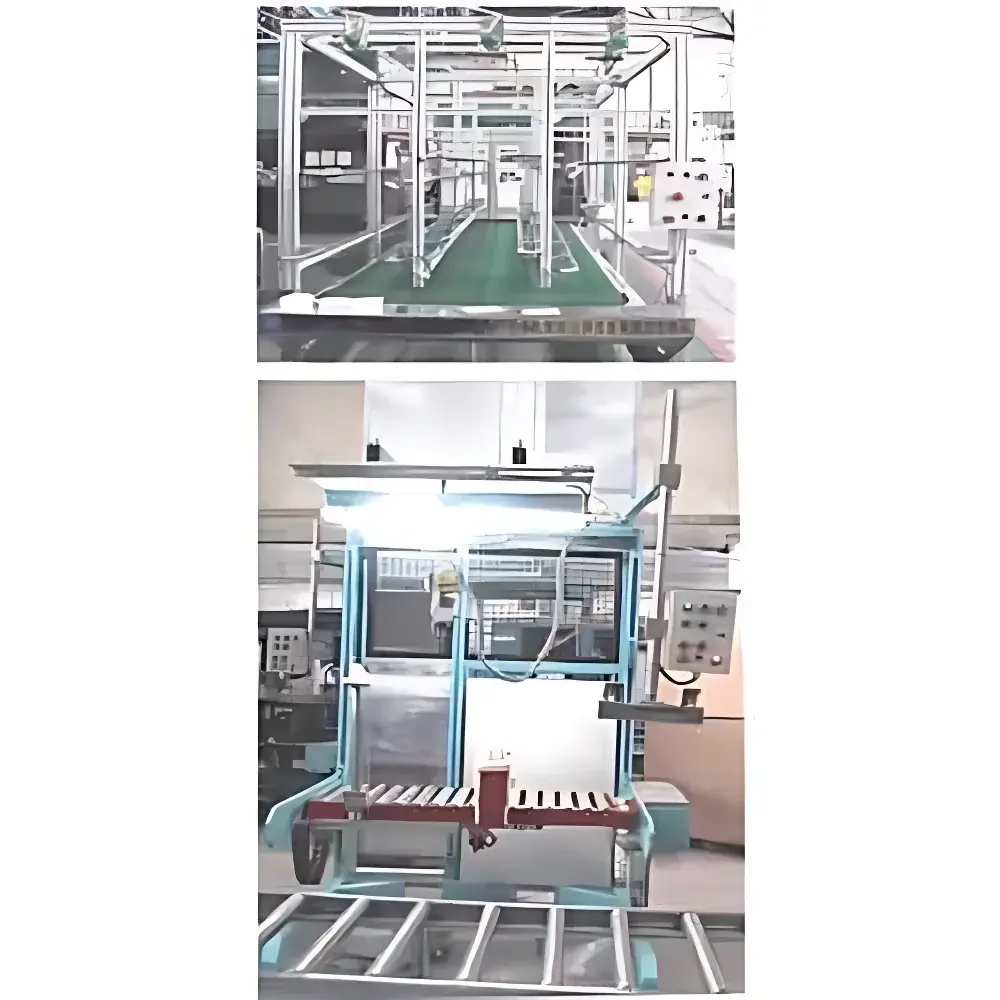
Automotive Seat Floating Nut Horizontal Actuator Performance Testing System QT-5
| Origin | Jilin, China |
|---|---|
| Manufacturer Type | Authorized Distributor |
| Origin Category | Domestic (China) |
| Model | QT-5 |
| Pricing | Available Upon Request |
Overview
The QT-5 Automotive Seat Floating Nut Horizontal Actuator Performance Testing System is an engineered test platform designed specifically for functional and durability validation of horizontal drive mechanisms used in automotive seat adjustment systems. It implements closed-loop servo-controlled linear actuation to replicate real-world operational loads and motion profiles defined in OEM technical specifications—particularly aligned with test requirements outlined in Sections 4.7 and 4.8 of standard gearmotor and floating nut actuator documentation. The system operates on a precision-guided sliding carriage architecture, integrating a calibrated torque-sensing coupling, programmable AC servo motor, high-resolution position encoder, and thermally stabilized load frame. Its core measurement principle relies on synchronized acquisition of axial force (N), rotational torque (N·m), displacement (mm), and cycle timing (ms), enabling full characterization of dynamic response, hysteresis, breakaway behavior, and thermal drift under controlled ambient conditions (−40 °C to +80 °C). Designed for integration into Tier-1 supplier QA labs and OEM component validation centers, the QT-5 supports repeatable execution of endurance, static torque, and combined mechanical fatigue protocols per ISO 16750-3 (mechanical loads), SAE J1788 (seat mechanism durability), and internal automotive engineering standards.
Key Features
- Modular test station architecture supporting four distinct test modes: Static Torque Verification, Mechanical Fatigue Cycling, Endurance Life Testing, and Integrated Functional Validation
- Computer-controlled operation via embedded industrial PLC and Windows-based HMI software with real-time data visualization and automated pass/fail logic evaluation
- Thermal conditioning interface compatible with external environmental chambers for temperature-dependent performance mapping (−40 °C to +80 °C)
- Precision alignment fixtures including gear housing ear slots, guide screw positioning bores, floating nut clamping blocks, and worm shaft couplers—designed to eliminate parasitic bending moments during actuation
- Dual-stage zeroing procedure (coarse + fine) ensuring sub-0.1 N·m torque baseline stability prior to test initiation
- Configurable loading direction control (clockwise “L” or counterclockwise “T”) synchronized with motor rotation and load cell polarity
- Onboard data logging with timestamped CSV export, curve plotting (force vs. displacement, torque vs. angle), and audit-ready report generation including test ID, operator, date/time, and environmental parameters
Sample Compatibility & Compliance
The QT-5 accommodates standard automotive seat horizontal actuators featuring M6–M12 threaded floating nuts, integrated worm-gear reducers, and dual-bearing support configurations. Fixture adaptability extends to common gear housing footprints (up to 120 mm × 80 mm) and guide rod diameters ranging from 8 mm to 16 mm. All mechanical interfaces comply with GD&T tolerances specified in ISO 2768-mK. The system supports traceable calibration per ISO/IEC 17025 requirements when paired with accredited force and torque transducers. Test procedures align with automotive industry best practices for functional safety verification under ISO 26262 ASIL-A context and meet documentation rigor expected for IATF 16949 internal audits.
Software & Data Management
The QT-5’s native control software provides role-based access control, configurable test templates, and versioned parameter sets for each actuator family. All test executions generate immutable records containing raw sensor timestamps, processed metrics (peak torque, cycle count, stall detection, positional deviation), and operator annotations. Data files include embedded metadata compliant with ASTM E2500-13 (Standard Guide for Specification, Design, and Verification of Pharmaceutical and Biopharmaceutical Manufacturing Systems) principles—ensuring long-term readability and regulatory traceability. Audit trail functionality logs user logins, parameter changes, and print/export events in accordance with FDA 21 CFR Part 11 electronic record requirements when deployed in GMP-aligned environments.
Applications
- Validation of floating nut engagement/disengagement force thresholds across temperature extremes
- Life-cycle testing of horizontal seat track actuators under variable load spectra (e.g., 5,000–100,000 cycles at 15–45 N axial load)
- Static torque verification of worm gear efficiency and backlash characteristics pre- and post-thermal soak
- Correlation testing between bench-level QT-5 results and vehicle-level seat track performance metrics
- Root cause analysis of actuator failure modes including thread galling, bearing wear, and lubricant migration
- Supporting PPAP submissions with documented repeatability (R&R < 5% per AIAG MSA guidelines)
FAQ
What test standards does the QT-5 directly support?
The system is configured to execute tests referenced in OEM engineering specifications—especially Sections 4.7 and 4.8 of typical horizontal actuator DVP&Rs—and facilitates compliance with ISO 16750-3, SAE J1788, and VDA 238-100 (bending strength) through adaptable test sequences.
Can the QT-5 integrate with existing MES or LIMS platforms?
Yes—via OPC UA or Modbus TCP protocol support, raw data streams and pass/fail outcomes can be routed to enterprise manufacturing execution or laboratory information management systems.
Is third-party calibration certification available?
Calibration certificates traceable to NIM (National Institute of Metrology, China) or ISO/IEC 17025-accredited laboratories are provided upon request, including as-found/as-left data for force, torque, and position channels.
What maintenance intervals are recommended?
Linear guide rails require re-lubrication every 500 operational hours; torque sensor zero checks are advised before each test batch; annual verification of encoder resolution and motor encoder alignment is recommended.
Does the system support custom test scripting?
Advanced users may import Python-based test logic modules via the SDK interface, enabling conditional branching, multi-step thermal ramping, and adaptive load profiling based on real-time feedback.



