
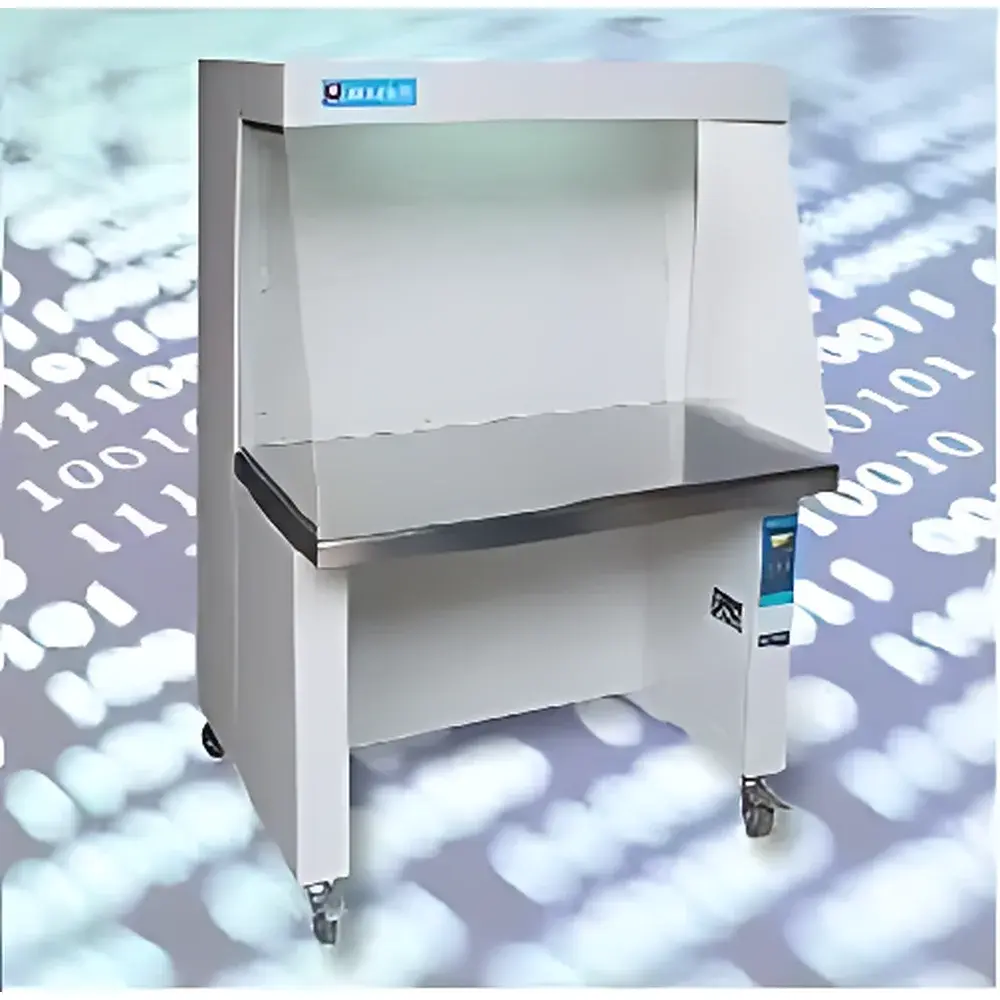
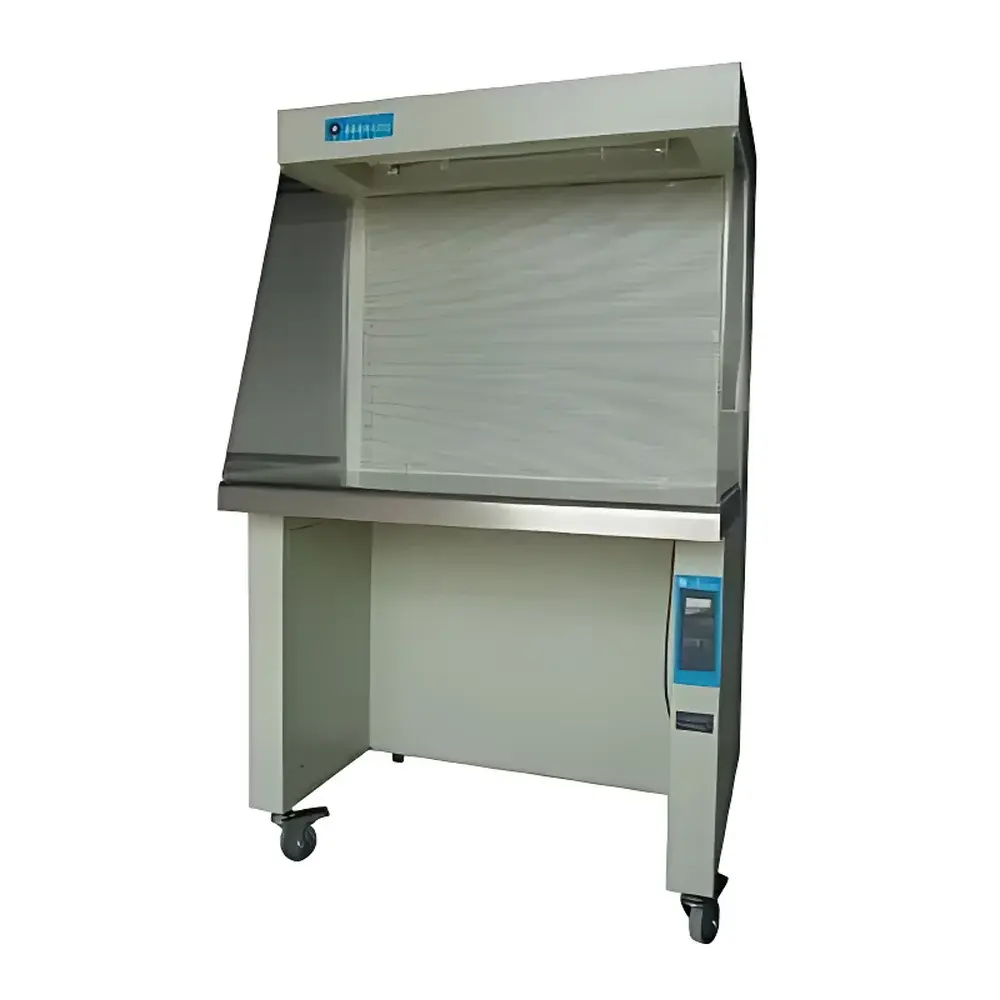
Truelab SW-CJ-1BU / SW-CJ-1CU Horizontal Laminar Flow Clean Bench
| Brand | Truelab |
|---|---|
| Origin | Shanghai, China |
| Model | SW-CJ-1BU / SW-CJ-1CU |
| Cleanliness Class | ISO Class 5 (Federal Standard 209E Class 100 @ ≥0.5 µm) |
| Average Air Velocity | 0.3–0.6 m/s (adjustable) |
| Noise Level | ≤62 dB(A) |
| Illumination | ≥300 lx |
| Microbial Recovery | ≤0.5 CFU/plate·hr (φ90 mm Petri dish) |
| Vibration Half-Peak | ≤0.3 µm (X/Y/Z axes) |
| Power Supply | AC 220 V / 50 Hz |
| Power Consumption | 0.15 kW (SW-CJ-1BU), 0.3 kW (SW-CJ-1CU) |
| Weight | 110 kg (SW-CJ-1BU), 200 kg (SW-CJ-1CU) |
| Work Area Dimensions | 910×480×570 mm (SW-CJ-1BU), 1570×480×570 mm (SW-CJ-1CU) |
| Overall Dimensions | 910×790×1380 mm (SW-CJ-1BU), 1570×790×1380 mm (SW-CJ-1CU) |
| HEPA Filter Specification | 820×600×100 mm ×1 (SW-CJ-1BU) |
| Fluorescent Lamp / UV Lamp | 20 W ×1 / 20 W ×1 (SW-CJ-1BU) |
Overview
The Truelab SW-CJ-1BU and SW-CJ-1CU Horizontal Laminar Flow Clean Benches are engineered for precision-controlled, particle-free environments in microbiological laboratories, cell culture facilities, pharmaceutical QC labs, and academic research settings. These units operate on the principle of unidirectional horizontal laminar airflow—air is drawn through a pre-filter and then forced through a certified HEPA filter (≥99.99% efficiency at 0.3 µm) to generate a uniform, low-turbulence stream across the work surface. This airflow pattern minimizes cross-contamination by sweeping airborne particles away from the operator and out of the working zone toward the front grille. Designed to meet ISO 14644-1 Class 5 (equivalent to Federal Standard 209E Class 100) performance requirements at ≥0.5 µm, each unit provides validated microbial control with ≤0.5 colony-forming units per φ90 mm Petri dish per hour under standard test conditions.
Key Features
- Robust structural design: Cold-rolled steel outer casing with electrostatic powder coating; 304 stainless steel work surface for corrosion resistance, chemical compatibility, and ease of decontamination.
- Optimized airflow management: Centrifugal blower with stable rotational speed and low acoustic signature (≤62 dB[A]), delivering adjustable laminar velocity between 0.3 and 0.6 m/s via eight-step digital control interface.
- Dual independent lighting system: Separate switches for 20 W (SW-CJ-1BU) or 40 W (SW-CJ-1CU) fluorescent lamps (≥300 lx illumination) and germicidal UV-C lamps (254 nm), enabling safe operation during sample handling and effective surface sterilization between uses.
- Enhanced ergonomics and safety: Transparent acrylic side panels provide optical clarity and mechanical durability; open-front sash design ensures unrestricted access while maintaining laminar integrity and minimizing external air intrusion.
- Extended filter service life: Integrated medium-efficiency pre-filter captures coarse particulates upstream of the HEPA module, reducing loading and extending operational lifespan of the final filter assembly.
- Vibration-isolated work surface: Measured vibration half-peak ≤0.3 µm across X-, Y-, and Z-axes—critical for sensitive procedures such as microinjection, micromanipulation, or sterile weighing.
Sample Compatibility & Compliance
These clean benches support non-hazardous, non-toxic biological and pharmaceutical operations including aseptic transfer of cell lines, preparation of media and reagents, inoculation of agar plates, and packaging of sterile components. They are not suitable for handling volatile chemicals, radioactive materials, or pathogenic agents requiring biosafety containment (i.e., BSL-2 or higher). Units comply with ISO 14644-1:2015 for cleanroom classification and are validated per ISO 14644-3:2019 for airflow uniformity and particle counting methodology. While not intrinsically compliant with FDA 21 CFR Part 11, the absence of electronic data logging means they are typically deployed in GLP-aligned environments where manual logbooks and periodic certification (e.g., annual HEPA integrity testing per IEST-RP-CC001) fulfill regulatory expectations.
Software & Data Management
The SW-CJ-1BU and SW-CJ-1CU operate via an embedded digital controller with LED-based eight-segment display and tactile membrane switches—no software installation, firmware updates, or network connectivity is required or supported. All operational parameters (fan speed, lamp status) are manually set and visually confirmed. For quality assurance traceability, users must maintain paper-based or LIMS-integrated records documenting daily visual inspections, weekly UV intensity verification (using calibrated radiometer), biannual particle count audits, and annual HEPA filter integrity tests (via DOP/PAO scanning or sodium flame method per ISO 14644-3 Annex B). No audit trail or electronic signature functionality is embedded.
Applications
- Aseptic processing of mammalian and insect cell cultures in academic and industrial biotechnology labs.
- Preparation and dispensing of sterile culture media, buffers, and growth supplements under controlled particulate conditions.
- Handling of primary tissues and stem cells where environmental endotoxin and fungal spore load must be minimized.
- QC release testing of terminally sterilized medical devices prior to packaging.
- Electronics manufacturing support for dust-sensitive component assembly (e.g., optical sensors, MEMS devices).
- Botanical and agricultural research involving tissue propagation and meristem isolation.
FAQ
What is the difference between horizontal and vertical laminar flow clean benches?
Horizontal flow units direct filtered air parallel to the work surface—from rear to front—providing optimal protection for samples but exposing operators to UV and exhaust air. Vertical flow benches direct air downward, protecting both operator and sample, but require greater ceiling clearance and are unsuitable for tall equipment.
Can this unit be used for handling hazardous biological agents?
No. These are open-front laminar flow devices without negative pressure containment or exhaust ducting. They do not meet BSL-2 requirements and must not be used for pathogens, toxins, or genetically modified organisms requiring biosafety containment.
How often should the HEPA filter be replaced?
Filter replacement frequency depends on ambient air quality and usage intensity. Under typical laboratory conditions with functional pre-filters, HEPA service life ranges from 3 to 5 years. Integrity testing must be performed annually per ISO 14644-3.
Is electrical certification provided for international markets?
Units ship with CE-marked components and conform to IEC 61010-1 for laboratory equipment safety. For North American deployment, third-party UL/ETL listing requires localized evaluation and may involve minor modifications to power input or labeling.
Does the unit include validation documentation?
Factory-supplied documentation includes filter certification reports (HEPA efficiency, initial pressure drop), airflow velocity calibration certificates, and ISO Class 5 particle count test results. Full IQ/OQ/PQ protocols are user-responsible and must be executed on-site per GMP Annex 1 or local regulatory guidance.



