
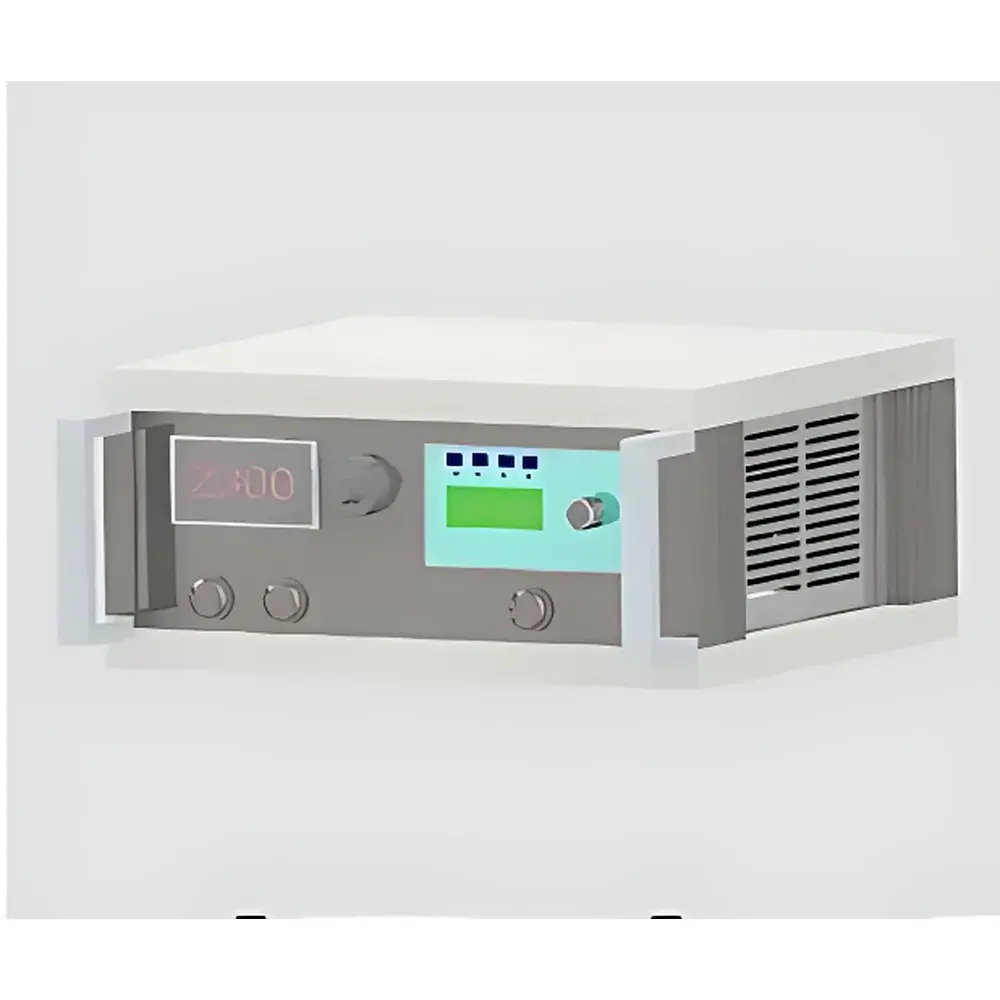
Truelab K22 Dual-Channel Electrospinning Controller for Brushless DC Collector & Reciprocating Nozzle Stage
| Brand | Truelab |
|---|---|
| Origin | Shanghai, China |
| Manufacturer Type | Authorized Distributor |
| Product Category | Domestic (China-Made) |
| Model | K22 Electrospinning Controller |
| Pricing | Upon Request |
| Receiver Speed Range | 300–3600 rpm (±1 rpm) |
| Reciprocating Stage Speed Range | 0–1000 mm/min (±1 mm/min |
| high-resolution mode | 0–300 mm/min ±0.1 mm/min) |
| Dimensions (W×D×H) | 275 × 250 × 110 mm |
| Weight | 4.5 kg |
| Power Supply | AC 220 V, 50 Hz |
| Safety | Integrated Emergency Stop Button |
| Motor Compatibility | Brushless DC motor (collector), Stepper motor (nozzle stage) |
| Direction Control | Bidirectional toggle switch |
Overview
The Truelab K22 Dual-Channel Electrospinning Controller is an engineered interface designed for precise, synchronized actuation of two critical motion subsystems in laboratory-scale electrospinning systems: a brushless DC (BLDC) motor-driven rotating collector (e.g., drum or mandrel) and a stepper motor-driven linear reciprocating stage for nozzle positioning. Unlike generic motion controllers, the K22 implements dedicated current-mode BLDC commutation logic and microstepping-capable stepper drive firmware—enabling stable, low-ripple rotational velocity control and repeatable, jitter-free linear traversal. Its architecture supports closed-loop speed regulation without external encoders, relying on internal back-EMF sensing for the BLDC channel and step-loss detection algorithms for the stepper channel. This controller is intended for integration into Class I or II electrospinning setups compliant with IEC 61000-6-3 (EMC emission limits) and IEC 61010-1 (safety requirements for electrical equipment for measurement, control, and laboratory use).
Key Features
- Dual independent motion channels: One optimized for brushless DC motors (300–3600 rpm, ±1 rpm accuracy) and one for bipolar stepper motors (0–1000 mm/min, ±1 mm/min; high-fidelity mode: 0–300 mm/min at ±0.1 mm/min resolution)
- Real-time bidirectional reversal via hardware toggle switch—no software restart or parameter reconfiguration required
- Integrated emergency stop circuit meeting IEC 60204-1 Category 0 requirements, directly cutting power to both motor drivers
- Front-panel analog potentiometers with tactile detents for intuitive, drift-resistant speed adjustment
- Galvanically isolated digital I/O terminals (opto-coupled) for safe interlock signaling with high-voltage electrospinning power supplies
- Compact benchtop enclosure (275 × 250 × 110 mm) constructed from flame-retardant ABS (UL94 V-0 rated) with IP20-rated ventilation grilles
Sample Compatibility & Compliance
The K22 is compatible with standard electrospinning configurations using polymeric solutions (e.g., PVP, PLA, PAN) and solvent systems (e.g., DMF, chloroform, TFA). It supports collector geometries including cylindrical drums (diameter ≥ 50 mm), rotating disks, and custom mandrels up to 5 kg inertial load. The reciprocating stage interface accommodates standard M4/M5 mounting rails and integrates with linear stages featuring lead screws (pitch ≤ 2 mm) or timing belts (pitch ≤ 5 mm). From a regulatory standpoint, the unit conforms to CE marking directives (2014/30/EU EMC Directive and 2014/35/EU LVD Directive), carries RoHS 2011/65/EU compliance certification, and meets essential safety requirements outlined in GB/T 18268.1–2010 (Chinese national standard equivalent to IEC 61326-1). It is not certified for use in explosion-hazardous environments (ATEX/IECEx) or intrinsically safe applications.
Software & Data Management
The K22 operates as a standalone hardware controller with no embedded firmware update capability or USB/RS-232 connectivity. All operational parameters are set locally via front-panel controls; no host PC or proprietary software is required. However, its analog voltage outputs (0–10 V) for real-time speed feedback—available at dedicated BNC terminals—enable integration with third-party data acquisition systems (e.g., National Instruments DAQmx, LabVIEW, or MATLAB Data Acquisition Toolbox) for time-synchronized logging of collector RPM and stage position. Audit trails are maintained manually per GLP guidelines; the device does not support FDA 21 CFR Part 11-compliant electronic signatures or automated event logging.
Applications
- Controlled fiber alignment in aligned nanofiber mat fabrication via synchronized rotation-reciprocation
- Uniform deposition across large-area substrates (≥150 mm width) using programmable scan patterns
- Multi-layer scaffold engineering requiring alternating collection speeds for core–shell morphology tuning
- Process validation studies under ISO 13485–aligned quality management systems for biomedical textile development
- Teaching laboratories implementing ASTM D3826–22 (Standard Practice for Determining Degradation End Point of Polymeric Materials) via controlled electrospun sample generation
FAQ
Does the K22 support external triggering or synchronization with high-voltage power supplies?
Yes—via opto-isolated TTL-compatible trigger inputs (active-low, 5 V logic), enabling start/stop coordination with syringe pump controllers or HV generators.
Can the reciprocating stage operate in continuous unidirectional mode?
No—the K22 is designed exclusively for oscillatory (back-and-forth) motion; it does not support open-loop constant-velocity translation.
Is firmware customization or OEM branding available?
Truelab offers limited OEM configuration options (e.g., custom labeling, panel engraving) but does not provide source code access or user-modifiable firmware.
What maintenance is required for long-term reliability?
No scheduled maintenance is specified; periodic inspection of cooling vents and verification of emergency stop functionality every 6 months is recommended per ISO/IEC 17025 Clause 6.4.10.
Does the controller include overload protection for connected motors?
Yes—both channels feature thermal foldback and current-limiting circuits that automatically reduce output torque upon sustained overcurrent detection (>120% nominal for >2 s), followed by latching shutdown until manual reset.
Related Products



