
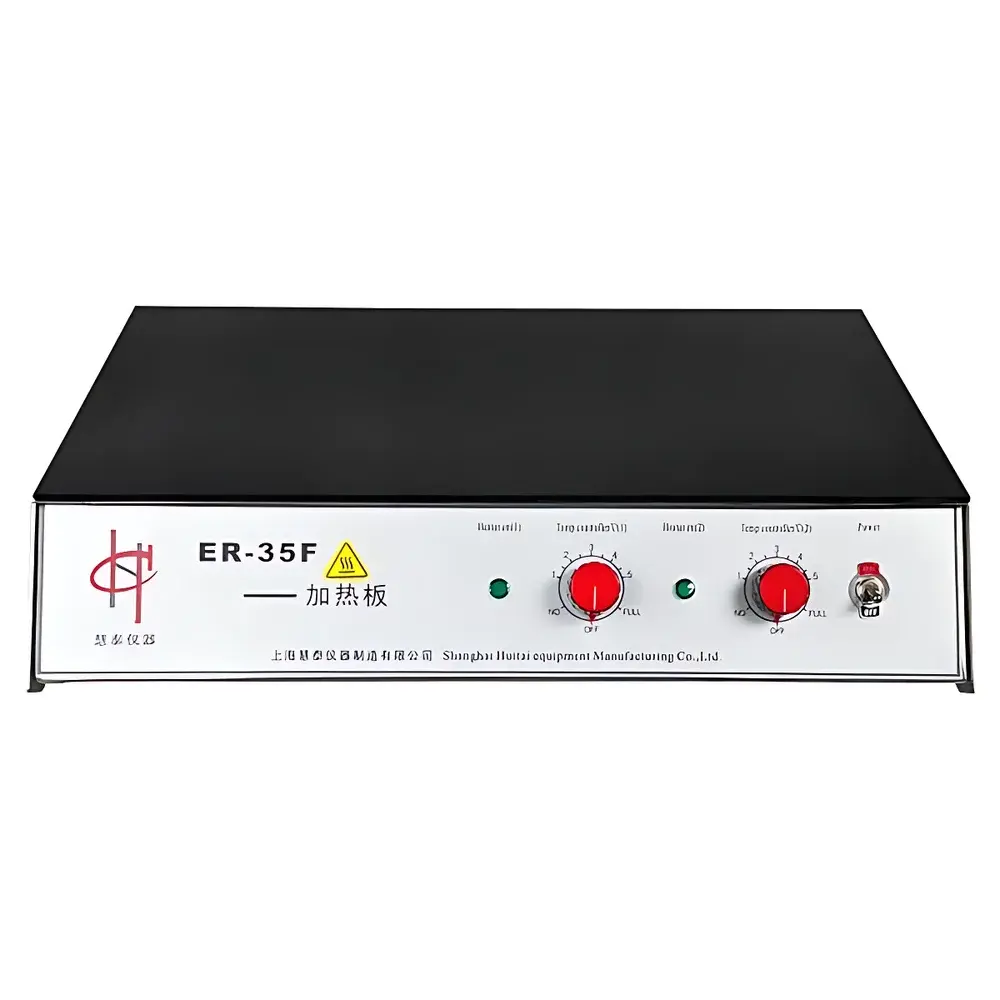
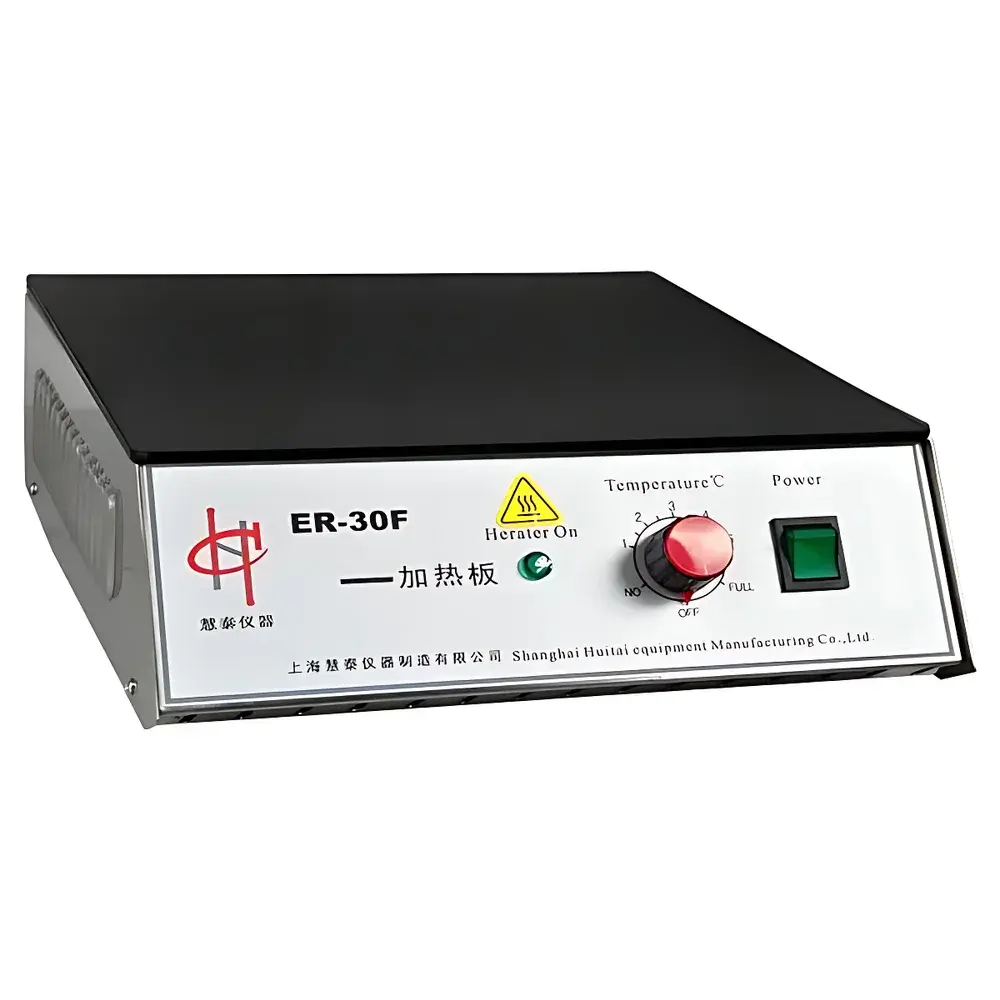
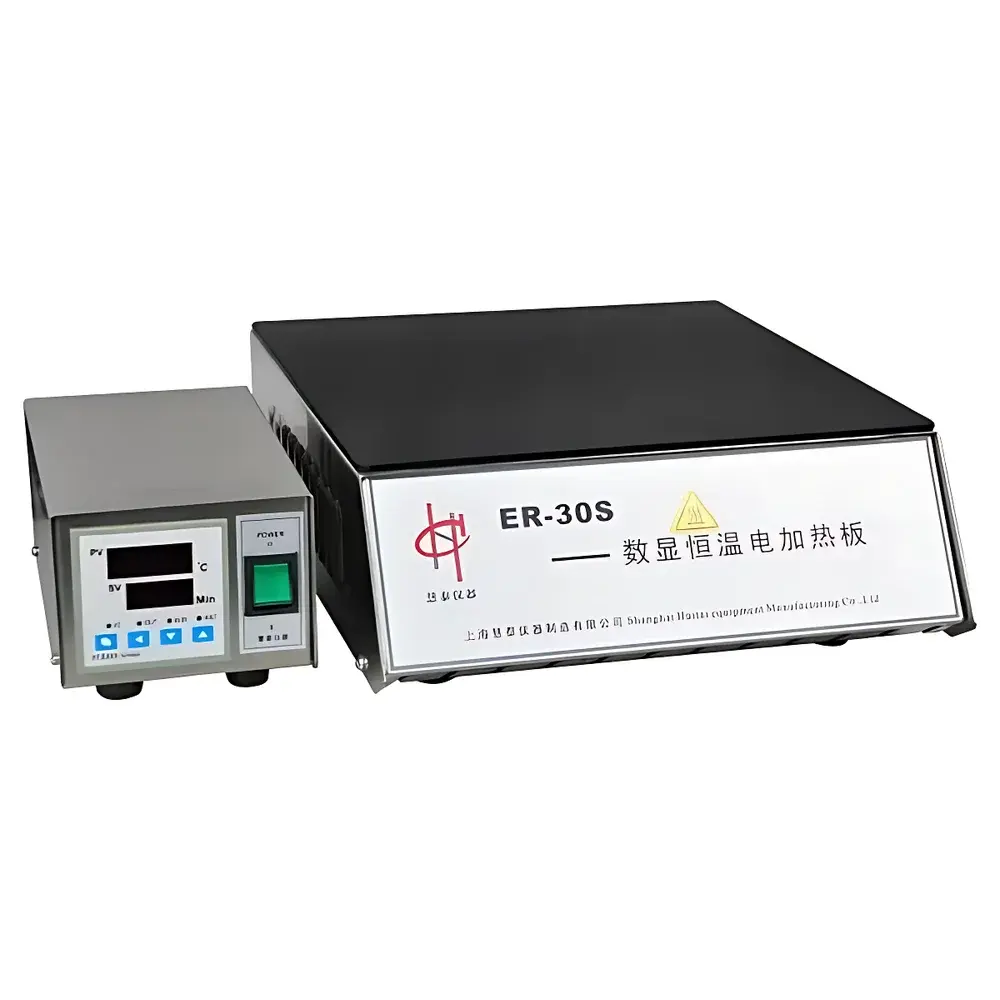
Truelab ER-30 / ER-30F / ER-35F Electric Heating Plate
| Brand | Truelab |
|---|---|
| Origin | Shanghai, China |
| Model | ER-30 / ER-30F / ER-35F |
| Heating Power | 1200 W (ER-30/ER-30F), 2400 W (ER-35F) |
| Max. Operating Temperature | 450 °C (ER-30, 30 s transient), 400 °C (ER-30F, continuous) |
| Heating Surface Dimensions | 300 × 300 mm (ER-30/ER-30F), 300 × 500 mm (ER-35F) |
| Overall Dimensions (W×D×H) | 300 × 355 × 125 mm (ER-30/ER-30F), 500 × 355 × 125 mm (ER-35F) |
| Temperature Display | Digital LED |
| Construction | Microcrystalline glass top plate, 316L stainless steel housing, ceramic fiber insulation |
| Temp. Uniformity | ±5 °C across heating surface (at 400 °C, steady state) |
| Input Voltage | AC 220 V, 50 Hz |
Overview
The Truelab ER-30, ER-30F, and ER-35F series electric heating plates are precision-engineered benchtop thermal platforms designed for controlled, uniform conductive heating in analytical laboratories, sample preparation workflows, and routine digestion applications. These units operate on resistive heating principles, delivering stable thermal energy directly through a low-thermal-mass microcrystalline glass surface—enabling rapid thermal response and minimal temperature overshoot. Unlike open-coil or aluminum-block heaters, the microcrystalline glass top provides exceptional chemical inertness and dimensional stability under sustained high-temperature operation, making it suitable for acid digestion, solvent evaporation, reflux setups, and reagent warming where surface integrity and contamination control are critical. The ER-30F and ER-35F variants integrate enhanced corrosion resistance via full 316L stainless steel enclosures and sealed front-panel electronics, supporting long-term use in aggressive chemical environments common in environmental testing (e.g., EPA Method 3050B/3051A), pharmaceutical QC, and petrochemical analysis.
Key Features
- Microcrystalline glass heating surface with near-zero coefficient of thermal expansion—resists warping, cracking, and thermal shock up to 450 °C
- High-density ceramic fiber insulation layer minimizes heat loss and improves energy efficiency while reducing external casing temperature
- Digitally controlled PID temperature regulation with LED display for real-time setpoint and actual temperature readout (±1 °C accuracy at 200 °C)
- Robust 316L stainless steel chassis and perimeter housing—fully resistant to splashes of concentrated HNO₃, HCl, HF, and aqua regia
- Modular design with standardized footprint compatibility for integration into fume hoods, glove boxes, or automated sample prep stations
- Thermal cut-off protection and overtemperature alarm (adjustable threshold) compliant with IEC 61000-6-2 EMC immunity standards
Sample Compatibility & Compliance
These heating plates accommodate standard laboratory vessels including borosilicate glass beakers (50–1000 mL), PTFE digestion cups, quartz crucibles, and ceramic evaporating dishes. The flat, non-porous surface ensures optimal thermal contact and eliminates hot spots that may compromise reproducibility in gravimetric or volumetric sample prep. Units meet general safety requirements per IEC 61010-1:2010 for electrical equipment used in laboratory environments. While not certified to UL or CE as standalone medical devices, they conform to electromagnetic compatibility (EMC) Class B limits and support GLP-compliant documentation when paired with validated calibration procedures (e.g., using NIST-traceable RTDs). For regulated environments—including USP compounding labs or ISO/IEC 17025-accredited testing facilities—the ER-30F and ER-35F models are routinely deployed in method-validated digestion protocols aligned with ASTM D5191, ISO 11885, and EPA SW-846 Methods 3015A and 3051A.
Software & Data Management
The ER-series operates as a stand-alone analog-digital hybrid instrument without embedded firmware or network connectivity. Temperature setpoints and real-time readings are managed locally via push-button interface and LED display. For traceability in regulated workflows, users may integrate external data loggers (e.g., Omega OM-DAQPRO-5300 or Testo 176 T4) connected to calibrated PT100 probes placed directly on the heating surface or within sample vessels. This configuration supports 21 CFR Part 11–compliant audit trails when combined with validated electronic lab notebook (ELN) systems. Optional RS-485 communication modules (sold separately) enable Modbus RTU integration into centralized lab automation platforms for remote monitoring and batch parameter logging.
Applications
- Acid digestion of soil, sediment, and biological tissues prior to ICP-OES or ICP-MS analysis
- Controlled evaporation of organic solvents (e.g., hexane, acetone, chloroform) during extraction workflows
- Pre-heating reagents and standards in wet chemistry QA/QC procedures
- Support heating for hotplate-stirrer hybrid configurations (when used with compatible magnetic stirrers)
- Stabilization of reaction mixtures in synthetic chemistry and polymer characterization labs
- Calibration verification of thermocouples and RTDs using fixed-point reference materials
FAQ
What is the maximum continuous operating temperature for each model?
The ER-30 supports up to 450 °C for short-duration tasks (≤30 seconds); its rated continuous duty temperature is 400 °C. The ER-30F is rated for continuous operation at 400 °C. The ER-35F, with dual heating zones and higher power input, maintains 400 °C continuously across its extended 300 × 500 mm surface.
Can these plates be used inside a fume hood?
Yes—both ER-30F and ER-35F models feature fully sealed electronics and 316L construction, making them suitable for installation in Type B or C ducted fume hoods. Ensure adequate clearance (≥10 cm) around rear ventilation slots.
Is the microcrystalline glass surface resistant to hydrofluoric acid?
No. While highly resistant to nitric, sulfuric, and hydrochloric acids, microcrystalline glass is susceptible to etching by HF. Use PTFE or quartz inserts when handling HF-containing solutions.
Does the unit include a calibration certificate?
No factory-issued calibration certificate is included. Users must perform initial verification using a NIST-traceable thermometer and document results per internal SOPs or ISO/IEC 17025 requirements.
What maintenance is required to ensure long-term accuracy?
Clean the surface after each use with deionized water and lint-free wipes; avoid abrasive cleaners. Annually inspect the thermal fuse and recalibrate the PID controller using a calibrated reference probe at three points (100 °C, 250 °C, 400 °C).



