
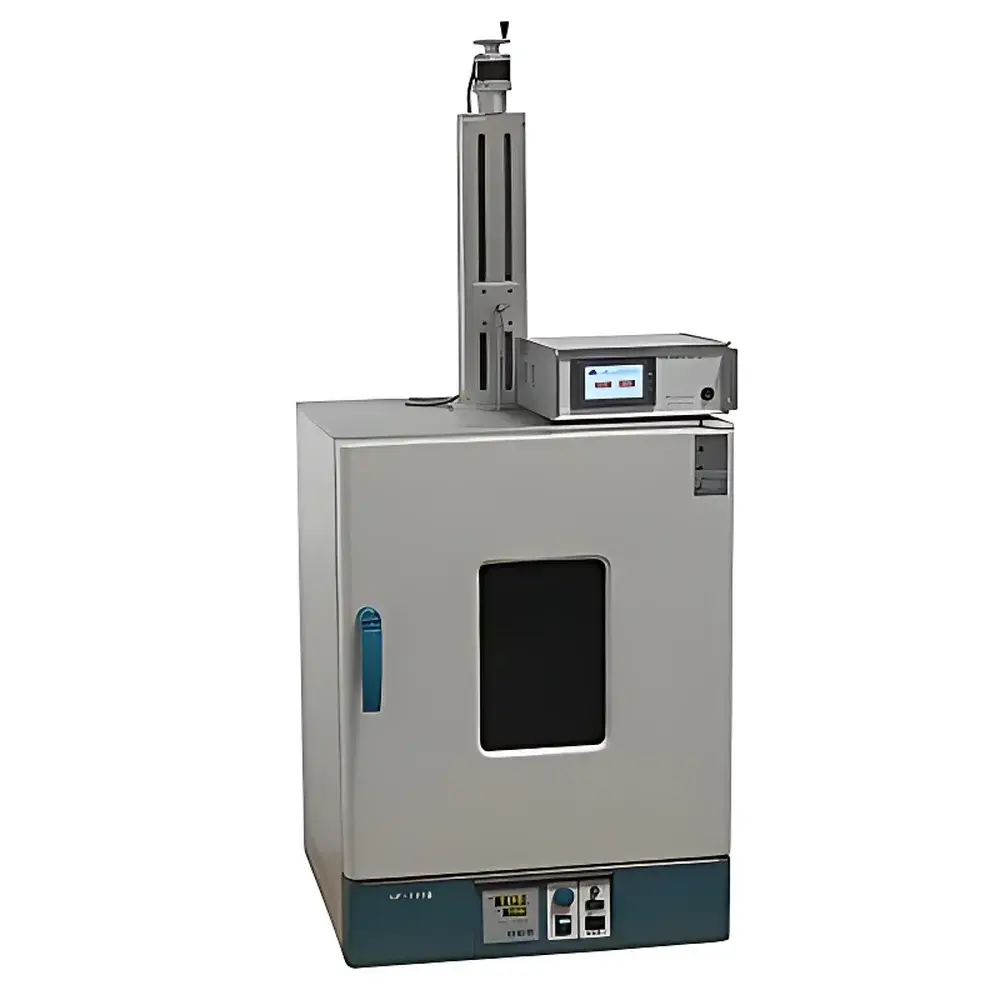
KJ GROUP PTL-MMB02-200 Constant-Temperature Vertical Dip-Coating Machine
| Brand | KJ GROUP |
|---|---|
| Origin | Liaoning, China |
| Manufacturer Type | Authorized Distributor |
| Country of Origin | China |
| Model | PTL-MMB02-200 |
| Price | Upon Request |
| Power Supply | 220 V, 50 Hz |
| Heating Power | 2.3 kW |
| Withdrawal Speed Range | 1–200 mm/min |
| Stroke Length | 250 mm |
| Temperature Range | 80–200 °C |
| Temperature Accuracy | ±1.5 °C |
| Fuse Rating | 15 A |
| Sample Dimensions | 407 mm × 229 mm × (1–10) mm |
| Maximum Load Capacity | ≤5 kg |
| Overall Dimensions | 636 mm × 680 mm × 1520 mm |
| Standard Accessories | 1 control unit, 1 immersion bath |
Overview
The KJ GROUP PTL-MMB02-200 Constant-Temperature Vertical Dip-Coating Machine is an engineered platform for controlled thin-film deposition via vertical dip-coating—a technique rooted in sol-gel processing, colloidal self-assembly, and Langmuir-Blodgett-inspired interfacial engineering. It operates on the principle of uniform withdrawal of a substrate from a precursor solution under precisely regulated thermal and kinematic conditions. By maintaining a stable isothermal environment (80–200 °C) around the immersion bath and substrate path, the system minimizes convective disturbances and solvent evaporation gradients—critical factors governing film thickness uniformity, nucleation density, and microstructural homogeneity. Designed for reproducible lab-scale fabrication of oxide, polymer, perovskite, and hybrid functional films, the PTL-MMB02-200 supports fundamental research in optoelectronics, corrosion-resistant coatings, gas-sensing layers, and templated nanomaterial synthesis.
Key Features
- Integrated constant-temperature chamber with PID-controlled resistive heating (2.3 kW), ensuring thermal stability within ±1.5 °C across the full 80–200 °C operating range.
- Precision motion control system based on microstepping two-phase hybrid stepper motor, enabling smooth, jitter-free withdrawal at speeds from 1 to 200 mm/min with programmable acceleration/deceleration profiles.
- Intuitive 7-inch capacitive touchscreen interface with real-time parameter monitoring, multi-step recipe storage (up to 20 protocols), and password-protected user levels for lab-wide access management.
- Robust mechanical architecture featuring linear guide rails and reinforced vertical column (height: 1520 mm), supporting consistent alignment and load stability up to 5 kg—including oversized substrates (max 407 × 229 mm, thickness 1–10 mm).
- Modular immersion bath (included) constructed from corrosion-resistant stainless steel with adjustable depth and optional inert-atmosphere purge ports for oxygen/moisture-sensitive precursors.
- Comprehensive safety suite: 15 A thermal fuse, over-temperature cutoff, emergency stop button, and grounded chassis compliant with IEC 61010-1 for laboratory electrical safety.
Sample Compatibility & Compliance
The PTL-MMB02-200 accommodates rigid planar substrates including silicon wafers, glass slides, FTO/ITO-coated glass, ceramic plates, and metal foils—provided dimensional and weight limits are observed. Its open-bath configuration allows direct integration with custom solution reservoirs or glovebox-mounted adaptations. While not certified to ISO/IEC 17025 or FDA 21 CFR Part 11 out-of-the-box, the system’s deterministic speed/temperature control, audit-ready parameter logging (via USB export), and traceable calibration pathways support GLP-compliant documentation workflows. Users may implement supplementary validation protocols aligned with ASTM D5239 (for coating thickness repeatability) or ISO 2135 (for dip-coating process consistency).
Software & Data Management
The embedded firmware records all operational parameters—including timestamped speed, temperature setpoint, actual bath temperature, withdrawal position, and cycle count—into non-volatile memory. Data can be exported in CSV format via USB flash drive for post-processing in MATLAB, Python (Pandas), or statistical analysis platforms. Although no proprietary PC software is bundled, the machine supports Modbus RTU over RS-485 for integration into centralized lab automation systems (e.g., LabVantage, Siemens Desigo). Optional firmware upgrades may introduce Ethernet connectivity and RESTful API endpoints for remote monitoring and scheduled batch execution.
Applications
- Sol-gel derived TiO₂, SiO₂, and ZnO antireflective or photocatalytic films for photovoltaic and environmental remediation studies.
- Layer-by-layer (LbL) assembled polyelectrolyte multilayers for biosensor interfaces and controlled drug release matrices.
- Perovskite precursor films for scalable optoelectronic device prototyping (e.g., LEDs, photodetectors).
- Functionalized hydrophobic/hydrophilic gradient coatings for microfluidic channel surface engineering.
- Templated mesoporous silica films used in selective gas adsorption and catalytic support applications.
- Quality assurance testing of coating solution rheology and drying kinetics under variable thermal gradients.
FAQ
What substrates are compatible with the PTL-MMB02-200?
Standard rigid flat substrates up to 407 mm × 229 mm × 10 mm are supported; flexibility or curvature beyond ±0.1 mm deviation per 100 mm is not recommended.
Can the system operate inside a nitrogen glovebox?
Yes—the open-frame design and modular bath allow installation in gloveboxes with appropriate feedthroughs for power and control cabling.
Is temperature calibration traceable to NIST standards?
The unit ships with factory calibration; users may perform field verification using a calibrated PT100 probe and adjust offset values via the service menu.
Does the machine support multi-cycle sequential dipping?
Yes—up to 99 repeated dips per program, each with independent speed, dwell time, and temperature settings.
What maintenance is required for long-term reliability?
Biannual inspection of guide rail lubrication, stepper motor coupling integrity, and heater element resistance; no consumables beyond standard fuses (15 A, slow-blow type).



